
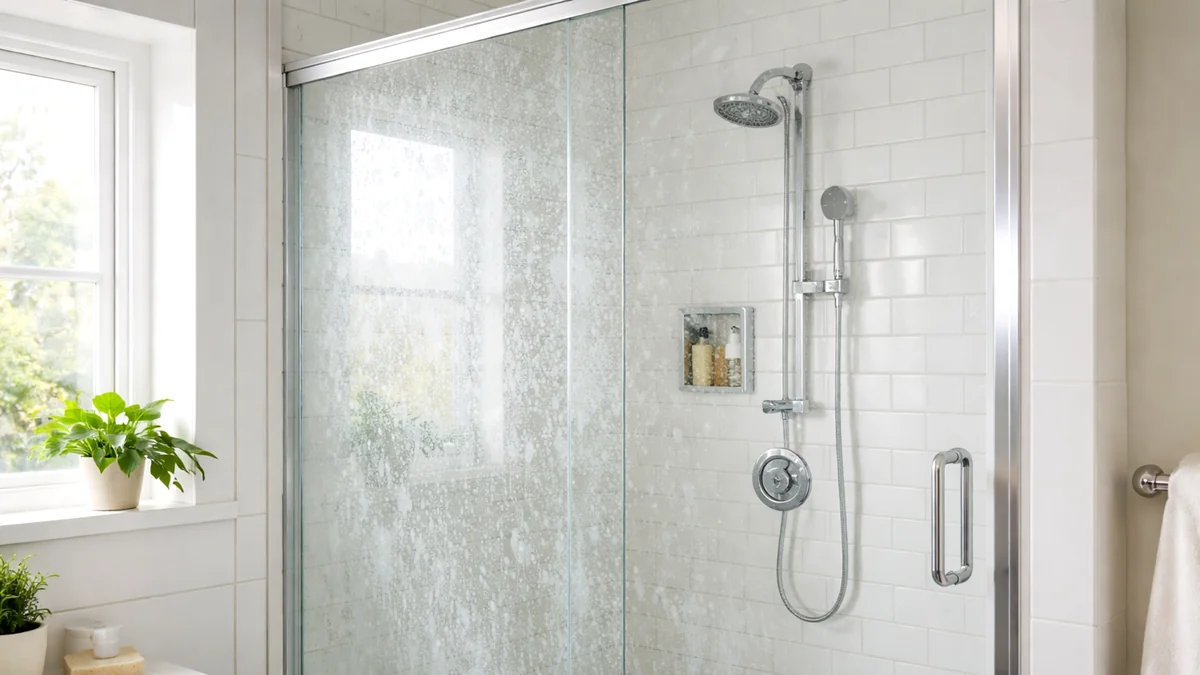
Cloudy shower doors can make the whole bathroom look dull. When you want to know how to get hard water stains off shower glass, the biggest difference comes from using the right method before the buildup gets thick.
Those white marks are dried mineral deposits. Soap scum often mixes with them and makes the film harder to remove.
A quick wipe rarely fixes that cloudy look for long. You need something that loosens the residue, lifts it gently, and lets you dry the glass fully.
You can get hard water stains off shower glass with simple home methods first, then move to stronger options only if needed. The sections below also cover causes, mistakes, smarter cleaning tips, and prevention.
Table of Contents
What Causes Hard Water Stains on Shower Glass?
Hard water stains form when mineral-rich water dries on the glass again and again. Over time, that light haze can turn into a rough, cloudy layer.
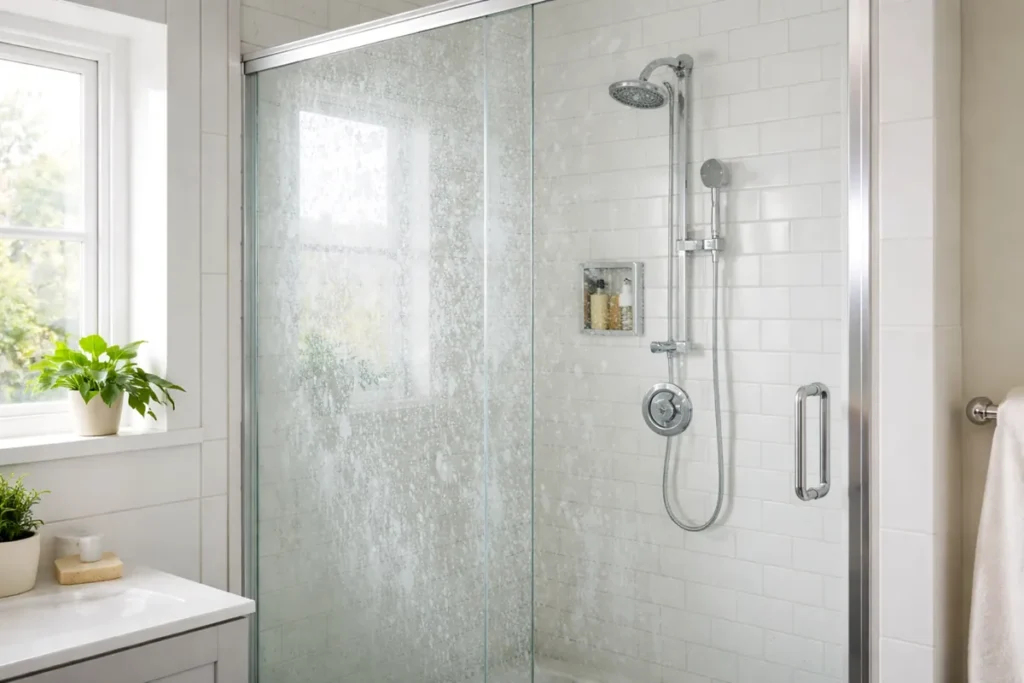
Poor airflow and leftover soap make the problem worse by slowing drying.
Common causes include:
- Water with a high mineral content
- Droplets left to dry after showers
- Soap scum mixing with the mineral film
- Infrequent cleaning of the glass
- Slow drying from weak ventilation
The USGS explains that hard water contains dissolved calcium and magnesium, which helps explain why shower glass can turn cloudy so quickly.
Mineral residue rarely stays on the glass alone, and mineral buildup on faucets often shows up next.
Methods to Get Hard Water Stains Off Shower Glass (Without Scratching Glass)
Start with the mildest method that matches the mess. That helps you get hard water stains off shower glass without adding scratches or dull spots.
1. Warm White Vinegar Spray (Best First Step)
Vinegar helps loosen fresh mineral film and light cloudiness.
How to use it:
- Warm white vinegar slightly
- Spray the glass well
- Let it sit for 10 to 15 minutes
- Wipe with microfiber, then rinse and dry
Best for:
- Light to medium buildup
- Weekly cleaning
2. Vinegar and Dish Soap Mix (For Mixed Residue)
This works well when mineral spots and soap scum are stuck together.
How to use it:
- Mix equal parts white vinegar and dish soap
- Spread or spray it on the glass
- Let it sit for 15 minutes
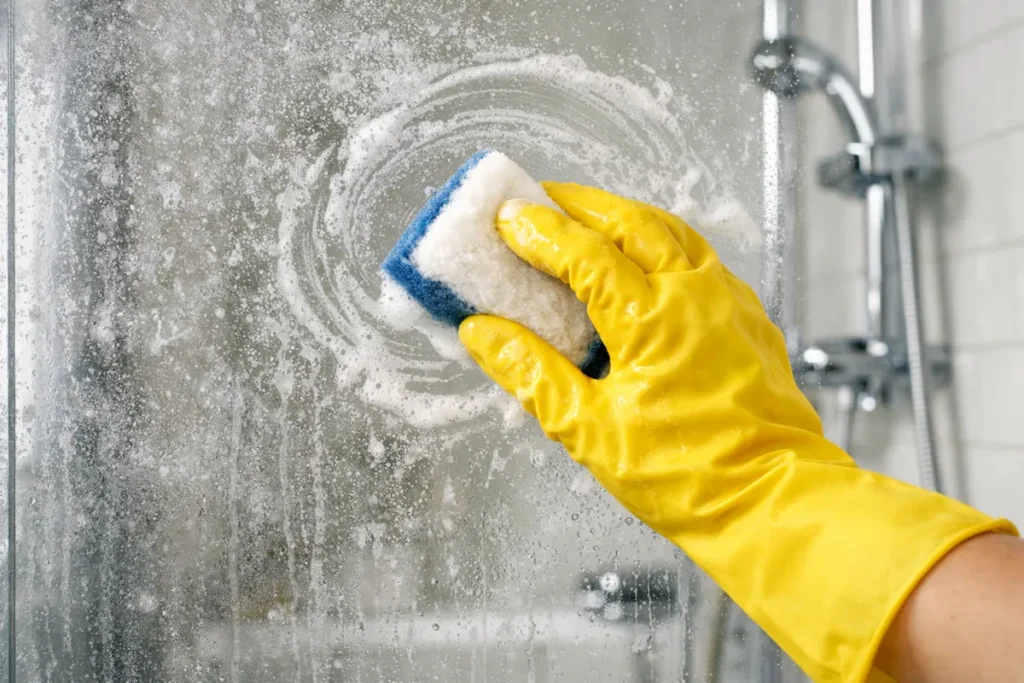
- Wipe with a non-scratch sponge, then rinse and dry
Best for:
- Cloudy shower doors
- Mid-level buildup
The same film often shows up on the shower walls too, especially when soap scum on shower walls starts to build.
3. Baking Soda Paste (For Crusty Edges)
Baking soda adds gentle scrubbing power for thicker spots near corners and the bottom track area.
How to use it:
- Mix baking soda with a little water
- Apply the paste to stained areas
- Let it sit for 5 to 10 minutes
- Rub gently, then rinse and dry
Best for:
- Older buildup on small areas
- Stubborn edges and corners
4. Lemon Juice or Citric Acid (For Light Haze)
This is a good touch-up option when the glass looks dull but not heavily coated.
How to use it:
- Apply lemon juice or a mild citric acid mix
- Let it sit for about 10 minutes
- Wipe with a soft cloth
- Rinse and dry the glass
Best for:
- Mild cloudiness
- People who dislike vinegar smell
5. Commercial Hard Water Cleaner (For Heavy Buildup)
Use this only after gentler methods fail. Test in a hidden spot first if your shower glass has a coating.
How to use it:
- Follow the label directions exactly
- Apply only to the stained area
- Let it sit for the suggested time
- Wipe, rinse well, and dry
Best for:
- Thick mineral residue
- Deep-clean sessions
That same mineral crust often shows up on showerheads too, not just the glass.
What NOT to Do (Avoid Etching and Damage)
A few common mistakes can make the glass look worse.
- Do not use steel wool or rough scrub pads. Fine scratches make future buildup stick faster.
- Do not scrape with a razor unless the maker says it is safe. Coated glass can be damaged easily.
- Do not leave strong cleaners on too long. That can dull finishes or leave uneven marks.
- Do not rub the surface dry first. Grit can drag across the glass and cause streaky results.
- Do not mix random cleaners together. One method at a time is safer and easier to control.
Advanced Tips to Make Cleaning Easier
Small prep steps can save scrubbing time later. They also help each cleaner spread more evenly.
- Warm the glass first with a hot shower for a minute. Residue often loosens faster on a warm surface.
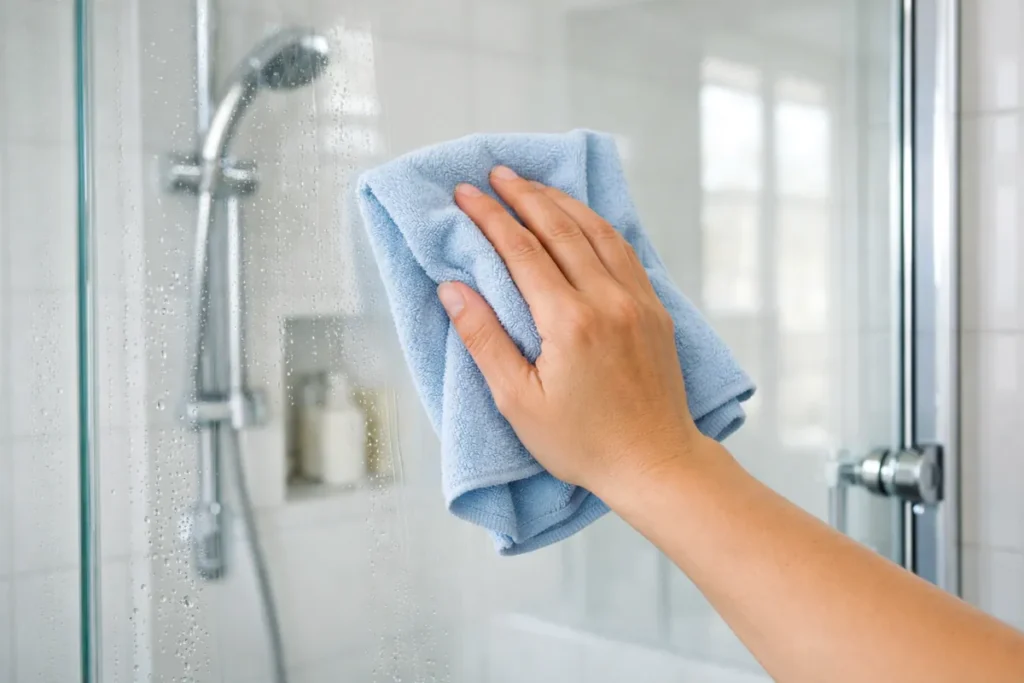
- Use microfiber instead of paper towels. It leaves less lint and buffs the glass better.
- Work from top to bottom. That keeps dirty runoff from landing on cleaned areas.
- Rinse before the final wipe. Loose minerals are easier to remove while still wet.
- Dry the glass right away. This helps you get hard water stains off shower glass without new spots forming during cleanup.
Even clean glass can look dull when streaks dry on it, so keeping it streak-free matters too.
How to Prevent Hard Water Stains on Shower Glass From Building Up Again
A few daily habits stop new spots from settling in.
- Squeegee the door after each shower. It removes droplets before minerals dry in place.
- Wipe edges and handles with microfiber. Those areas often stay wet the longest.
- Run the bathroom fan after showers. Faster drying means less mineral film left behind.
- Do a quick weekly wipe with vinegar. Light maintenance stops thick buildup from forming.
- Use less bar soap if scum is heavy. Liquid wash often leaves less residue on the glass.
Keeping the whole shower clean matters too, especially around tile and grout.
Frequently Asked Questions (FAQ)
How often should shower glass be cleaned?
A quick wipe after showers helps the most. A fuller clean once a week is enough for many homes.
Is vinegar safe for shower glass?
It is usually safe for plain glass. Keep it off nearby natural stone and rinse metal trim well.
What if the first method does not work?
Move to the next stronger option instead of scrubbing harder. Many people start with vinegar, then switch to vinegar and dish soap.
Can I use these methods on framed shower doors?
Yes, but be careful around metal finishes and seals. Apply with control and dry the frame too.
When should I use a commercial product?
Use one when home methods leave thick cloudiness behind. Sometimes you need a stronger product to get hard water stains off shower glass after heavy buildup has been left too long.
Why do hard water stains keep building up?
The minerals return every time droplets dry on the surface. Drying the glass after showers breaks that cycle.
Final Tips
Start gentle and move up only when needed. That protects the glass and keeps the job easier.
Use soft cloths, rinse well, and dry the door every time. Steady upkeep usually works better than one harsh cleaning session.
Our bathroom cleaning guide has more simple ways to keep the whole space easier to manage.
Conclusion
Clear shower doors usually come down to the right method and a few simple habits. Once you know how to get hard water stains off shower glass, it becomes much easier to keep that clean, bright look with less effort each week.