
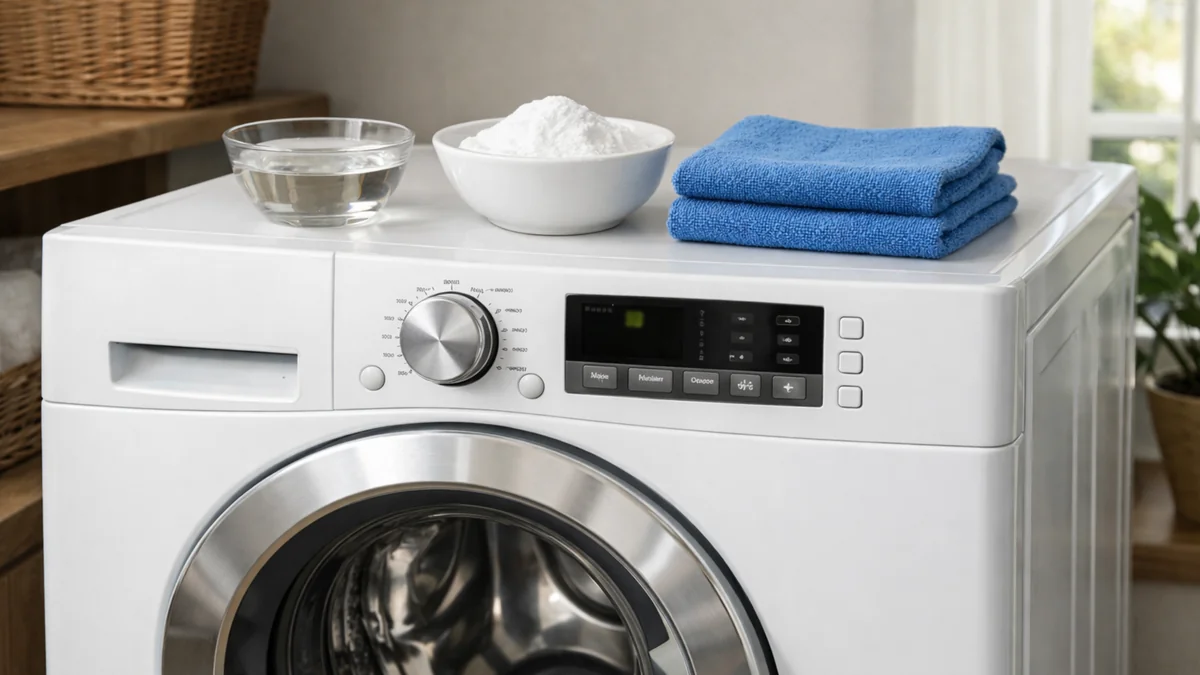
Your washer should make clothes smell fresh, not leave a sour odor behind. Learning how to clean a smelly washing machine helps stop that smell before it reaches your laundry.
Many people try to clean a smelly washing machine by running one extra rinse. That may freshen the drum for a day, but it rarely removes the grime causing the problem.
The smell often builds in damp places you do not see right away. Soap film, lint, and trapped water can sit in the gasket, drawer, filter, and drum.
To clean a smelly washing machine, you need to clear both the odor and the residue feeding it. Once you clean the right spots in the right order, keeping the washer fresh gets much easier.
Table of Contents
What Causes Washing Machine Odors?
Washing machine odors usually start when moisture stays trapped after a load ends. If you clean only the visible drum, the smell can stay behind in smaller parts.
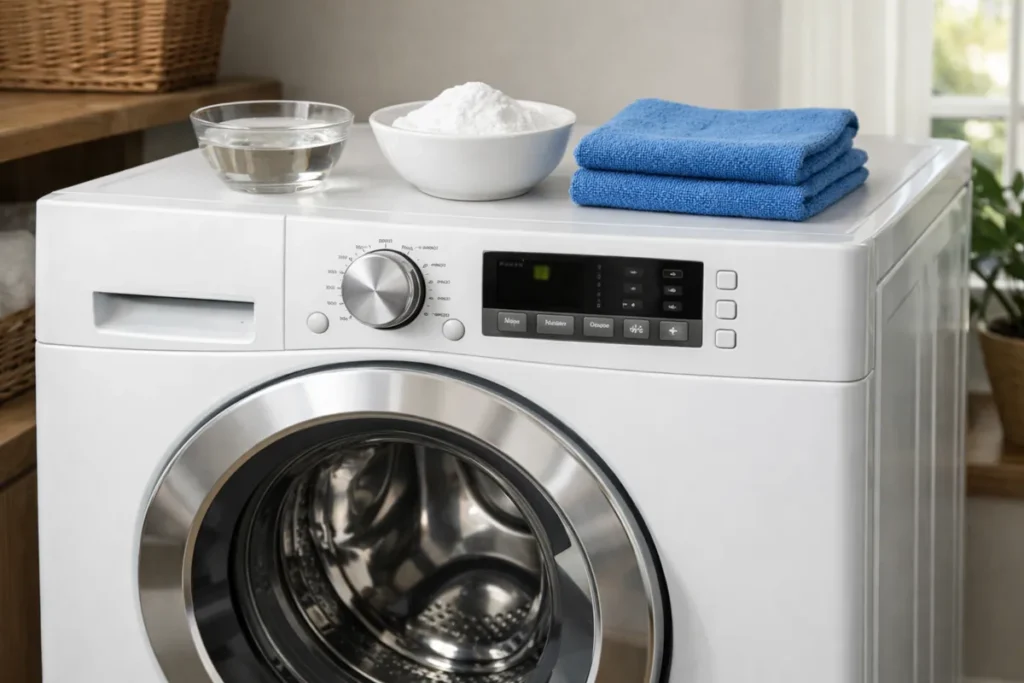
Front-load washers often hold water in the rubber seal, while top-load models may collect residue around the rim. Many homeowners do not clean a smelly washing machine until their laundry starts to smell off.
Common causes include:
- Too much detergent or fabric softener
- A closed door after every wash
- Lint and water trapped in the gasket
- A dirty detergent drawer
- A drain filter holding old water
The EPA notes that mold grows in damp places with ongoing moisture, which is why regular drying and cleaning matter so much in laundry areas.
When the smell seems bigger than the washer, it helps to figure out where the smell is coming from in the rest of your home too.
Methods to Clean a Smelly Washing Machine Naturally (Fresh Results, No Harsh Cleaners)
1. White Vinegar Cycle (Deep drum reset)
White vinegar helps loosen soap film and cut sour smells inside the drum. It is one of the easiest ways to clean a smelly washing machine without stronger cleaners.
How to use it:
- Empty the washer.
- Pour 2 cups of white vinegar into the drum.
- Run the hottest, longest cycle.
- Leave the door open after the cycle.
Best for:
- Musty drum odors
- Light residue
If the odor has already spread to bath linens, wash those next with a routine made for musty towels.
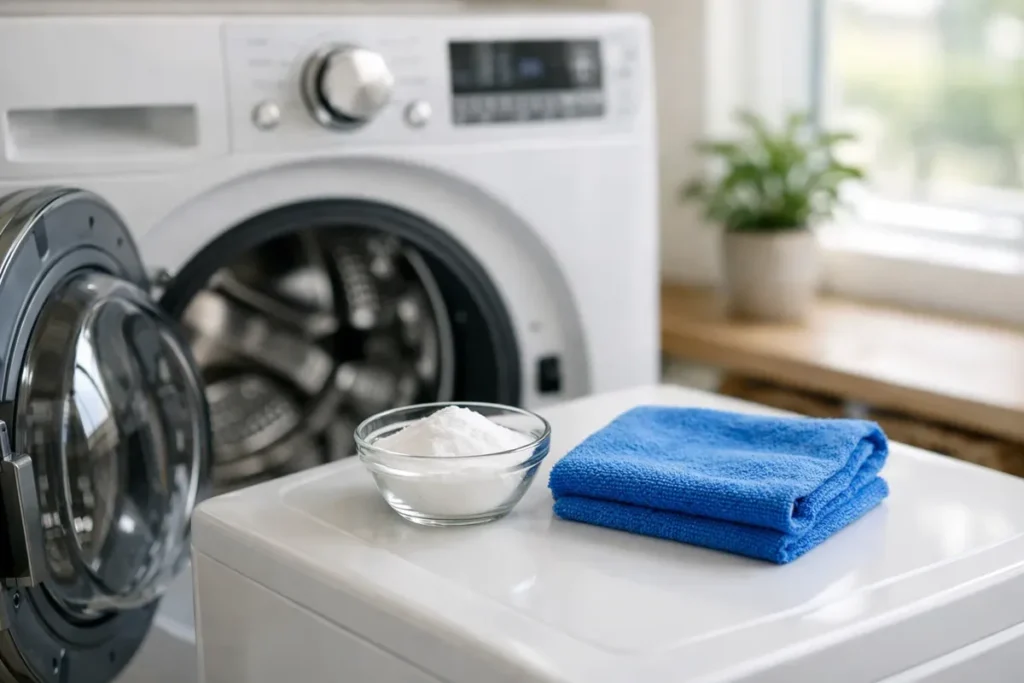
2. Baking Soda Rinse (Odor-lifting finish)
Baking soda helps absorb leftover smells and freshen the inside after a vinegar wash. It works best as a follow-up step.
How to use it:
- Add 1/2 cup of baking soda to the drum.
- Run a short hot cycle.
- Wipe the inside with a microfiber cloth.
Best for:
- Lingering odor
- Routine freshening
3. Door Gasket Wipe (Hidden fold cleanup)
The gasket can trap lint, water, and dark grime in its folds. This area deserves special attention when you clean a smelly washing machine.
How to use it:
- Pull back the rubber seal gently.
- Spray vinegar into the folds.
- Wipe with a soft cloth or toothbrush.
- Dry the area well.
Best for:
- Front-load washers
- Smells near the door
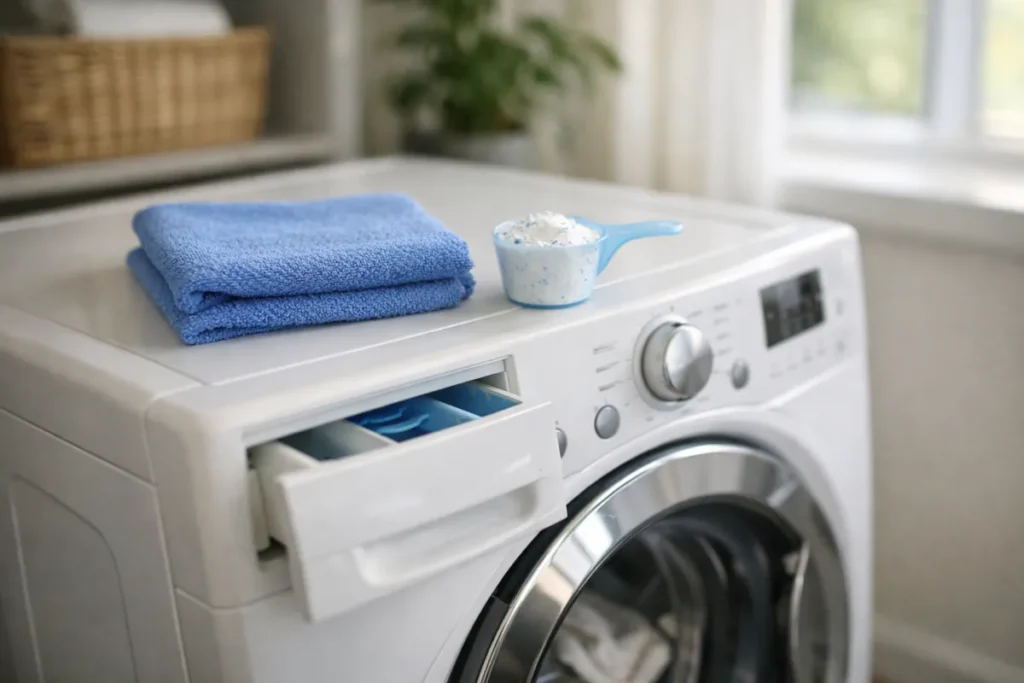
4. Detergent Drawer Soak (Sticky residue fix)
Soap and softener can dry into a sticky layer inside the drawer. Cleaning it removes a hidden source of stale smell.
How to use it:
- Remove the drawer if your model allows it.
- Soak it in warm water with a splash of vinegar.
- Scrub corners with a soft brush.
- Dry it before putting it back.
Best for:
- Sticky compartments
- Heavy liquid detergent use
5. Drain Filter Cleanout (Stale water trap)
A dirty filter can hold lint, hair, and smelly water. Many people forget it, even though it can keep smells trapped in the washer.
How to use it:
- Unplug the machine first.
- Put a towel and shallow pan under the filter area.
- Remove the filter and rinse it well.
- Wipe the housing and reinstall the filter.
Best for:
- Strong sour smells
- Slow draining washers
If loads still come out stale after this, the next step may be treating musty clothes instead of rewashing them with more detergent.
What NOT to Do (Avoid Making the Smell Worse)
A few wrong moves can trap the smell even longer.
- Do not shut the washer door right after a cycle. That seals in moisture and lets the smell build up again fast.
- Do not skip the gasket or filter. A hot wash alone will not clear grime in those spots.
- Do not use rough scrub pads on rubber parts. They can scratch or weaken the seal.
- Do not pour in extra detergent to make the washer smell cleaner. More soap usually means more residue left behind.
- Do not let wet laundry sit for hours. The damp fabric can add even more smell to the machine.
Damp items that sat too long may need extra help with mold on clothes before you store them again.
Advanced Tips to Make Cleaning Easier
Small habits can cut cleaning time next month.
They also help the drum stay fresher between loads.
- Keep a microfiber cloth near the washer for quick wipe-downs after damp loads.
- Measure detergent instead of pouring by eye. Less extra soap means less film to clean later.
- Run one warm or hot load each week if fabric labels allow. That helps rinse away residue from cold-only routines.
- Leave the detergent drawer cracked open between loads so dampness can escape.
That same airflow habit can also help prevent a musty closet if you store laundry in a tight space.
How to Keep Washing Machine Odors From Building Up Again
Steady upkeep keeps damp smells from settling in.
- Leave the door open after each wash. Airflow helps the drum and gasket dry faster.
- Wipe the gasket every few washes. This removes water and lint before they sit.
- Clean the detergent drawer monthly. Even a quick rinse can stop stale buildup.
- Check the filter every month or two. Hidden debris often causes the strongest smell.
- Run a vinegar maintenance cycle once a month. This helps remove residue before odors build up again.
For more fabric-care and washer routines in one place, see the laundry cleaning guide.
Frequently Asked Questions (FAQ)
How often should I clean my washing machine?
A monthly deep clean works well for most homes. If you wash often or use cold cycles, you may need to clean it sooner.
Is vinegar safe for washing machines?
Vinegar is commonly used for routine washer cleaning. It is still smart to check your manual and use moderate amounts.
Can baking soda hurt the drum?
It is generally gentle and useful for odor control. Use it as part of a simple rinse cycle.
Why do my clothes still smell after I clean the washer?
One hidden area may still be dirty, usually the gasket, filter, or drawer. Wet laundry can also cause the same problem.
Do I need a store-bought washer cleaner?
Not always. Many homeowners can clean a smelly washing machine naturally with vinegar, baking soda, and better drying habits.
What should I do if the smell comes back fast?
Check for standing water, too much detergent, or a filter that was only partly cleaned. That usually means moisture is still trapped somewhere.
Final Tips
Start with the gentlest option and work in a smart order. For most washers, that means the drum first, then the gasket, drawer, and filter.
If you need to clean a smelly washing machine, regular upkeep matters more than stronger products. A short monthly routine usually prevents major odors.
The full cleaning guide can also help if you are working through other household messes.
Conclusion
A fresh washer comes from removing moisture and residue, not covering them up. When you clean a smelly washing machine and keep damp areas dry, the smell becomes much easier to manage. With a few steady habits, your machine can stay cleaner and fresher for every load.