
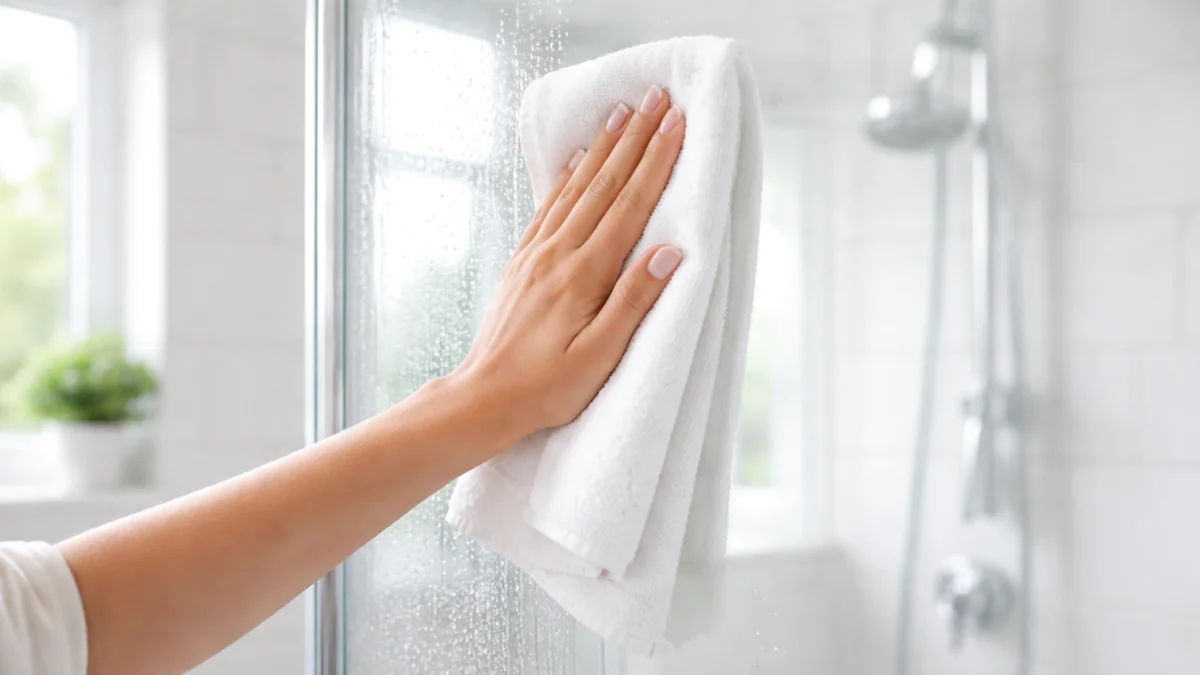
You wipe the shower door, step back, and the glass still looks smeary. Most of the time, it is not dirt. It is leftover film that dries unevenly. To clean a glass shower door without streaks, the trick is removing residue and finishing dry.
Streaks build up from soap, body oils, and product overspray that gets “polished” around. A cloth that is not truly clean can also leave lint and make the problem look worse.
To clean a glass shower door without streaks, use less cleaner than you think you need. Rinse longer, then buff with a dry microfiber cloth so nothing is left to dry in lines.
Below are practical causes, five methods you can rotate, and a simple prevention routine. You can start gentle and still get clear glass.
Table of Contents
What Causes Streaks on a Glass Shower Door?
Streaks show up when something stays on the glass after you “clean.” That leftover layer catches light and looks like haze, smears, or lines.
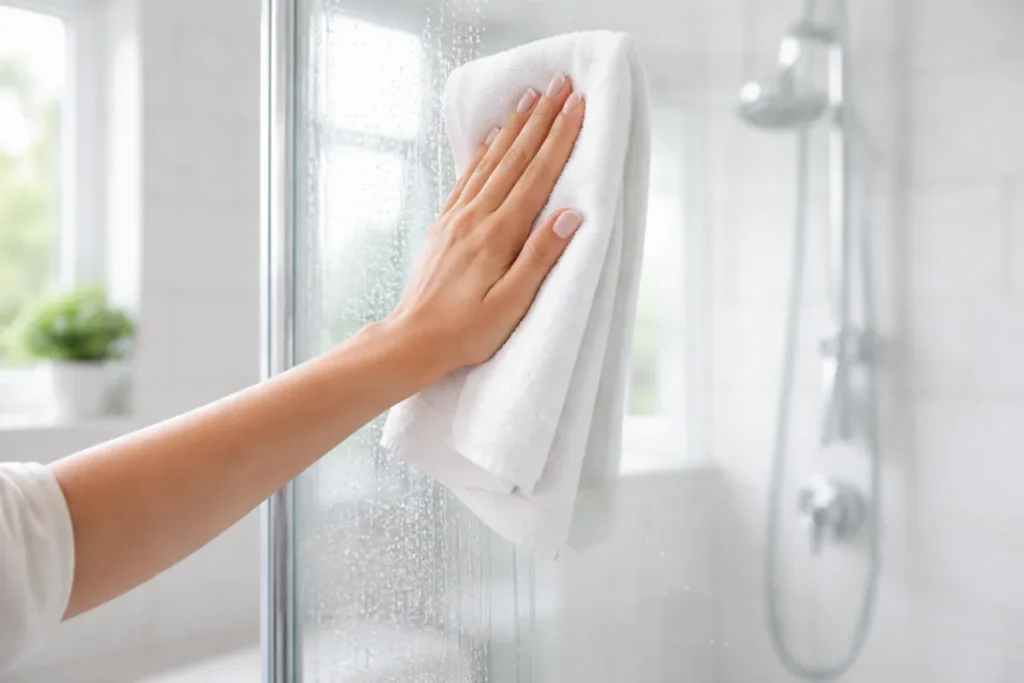
Common reasons streaks show up:
- Soap and body wash film that dries in a thin layer
- Conditioner or styling product overspray that sticks to glass
- Too much spray cleaner, not enough rinsing
- A damp, linty cloth that spreads residue
- Microfiber washed with fabric softener, so it smears
CDC defines cleaning as using water and soap to remove dirt and impurities from surfaces. A light wash-and-rinse helps remove film so less is left on the glass as it dries.
In some bathrooms, what looks like streaking is really hard water film drying back onto the glass.
Methods to Clean a Glass Shower Door Without Streaks (Clear glass, low scrubbing)
Rinse well and finish dry – that is how you clean a glass shower door without streaks most of the time. If your door has a coating, test in a hidden spot first. Then buff with a clean microfiber so the glass dries clear.
1. Daily Warm Rinse + Microfiber Wipe (Stops film from setting)
This works because fresh residue is easiest to lift. A quick wipe keeps you from needing heavy scrubbing later.
How to use it:
- Rinse the door with warm water.
- Wipe top to bottom with a well-wrung microfiber.
- Buff dry with a second microfiber cloth.
Best for:
- Daily upkeep
- Light haze after showers
2. Dish Soap Wash and Rinse (Cuts oils, rinses clean)
Dish soap breaks up oily film and usually rinses away clean. Use a tiny amount so you do not leave a soapy layer behind.
How to use it:
- Add a few drops of dish soap to warm water.
- Wipe the glass with a soft sponge or microfiber.
- Rinse well, then dry buff.
Best for:
- Conditioner and body oil film
- Smears around the handle
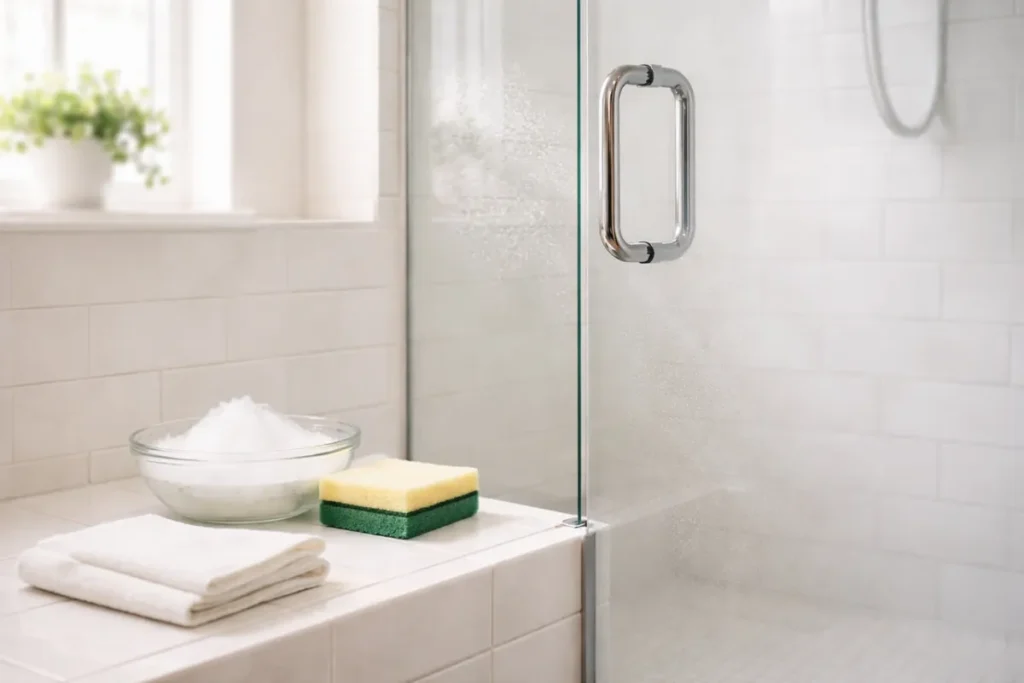
3. Rubbing Alcohol Mist + Buff (Dries fast, fewer streaks)
Alcohol lifts oily residue and evaporates quickly. That fast dry time makes it easier to get a streak-free finish.
How to use it:
- Mix 1 part rubbing alcohol with 3 parts water.
- Lightly mist the glass and wipe in straight passes.
- Flip to a dry side and buff until clear.
Best for:
- Final polishing after washing
- Humid bathrooms
4. Foaming Shower Cleaner for Soap Film (Clings, then releases)
Foaming cleaners cling to vertical glass and soften soap film. Choose a non-abrasive formula and rinse very well.
How to use it:
- Spray foam on the glass and wait as directed.
- Wipe gently with a non-scratch sponge.
- Rinse thoroughly, then dry buff.
Best for:
- A visible film line near the bottom
- When gentle methods fail
Soap film rarely stays on the door alone, so shower wall buildup is often worth cleaning at the same time.
5. Steam, Then Squeegee and Buff (Less residue left behind)
Steam softens residue, and a squeegee removes water evenly. The dry buff at the end catches tiny droplets that turn into streaks.
How to use it:
- Run a hot shower for 3-5 minutes with the door closed.
- Wipe the glass with a damp microfiber cloth.
- Squeegee top to bottom, then do a quick dry buff.
Best for:
- A quick refresh before guests
- Cutting down on too many sprays
For a fuller shower reset, bathroom tile and grout often needs the same steady upkeep as the glass.
What NOT to Do (Protect coatings, avoid scratches)
Streak-free glass depends on the rinse and the dry step.
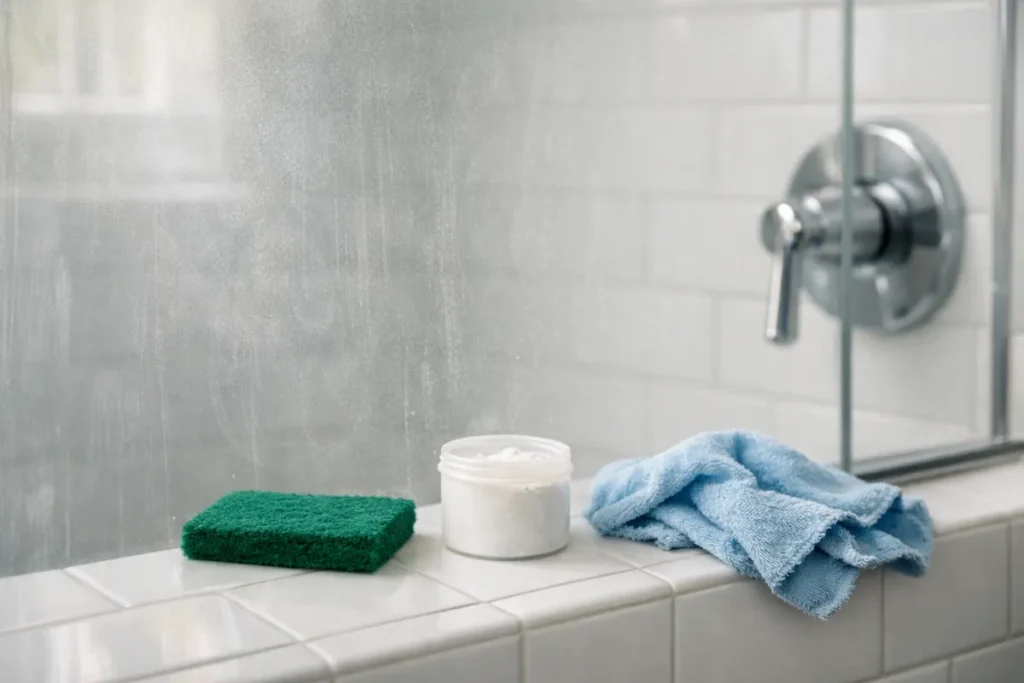
- Do not use abrasive pads or gritty powders. Scratches make glass hold residue and show streaks.
- Do not “shine” with a dirty cloth. Lint and dust get dragged across the surface.
- Do not wash microfiber with fabric softener. It coats fibers and makes them smear.
- Do not overspray cleaner and let it dry on the door. Dried product leaves cloudy lines.
- Do not skip the final dry buff. Air-drying often leaves marks.
The same simple approach works well on other surfaces too, and the full cleaning guide covers more everyday cleaning jobs.
Advanced Tips to Make Cleaning Easier
Build a tiny setup, and streaks stop eating your time. The goal is a cleaner finish with fewer passes.
- Keep two microfiber cloths in the bathroom. One cleans, the other stays dry for buffing.
- Use a squeegee after the last shower of the day. One minute reduces drying marks.
- Clean when the glass is cool, not steaming hot. Heat can dry product before you wipe evenly.
- Apply spray to the cloth, not the door. You control the amount and avoid drips.
- Wash microfiber towels with a free-and-clear detergent. Residue in the towel transfers back.
Mineral residue usually does not stop at the glass, so limescale on faucets is worth dealing with at the same time.
How to Prevent Streaks on a Glass Shower Door From Forming Again
A 60-second after-shower routine can keep the glass clear all week.
- Squeegee the door after each shower. Even pulls remove water in a smooth sheet.
- Finish with a dry microfiber buff. Dry glass does not streak as it dries.
- Keep a “glass-only” cloth. Using it on counters adds grease that smears.
- Vent the bathroom for 15-20 minutes. Lower humidity helps even drying.
- Do a weekly gentle wash. It keeps residue from building up between wipes.
When spray starts hitting unevenly, calcium buildup on showerheads may be part of the reason new spots keep showing up.
Frequently Asked Questions (FAQ)
How often should I clean the shower door to avoid streaks?
A quick rinse and dry after showers helps the most. Do a fuller clean about once a week.
What is the best cloth for a streak-free finish?
A tight-weave microfiber cloth works best. Use one damp cloth to clean and a second dry cloth to buff.
Why does my door look streaky right after I clean it?
Most often it is leftover product or a towel that is not truly clean. Rinse longer, then buff dry.
Is it okay to use a store-bought glass cleaner in the shower?
Yes, as long as it is made for glass and you do not overspray. Use a light mist, rinse, and finish dry.
What if the first method does not work?
Wash with dish soap first, then follow with the alcohol mist and buff. The combo removes residue and helps the surface dry clear.
Will a water-repellent coating stop streaks?
It can reduce how much film sticks to the door. You still get the best look when you squeegee and dry buff.
Final Tips
Once you learn how to clean a glass shower door without streaks, the routine gets easier. Start gentle, rinse well, and never skip the dry buff.
To clean a glass shower door without streaks, focus on clean tools as much as the glass itself. A fresh microfiber and a quick squeegee do more than a stronger spray.
For a more complete reset, our bathroom cleaning guide can help you clean the rest of the space with the same simple approach.
Conclusion
Most streak problems are residue problems. A longer rinse and a true dry finish are what make the glass look clear. With a few small habits, you can clean a glass shower door without streaks and keep it looking good between deeper cleans.