
Sticky cabinet doors can make a kitchen feel grimy. To remove grease from kitchen cabinets, start with gentle steps before using a stronger spray.
Most buildup comes from normal cooking. Oil, steam, and splatters settle on doors and handles, then grab dust.
Many people scrub too hard and end up with streaks or a faded spot. It is better to remove grease from kitchen cabinets in layers, starting with the mildest method first.
Once you know where the stickiness comes from, the cleanup gets easier. It is also easier to remove grease from kitchen cabinets before the residue turns thick and yellow.
Table of Contents
What Causes Grease Buildup on Kitchen Cabinets?
Grease buildup usually starts during cooking. Frying and simmering send oily moisture into the air, where it settles on nearby surfaces.
Cabinets beside the stove collect the most film, but upper doors and handles can get sticky. That is why many homeowners need to remove grease from kitchen cabinets even when they never see a splatter.
Common causes include:
- Cooking with oil
- Frying without a lid
- Leaving the hood off
- Skipping quick wipe-downs
- Letting residue sit for months
The EPA notes that cooking can increase indoor particulate matter, which helps explain why greasy residue may settle beyond the stovetop.
The same greasy air can also settle around oven racks, especially in kitchens where cooking residue has been building up for a while.
Methods to Remove Grease From Kitchen Cabinets (Without Dulling Finish)
Start with the gentlest method. If that is not enough to remove grease from kitchen cabinets, move up one level instead of scrubbing harder.
1. Dish Soap and Warm Water (Best first step)
Dish soap breaks down cooking oils without being too harsh. For many homes, this is enough.
How to use it:
- Mix warm water with a few drops of dish soap.
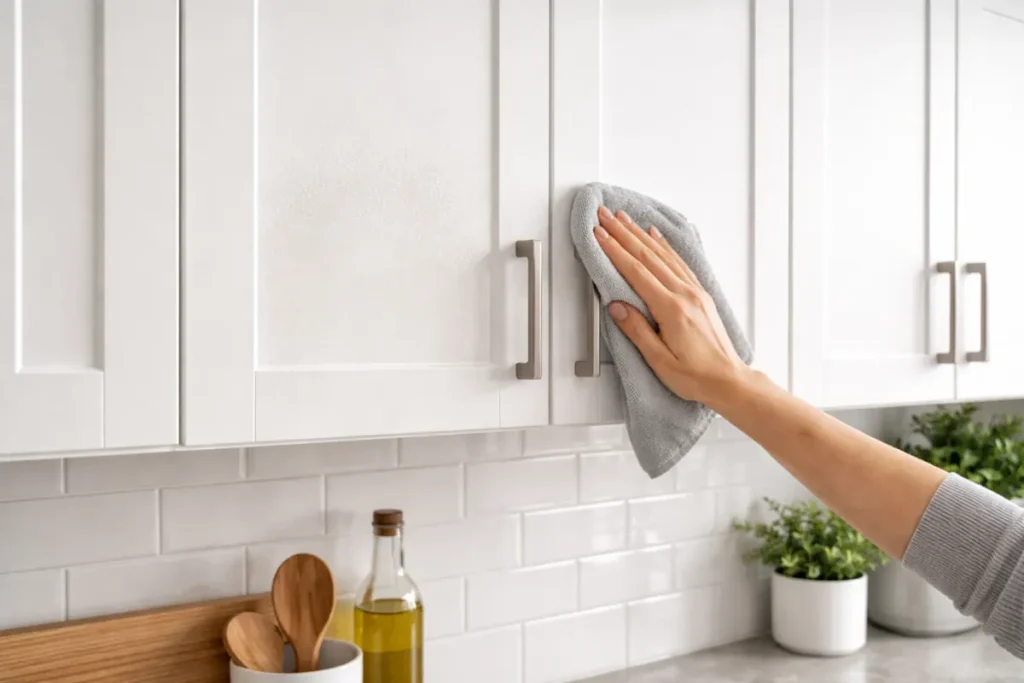
- Wipe with a well-wrung microfiber cloth.
- Clean small sections, then dry with a soft towel.
Best for:
- Light buildup
- Painted, laminate, or sealed wood cabinets
2. White Vinegar and Water (For Light Sticky Grease)
Diluted vinegar can loosen sticky film and make wiping easier. Test in a hidden spot first.
How to use it:
- Mix equal parts vinegar and warm water.
- Spray onto a cloth, not the cabinet.
- Wipe, then follow with a damp cloth and dry.
Best for:
- Sticky doors
- Sealed painted or laminate finishes
3. Baking Soda Paste (For stubborn patches)
Baking soda adds mild scrubbing power for small greasy spots. Use a light hand so you do not dull the finish.
How to use it:
- Mix baking soda with a little water.
- Rub the paste on with a damp cloth.
- Wipe clean and dry the area.
Best for:
- Grease near handles
- Thick patches above the stove
4. Hot Microfiber Cloth (For fresh residue)
Warmth can soften fresh grease so it lifts faster. This is a handy way to remove grease from kitchen cabinets after cooking.
How to use it:
- Wet a microfiber cloth with hot tap water.
- Wring it out until damp.
- Press, wipe gently, and dry.
Best for:
- Fresh grease
- Quick touch-ups
5. Mild Cabinet-Safe Degreaser (For Heavy Buildup)
If home methods fall short, a cabinet-safe degreaser can cut older layers. Test in a hidden spot first.
How to use it:
- Choose a product labeled safe for cabinets.
- Spray it onto a cloth unless the label says otherwise.
- Wipe one small section at a time, then dry well.
Best for:
- Old yellow buildup
- Long ignored grease
After the cabinets, a quick wipe of the stainless sink helps the whole area feel clean.
What NOT to Do (Avoid Finish Damage)
A few wrong moves can strip shine fast.
- Do not soak cabinet doors with water or cleaner. Extra moisture can seep into seams and cause swelling over time.
- Do not use steel wool or rough scrub pads. They can scratch paint, dull laminate, and leave marks that collect more grime later.
- Do not spray cleaner into hinges or hardware. Liquid can sit in those spots and make them sticky or rusty.
- Do not jump straight to the strongest degreaser. You may remove grease from kitchen cabinets, but you can also leave the finish faded or patchy.
Before assuming you need a stronger cleaner, it may help to check your hood filters, since trapped grease there can add to the sticky film around the stove.
Advanced Tips to Make Cleaning Easier
Small tricks can cut scrub time by a lot. They also help cleaners work with less effort.
- Clean the top edges first. That keeps loosened grime from dropping onto doors you already wiped.
- Switch to a fresh cloth when the first one looks dirty. A clean cloth lifts residue better.
- Wrap a cloth around an old card for grooves and corners. It helps you reach trim lines more easily.
- Buff with a dry microfiber cloth at the end. That final pass can remove haze.
If grease has spread beyond the cabinets, a gentle microwave cleanup is another easy place to start.
How to Prevent Grease Buildup on Kitchen Cabinets From Building Up Again
A short routine keeps sticky film from taking over.
- Run the range hood every time you cook. Better airflow moves oily moisture away from cabinet surfaces.
- Use lids or splatter screens when frying. This cuts down on airborne grease before it reaches nearby doors.
- Wipe cabinets near the stove once a week. Fresh residue is much easier to clean than old sticky film.
- Deep clean the stove area every month or two. A regular reset keeps small buildup from turning into a tougher job.
The same cooking film often lands on your greasy backsplash, so cleaning both surfaces together can keep the whole stove area from feeling sticky again.
Frequently Asked Questions (FAQ)
How often should kitchen cabinets be degreased?
Cabinets near the stove usually need a quick wipe every week or two. A deeper clean every month or two helps keep the film from getting thick.
Is vinegar safe for all cabinet finishes?
No. It is often fine when diluted on sealed surfaces, but some finishes need more caution. Test in a hidden spot first.
Can baking soda scratch cabinets?
It can if you scrub hard or use it on a glossy surface. Keep the paste soft, use light pressure, and stop if the finish starts to look dull.
What if dish soap does not work?
Step up slowly. Try diluted vinegar next, then a paste for stubborn spots. Use a cabinet-safe degreaser only when gentler methods fail.
Should I spray cleaner directly on the cabinet?
Usually no. Spraying onto a cloth gives you more control and lowers the chance of drips.
Why do my cabinets feel sticky again so fast?
Grease builds up faster when the hood stays off and frying happens often. A weekly wipe makes it easier to remove grease from kitchen cabinets before the film gets heavy again.
Final Tips
Start with the mildest method. That gives you the best chance of cleaning the surface without harming the finish.
Use soft cloths, small sections, and only enough moisture to lift the film. Once you remove grease from kitchen cabinets, a simple wipe-down routine keeps the job from growing into a bigger project.
For a broader reset around the stove, sink, and other greasy surfaces, the kitchen cleaning guide can help you tackle the rest in a simple order.
Conclusion
Clean cabinet doors can brighten the kitchen. When you remove grease from kitchen cabinets with gentle methods first, you protect the finish and make future wipe-downs much easier.