
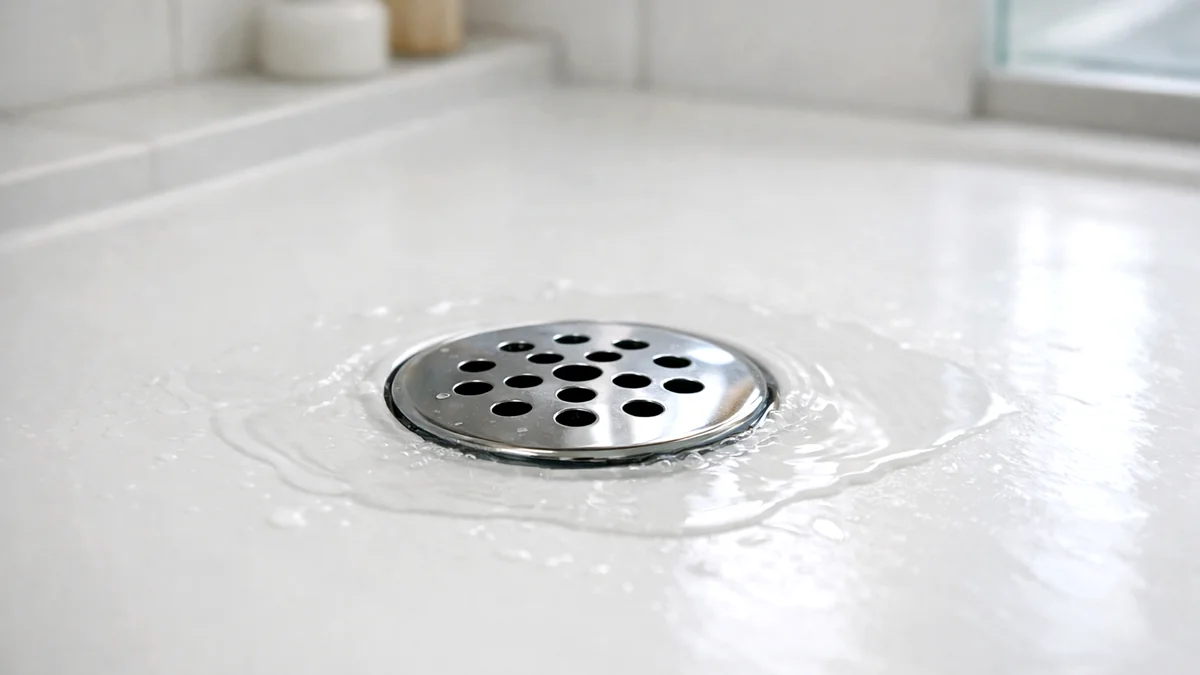
Water pooling around your feet gets annoying fast. Knowing how to unclog a shower drain matters because most shower clogs start near the top, not deep in the plumbing.
Hair, soap film, and sticky product residue usually build up together. That is why many people can unclog a shower drain with manual removal before they need anything stronger.
Many people make the job harder by pouring in something strong too soon. A safer method keeps the next step manageable and helps you see what is actually blocking the drain.
The best approach is to start with simple checks, remove what you can reach, and test as you go. Most slow drains improve once the top layer is cleared.
Table of Contents
What to Check First
Before you try to unclog a shower drain, look at the obvious trouble spots first. A quick check can tell you whether this is a normal hair clog or a bigger issue.
- Whether water is slow or fully standing
- Whether the stopper or cover lifts out easily
- Whether hair is visible near the opening
- Whether soap or conditioner residue is coating the drain
- Whether another drain is also acting up
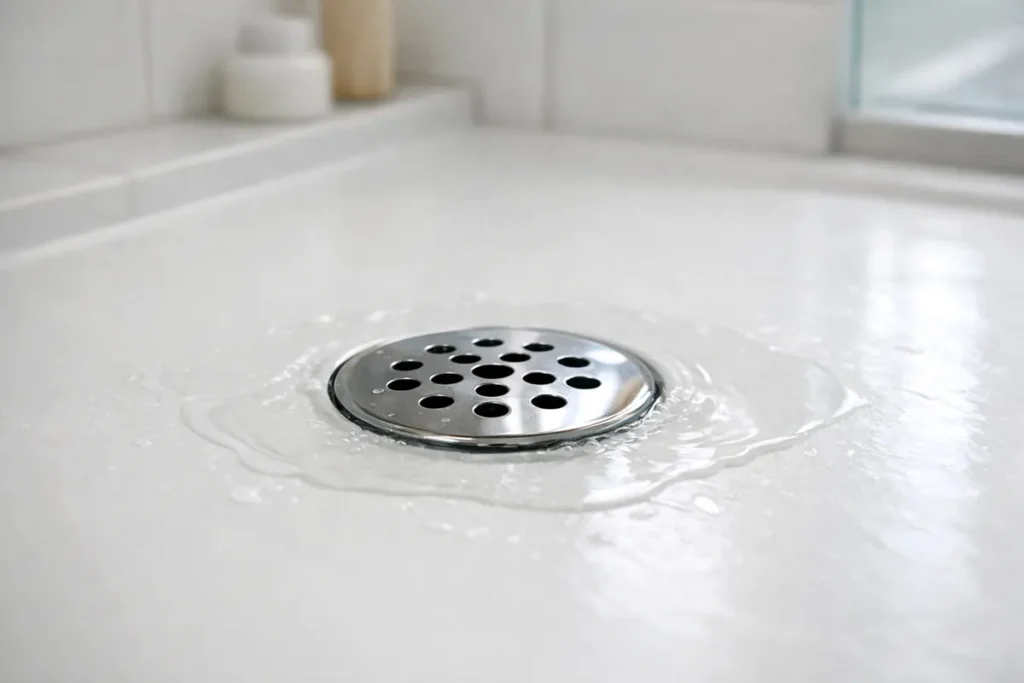
The CPSC says never mix household care products unless the label directs it, which matters if a previous drain cleaner may still be in the pipe.
If the odor feels stronger than the clog itself, a sewer smell may point to a different bathroom drain issue.
Best Ways to Unclog a Shower Drain (Hair First, Then Flush)
Most people can unclog a shower drain by removing hair first, then flushing away softer buildup. Work in small rounds so you do not push the clog deeper.
1. Remove the Stopper and Pull Surface Hair (Start High)
Most shower clogs sit right under the stopper or cover. Clearing that top layer often helps right away.
How to do it:
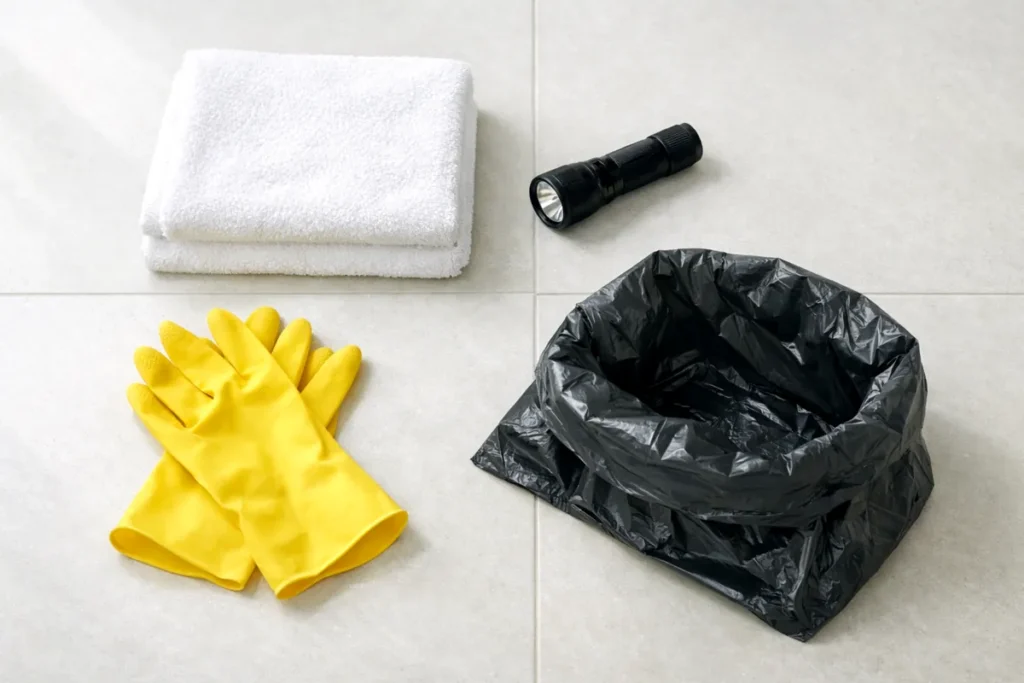
- Put on gloves and place a towel nearby
- Remove the stopper or lift out the cover if it comes out easily
- Pull out visible hair with your fingers or tweezers
- Rinse with hot tap water and test
Best for:
- Fresh clogs near the top
- Slow drains with visible hair
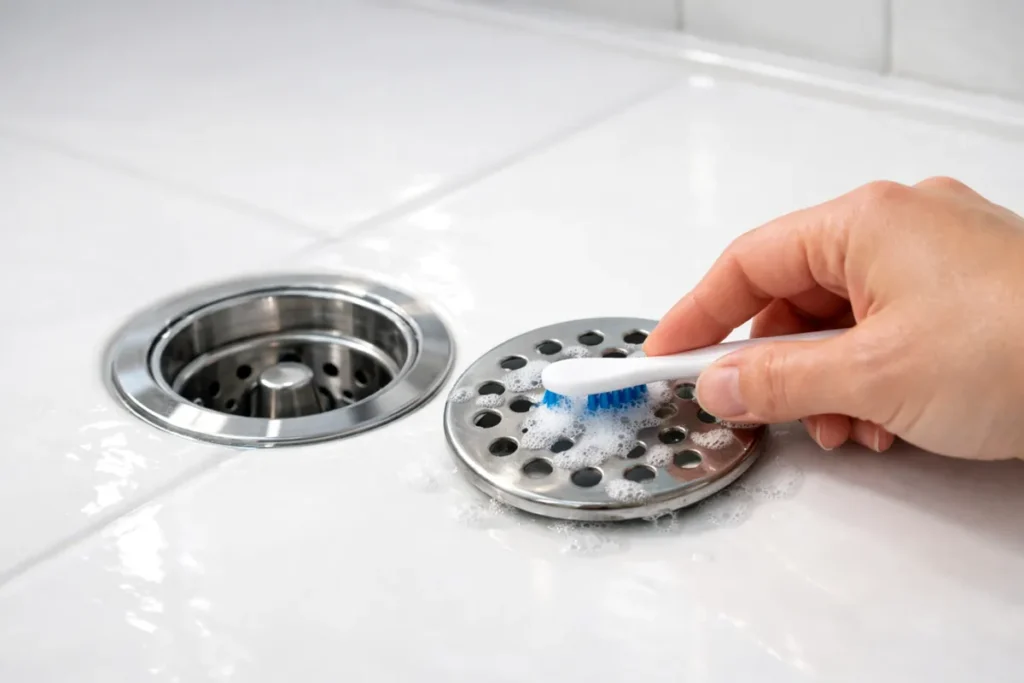
2. Clean the Drain Opening and Cover (Clear the Sticky Ring)
Hair sticks harder when the opening is coated with residue. Cleaning that ring helps water move and slows future buildup.
How to do it:
- Scrub the cover with dish soap and an old toothbrush
- Wipe the inside rim of the drain opening
- Remove loosened residue with a paper towel
- Test with hot water
Best for:
- Soap-heavy buildup
- Drains that slow again quickly
Hair tends to stick faster when soap scum starts building up nearby.
3. Flush With Hot Water and Dish Soap (Loosen Soft Buildup)
This works best on soap film and product residue, not a thick plug of hair. Use hot water, not a rolling boil.
How to do it:
- Add a few drops of dish soap into the drain
- Wait one minute
- Pour in hot water in two small rounds
- Pause and check the flow
Best for:
- Light residue
- Drains that are slow, not fully blocked
Weak spray can leave more residue behind, and mineral buildup on the showerhead is often part of the problem.
4. Use Baking Soda and Vinegar (Mild Help Only)
This method is natural, but it is best for light residue and mild odor. Dense hair usually needs manual removal first.
How to do it:
- Pour in about 1/2 cup baking soda
- Add about 1 cup white vinegar
- Let it sit for 10 to 15 minutes
- Flush with hot water and test
Best for:
- Mild slow drains
- A follow-up after surface hair removal
5. Use a Plastic Hair Tool (Deeper Pull, Less Risk)
If the clog sits a little lower, a plastic zip tool can usually grab it without much risk. Go slowly and pull upward in one steady motion.
How to do it:
- Remove the stopper again
- Slide the tool in gently until you feel resistance
- Twist slightly and pull up
- Wipe off the debris and test with hot water
Best for:
- Deeper hair clogs
- Drains that only partly improve after surface cleaning
What Not to Do (No Force, No Fumes)
A shower drain usually responds better to patience than force. The wrong shortcut can waste time or make the problem worse.
- Do not use a natural mix if a chemical opener was used recently
- Do not shove a wire hanger or sharp tool down the pipe
- Do not pour fully boiling water into the drain
- Do not force stuck screws or pry hard at the cover
- Do not ignore repeated backup in other drains
A slow bathroom sink usually needs its own fix instead of the same shower-drain method.
Advanced Tips to Make the Fix Easier
A few small habits make this fix cleaner and smoother.
- Use a flashlight so you can see where the hair is sitting
- Keep a trash bag beside you for wet debris
- Take a photo before removing parts that may need reassembly
- Test after each step instead of stacking methods
- Protect the shower floor with an old towel
How to Prevent New Shower Drain Clogs
After you unclog a shower drain, a little maintenance usually prevents the next clog.
- Use a hair catcher and empty it often so loose strands stop at the surface
- Pull visible hair from the drain area after showers so it does not compact
- Flush with hot water once a week to move soft residue early
- Rinse the stopper now and then so buildup does not hide underneath
- Go lighter on heavy hair products in the shower when possible
A quick wipe of the shower door glass at the same time can make the whole shower routine easier to keep up.
Frequently Asked Questions (FAQ)
Can I clear a shower drain naturally if water is fully standing?
Yes, but start with manual removal first. Pull surface hair, then use a plastic tool before trying any flushing method.
Is baking soda and vinegar enough for a hair clog?
Usually not by itself. It helps more with residue than with thick clumps of hair.
What is the safest tool for a beginner?
A plastic hair snake is usually the safest choice. It is easier to control than a metal tool near the opening.
Why does the drain clog again so fast after I clear it?
The top layer may be gone while residue is still coating the drain. A poorly fitting stopper or missing hair catcher can also cause repeat clogs.
Is it okay to try a natural method after a drain cleaner?
Not until you know the drain is safe to handle. The CPSC says household care products should not be mixed unless the label directs it.
When should I call a plumber?
Call if the shower stays blocked after manual removal or if other drains are backing up too. That can point to a deeper clog farther down the line.
Final Tips
Start with what you can see. Hair near the top is more common than a major plumbing problem.
Most people can unclog a shower drain with gloves, patience, and one safe tool. Test after each step, and stop when the job starts feeling bigger than a basic home fix.
A careful method usually works better than a harsh one.
Conclusion
A slow shower drain is frustrating, but it is often very fixable with calm, low-risk steps. Once you unclog a shower drain, a small weekly routine can help keep hair and residue from building up again.