
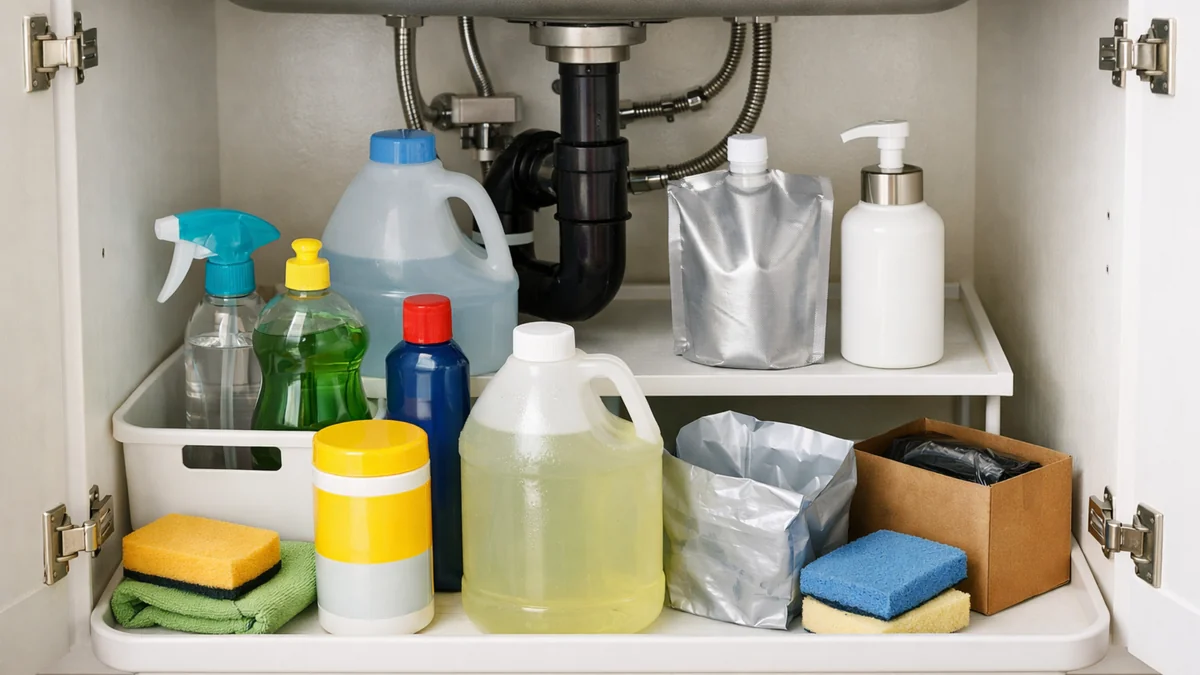
Small under-sink areas turn chaotic fast. Learning how to organize under-the-sink storage helps stop the pileup before it starts.
This space often holds too many jobs at once. Cleaners, trash bags, sponges, extra soap, and random backups end up in a cramped spot.
The problem is not always the amount of stuff. Often, the setup works better when the layout matches what you actually reach for every day.
A better setup saves time, cuts visual mess, and makes resets easier.
Table of Contents
Why This Gets Messy, Cramped, or Hard to Use
Most under-sink cabinets fail because they mix categories, block access, and waste vertical room. Each item needs a reason to be there and a place to return to when you organize under-the-sink storage for real life.
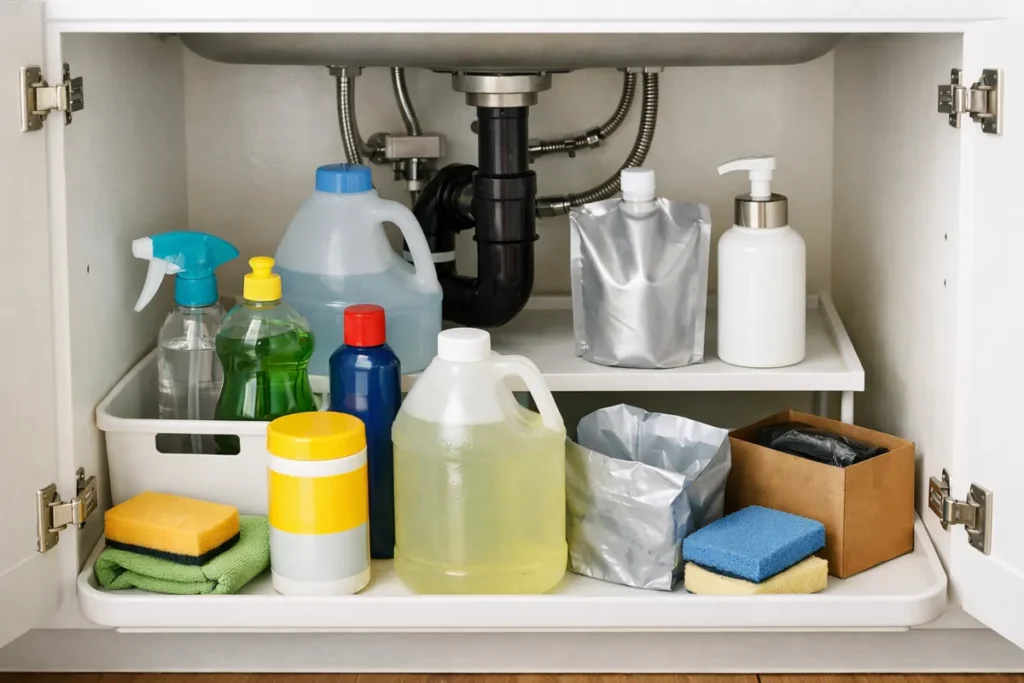
Common reasons this area stops working:
- Too many item types are stored together
- Daily-use products get blocked by backups
- Empty vertical space goes unused
- Loose items slide around and hide in corners
- The cabinet becomes a catch-all for extras
The CPSC notes that household cleaning supplies should be stored in a locked cabinet or box and out of the reach of children.
Best Ways to Organize Under-the-Sink Storage (Tight Space, Better Flow)
Start with the changes that remove the most friction. Once access feels easier, the cabinet gets easier to maintain.
1. Build Clear Zones First (Stop the Mixing)
Zones cut decision fatigue. They help you organize under-the-sink storage by making similar items easy to spot and return.
How to set it up:
- Pull everything out
- Group items into simple categories
- Choose 3 to 5 zones only
- Keep each zone in one part of the cabinet
Best for:
- Cabinets with mixed supplies
- Shared cleaning products
- People who lose track of what they own
2. Keep Daily-Use Items Front and Center (Less Reaching)
The front of the cabinet should hold the products you grab most often. This setup works best when storage follows real habits.
How to set it up:
- Put daily-use items near the door
- Keep tall spray bottles upright and visible
- Move backups and refills behind them
- Leave a little open space for quick returns
Best for:
- Busy kitchens and bathrooms
- Fast evening resets
- Anyone who wants less digging
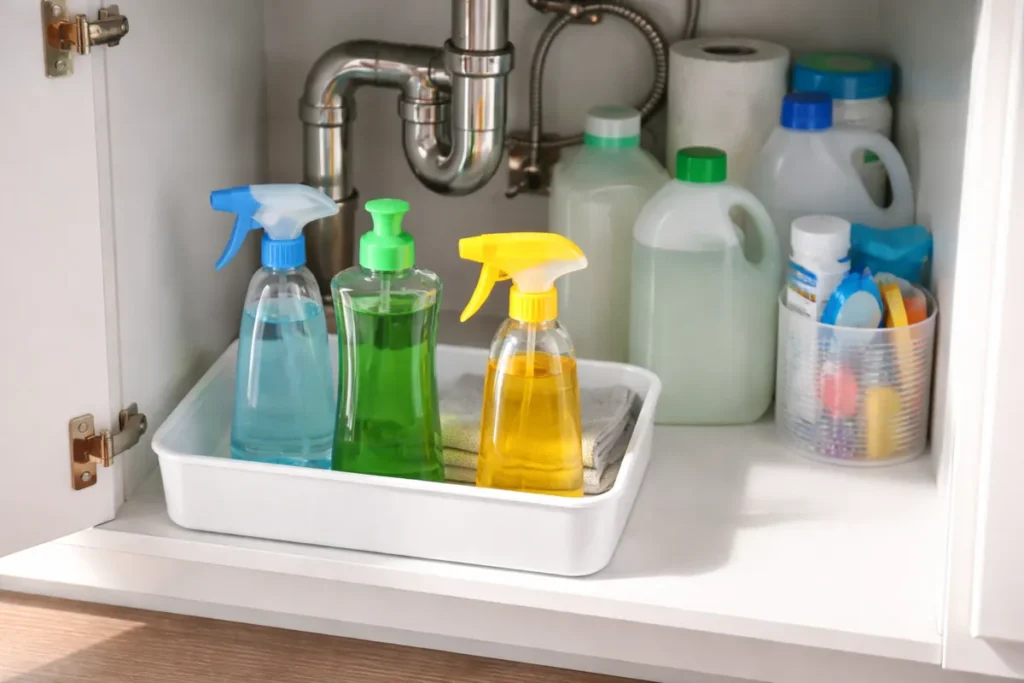
3. Use Vertical Space Around Plumbing (More Room Without More Stuff)
Pipes often make the cabinet feel smaller than it is. A small shelf, riser, or bin can add usable room without fighting the layout.
How to set it up:
- Measure around the pipe area first
- Add a short shelf where height is wasted
- Use stackable bins only if they stay easy to lift
- Leave pipe access clear
Best for:
- Short but deep cabinets
- Cabinets with a wide center pipe
- Homes with limited storage elsewhere
Leaving the pipe area open also makes it easier to deal with a clogged sink when that problem comes up.
4. Separate Refills From Daily-Use Supplies (Cut the Overflow)
Too many extras in the main zone make the cabinet feel full all the time. This approach helps organize under-the-sink storage without buying much.
How to set it up:
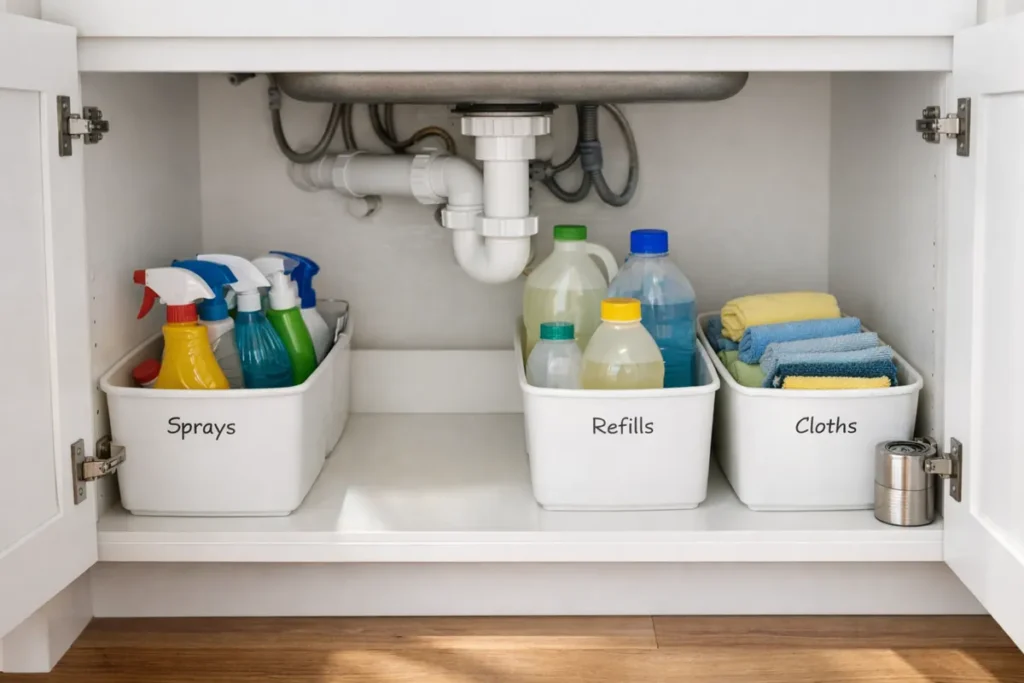
- Choose one small bin for refills only
- Limit duplicates to what you can use soon
- Keep active items outside the refill bin
- Move overflow to another storage area if needed
Best for:
- Bulk buyers
- Sale-stocked items
- Cabinets that always feel crowded
5. Use Containment Only Where It Solves a Problem (Neat That Lasts)
Bins are useful when they stop sliding, leaking, or category mixing. Use containers with a real job instead of adding them just for looks.
How to set it up:
- Use one open bin for cloths or sponges
- Add a tray under leak-prone bottles
- Use narrow bins for small tools
- Skip lids unless they truly help
Best for:
- Loose small items
- Drip-prone products
- People who want low-effort upkeep
A tray under drips also makes keeping the sink clean easier over time.
Mistakes That Waste Space or Create Clutter (Pretty but Hard to Keep)
A setup can look tidy and still fail quickly. A rushed day will expose weak systems, so organize under-the-sink storage in a way that feels easy to follow.
- Keeping too many categories in one cabinet. This creates visual noise and makes simple items harder to find.
- Hiding daily-use products behind backups. The area looks fuller and becomes annoying to use.
- Buying bins before sorting the contents. Containers cannot fix a bad layout by themselves.
- Storing things by habit instead of frequency. Rarely used items often take the best spots for no reason.
- Leaving no reset space. When every inch is packed, nothing goes back neatly.
Advanced Tips to Make This Setup Work Better
Small rules make this space easier to maintain. You do not need a perfect system, just one that is quick to reset.
- Set a space limit for each category. When the bin is full, that category is full.
- Use one label word at most. Short labels are easier to follow at a glance.
- Keep one empty spot near the front. It gives you drop space during busy days.
- Do a duplicate check before buying more. This helps prevent silent overflow.
- Review the cabinet when seasons change. Some products may belong somewhere else part of the year.
These same reset rules can also help with organizing busy areas around the house.
How to Keep It Organized
Light upkeep beats full redoing. Tiny reset habits help organize under-the-sink storage for real life.
- Put items back by zone after each use. This stops slow category drift.
- Wipe spills as soon as you see them. Clean surfaces keep bins from sticking and sliding.
- Toss empties during your normal cleaning routine. Small trash builds clutter fast in tight spaces.
- Check duplicates once a month. Fewer extras means easier access.
- Rework one bad zone instead of the whole cabinet. Small fixes are easier to keep.
These low-effort reset habits also help with keeping dust down in other parts of the house.
Frequently Asked Questions (FAQ)
How often should I reset under-the-sink storage?
A full reset every few months is usually enough. Weekly check-ins do most of the work.
What if the cabinet is very small?
Use fewer categories and keep only the items you use there often. Small spaces work better with tighter limits.
Do I need bins to make this work?
Not always. Bins help when items slide, leak, or mix together, but the layout matters more than the products.
Where should I keep backups and refills?
Keep a small amount in the cabinet only if there is room. The rest can go to a closet, shelf, or laundry area.
Can this setup work for a family?
Yes, but the zones need to be obvious. Fewer categories and simple labels make shared use much easier.
What should I do if the system stops working?
Look for the one part people ignore or overload. Often, one bad category is making the whole space feel messy.
Final Tips
The best setups are not the prettiest ones. They are the ones you can use without thinking too much.
Keep similar items together, keep daily products easy to grab, and keep extras under control. A better way to organize under-the-sink storage is to make the cabinet support your routine instead of slowing it down.
Open space matters. It gives the area breathing room and makes quick resets feel possible.
Extra breathing room can also help prevent musty closet smells in other closed storage areas.
Conclusion
A small cabinet can work surprisingly well with the right layout. When you organize under-the-sink storage around access, limits, and simple zones, the space feels calmer and easier to use every day.