
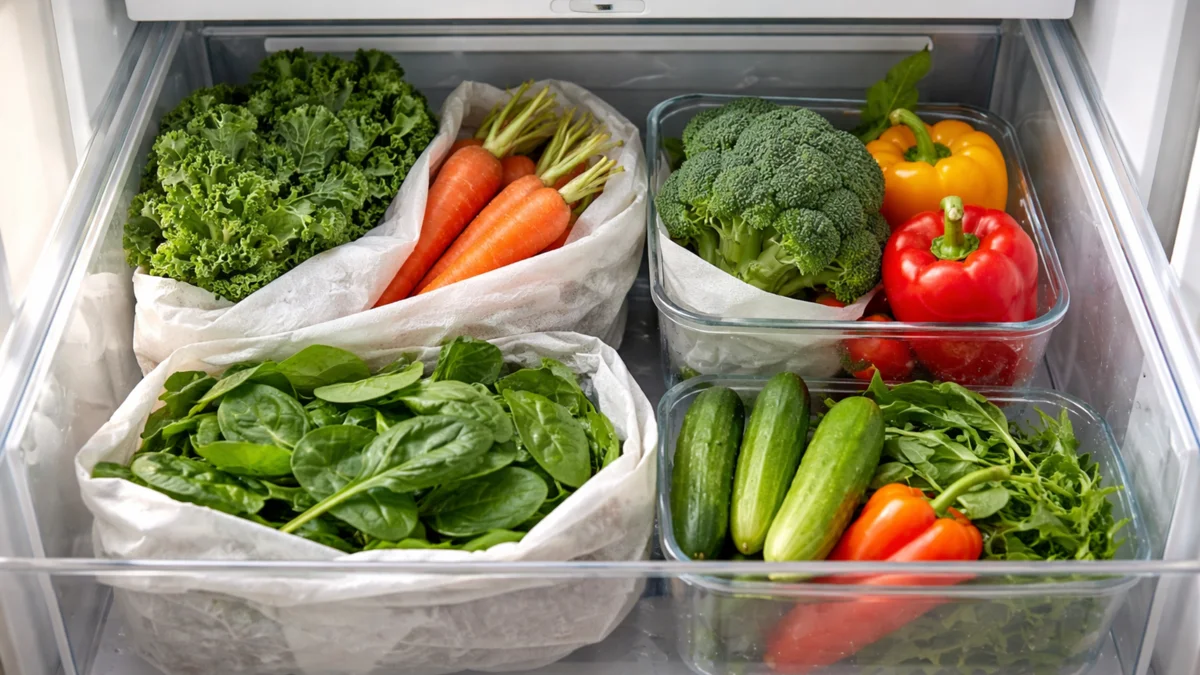
Good vegetables often go bad in quiet ways. One damp bag, one crowded drawer, or one warm fridge spot can ruin your plan for how to keep vegetables fresh longer.
The problem is usually trapped moisture, poor airflow, and storing the wrong items together, which makes it harder to keep vegetables fresh longer from one grocery trip to the next.
That is why small storage rules work so well. A paper towel or quick produce check can save texture and money.
You do not need a full kitchen reset to fix this. A few smart habits can help you keep vegetables fresh longer and waste less during the week.
Table of Contents
Why Vegetables Lose Freshness
Most people fail to keep vegetables fresh longer because produce reacts fast to moisture, heat, pressure, and ripening gases from nearby foods. Even good vegetables can turn soft or slimy early when storage is a bad fit.
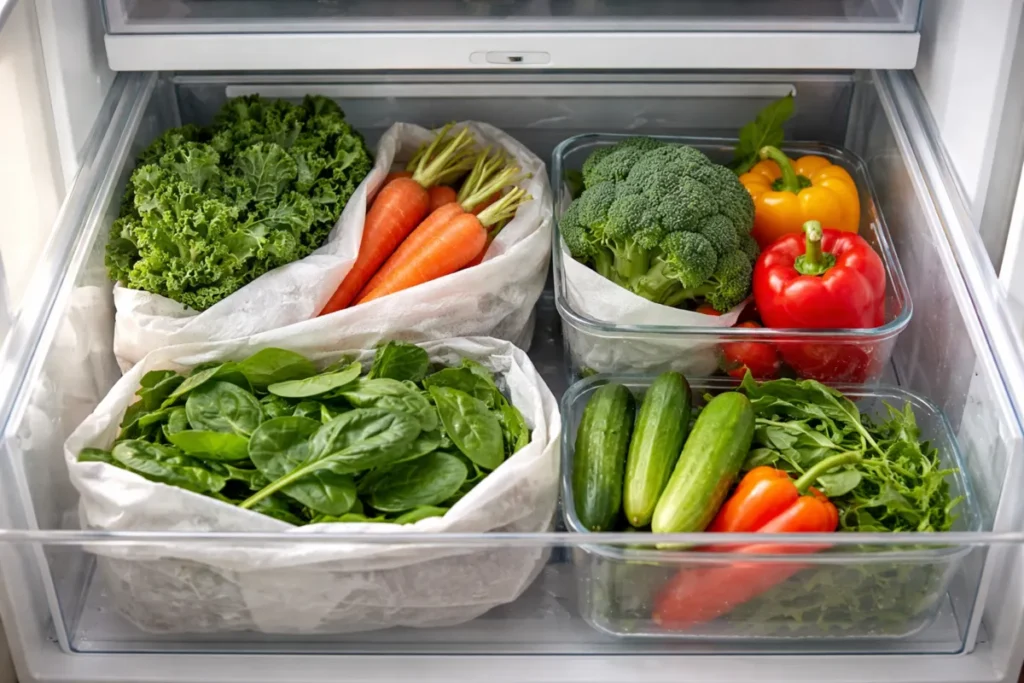
A lot of spoilage starts with normal habits. Washing too early, crowding one drawer, or forgetting what is in the back of the fridge can shorten shelf life quickly.
Common causes include:
- storing wet vegetables
- crowding produce too tightly
- mixing vegetables with ripening fruit
- using damp, sealed storage for dry items
- leaving one spoiled item in place
USDA notes that refrigerator zones vary and that produce placement affects quality, which is why drawer choice and colder back spots matter.
Best Ways to Keep Vegetables Fresh Longer (Less Waste, Better Texture)
The best way to keep vegetables fresh longer is to match the method to the vegetable. Leafy greens need moisture control, while potatoes and onions need air and dryness.
1. Wait to Wash Until Use (Less Extra Moisture)
Extra water speeds spoilage for many vegetables. Washing right before cooking or eating usually works better.
How to use it:
- Store most vegetables unwashed.
- Brush off loose dirt first if needed.
- Wash under running water right before prep.
Best for:
- carrots
- peppers
Washing vegetables right before prep is easier when your sink drains well.
2. Use the Crisper the Right Way (Better Humidity Control)
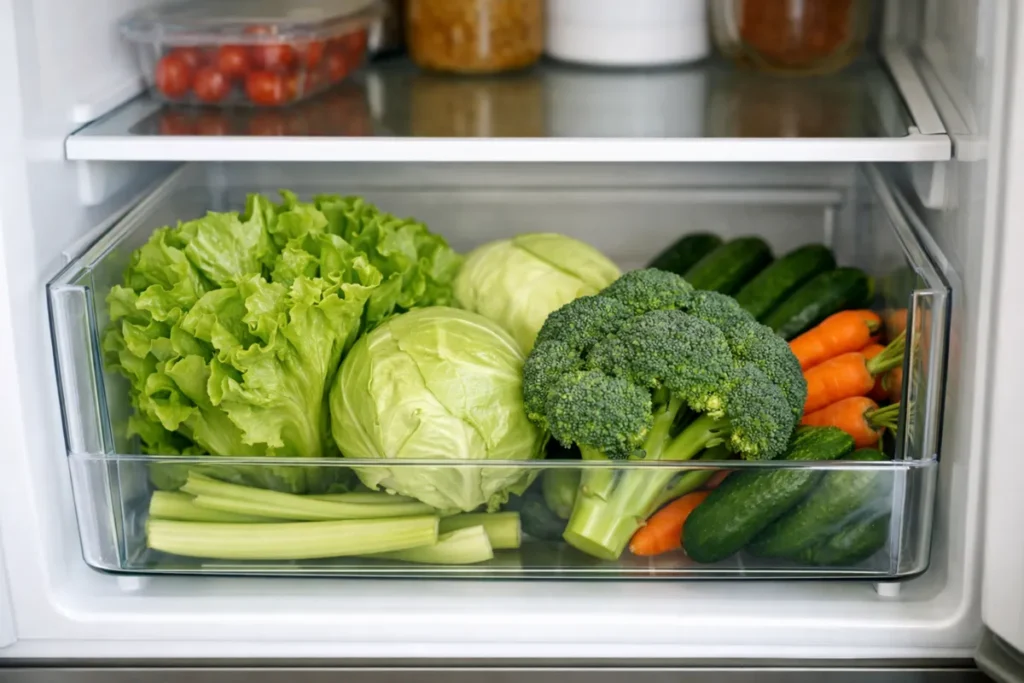
Most refrigerated vegetables last longer in the produce drawer than in the fridge door or loose on a shelf. This reduces temperature swings and moisture loss.
How to use it:
- Keep tender vegetables in the crisper.
- Do not overpack the drawer.
- Keep produce away from raw meat areas.
Best for:
- lettuce
- broccoli
A cleaner fridge also helps produce last longer, especially if you are already dealing with fridge odor.
3. Add a Paper Towel for Greens (Less Slime, Less Wilt)
Leafy vegetables often spoil because moisture sits on the leaves. A dry paper towel helps absorb that extra dampness.
How to use it:
- Place a dry paper towel in the bag or container.
- Change it when it feels damp.
- Use a loose container, not a packed one.
Best for:
- salad greens
- herbs
4. Separate Ripening Produce (Slower Breakdown)
Some fruits release gases that make nearby vegetables soften faster. A little separation can buy you more days.
How to use it:
- Keep apples, bananas, and tomatoes away from tender vegetables.
- Use one space for fruit and another for vegetables.
- Check mixed produce bins after shopping.
Best for:
- cucumbers
- leafy greens
5. Give Dry-Storage Vegetables Air (Cool, Dry, Open)
Not every vegetable belongs in the fridge. Potatoes, onions, garlic, and some squash keep better in a cool, dark, dry spot.
How to use it:
- Use a basket, paper bag, or open bin.
- Keep the area dry and out of direct sun.
- Store onions and potatoes apart.
Best for:
- potatoes
- onions
If onions are part of your weekly prep, getting onion smell off your hands can make kitchen cleanup easier.
6. Do a Two-Minute Weekly Check (Catch Trouble Early)
One soft cucumber or leaking bag can affect everything around it. A fast check helps you use older items first and remove problems early.
How to use it:
- Scan your produce once a week.
- Move softer items to the front.
- Repack damp vegetables with a fresh towel.
Best for:
- mixed produce drawers
- larger grocery hauls
What Not to Do (Mistakes That Speed Spoilage)
When you want to keep vegetables fresh longer, a few common shortcuts can work against you. Most of them trap moisture or make spoilage harder to notice.
- Do not wash everything right after shopping unless you will use it soon.
- Do not stuff the crisper drawer too full.
- Do not leave vegetables in wet store bags for days.
- Do not store onions and potatoes together.
- Do not ignore one spoiled item in the drawer.
When spoiled vegetables go straight into the bin, dealing with trash can odor helps keep the whole kitchen fresher.
Advanced Tips to Make This Easier
You can keep vegetables fresh longer with a setup that is easy to maintain. Small habits work better than a perfect fridge reset.
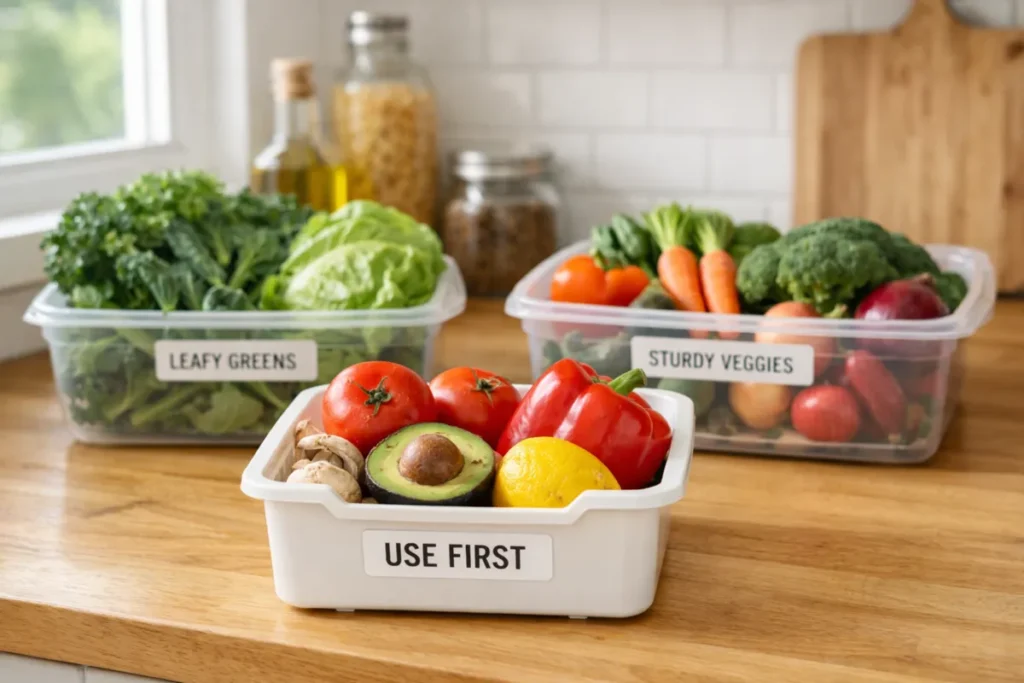
- Keep one small bin for vegetables that need to be used first.
- Label one shelf or drawer as “use now” after each grocery trip.
- Store the vegetables you use most often together so you can spot them faster.
- Buy less of delicate greens on extra busy weeks.
- Trim damaged ends early so the rest keeps better.
Keeping vegetables visible and easy to use fits well with other time-saving kitchen hacks for busy weeknights.
How to Keep Results Lasting Longer
To keep vegetables fresh longer, focus on repeatable habits that control moisture and make older produce easy to spot. The goal is fewer spoiled vegetables by the end of the week.
- Dry vegetables well before storage if they were rinsed.
- Use the right zone for the right type.
- Check drawers every few days and rotate older items forward.
- Plan one flexible meal for vegetables that are close to turning.
- Toss bad produce quickly so moisture and mold do not spread.
Frequently Asked Questions (FAQ)
Should I wash vegetables before storing them?
Usually no. Washing before storage often adds moisture that speeds spoilage. Wash under running water before eating or cooking instead.
Which vegetables should not go in the fridge?
Potatoes, onions, and garlic usually do better in a cool, dry, dark place with airflow. The fridge is often too cold and damp for them.
What is the best container for leafy greens?
A loose container or bag with a dry paper towel usually works well. The towel catches extra moisture and reduces slime.
Can I store cut vegetables for later?
Yes. Keep them in a clean covered container in the fridge and use them within a few days.
What should I do on busy weeks?
Buy fewer delicate vegetables and more sturdy ones. It is better to finish what you buy than to overstock.
Do pre-washed greens need to be washed again?
If the package says pre-washed or ready-to-eat, extra washing is usually not needed. More handling can add moisture without helping much.
Final Tips
Start with one or two changes you will actually keep doing. A better drawer setup and one weekly check can make a big difference.
Pay attention to moisture first. Then separate what should not be stored together and use older produce sooner.
Conclusion
A few small storage rules can help you keep vegetables fresh longer without adding much work. Focus on moisture control, airflow, and better placement first. Once those basics are in place, your produce is easier to use and less likely to go to waste.