
Daily mess usually starts in the same few places. The best home organization hacks fix those pressure spots without turning your home into a full-time project.
A lot of organizing advice looks good in photos but adds more steps in real life. What works better is a setup that is fast to use on a normal weekday.
That means choosing a few strong ideas, not dozens of clever tricks. The goal is a home that feels easier to live in.
Table of Contents
What Makes a Hack or Pick Worth Using
Useful home organization hacks should solve a repeat problem you already have. They should also stay easy to follow when you are busy or tired.
The best ones reduce decisions and make items easier to put back. They should help your home run better, not make storage more complicated.
A strong pick usually has these traits:
- It saves time without adding extra steps
- It fits the way your home already works
- It makes items easy to see and return
- It stays manageable during a busy week
The CPSC’s Anchor It program warns that tall storage furniture should be anchored to reduce tip-over risk, which matters if you add vertical organizers in family spaces.
A setup that keeps surfaces clearer also makes it easier to keep up with dust control.
Best Home Organization Hacks for Real Homes (Less Mess, More Access)
These ideas work because they match real behavior. They help control clutter where it starts.
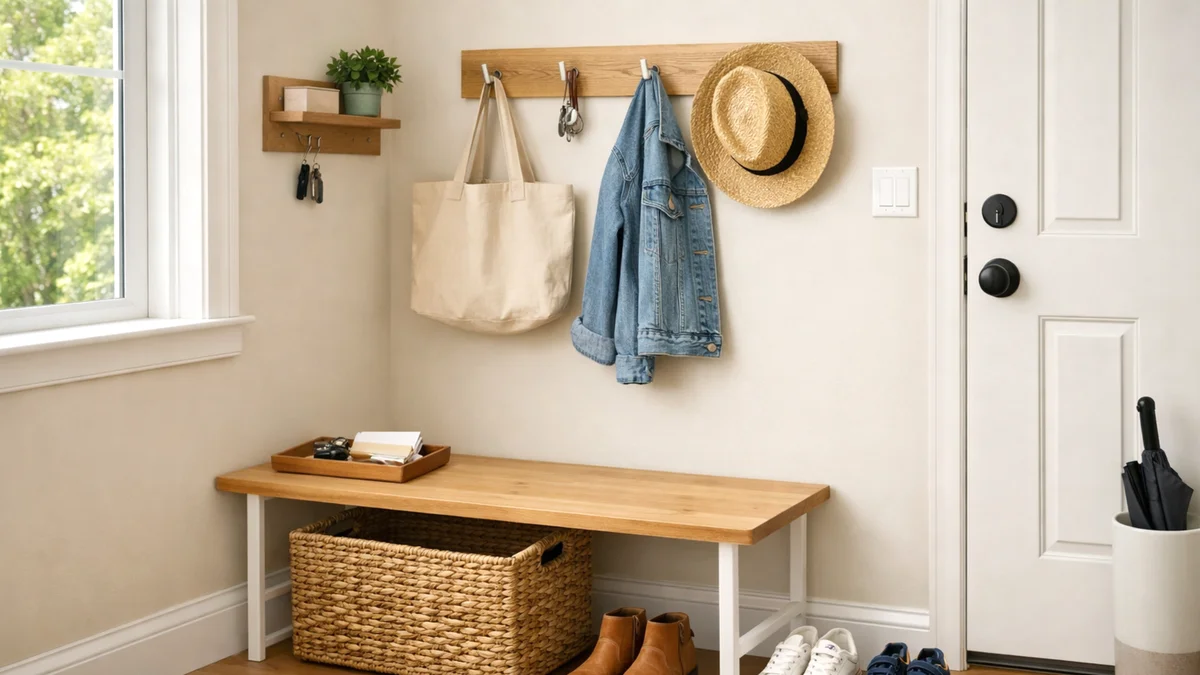
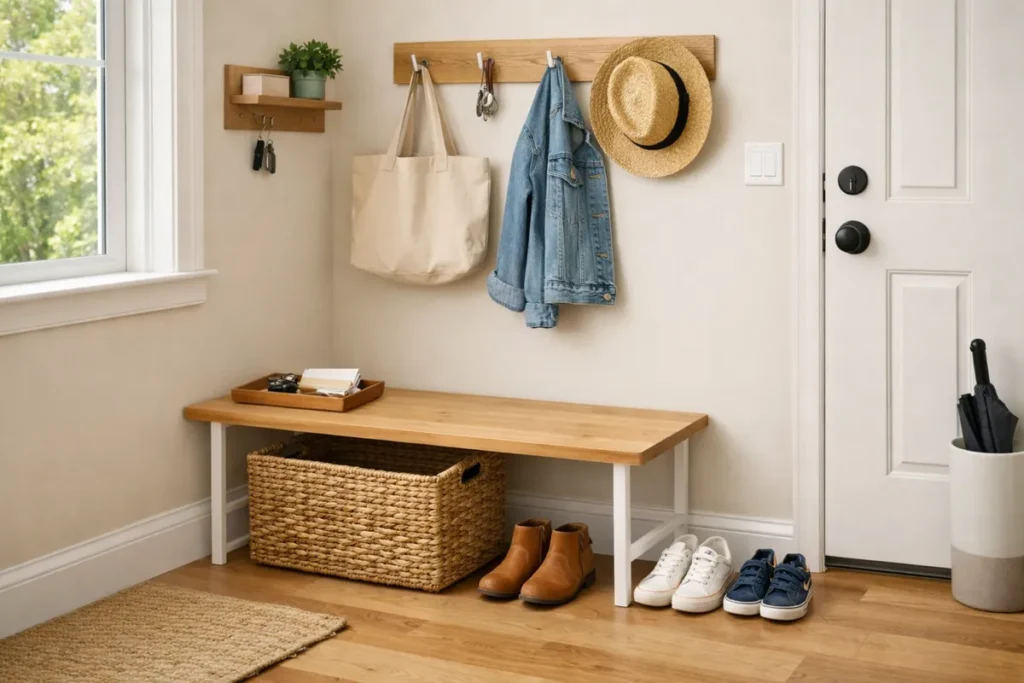
1. Create Drop Zones by the Door (Stops Floor Pileups)
Most daily clutter starts when people walk in. A small landing spot near the entry keeps keys, bags, mail, and shoes from spreading.
How to use it:
- Add one tray for small grab-and-go items
- Use one basket for daily gear
- Keep shoes in one open row or low bin
Best for:
- Busy households
- Homes without a mudroom
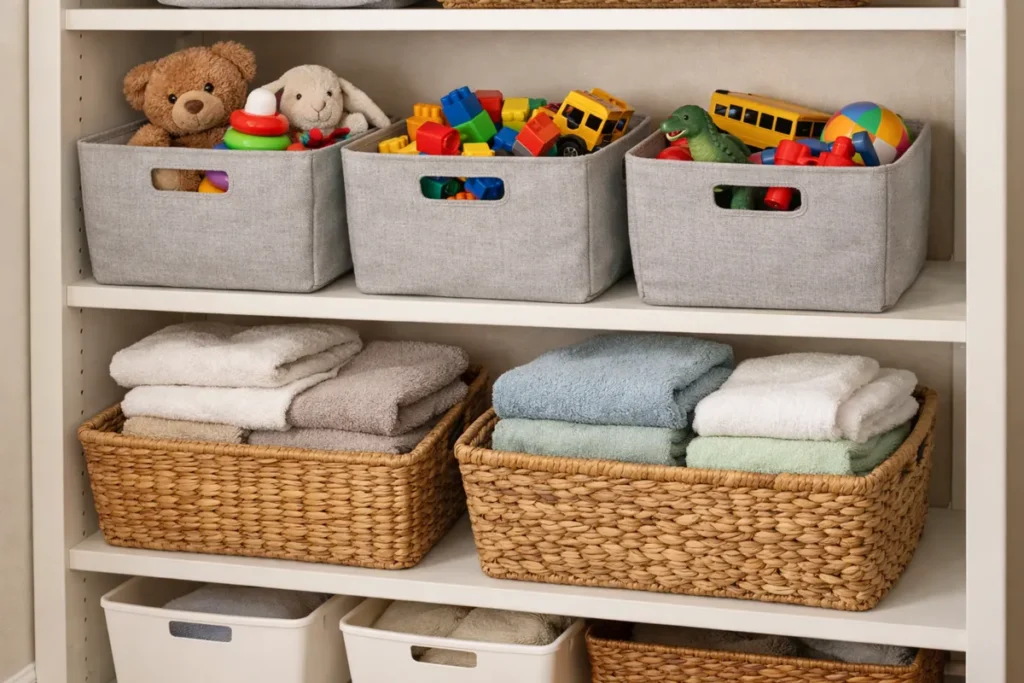
2. Use Open Bins for Broad Categories (Fast Put-Backs)
Open bins are easier to keep up than detailed systems. They let people put items back quickly without folding, stacking, or sorting too much.
How it helps:
- Groups like items together fast
- Cuts visual clutter on shelves
- Makes cleanup easier for the whole house
Best for:
- Toys and crafts
- Linen closets
- Pantry overflow
For linen closets and overflow shelves, a few laundry habits can help stored fabrics stay fresher between washes.
3. Organize by Use Frequency (Less Shuffling)
Daily items should live in the easiest spot. Rarely used items can move higher, lower, or farther back so prime space stays useful.
How to use it:
- Put everyday items at eye level
- Move backups to a second zone
- Keep rare-use items out of the way
Best for:
- Bathroom cabinets
- Kitchen shelves
- Shared storage areas
The same setup also works well in kitchens, where keeping daily tools within reach makes dinner prep smoother.
4. Set One Container Limit per Category (Built-In Control)
This hack works because it creates a clear boundary. When one category fills its basket, drawer, or bin, you know it is time to edit instead of buying more storage.
How it helps:
- Prevents silent clutter growth
- Makes overbuying easier to spot
- Keeps problem categories contained
Best for:
- Food containers
- Hair tools
- Charging cords
5. Pair a Reset Habit With an Existing Routine (Helps the System Last)
Even a good system falls apart without a reset. A short tidy-up linked to something you already do is much easier to maintain.
How to use it:
- Reset one zone after dinner or before bed
- Keep the session to five minutes
- Focus on returning visible out-of-place items
Best for:
- Kitchen counters
- Living room clutter
- Families who struggle with follow-through
What to Avoid When Choosing or Using These (Less Stuff, Fewer Headaches)
Some home organization hacks sound smart but create new problems. The wrong setup adds bulk, cost, or cleanup without fixing the real issue.
- Buying containers before sorting first – This often hides clutter instead of reducing it.
- Choosing too many tiny sections – They look neat at first but are hard to maintain.
- Storing daily items in hard-to-reach spots – That sends clutter back to counters and tables.
- Using narrow single-purpose organizers everywhere – They take up space without solving much.
- Copying a perfect-looking setup that does not match your habits – A system only works if your household can repeat it.
Advanced Tips to Get Better Results
Small adjustments make these hacks more effective. A little strategy helps the system last longer.
- Start with the biggest daily pain point – Fix the space that creates stress most often.
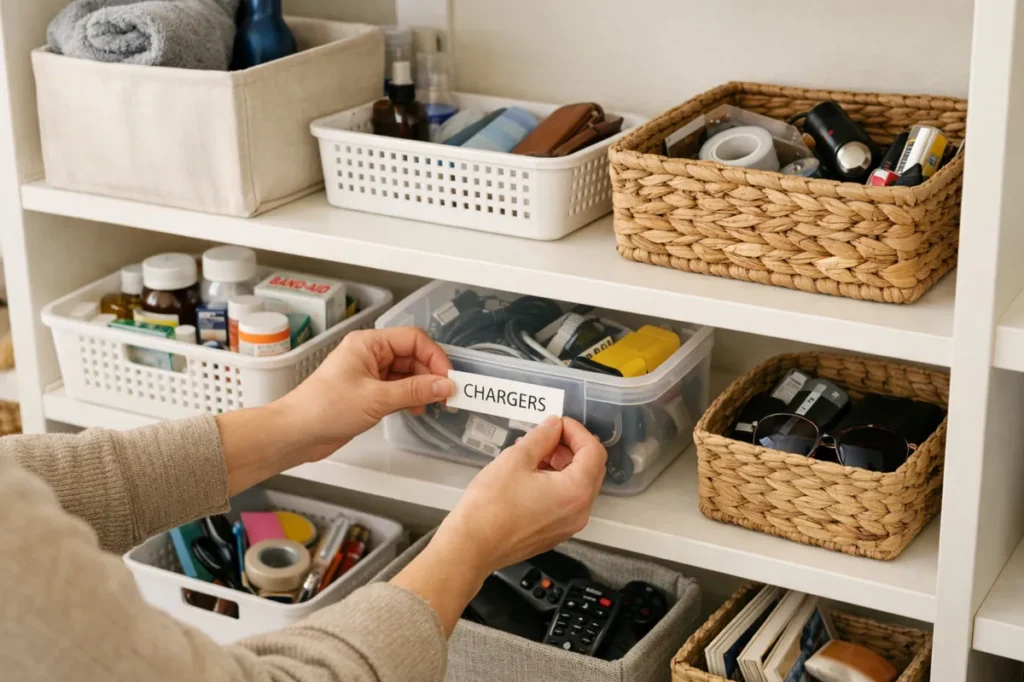
- Use visibility on purpose – Open tops, clear fronts, or simple labels help people put things back faster.
- Store the first step where action begins – Keep donation bags in the closet or trash liners in the bin.
- Limit backups in prime space – Too many extras make storage feel full before it really is.
- Test one change for a week – Keep what still feels easy after real use.
If the space still feels off after you simplify clutter zones, it helps to check for a hidden smell before changing anything else.
How to Make These Work in Real Life
The best home organization hacks work better when they feel light and repeatable. Keep the setup simple enough to survive a normal week.
- Walk your home and note three repeat clutter spots – This keeps your focus on real friction.
- Choose one hack per zone – Too many changes at once make progress harder to track.
- Use what you already own first – A basic tray or basket is often enough.
- Make the return path obvious – Items should be as easy to put back as they are to grab.
- Reset at the same time each day – A short routine protects the system.
Frequently Asked Questions (FAQ)
How many organization hacks should you try at once?
Start with one or two. That makes it easier to see what helps first.
What should you organize first?
Begin with the spot that annoys you most often. Daily frustration is usually the best clue.
Do expensive organizers work better?
Not always. The best home organization hacks are often simple and easy to keep up.
What works best in a small home?
Use hacks that reduce spread and visual clutter. Broad categories and good vertical use usually help more than extra furniture.
How do you stop a system from becoming more work?
Keep the steps few and the categories broad. If putting something away feels slow, the setup is too detailed.
How do you know a hack is actually useful?
Check whether people use it without reminders. If the area stays calmer during a normal week, it is working.
Final Tips
The best organizing wins are small and repeatable. They remove one daily annoyance without adding a lot of upkeep.
Choose hacks that fit your real habits, not your ideal routine. A simple system you follow beats a detailed system you avoid.
One shelf, one bin, or one basket can also show you when a category has grown too large. Limits often work better than more storage.
Once clutter is easier to manage, a few natural ways to freshen the space can help without adding heavy fragrance.
Conclusion
A calmer home does not come from doing everything at once. The most useful home organization hacks are the ones that reduce friction, fit your routine, and stay easy to maintain.