

A squeaky door gets annoying quickly, especially at night. Learning how to fix a squeaky door usually means finding one dry hinge, one loose screw, or one rubbing point.
Most of the time, the cause is simple. Hinge parts lose lubrication, dust collects, or the door shifts a little from daily use.
That is why it usually takes less work to fix a squeaky door than people think. A few careful checks can tell you whether the door needs lubricant, a small adjustment, or one basic part replacement.
Start small and test after each change. That keeps the fix safe, clean, and easy to control.
Table of Contents
What to Check First
Before you try to fix a squeaky door, slow the door down and listen closely. The sound may come from one hinge, or it may be rubbing near the latch side instead.
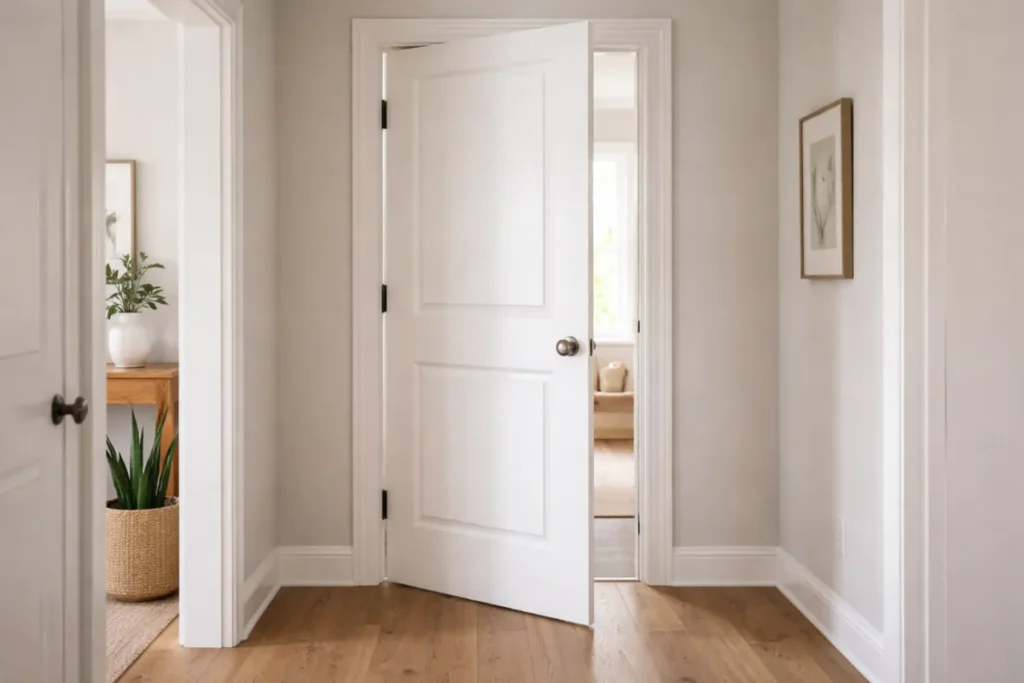
- Open and close the door slowly
- Check each hinge for dust, rust, or signs of dryness
- Look for loose screws
- Watch for rubbing at the top corner or latch edge
- Notice any paint buildup around the frame
Schlage notes that most squeaky doors come from dry hinge pins or metal-on-metal friction, which is why a small amount of lubricant often solves the problem.
Best Ways to Fix a Squeaky Door (Start With the Hinge)
1. Find the Exact Noise Spot (Do This First)
A whole door can sound noisy when only one hinge is causing the problem. A slow test keeps you from treating the wrong area.
How to do it:
- Open the door a few inches at a time
- Pause and listen at each point
- Touch each hinge lightly for vibration
- Check whether the latch side rubs the frame
Best for:
- First-time DIY fixes
- Doors with more than one possible cause
- Avoiding wasted effort
2. Add a Small Amount of Lubricant (First Quick Fix)
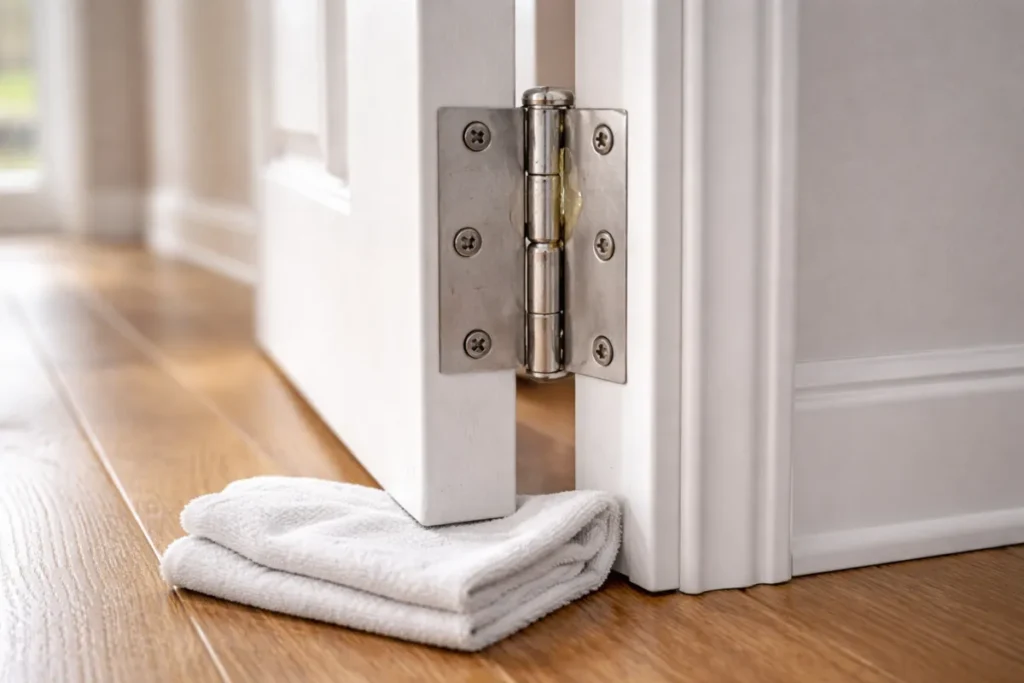
This is often enough to fix a squeaky door if the hinge is just dry. Use a little, not a heavy spray, so the joint moves without turning sticky.
How to do it:
- Put a rag under the hinge
- Add a small drop at the top of the hinge pin
- Open and close the door several times
- Wipe away any extra product
Best for:
- New squeaks
- Solid hinges with no visible damage
- Quick same-day results
3. Use a Household Backup (Short-Term Quiet)
If you do not have proper lubricant, bar soap, candle wax, or a little petroleum jelly can quiet the hinge for a while. This is a stopgap, not the best long-term fix.
How to do it:
- Rub a small amount onto the hinge pin area
- Move the door slowly to work it in
- Add only a little more if needed
- Wipe away heavy residue
Best for:
- Temporary relief
- Renters
- Situations where you need a fast backup
4. Pull and Clean the Hinge Pin (For Stubborn Squeaks)
If the sound keeps coming back, grime may be sitting on the hinge pin itself. This step can help fix a squeaky door when surface lubricant is not reaching the real friction point.
How to do it:
- Keep the door mostly closed for support
- Tap the hinge pin up gently with a nail and hammer
- Pull the pin out partway or fully
- Wipe off dirt or old residue
- Add a light coat of lubricant and put the pin back
- Test the door before moving on
Best for:
- One hinge that squeaks every time
- Older doors
- Repeated squeaks after quick lubrication
5. Tighten the Hinge and Correct a Minor Shift (When the Door Has Moved)
A loose hinge can make the door twist as it swings. If that does not solve it, and the hinge still looks bent or badly worn, replacement is usually the smarter next step to fix a squeaky door.
How to do it:
- Tighten each hinge screw by hand
- Test the door after each hinge
- Watch for rubbing at the top corner or latch edge
- Replace one worn hinge if it stays noisy after tightening and cleaning
Best for:
- Slight sagging
- Doors that rub and squeak
- Cases where adjustment may be enough
What Not to Do (Less Wear, Less Mess)
It is easy to make a small job messier than it needs to be. When people try to fix a squeaky door too aggressively, they often create a second problem.
- Do not soak the hinge with too much spray – extra product collects dust and can stain nearby paint
- Do not use cooking oil – it can turn gummy and stop working well
- Do not force a stuck hinge pin – bent hardware is harder to deal with than a squeak
- Do not overtighten screws – stripped holes weaken the hinge
- Do not ignore frame rubbing – quieting the hinge alone will not solve misalignment
Advanced Tips to Make the Fix Easier
A few small habits can make the job faster and cleaner. They also help you avoid repeating steps.
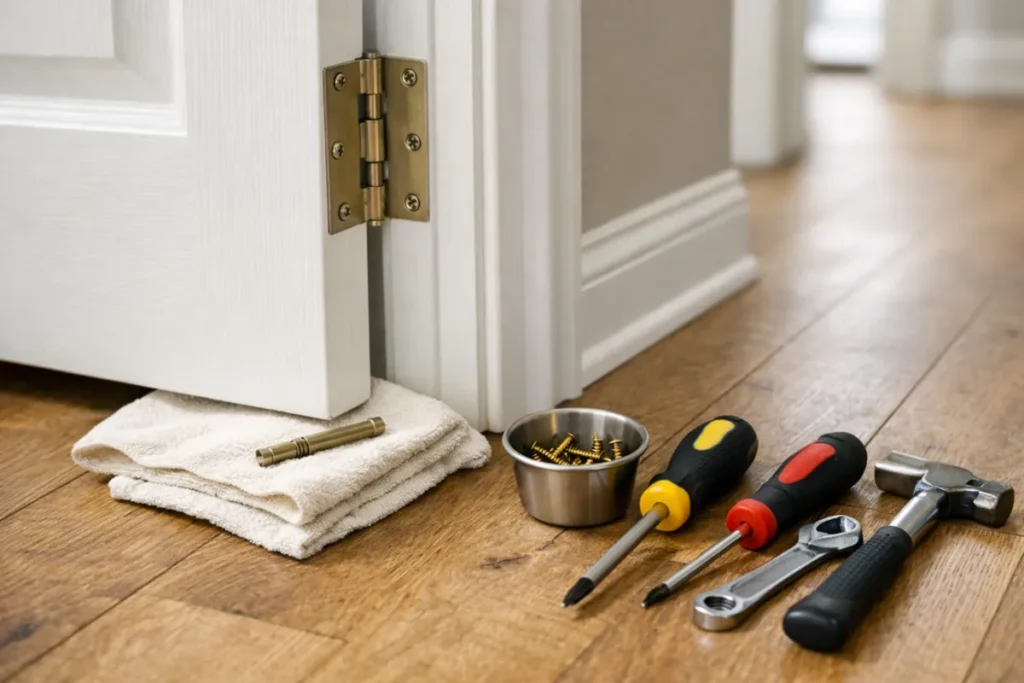
- Put a rag under the hinge before applying anything
- Take a quick photo before removing a pin or hinge
- Test after each small change
- Work in good light so you can spot rub marks
- Keep screws and pins in a cup
Small setup habits like better lighting and testing as you go can save time in other jobs too, just like other kitchen time-savers do.
How to Keep a Door From Squeaking Again
Most squeaks return because the same hinge dries out again. Small maintenance habits usually keep the door quiet much longer.
- Wipe dust off hinge areas during regular cleaning – grit adds friction
- Tighten loose screws early – small movement grows over time
- Reapply a small amount of lubricant at the first sign of noise – early touch-ups work better
- Open and close doors gently – less force means less wear
- Watch for seasonal swelling – humidity can change door alignment
Dust buildup around hinges and trim can make small friction problems return faster, so a simple dust-free routine helps more than people think.
Frequently Asked Questions (FAQ)
Do I need special tools for this?
Usually not. A rag, screwdriver, and light lubricant handle most squeaks.
What should I try first?
Start with a small amount of lubricant on the noisy hinge. Then test the door before doing anything more involved.
Is soap a real fix?
It can help for a while, but it is temporary. It works best as a backup, not the final answer.
What if the squeak comes back quickly?
The hinge pin may need cleaning. Loose screws or slight rubbing can also bring the noise back.
Can a beginner do this safely?
Yes, in most cases. Go slowly and change one thing at a time.
When should I replace the hinge?
Replace it when the hinge is bent, badly rusted, or still noisy after cleaning, lubrication, and tightening.
Final Tips
Start with the sound, not the product. Once you know whether the problem is dryness, dirt, or slight misalignment, the fix gets much easier.
Use the lightest fix first and test as you go. If one step works, stop there and save the bigger step for later.
Starting with the gentlest fix first also helps when unclogging a sink without chemicals.
Conclusion
A calm, step-by-step approach is usually enough to fix a squeaky door without turning it into a bigger repair. Check the obvious cause first, use the least invasive fix, and move up only if the noise keeps coming back.