
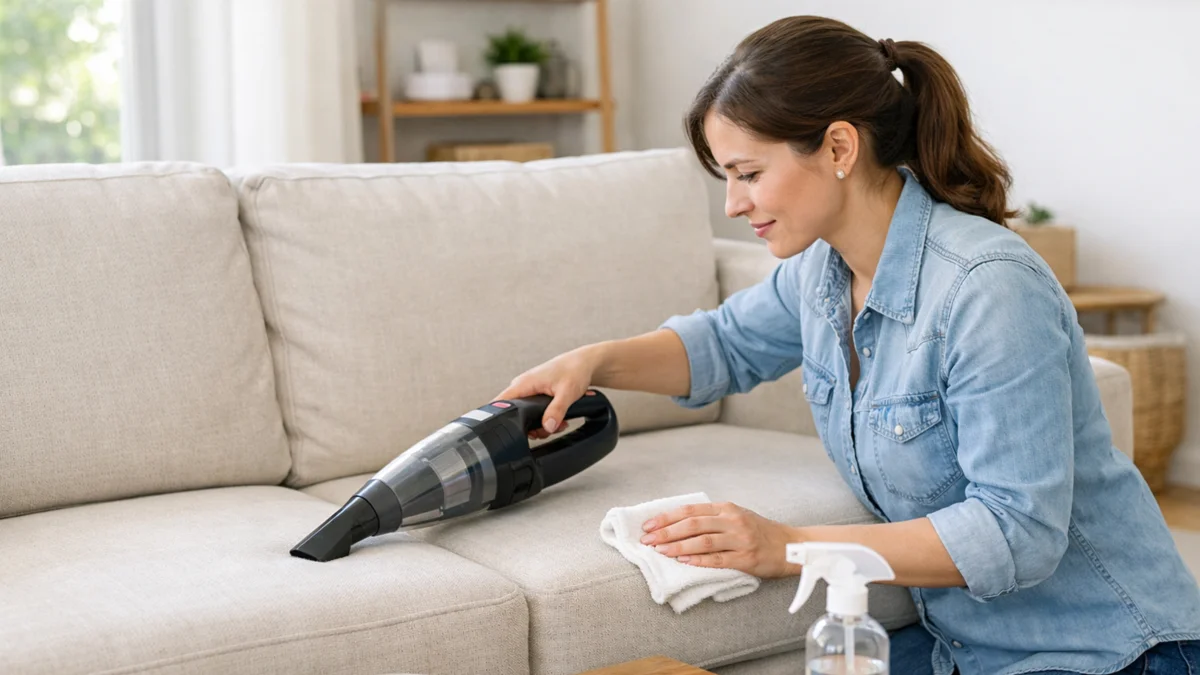
A couch can look clean and still smell stale. When you’re trying to remove odor from upholstery, the goal is not more fragrance but removing what is trapped in the fabric.
Soft furniture holds dust, body oils, and dampness. The best results come from using a method that fits both the source and the fabric.
Many sprays only hide the smell for a while. Others can leave residue when you try to remove odor from upholstery.
A better plan is to start dry, use moisture carefully, and dry the fabric fully. Here are the main causes, safest methods, key mistakes, and habits.
Table of Contents
What Causes Odor in Upholstery?
Odor in upholstery usually builds slowly. To remove odor from upholstery, it helps to know whether the smell is coming from dampness, skin oils, food residue, smoke, or old cleaner buildup.
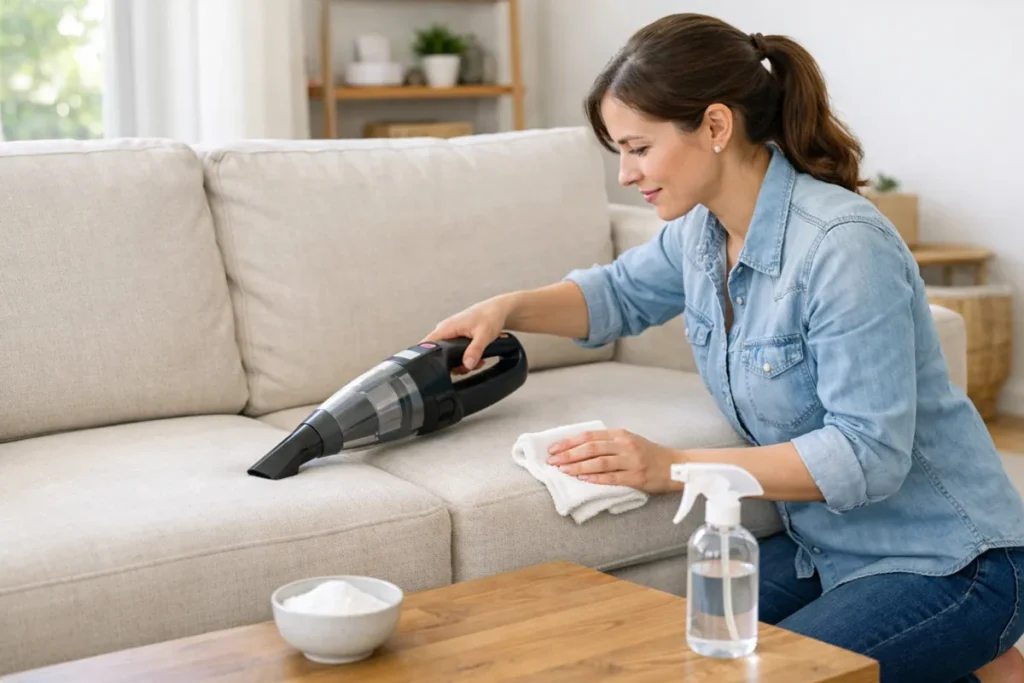
Fabric and foam act like a sponge. They trap tiny particles, and the smell gets stronger in warm or humid rooms.
- Spills that seep below the surface
- Body oils and sweat from daily use
- Smoke or cooking odors in fabric
- Damp cleaning that never dried fully
The EPA says moisture control is the key to stopping mold growth, which is one reason wet fabric can start smelling musty if it stays damp too long.
When the source still feels unclear, this odor source checklist can help you narrow it down before treating the fabric.
Methods to Remove Odor From Upholstery (Fresh Results, Low-Fume)
Before you start, check the care tag, test a hidden spot, and never mix cleaners.
1. Vacuum and Soft Brush (Lift Dry Buildup)
Dry debris often feeds stale smells on the surface. A slow vacuum pass is the best first step before any powder or liquid touches the fabric.
How to use it:
- Vacuum the seat, back, arms, and seams.
- Use a soft brush to loosen lint first.
- Repeat around creases and under cushions.
Best for:
- Light stale smells
- Routine upkeep
2. Baking Soda Rest (Gentle, Fragrance-Free)
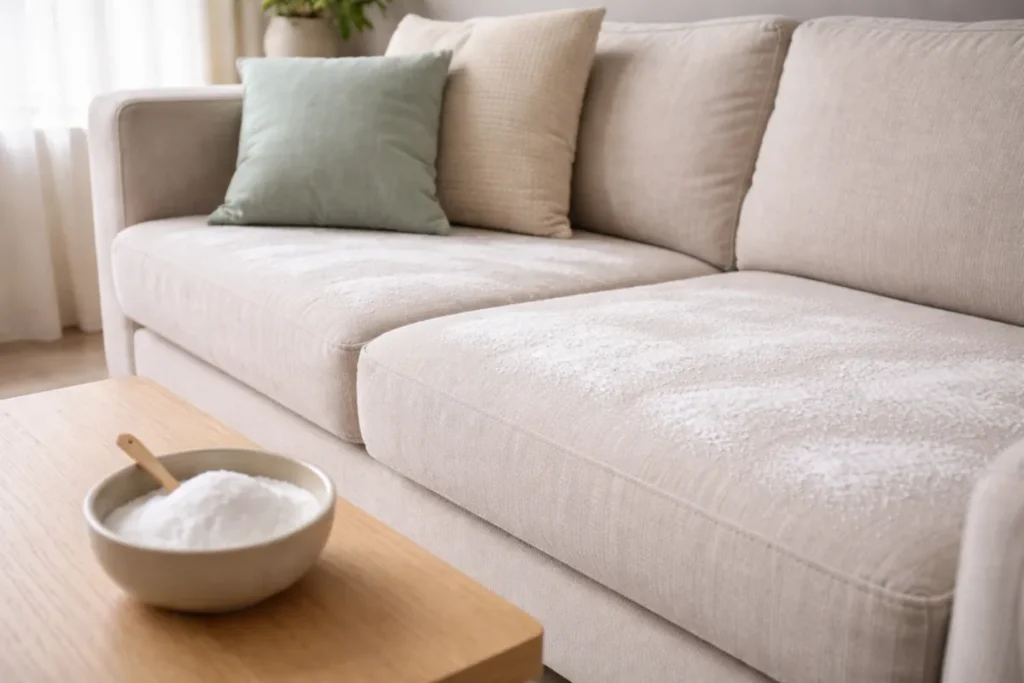
For mild stale smells, baking soda can help remove odor from upholstery without adding fragrance or much moisture. It works best on dry fabric with enough sit time.
How to use it:
- Sprinkle a light, even layer over the fabric.
- Let it sit for several hours or overnight.
- Vacuum slowly until all powder is gone.
Best for:
- Everyday couch odor
- Fabrics that should stay mostly dry
3. White Vinegar Mist (Light Acid, Low Residue)
A light vinegar mist can help with sour or slightly musty smells from light spills or old dampness. Use very little – the fabric should feel lightly damp, not wet.
How to use it:
- Mix equal parts white vinegar and water.
- Mist a cloth, or spray lightly from a distance.
- Blot the area and dry it with a fan.
Best for:
- Sour spill odor
- Mild musty smell
A lingering musty smell often points to extra moisture, and these musty smell tips can help you deal with the cause.
4. Upholstery-Safe Enzyme Cleaner (Organic Mess, Deeper Reset)
When food or old drink spots are part of the problem, an enzyme cleaner can remove odor from upholstery better than a cover-up spray. Choose a fragrance-free formula labeled for upholstery.
How to use it:
- Vacuum first so the product can reach the fabric.
- Apply only as directed and do not oversaturate.
- Blot and allow full drying time with airflow.
Best for:
- Deep organic odor
- Older spills that left odor behind
5. Warm Towel or Low-Moisture Steam (Heat, Not Soaking)
Gentle warmth can help remove odor from upholstery when the fabric feels clean but still smells stale. Keep the tool moving and avoid heavy steam on delicate pieces.
How to use it:
- Hold a warm, slightly damp towel over the area, or use low-moisture steam.
- Work in short passes instead of long blasts.
- Dry the area right away with moving air.
Best for:
- Stale fabric smell
- Refreshing sturdy upholstery
A lingering smoke smell usually needs a room-wide fix first, and this smoke smell guide can help with that.
What NOT to Do (No Soaking, No Cover-Up)
A few common moves make the smell settle deeper.
- Do not soak the fabric. Water that reaches the padding can linger and make the odor worse.
- Do not use heavy perfume sprays. They mask the problem for a short time, then mix with the old smell.
- Do not scrub with a stiff brush. That can rough up fibers and spread stains.
- Do not mix cleaners together. That can leave residue or create a bad reaction.
- Do not shut the room right away. Upholstery needs airflow after cleaning.
Advanced Tips to Make Cleaning Easier
Small setup changes save effort on every round. They also help fabric dry cleaner and faster.
- Clean hidden zones too. Seams and back panels often hold the strongest stale smell.
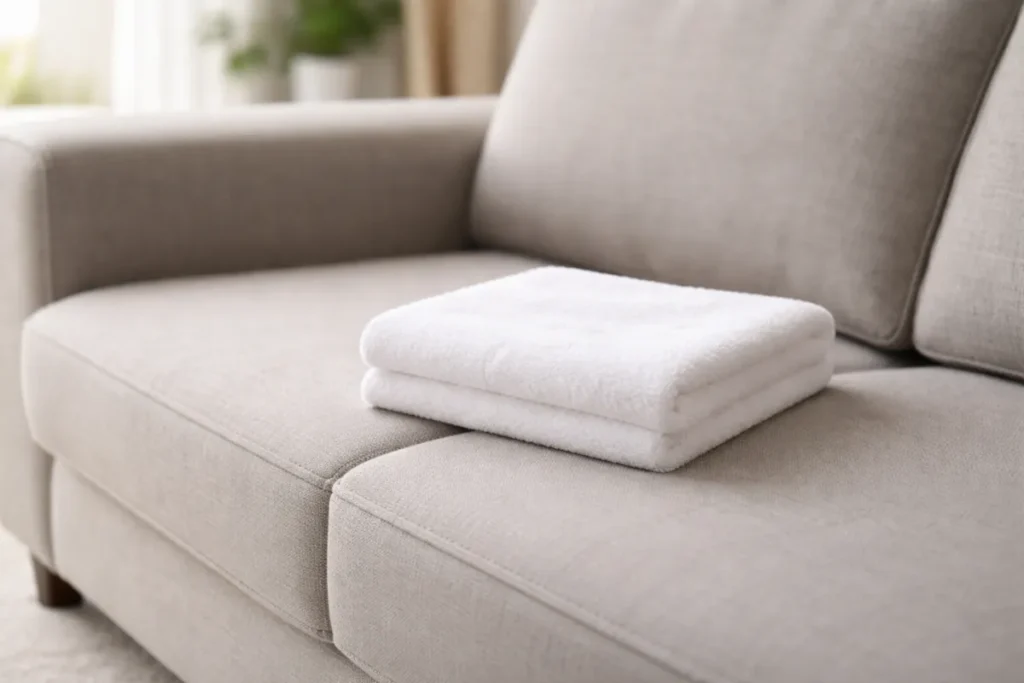
- Use white towels for blotting. They show when soil is still lifting.
- Work one cushion at a time. That keeps moisture levels controlled.
- Wash nearby throws or removable covers too. Odor often moves between soft surfaces.
If the smell keeps moving from one surface to another, these whole-home odor tips can help you reset the room.
How to Prevent Upholstery Odor From Building Up Again
A few habits keep the same smell from settling in again.
- Vacuum upholstery weekly. Dust and skin oils are easier to remove early.
- Blot spills the same day. Fast cleanup stops liquid from reaching the foam.
- Keep humidity under control. A fan or dehumidifier helps fabrics stay fresher.
- Let every cleaned spot dry fully. Slight dampness can let musty odor build again.
- Wash removable covers and nearby textiles regularly. Odor can shift between surfaces.
To keep the room fresh between cleanings, try these no-spray freshening tips along with regular upholstery care.
Frequently Asked Questions (FAQ)
Is this safe for all upholstery?
Most of these methods are gentle, but not every fabric handles moisture the same way. Check the care tag and test a hidden area.
How often should I clean a couch or chair that smells stale?
Light vacuuming can be done weekly. Deeper odor care is usually needed when the smell lingers or after a spill.
Are natural methods enough, or do I need a commercial cleaner?
Natural methods are often enough for light stale smells. For food residue or older buildup, a fragrance-free upholstery cleaner may work better.
What if the smell comes back after one cleaning?
Start with dry steps again and then use a more targeted method to remove odor from upholstery based on the source, not just the smell. If dampness or residue is still inside the padding, one pass may not be enough.
Is it safe around kids and pets?
Choose low-odor or fragrance-free products, ventilate the room, and wait until the fabric is fully dry before normal use. Store all cleaners out of reach.
When should I call a professional cleaner?
Call a pro if the odor stays strong after repeated attempts, the furniture was soaked, or the fabric is delicate. Deep padding odor may need extraction.
Final Tips
The best results come from matching the method to the source. Dry debris, dampness, smoke, and old spills do not all respond the same way.
Start with the least aggressive option and use only enough moisture to do the job. Full drying is part of the cleaning.
If one method helps but does not finish the job, build up slowly and stay surface-safe.
Conclusion
You do not need strong fragrance to remove odor from upholstery. Start with the gentlest method, control moisture, and dry the fabric fully so your couch or chair stays fresh without harsh chemicals.