
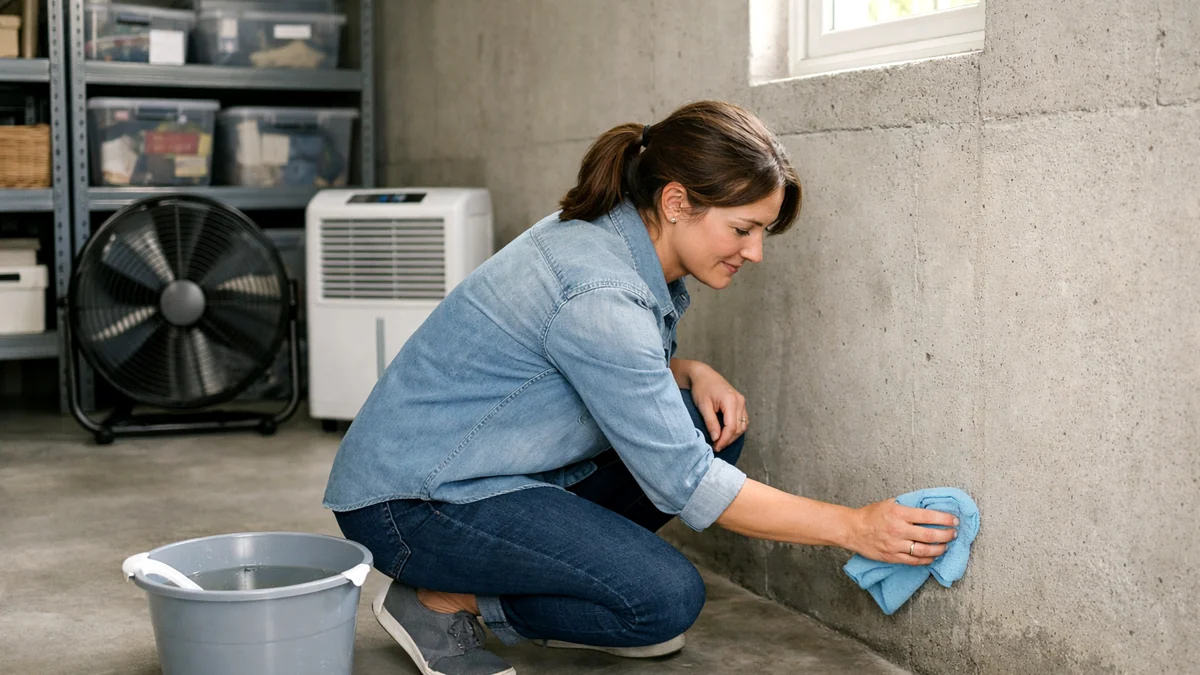
A basement can smell stale even when it looks clean. If you want to know how to get musty smell out of a basement, the real fix is lowering moisture and cleaning the places that keep holding that damp odor.
That smell builds slowly. Humid air, dusty corners, storage, and concrete can make the room feel heavy.
You can get musty smell out of a basement with simple steps. Vent the space, remove odor-holding clutter, clean hard surfaces, and dry the room before the smell settles back in.
Some changes help today. Others help keep the odor from building up again.
Table of Contents
What Causes Musty Basement Smell?
Musty basement smell usually comes from trapped moisture mixed with dust, fabric, cardboard, and stale air. Even a small damp spot can keep feeding that odor.
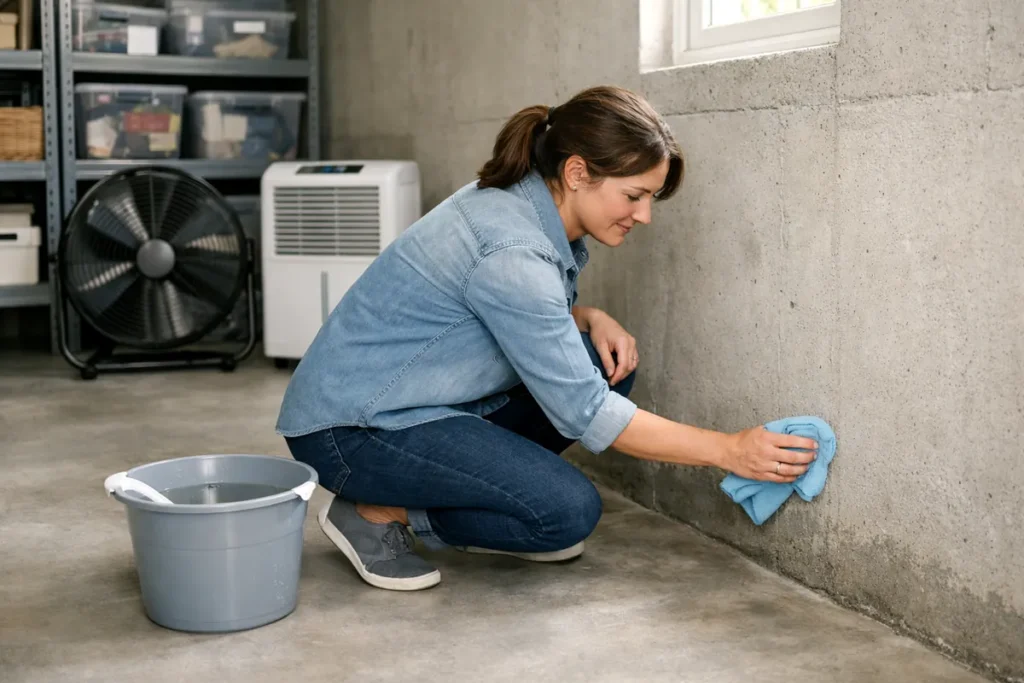
That is why it can be hard to get musty smell out of a basement when the air stays damp.
Common causes include:
- high humidity with little ventilation
- damp boxes, rugs, or stored clothes
- small leaks around windows, walls, or pipes
- dusty shelves and floor edges
- unfinished concrete that holds moisture
The EPA says moisture control is key to preventing mold growth, which is why drying matters as much as cleaning in a basement.
Stored clothes and bins can hold the same damp odor, so a musty closet smell often needs the same dry-first approach.
Methods to Get Musty Smell Out of a Basement (Lasting Freshness in Damp Spaces)
Start with the air, then work down to the surfaces. Remove both the odor and the damp conditions behind it.
1. Open the Space and Move the Air (Dry air first)
Airflow pushes out stale air and gives damp surfaces a chance to dry.
What to do:
- open windows if the outdoor air feels dry
- place a fan to move air across the room
- place another fan near a door or window to push air out
Best for:
- light odor
- stuffy rooms
2. Remove Damp Clutter (Cut the odor source)
Stored fabric, cardboard, and paper absorb odor fast. Taking them out lowers the amount of smell trapped in the room.
What to do:
- remove cardboard boxes, old papers, rugs, and fabric bins
- throw away anything wet, warped, or strongly odor-soaked
- keep saved items in a dry room until the basement is fresh again
Best for:
- storage-heavy basements
- musty corners
If a stored chair, cushion, or fabric bench still smells after the room improves, clean the odor in upholstery separately before bringing it back.
3. Vacuum Dust and Edges (Clear trapped dust)
Dust can hold odor and make damp air settle in faster along walls and stairs.
What to do:
- vacuum floors, baseboards, stairs, and corners
- use a brush tool on shelves, vents, and ledges
- empty the vacuum right after cleaning
Best for:
- unfinished areas
- dusty utility spaces
4. Wash Hard Surfaces With Mild Soap (Clean without soaking)
A simple wash removes the film that keeps the room smelling stale. Test a small hidden area first on painted walls or finished surfaces.
What to do:
- mix warm water with a small amount of mild dish soap
- wipe walls, shelves, doors, and sealed floors with a damp cloth
- dry each area with a towel instead of leaving water behind
Best for:
- painted walls
- sealed floors
5. Treat Lingering Odor Spots With Vinegar (Help with leftover odor)
If odor stays after washing, white vinegar can help on hard surfaces that still smell dull or sour. Do not use it on natural stone, and never mix it with other cleaners.
What to do:
- dampen a cloth with white vinegar
- wipe corners, floor edges, or utility areas that still smell
- let the area air out, then wipe it dry
Best for:
- light leftover odor
- hard surfaces
6. Run a Dehumidifier After Cleaning (Stop damp air from building again)
Cleaning removes the grime that holds smell. Drying removes the damp air that keeps feeding it back into the room.
What to do:
- place the dehumidifier in the dampest area
- keep windows closed when outside humidity rises
- run it until the room feels noticeably drier
Best for:
- recurring odor
- humid basements
If the basement smells smoky rather than damp, use a smoke odor cleanup approach instead of treating it like normal musty air.
What NOT to Do (No Damage in Damp Areas)
Shortcuts can trap the smell longer.
- Do not spray fragrance over the odor and stop there. That only changes the smell for a short time.
- Do not mop with a lot of water. Extra moisture can sink into concrete, trim, or stored items.
- Do not keep damp rugs, paper, or cardboard downstairs. Soft materials hold odor and feed it back into the air.
- Do not close the room up right after cleaning. The space needs moving air so surfaces can dry fully.
- Do not ignore leaks or seepage. A small water source can undo all your work.
Advanced Tips to Make Cleaning Easier
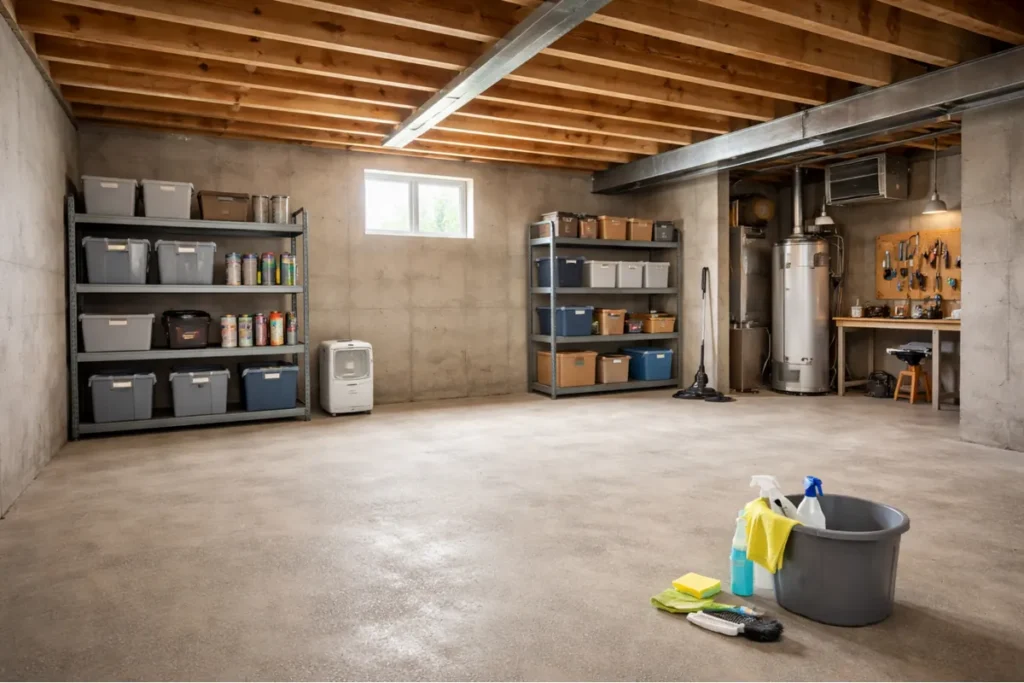
Set up the room before deeper cleaning. That saves effort and helps it dry faster.
- Clean on a dry day when possible. Outdoor air helps more when humidity is lower.
- Work one section at a time. A smaller zone feels easier and dries faster.
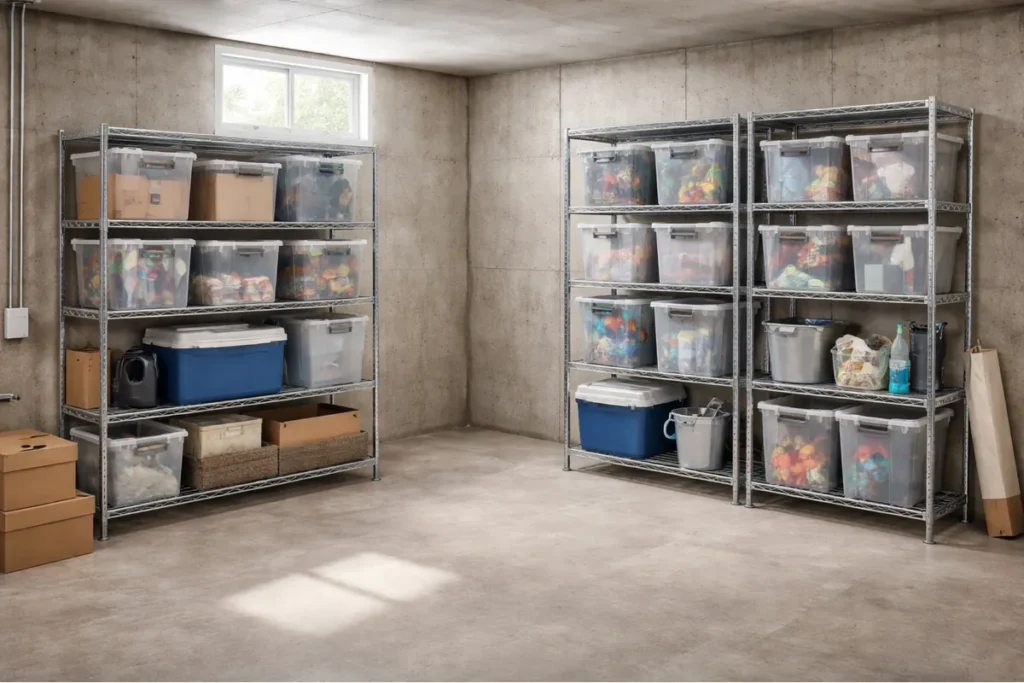
- Raise storage off the floor with shelves or plastic bins. Better airflow helps prevent future odor buildup.
- Check windows, pipe areas, and wall edges while you clean. Many basement smells keep building up again because the damp source stays hidden.
When the odor still feels unclear, finding the hidden odor source first can save you from cleaning the same area again.
How to Keep Basement Air From Smelling Musty Again
A fresher basement lasts longer when moisture stays low.
- run a dehumidifier during humid weeks – steady drying works better than occasional drying
- keep boxes and fabric off the floor – air needs to move around stored items
- switch cardboard to plastic bins – plastic handles damp spaces better
- check after rain – early action prevents stronger odor
- vacuum dusty spots often – less buildup means less trapped smell
The same moisture habits also help in smaller damp rooms, especially when a moldy bathroom odor keeps coming back after cleaning.
Frequently Asked Questions (FAQ)
Can baking soda solve the whole problem?
It can help with mild odor on small soft items. It will not fix a damp basement by itself.
Why does the smell come back after rain?
That usually means moisture is getting in again or humidity is rising quickly. Check wall edges, windows, and pipes.
Do I really need a dehumidifier?
In many basements, yes. It is often the easiest way to get musty smell out of a basement for more than a day or two.
Is vinegar enough for every case?
No. Vinegar can help with leftover odor on hard surfaces, but it will not solve soaked items or ongoing dampness.
How long does it take to freshen the room?
A light case may improve the same day. A heavier case may take several days of cleaning, airflow, and drying.
What if I already cleaned, but the smell stayed?
That usually means the room is still damp or odor-holding items are still inside. When you are trying to get musty smell out of a basement, focus on drying as much as washing.
Final Tips
The most reliable fix is not the strongest cleaner. Vent first, remove damp clutter, wash surfaces, and keep the air dry after cleaning.
That is how many homeowners get musty smell out of a basement without turning it into a huge project. Once the room is dry, staying ahead of the smell gets easier.
For other room-by-room smell problems, the odor removal guide can help you match the odor to the right next step.
Conclusion
A basement does not have to keep smelling stale and damp. When you lower moisture and clean the surfaces and storage that hold odor, you can get musty smell out of a basement and keep the space more comfortable over time.