
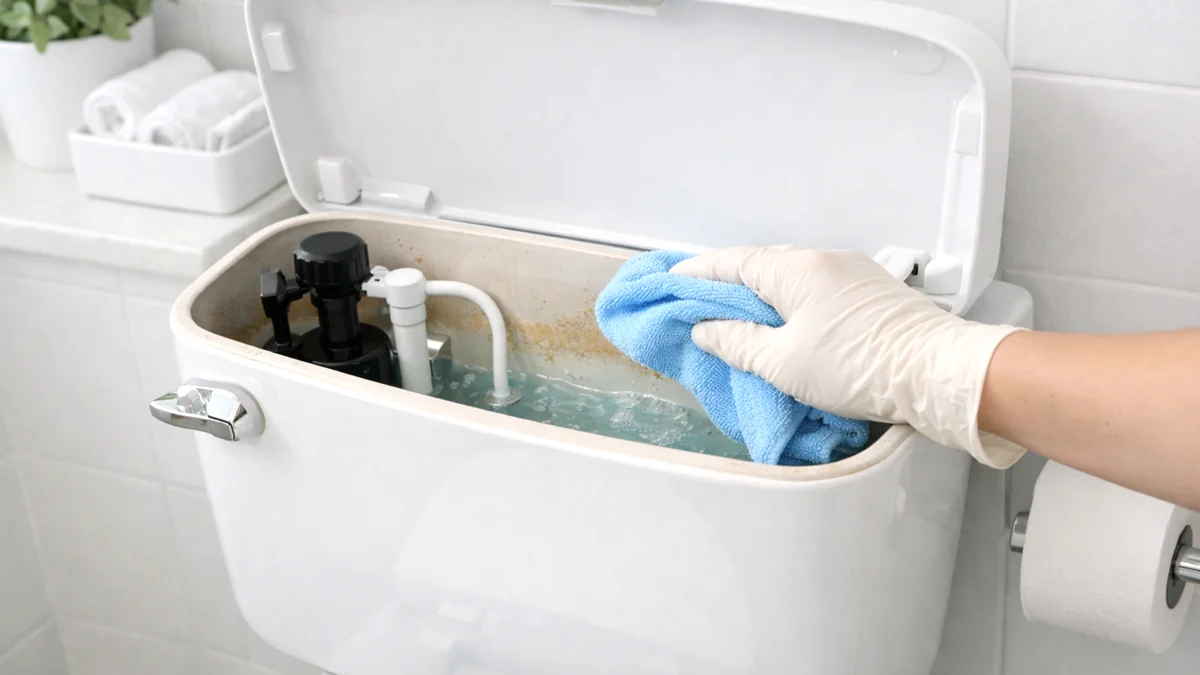
Learning how to clean a toilet tank matters when you lift the lid and see brown streaks or a stale smell. Most of it builds slowly from minerals, standing water, and neglected corners.
When you clean a toilet tank with the wrong product, you can wear down rubber parts and hardware. A safer deep-clean works better because it removes residue instead of hiding it.
Most people do not check the tank often, so stains have time to harden. Odor can also hide around the flapper, chain, and waterline.
The best way to clean a toilet tank is to match the method to the mess and rinse between products. That keeps the job effective and low-risk.
Table of Contents
What Causes Toilet Tank Stains and Odor?
To clean a toilet tank well, you need to know what is causing the color and smell. Most tank mess comes from mineral-heavy water, sitting moisture, and spots that never get wiped.
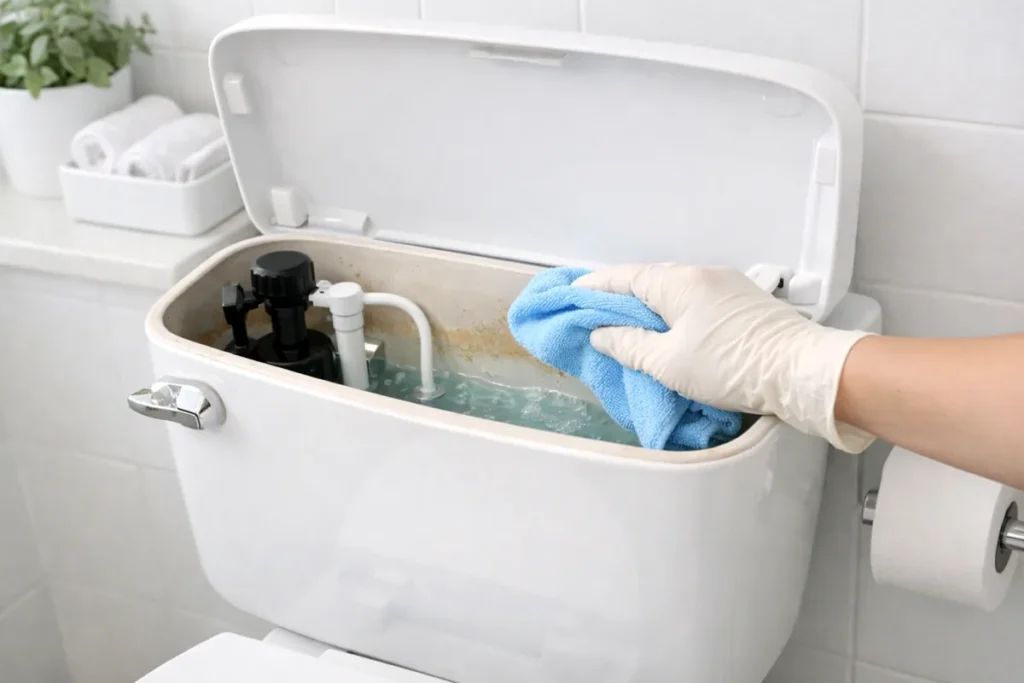
Typical causes include:
- hard water minerals drying on the inner walls
- rust-tinted deposits from metal parts or the water supply
- slime near the flapper and waterline
The USGS notes that hard water contains dissolved minerals that can leave deposits as water dries, which helps explain the chalky or rusty-looking stains seen inside many tanks (USGS on water hardness).
Methods to Clean a Toilet Tank (Deeper Clean, Less Risk)
1. Warm Water and Dish Soap (Light First Pass)
If you only need to clean a toilet tank lightly, start here. It loosens film and soft grime without stressing seals or hardware.
How to use it:
- turn off the water valve and flush to lower the water level
- wipe the walls and parts with a microfiber cloth dipped in warm soapy water
- wipe again with a clean damp cloth
Best for:
- light film
- routine upkeep
2. White Vinegar Soak (For Mineral Film)
A short vinegar soak helps loosen mineral film at the waterline and on the walls. Keep the soak moderate so rubber parts are not exposed for hours.
How to use it:
- drain most of the tank water with a flush
- apply vinegar to stained areas or add a small amount to the remaining water
- wait 15 to 30 minutes, scrub with a nylon brush, and refill
Best for:
- hard water film
- mild odor
When mineral film keeps showing up around the bathroom, showerhead buildup is often part of the same hard water pattern.
3. Baking Soda Paste (For Stuck Spots)
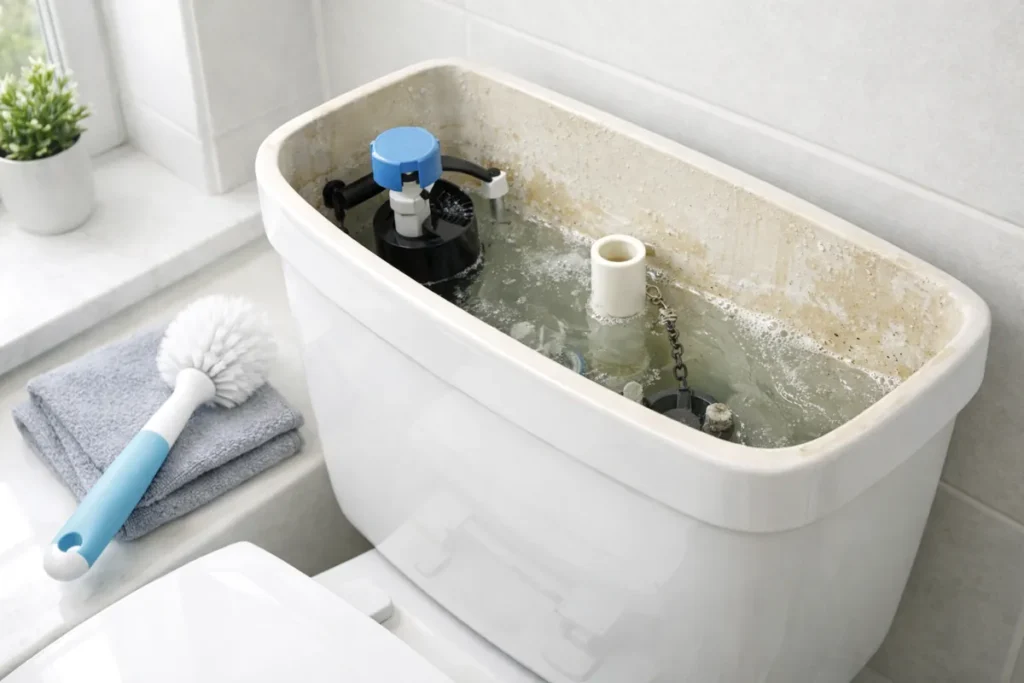
Baking soda adds gentle abrasion for stuck spots without scratching porcelain. It works best after the stain has been softened.
How to use it:
- mix baking soda with a little water to form a paste
- spread it over stained patches and let it sit for 10 minutes
- rub gently with a soft sponge, then wipe clean
Best for:
- small dark spots
- corners and edges
4. Hydrogen Peroxide Wipe (Odor and Slime)
When you clean a toilet tank because of odor, peroxide can help cut slimy residue and freshen the inside. Rinse first and never combine it directly with vinegar or other cleaners.
How to use it:
- empty most of the tank and wipe off loose residue
- apply peroxide with a cloth to the waterline, underside of the lid, and around the flapper
- let it sit for 10 minutes, then wipe and rinse
Best for:
- stale smell
- light slime
If the smell feels stronger than the tank itself, a bathroom sewer smell may be part of the issue.
5. Citric Acid Solution (Heavy Mineral Buildup)
Citric acid is stronger than vinegar against stubborn mineral staining, but it is still manageable for home use when diluted correctly. Follow the directions and rinse well.
How to use it:
- dissolve the citric acid in warm water as directed
- apply it to the stained walls and let it sit briefly
- scrub with a nylon brush and rinse the tank thoroughly
Best for:
- thick hard water stains
- tanks that did not respond to vinegar
The same residue can also leave shower glass stains that get harder to remove over time.
What NOT to Do (Less Damage, Fewer Fumes)
A rough approach can damage parts inside the tank.
- Do not start with the strongest product you own. Trying to clean a toilet tank with the harshest cleaner first can shorten the life of seals and flappers.
- Do not leave acidic products sitting overnight. Shorter, repeated treatments are safer for rubber and metal parts.
- Do not use rough metal brushes or abrasive pads. They can scratch surfaces and make future residue easier to stick to them.
- Do not mix cleaning products. Even common cleaners can create irritating fumes or leave residue that is harder to rinse away.
- Do not ignore worn parts. A damaged flapper or corroded bolt can lead to odor and discoloration building up again.
Advanced Tips to Make Cleaning Easier
Small setup changes make the job less messy. They also help you clean deeper without more effort.
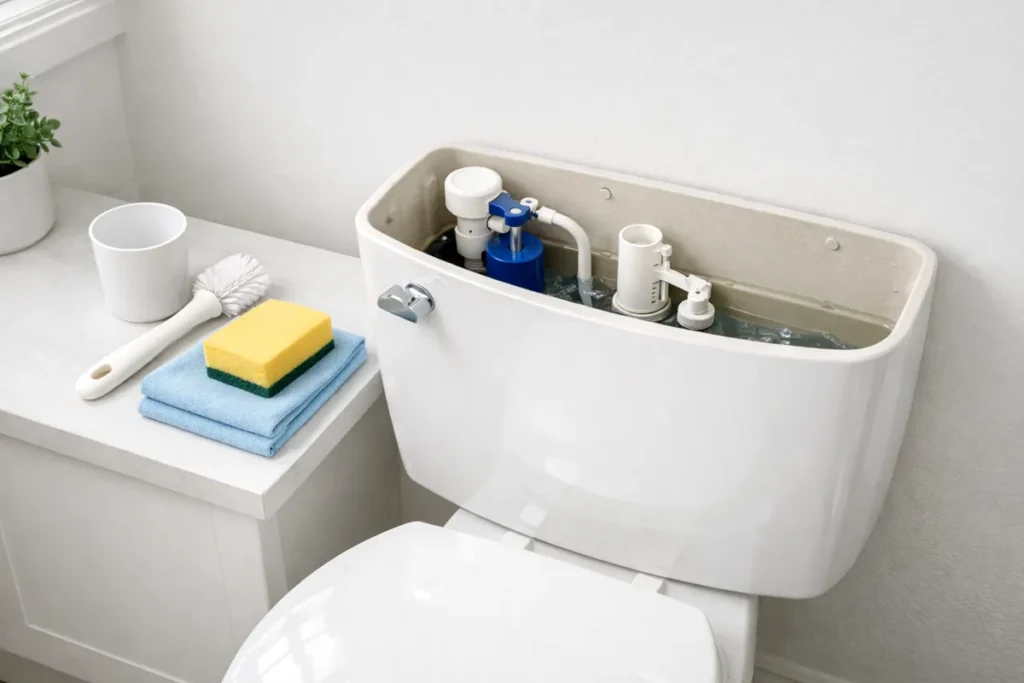
- Keep a small nylon brush just for the tank. It reaches corners better than a toilet bowl brush.
- Use a cup or sponge to remove the last bit of water. You will reach stains faster and use less cleaner.
- Take a quick photo first. It helps you reset the chain and float.
- Rinse with plain water between methods. It helps you see what worked and avoids product overlap.
Hard water buildup often spreads beyond the tank, and limescale on faucets is another easy spot to catch early.
How to Prevent Toilet Tank Stains and Odor From Building Up Again
A few small habits keep stains and odor from stacking up.
- Check inside the tank once a month – early buildup is easier to wipe away.
- Wipe the waterline every few weeks – this stops mineral film from hardening.
- Flush toilets in rarely used bathrooms every few days – standing water can start to smell stale.
- Replace worn flappers and rusty hardware – damaged parts trap grime and can tint the water.
When the source still is not obvious, a quick odor source check can help you rule out nearby drains, rugs, or hidden damp spots.
Frequently Asked Questions (FAQ)
Can I use vinegar in the tank?
Yes, but keep it moderate. A short soak is usually enough for mineral film.
How often should I clean the inside of the tank?
Every one to three months is enough for most homes. Clean sooner if you have hard water or visible staining.
Why does the tank still smell after I scrubbed it?
The odor may be hiding around the flapper, under the lid, or in old hardware. Tight areas often hold more residue than the walls.
Are brown stains always rust?
Not always. They can come from minerals, rust-tinted deposits, or a mix of both.
Do drop-in tank tablets help?
They may make the tank look cleaner for a while, but some products can be hard on parts over time. A manual clean is easier to control.
Do I need to turn off the water every time?
For a proper deep clean, yes. Lowering the water level gives you better access to the walls and parts.
Final Tips
You do not need harsh products to clean a toilet tank well. Start with the mildest method that matches the mess, then move up only if stains remain.
Short contact times, careful rinsing, and attention to hidden parts usually matter more than brute force. Once the tank is clean, quick check-ins help keep stains and odor from building up again.
Conclusion
A cleaner tank helps the whole toilet feel fresher. Clean a toilet tank with the gentlest method that gets results, then keep up with light maintenance so stains and odor do not build up again.