
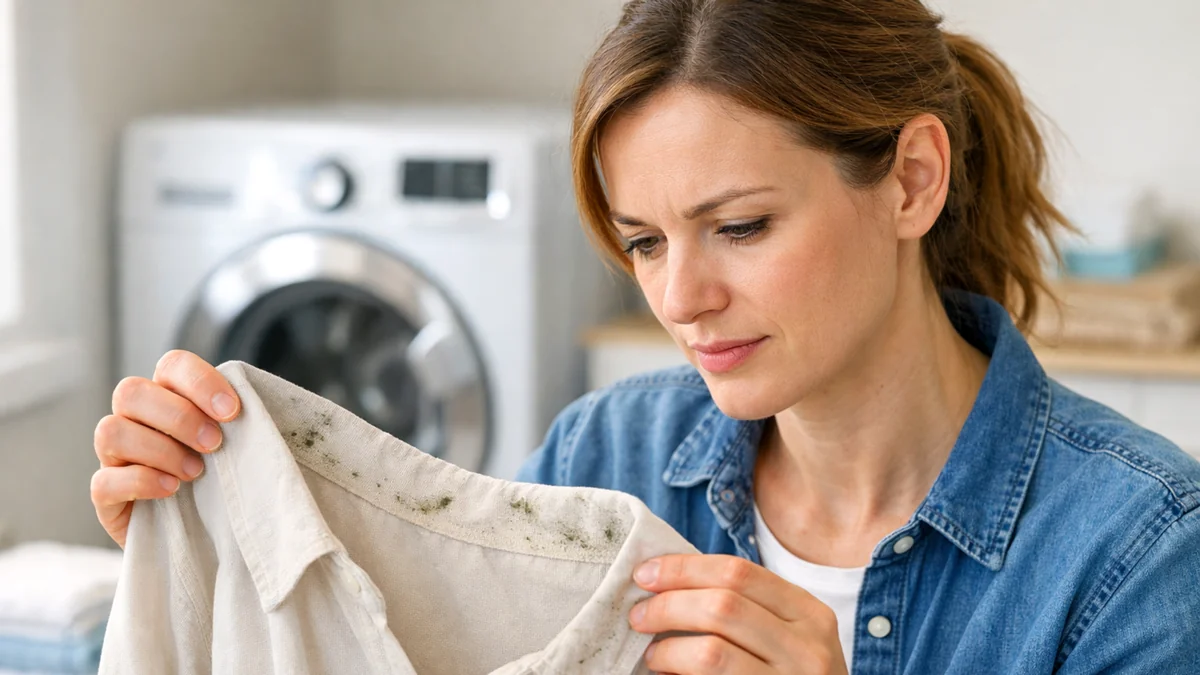
Knowing how to remove mold from clothes can save a favorite shirt before the smell gets worse and the fabric starts to look ruined. Mold usually shows up after laundry stays damp too long, storage air gets humid, or clothes go back into a closet before they are fully dry.
At first, you may only notice a stale smell. Later, small gray, green, or black spots can show up around seams, collars, cuffs, and folded areas.
You can remove mold from clothes with a few steady steps and common laundry supplies. The key is to loosen the growth, wash the fabric the right way, and make sure the item dries all the way through.
Below, you will find the main causes, the best cleaning methods, the mistakes to avoid, and simple habits that help keep mold from growing again.
Table of Contents
What Causes Mold on Clothes?
Mold grows when fabric stays damp, warm, and poorly ventilated. That is why the problem often starts in washers, hampers, closets, storage bins, and basements.

Common causes include:
- Leaving wet laundry in the washer for hours
- Folding or hanging clothes before they are fully dry
- Storing seasonal items in humid closets or boxes
- Poor airflow in laundry rooms or bedrooms
- A washing machine that already smells musty
The CDC notes that mold can grow on fabric and upholstery when moisture is present, which is why clothes that stay damp too long can develop both stains and a musty smell.
If clean loads come out smelling stale again, a musty washer may be part of the problem.
Methods to Remove Mold From Clothes (Gentle First, Stronger If Needed)
1. Brush Off Loose Mold First (Less Mess Before Washing)
Dry brushing removes loose particles before water spreads them deeper into the fabric. It also keeps less residue moving into your sink or washer.
How to use it:
- Take the item outside if possible
- Wear gloves if the mold is heavy
- Use a soft brush to loosen dry patches gently
- Shake the item out before bringing it back inside
Best for:
- Towels
- Jeans
- Sturdy cotton items
2. White Vinegar Soak (Good First Step for Mold)
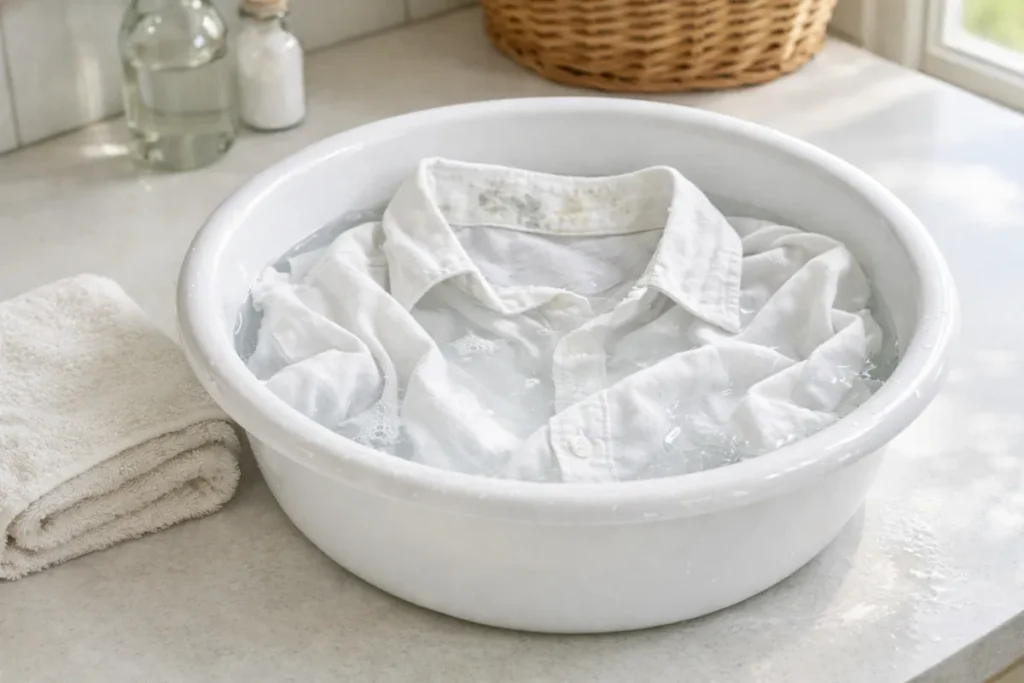
A vinegar soak is one of the easiest ways to remove mold from clothes when the fabric is still in good shape. It helps with sour smell and works well before a normal wash.
How to use it:
- Fill a basin with cool or lukewarm water
- Add 1 cup of white vinegar
- Soak the item for 30 minutes
- Rub the area gently with your fingers or a soft cloth
- Wash with regular detergent
Best for:
- T-shirts
- Socks
- Everyday cotton clothing
3. Baking Soda in the Wash (Extra Freshening Power)
Baking soda helps cut leftover odor during the wash cycle. It works best after a pre-soak or when the mold smell is mild.
How to use it:
- Add detergent as usual
- Add 1/2 cup of baking soda to the drum
- Wash on the warmest setting safe for the fabric
- Check the item before drying
Best for:
- Kids’ clothes
- Sleepwear
- Light musty smells
If the item looks clean but still smells stale, extra help with musty clothes can make the next wash count.
4. Oxygen Bleach Soak (For Stubborn Spots)
For washable fabrics, this is a good next step when gentler methods are not enough. Test in a hidden spot first, especially on colored items.
How to use it:
- Fill a basin with warm water
- Add oxygen bleach as directed on the label
- Soak for 1 to 4 hours
- Wash with detergent afterward
- Air-dry fully before deciding if it needs another round
Best for:
- Sheets
- Pillowcases
- White or colorfast cotton
5. Sun and Air Drying (Finish the Job Well)
Sunlight and airflow help fabric dry faster and can reduce leftover smell. This step supports cleaning, but it should come after washing, not instead of washing.
How to use it:
- Hang the item in a bright, airy place
- Open thick areas like waistbands and collars
- Turn the item once or twice while drying
- Store it only when it feels fully dry
Best for:
- Towels
- Bedding
- Cotton basics
Thicker fabrics can stay damp longer, which is why musty towels are often harder to fully freshen.
What NOT to Do (Skip Damage and Set-In Stains)
A few wrong moves make cleanup much harder.
- Do not put moldy clothes in with the rest of the laundry. Spores and odor can spread to nearby items.
- Do not use the dryer right away. Heat can lock in smell and make marks harder to lift.
- Do not scrub delicate fabric with a stiff brush. Rough rubbing can weaken fibers and leave wear spots.
- Do not store the item after one quick rinse if it still smells off. Leftover dampness can restart the problem fast.
- Do not mix too many products at once. Extra residue can stay in the fabric and make rinsing harder.
Advanced Tips to Make Cleaning Easier
Small prep steps save time later. They also help each wash work better.
- Wash moldy items in a small separate load. That gives water and detergent more room to move through fabric.
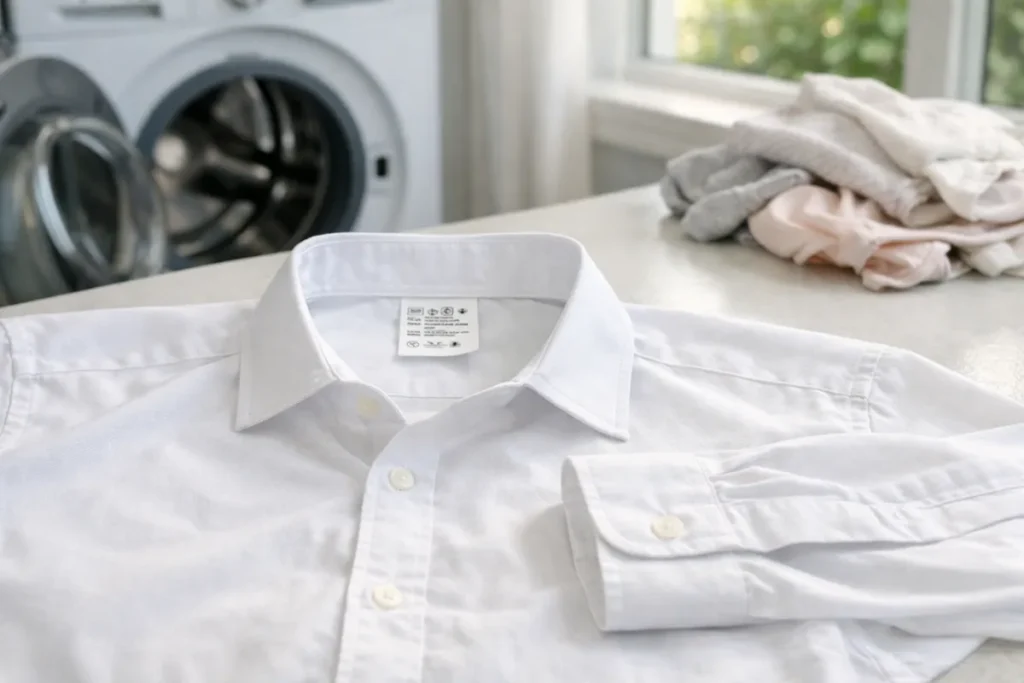
- Check the care label before choosing water temperature. Warm water helps many fabrics, but the label should guide the final setting.
- Smell the item before drying. If odor is still there while the fabric is damp, repeat the treatment first.
- Inspect seams, cuffs, and waistbands carefully. Those areas often hold the last of the smell.
- Clean your washer if clean clothes keep coming out musty. A moldy machine can send the same problem right back into the next load.
If the smell keeps returning from different areas, it helps to track the source before rewashing everything.
How to Prevent Mold on Clothes
Better drying habits stop most repeat problems.
- Move wet laundry fast. Try not to let a finished load sit in the washer.
- Dry clothes all the way through. Thick seams and waistbands often stay damp longer.
- Leave space in closets and drawers. Better airflow helps clothes stay fresh.
- Clean hampers and storage bins now and then. Moisture and dust can feed musty smells.
- Leave the washer door open after loads. This helps the drum and seal dry out.
Sometimes the smell keeps coming back because the clothes are going into a musty closet.
Frequently Asked Questions (FAQ)
Can moldy clothes be saved?
Yes, many can. If the fabric is still strong and the stain is not too old, a careful soak and wash often fix the problem.
Is vinegar enough on its own?
Sometimes, yes. For older spots or stronger odor, you may need a second wash or oxygen bleach.
Can I use these methods on dark clothes?
Usually yes, but test in a hidden spot first. Oxygen bleach should only be used if the label says the fabric can handle it.
What if the smell stays after one wash?
Sometimes, one wash is not enough. The real fix is repeating the right process instead of reaching for one stronger product.
How often should I clean my washer?
Once a month is a smart routine if you do laundry often. Clean it sooner if the drum, seal, or detergent drawer smells musty.
When should I throw the item away?
If the fabric is weakened, the spots keep coming back, or the odor stays after several careful tries, it may not be worth saving.
Final Tips
Start with the gentlest method that matches the fabric. One round is not always enough, so repeat the process before moving to a stronger option.
Always check the item before heat drying. A clean washer, full drying, and better airflow will help remove mold from clothes and keep musty odor from building up again.
For more laundry help beyond this fix, the laundry cleaning guide rounds up related cleaning tips.
Conclusion
A steady routine makes it easier to remove mold from clothes without ruining fabric or trapping odor in the fibers. Once you fix the moisture issue and improve drying habits, mold is far less likely to grow on clothes again.