
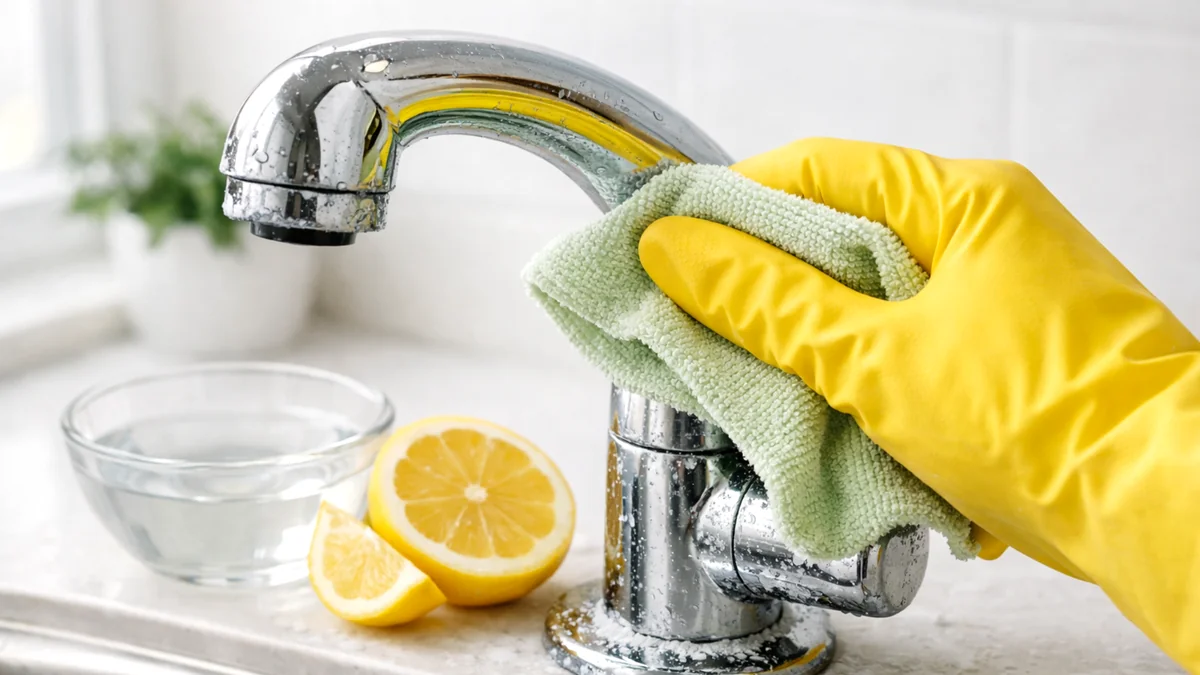
White crusty spots on a faucet can make the whole sink look dull fast. If you are trying to figure out how to remove limescale from faucets without spending your whole evening cleaning, you are not alone.
Limescale builds when water dries and leaves minerals behind. It starts as a faint haze, then turns chalky and rough over time.
A few simple methods and a little sit time can make a big difference fast.
Table of Contents
What Causes Limescale Buildup on Faucets?
Limescale is a mineral deposit left behind by hard water. When droplets dry on the spout or handles, they leave a thin layer that slowly builds.
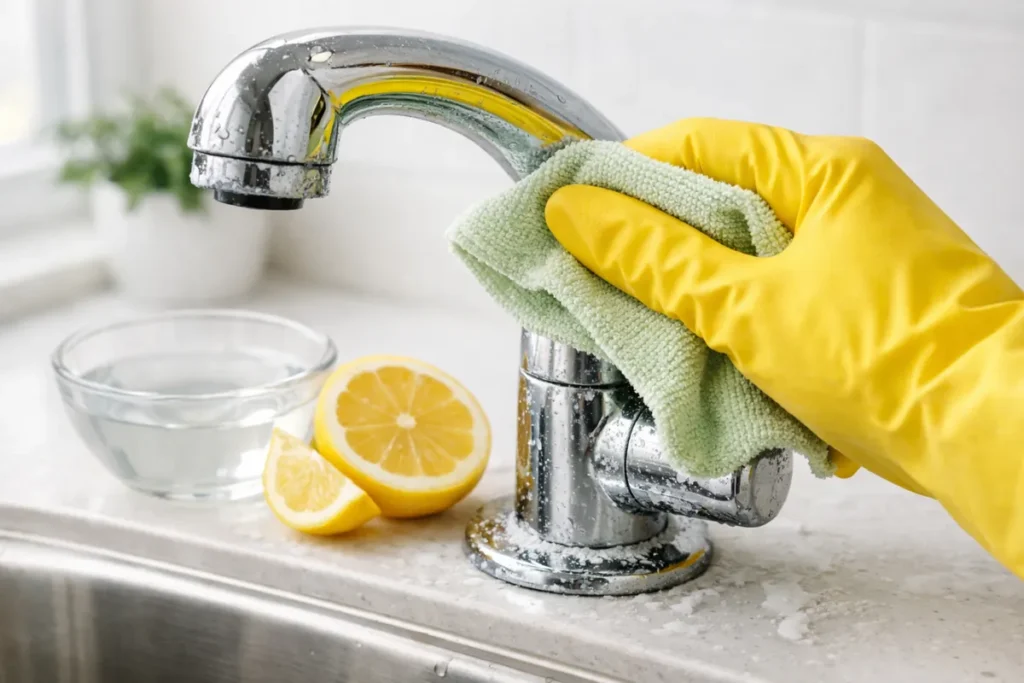
Typical causes include:
- Hard water minerals drying on the surface
- Soap and toothpaste residue trapping minerals
- Not drying the faucet after use
- A slow drip that keeps feeding new deposits
The USGS explains that water hardness is mostly dissolved calcium and magnesium, and hard water can leave scale deposits on plumbing and fixtures over time.
If hard water is showing up in more than one spot, the same kind of buildup often leaves hard water stains on shower glass too.
How to Remove Limescale From Faucets (Fast Methods for Busy Homes)
When deciding how to remove limescale from faucets, start with the gentlest method that fits your time. If your faucet has a specialty finish (matte black, brushed, gold), test in a small hidden area first and keep soak times short.
1. Warm dish soap wipe (Fast first pass)
This removes grime and fresh haze so you can see what is truly mineral buildup.
How to use it:
- Mix a few drops of dish soap with warm water.
- Wipe with a microfiber cloth for 30 to 60 seconds.
- Rinse and dry with a second cloth.
Best for:
- Very light buildup and water spots
- Any finish as a safe starting point
2. Vinegar cloth wrap (Quick dissolve)
Vinegar helps break down mineral deposits while you do something else.
How to use it:
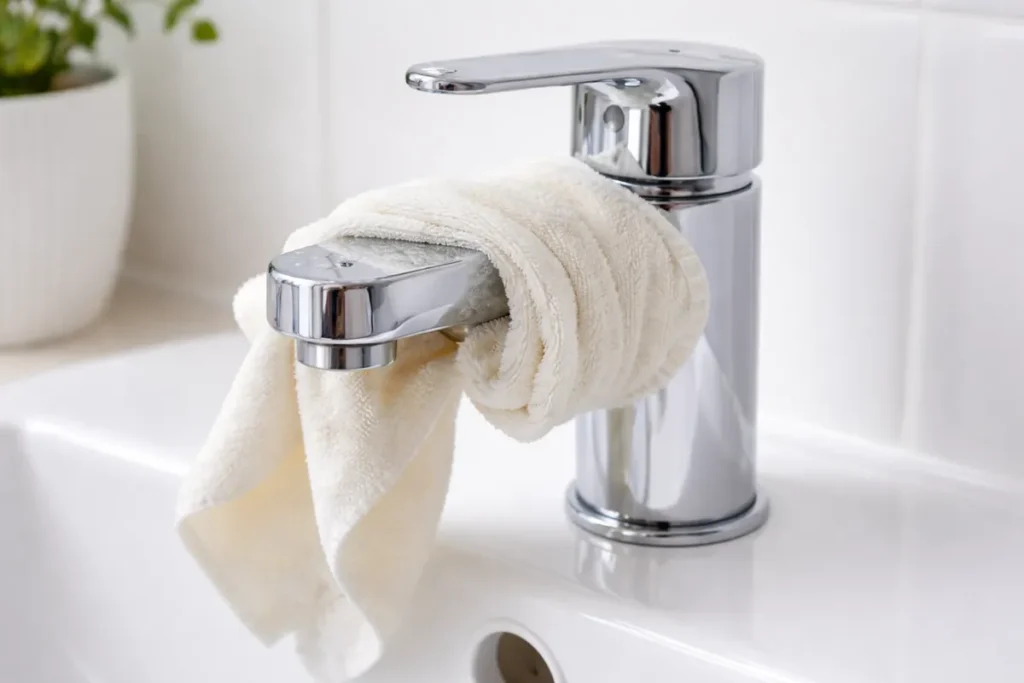
- Soak a soft cloth or paper towels in white vinegar and wrap the limescale.
- Let it sit 10 minutes (5 minutes for sensitive finishes).
- Wipe, rinse well, and dry completely.
Best for:
- Light to moderate rings and streaks
- Base of the spout and handle seams
3. Aerator vinegar bag (Fix spray and flow)
Scale often clogs the aerator at the tip, causing uneven spray.
How to use it:
- Fill a small zip-top bag with vinegar and place it over the faucet head.
- Secure with a rubber band so the aerator sits in vinegar.
- Wait 15 minutes, then run water and scrub gently with an old toothbrush.
Best for:
- Crusty buildup on the faucet tip
- Weak or sideways water flow
4. Lemon rub (Simple shine)
Lemon juice is acidic and can loosen light scale with less odor.
How to use it:
- Rub a cut lemon over the spots.
- Let it sit 5 to 10 minutes.
- Rinse and dry right away.
Best for:
- Light buildup on chrome or stainless
- Quick shine before guests
5. Baking soda paste (Stubborn patches)
A paste adds grip so you can lift stuck spots without harsh scrubbing. Use a soft cloth, not a scratchy pad.
How to use it:
- Mix baking soda with a little water to make a thick paste.
- Spread it on the limescale and wait 5 to 10 minutes.
- Wipe, rinse, and dry.
Best for:
- Small heavy spots that did not move with vinegar
- Around the faucet base where scale cakes on
6. Two-round soak (Heavier buildup, still doable)
Older buildup often needs a repeat, not more force.
How to use it:
- Do the vinegar wrap for 15 minutes, then wipe, rinse, and dry.
- Repeat once more and use a soft toothbrush for edges.
- Finish with a quick buff using microfiber.
Best for:
- Thick buildup you can feel with your fingers
- Faucets that have been ignored for a while
Sometimes patience works better than scrubbing, and how to remove limescale from faucets often comes down to a short soak, then a light wipe.
The same quick soak can also help loosen calcium buildup on showerheads when the spray holes start to clog.
What NOT to Do (In a Busy Home)
When limescale is annoying, it is tempting to grab the strongest cleaner and scrub hard. In most cases, that causes scratches or dull spots and creates more work later.
- Do not use steel wool or abrasive pads. They can scratch finishes and make future buildup stick faster.
- Do not leave vinegar on too long, especially on coated or colored finishes. Keep contact time short and test first.
- Do not mix cleaners, especially bleach with vinegar or ammonia. It can create harmful fumes and is not needed for limescale.
- Do not flood the base or let liquid seep into gaps. Trapped moisture can cause rust or loosen parts.
- Do not skip drying at the end. Air-drying can leave new spots right away.
That same gentle approach matters with soap scum on shower walls, where harsh scrubbing can leave surfaces looking worse.
Advanced Tips to Make Cleaning Easier
These quick habits make the next cleanup faster.
- Start with a sit method first, then do another task while it works.
- Keep a mini kit under the sink: microfiber, toothbrush, vinegar, and baking soda.
- Use two cloths: one wet for cleaning, one dry for finishing.
- Clean the worst spot first (often the base or aerator) so progress is obvious.
If you want the whole room to look cleaner, a quick pass on bathroom tiles and grout can make a bigger difference than you think.
How to Prevent Limescale Buildup on Faucets From Building Back Up
A few small habits beat another deep scrub later. They also cut down how often you have to think about how to remove limescale from faucets.
- Dry the faucet after the last sink use each day.
- Wipe handles and the spout after dishes or toothbrushing.
- Fix drips quickly, even “slow” ones.
- Do a 2-minute weekly vinegar wipe, then rinse and dry.
- Keep a microfiber cloth nearby so it is easy to follow through.
The same dry-after-use habit also helps keep a streak-free shower door looking clearer between deep cleans.
Frequently Asked Questions (FAQ)
How long does it take?
Light scale is often 5 to 15 minutes, mostly sit time. Heavier buildup may need two short rounds.
Will vinegar damage my faucet?
Usually not on chrome or stainless, but some specialty finishes can dull. Test in a hidden spot and keep the soak short.
Do I have to take the aerator off?
Not always. The vinegar bag method often works without removing anything, but a removable aerator can be easier to scrub if it is very clogged.
What if I only have 5 minutes?
Do the dish soap wipe and a full dry. That stops fresh mineral spots from hardening until you have time for vinegar.
Are these methods safe with kids and pets around?
They are generally lower-fume than harsh cleaners, but keep supplies out of reach and rinse the faucet well afterward.
What if the scale still will not come off?
Try one more round, then check your faucet manual for approved cleaners. If the finish looks pitted or stained, the surface may be etched and may not fully return to “like new.”
Final Tips
Start gentle, let your cleaner sit, and dry well. Two short rounds are often easier than one aggressive scrub.
If you are short on time, do one quick wipe today and save the soak for tomorrow. Small resets keep buildup from turning into a bigger job.
Once it looks good, a quick weekly wipe keeps it that way with almost no effort.
Our bathroom cleaning guide pulls together more quick fixes for common bathroom buildup.
Conclusion
A cleaner faucet makes the whole sink feel fresher. With simple supplies and short sessions, you can learn how to remove limescale from faucets and keep it from building back up.