
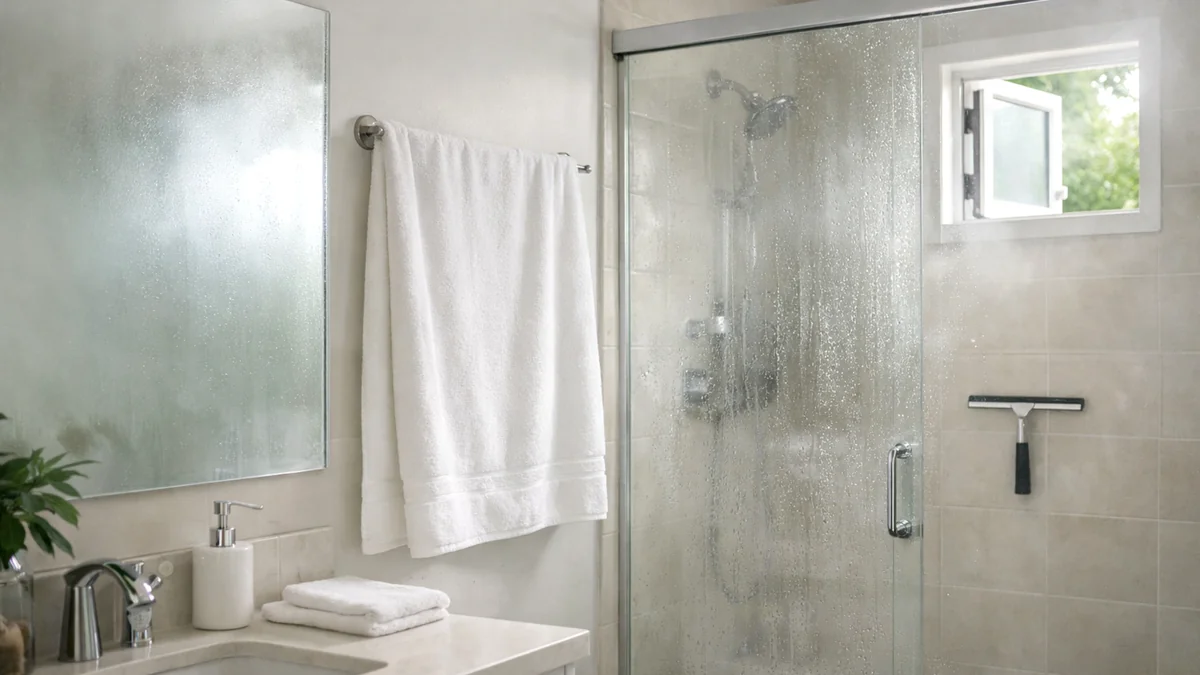
Steam can linger in a bathroom long after you step out. A few small habits usually matter more than heavy cleaning when you want to stop moisture from building up after a shower.
Wet walls, a foggy mirror, and a damp smell often mean the room is holding steam too long. That can make the bathroom feel less fresh.
Most of the time, the problem is not dirt. It is trapped humidity, slow drying, and soft items that stay wet longer than expected.
Table of Contents
Why Moisture After a Shower Happens
Moisture after a shower builds up when warm steam has nowhere to go. Even a clean bathroom can stay damp if airflow is weak or water is left sitting too long.
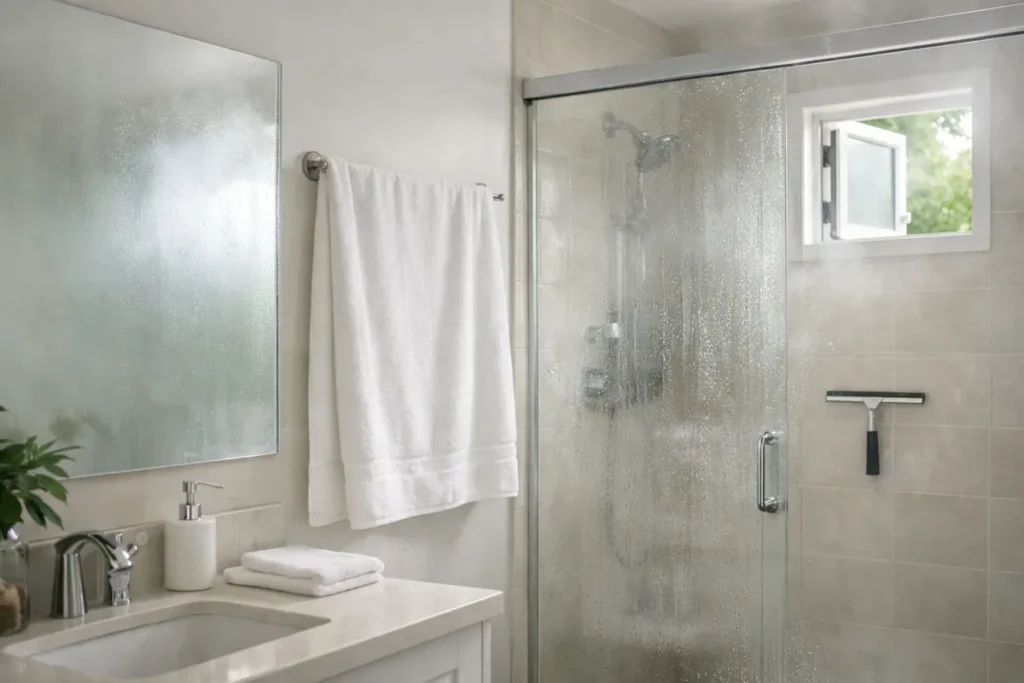
The problem also gets worse when towels, mats, and shower curtains stay wet. A closed room can hold that damp air longer than you think.
Common causes include:
- A weak fan or a fan turned off too soon
- Closed doors and windows that trap steam
- Water left on glass, tile, and fixtures
- Towels and mats drying too slowly
The EPA says controlling moisture is the key step in limiting mold growth indoors.
Slow drainage can leave extra moisture behind, so fixing a shower drain may help more than you think.
Best Ways to Stop Moisture From Building Up After a Shower (Small Moves That Work)
1. Run the Fan Longer (Timing Matters)
A fan helps most when it keeps running after the shower ends. This is one of the easiest ways to stop moisture from building up after a shower.
How to use it:
- Turn it on before or at the start of the shower
- Leave it running for 15 to 20 minutes after
- Keep the door slightly open if possible
Best for:
- Small bathrooms
- Bathrooms with no window
2. Open Up the Space (Let Steam Escape)
Steam needs a path out. Opening the door, shower curtain, or window helps move damp air out faster.
How to use it:
- Pull the curtain open after use
- Leave the shower door open once dripping slows
- Crack a window if weather allows
Best for:
- Bathrooms with weak fans
- Glass shower doors

3. Squeegee Wet Surfaces (Cut Drying Time)
Glass and tile can stay wet for a long time. A quick pass with a squeegee helps stop moisture from building up after a shower because less water stays behind.
How to use it:
- Keep a squeegee in the shower
- Swipe glass, tile, and smooth walls after showering
- Focus on the wettest spots first
Best for:
- Glass doors
- Tiled walls
If water spots are already showing, cleaning the shower glass can help you start fresh.
4. Wipe Trouble Spots Fast (Target the Wettest Areas)
Some spots trap water more than others. A microfiber cloth can help reduce lingering moisture after a shower when you use it on corners, trim, and ledges.
How to use it:
- Wipe corners, frames, and metal trim
- Dry the sink counter if it gets splashed
- Hang the cloth so it dries fully
Best for:
- Older bathrooms
- Bathrooms with grout and trim
5. Spread Out Towels and Mats (Do Not Trap Dampness)
Soft items hold moisture longer than hard surfaces. This step helps stop moisture from building up after a shower by keeping fabrics from adding more dampness back into the room.
How to use it:
- Hang towels fully open
- Lift or hang the bath mat after use
- Swap in a dry towel if needed
Best for:
- Shared bathrooms
- Busy mornings
Better towel drying can make the whole bathroom easier to manage when towels stay damp for hours.
6. Add Extra Moisture Control (For Stubborn Humidity)
Some bathrooms need extra help. A small dehumidifier or moisture absorber can help reduce moisture after a shower when ventilation is limited.
How to use it:
- Place it away from splash zones
- Empty or replace it on schedule
- Use it as support, not the only fix
Best for:
- Windowless bathrooms
- Repeated damp air
What Not to Do (Shortcuts That Backfire)
A few habits make the room stay damp longer. They seem small, but they usually create more work later.
- Do not turn the fan off right away. The steam still needs time to clear.
- Do not leave the shower curtain bunched up. Folds stay wet longer.
- Do not leave towels or mats in a heap. Thick fabric dries very slowly.
- Do not rely on fragrance sprays alone. They hide the smell but not the moisture.
- Do not ignore a fan that barely works. Weak airflow makes every other step less effective.
Advanced Tips to Make This Easier
The best routine is the one you can keep. A few setup changes can make drying feel almost automatic.
- Keep a squeegee and microfiber cloth in the bathroom so the job takes less than a minute.
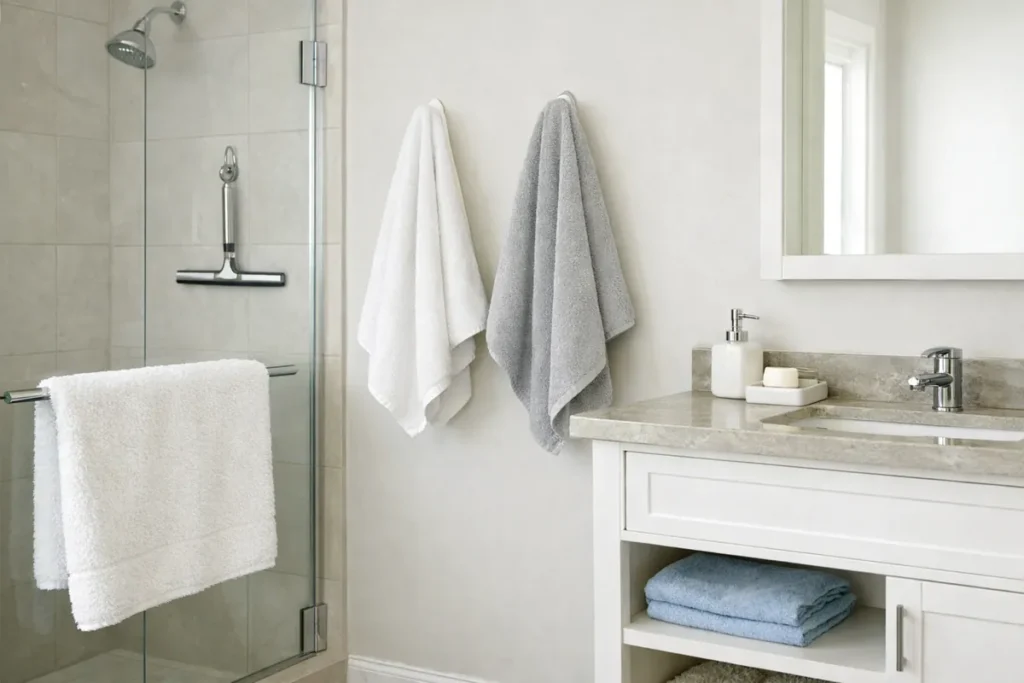
- Use hooks or bars that let towels hang fully open instead of folding thick layers together.
- Open the door or window right after showering so steam can leave sooner.
- Wash bath mats often so they dry faster and do not stay damp as long.
A simple under-sink setup makes it easier to keep a cloth, squeegee, and spare mat within reach.
How to Prevent Moisture After a Shower From Building Up Again
Prevention works best when it feels like part of the routine. The goal is faster drying, not more chores.
- Start the fan early – airflow works better before steam fills the room.
- Remove water quickly – one fast squeegee pass cuts down lingering moisture.
- Dry fabrics fully – towels and mats should never stay bunched up.
- Keep airflow moving – crack the door or window after showers when you can.
- Check the room later – a quick look helps you catch anything still wet.
Frequently Asked Questions (FAQ)
How long should I leave the fan on after a shower?
About 15 to 20 minutes is a good starting point. If the bathroom gets very steamy, leave it on longer.
What if I do not have a bathroom fan?
Open the door, crack a window, and dry surfaces faster. If you still cannot stop moisture from building up after a shower, a small dehumidifier can help.
Do I need to wipe every surface every time?
No. Focus on the wettest areas, like glass, tile, and ledges where water sits.
Why does the room still feel damp even after I clean it?
Cleaning helps, but it does not fix poor airflow. If you want to stop moisture from building up after a shower long term, the room needs better drying habits too.
Can a bath mat make the problem worse?
Yes. If it stays wet for hours, it keeps adding dampness back into the room.
When does this point to a bigger issue?
If paint peels, mildew returns fast, or the fan does very little, the bathroom may need better ventilation. In the meantime, lower shower moisture with simple daily habits first.
Final Tips
Small actions work best when they happen every day. You do not need to do everything at once to stop moisture from building up after a shower.
Start with the fan, one drying tool, and a better towel routine. Once that feels normal, add one more habit if the room still stays damp.
If the bathroom still smells stale after it dries, bathroom mold smell may be a sign that moisture is lingering too long.
Conclusion
A few better habits can help stop moisture from building up after a shower without turning cleanup into a big job. Keep the routine short, stay consistent, and your bathroom should feel drier and easier to manage.