
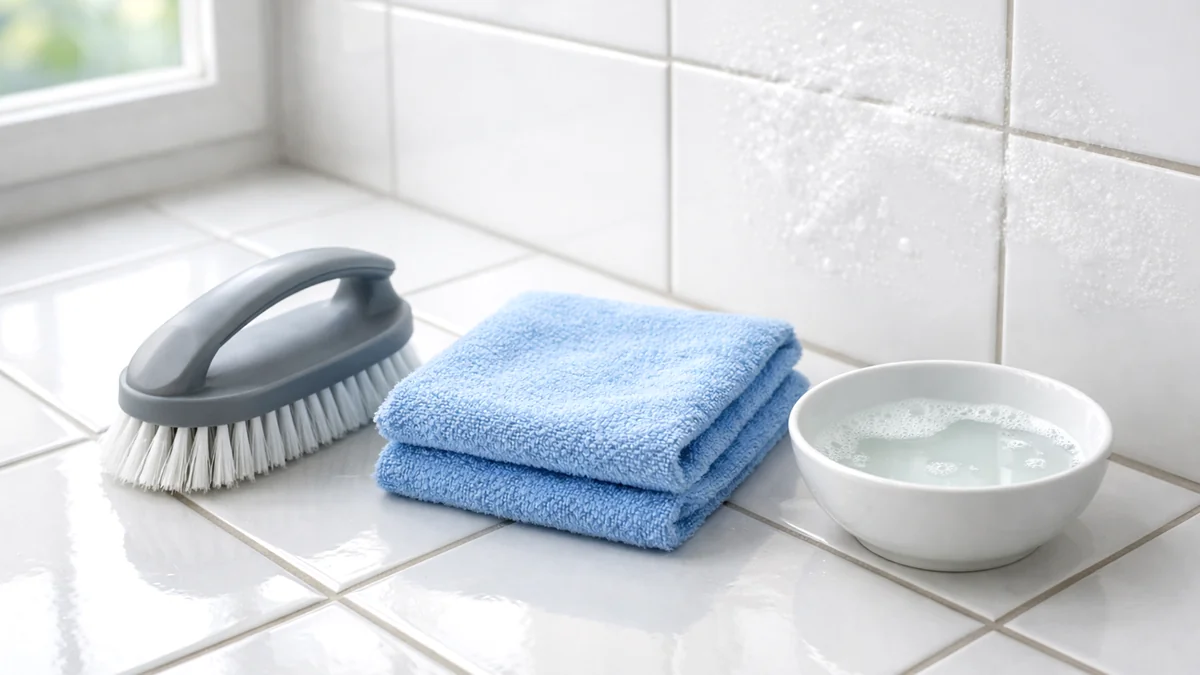
Many people want one simple way to clean tiles and grout in the bathroom without fading color or roughing up the surface. The hard part is that bathroom tile, grout, and buildup do not all respond to the same method.
Store labels make everything sound universal. In real homes, the right choice depends on tile type, grout condition, and whether the mess is mostly soap film, body oil, or light mineral haze.
A common mistake is choosing only by price, scent, or the strongest claim on the bottle. That can mean extra rinsing, wasted effort, or grout that looks more worn over time.
The best way to clean tiles and grout in the bathroom is usually the one that matches the surface first and the mess second. Once those two points are clear, the safer option becomes easier to spot.
Table of Contents
What Makes a Good Bathroom Tile and Grout Cleaning Method?
A good method should remove residue without turning regular upkeep into a full project. Surface safety matters just as much as cleaning power.
- It lifts common bathroom film without heavy abrasion.
- It protects grout instead of grinding it down.
- It matches the tile, especially if stone is involved.
- It rinses clean and does not leave a sticky film.
- It feels simple enough to repeat every week.
The EPA recommends following label directions and using household cleaners in well-ventilated spaces.
Sometimes the surfaces look clean, but a lingering mold smell still needs separate attention.
What to Look for First (Less Scrubbing Later)
Start with the surface, not the cleaner. That one detail changes the whole choice.
Before you clean tiles and grout in the bathroom, choose the method based on what you see and what the surface can handle.
- Check the tile type. Ceramic and porcelain are usually easier to clean than natural stone, which often needs a pH-neutral product.
- Look at the grout itself. Older or sandy grout needs a softer brush and less pressure.
- Identify the main mess. Soap film, body oil, and light hard water marks do not all lift the same way.
- Notice the location. Wall tile often needs dwell time, while floor grout usually needs better brushing.
- Think about rinsing. Tight corners reward low-residue methods because leftover cleaner is harder to remove.
Best Ways to Clean Tiles and Grout in the Bathroom (Safer Results by Surface)
1. Warm Water and Microfiber Wipe (Best for Weekly Upkeep)
This is the simplest option for light film before it hardens.
Best for:
- glossy wall tile
- bathrooms cleaned often
Watch out for:
- weak results on dingy grout
Why it makes sense:
It removes fresh residue early and keeps harsher cleaning from becoming routine.
Cloudy glass after a wipe-down usually points to hard water stains, not leftover film.
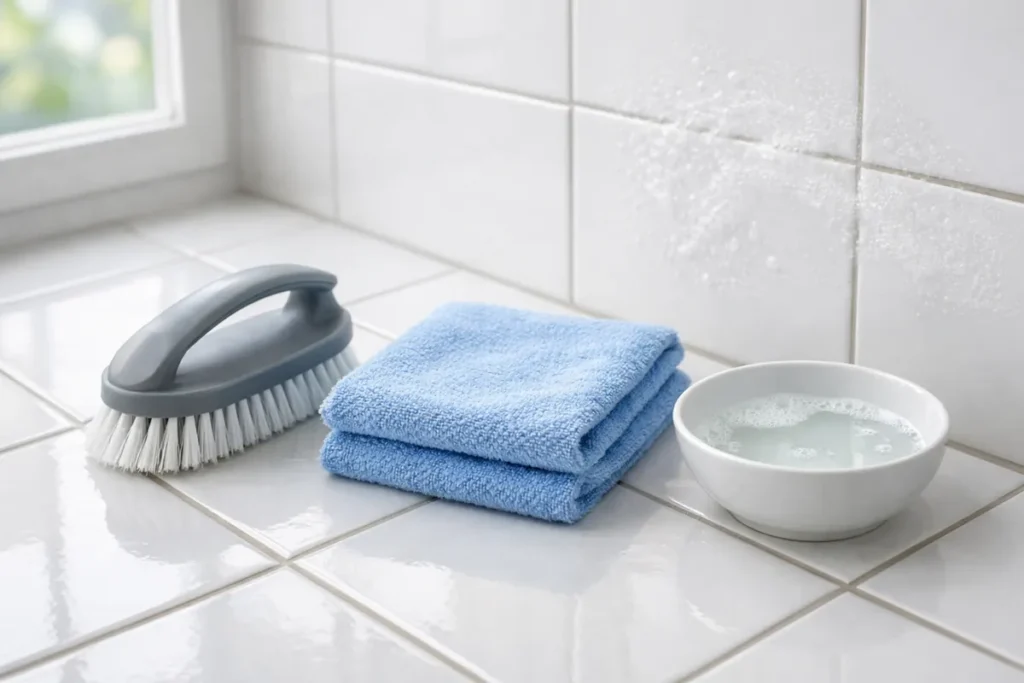
2. Dish Soap and Soft Nylon Brush (Best Overall Balance)
This is the most useful middle-ground method for many homes.
Best for:
- mixed soap film and body oil
- shower floors and wall tile
Watch out for:
- too much soap can leave residue
Why it makes sense:
A small amount of dish soap in warm water adds cleaning power without making the process harsh or complicated.
When buildup is thicker on shower walls, a more focused method for soap scum usually works better.
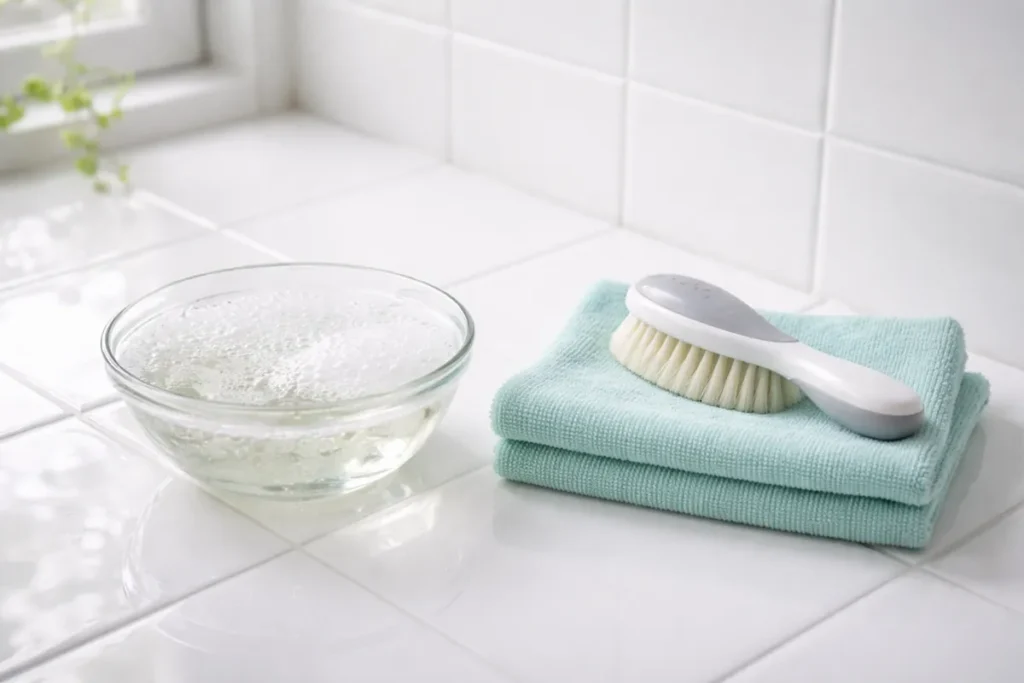
3. Baking Soda Paste Spot Clean (Best for Small Grout Spots)
This works better as a targeted fix than a whole-room method.
Best for:
- corners and edges
- a few darker grout sections
Watch out for:
- slow work on large areas
Why it makes sense:
Gentle friction can brighten isolated spots without soaking the full bathroom.
4. Oxygen-Based Cleaner With Dwell Time (Best for Dingy Grout)
This is a smart step up when grout looks dull across a larger area.
Best for:
- gray-looking grout
- deeper periodic cleaning
Watch out for:
- needs careful rinsing
Why it makes sense:
Letting the cleaner sit briefly often works better than scrubbing much harder.
If the chalky buildup is mostly on metal fixtures, treat limescale on faucets separately from the grout.
5. pH-Neutral Tile Cleaner (Best for Natural Stone)
Stone surfaces need more caution than they first appear.
Best for:
- marble, slate, or travertine
- homeowners who want a safer default
Watch out for:
- may feel too mild on heavy grime
Why it makes sense:
It lowers the risk of dulling the finish while still helping with everyday bathroom buildup.
The same low-residue mindset also works well for keeping a shower door streak-free.
What NOT to Choose (Skip Damage and Haze)
Harsh choices can leave grout weaker, duller, or harder to rinse.
- Do not choose metal brushes or extra-stiff scrubbers. They can scratch tile and wear grout down faster than expected.
- Do not choose a cleaner only because it smells strong. Scent does not prove better cleaning.
- Do not choose acidic formulas for every surface. Natural stone and some grout lines need a gentler cleaner.
- Do not choose thick foaming products just for drama. Some take longer to rinse and leave film behind.
- Do not choose one method for every bathroom mess. Surface type and buildup level should decide.
For more low-risk options like these, browse more bathroom cleaning tips.
How to Pick the Right Option for Your Home
Match the method to your mess, surface, and weekly routine.
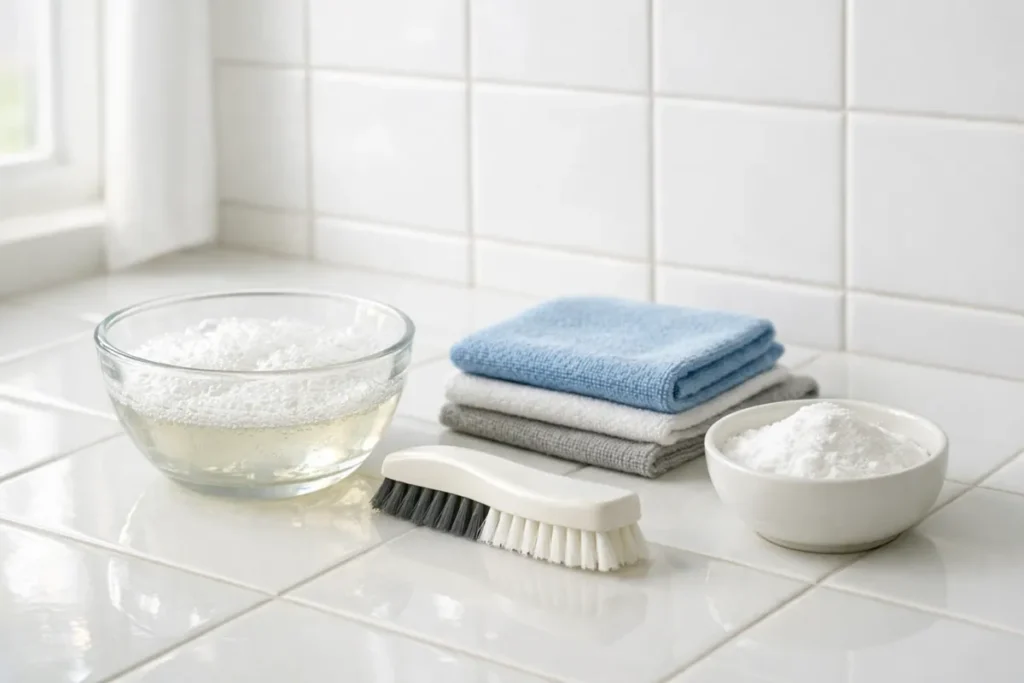
- If your bathroom gets cleaned often, start with warm water, microfiber, or a mild soap mix.
- If you have natural stone, use a pH-neutral cleaner first and stay cautious by default.
- If grout looks dingy across a wide area, move to an oxygen-based cleaner before increasing brush pressure.
- If storage is limited, keep one gentle routine method and one stronger grout backup.
- If textured floor tile traps dirt, use a soft grout brush and work in smaller sections.
Weak spray can add to the mess, so it is also worth clearing showerhead buildup.
Frequently Asked Questions (FAQ)
What matters most when choosing a method?
Surface fit matters most. A method that protects the tile and grout usually gives a better long-term result than a harsher one.
Do I need several products?
Most homes do not need many products to clean tiles and grout in the bathroom well. One routine method and one deeper-clean option is usually enough.
Can budget options still work?
Yes. Warm water, microfiber, dish soap, and a soft brush can handle a lot when used consistently.
When is a stronger option worth it?
Use it when lighter methods stop making a visible difference. Even then, dwell time is usually safer than harder scrubbing.
Are natural options enough?
They can be enough for light film and small touch-ups. Heavier residue may need a purpose-made cleaner to save effort.
How should I test a new method?
Try it on a small hidden area first, then rinse and let it dry. That is the safest way to clean tiles and grout in the bathroom when the surface finish is uncertain.
Final Tips
Choose by fit, not by hype. Think about surface, mess, and effort together.
Do not assume more force means better cleaning. In many bathrooms, a gentler method with enough dwell time does more.
One solid routine option plus one deeper-clean backup often beats a shelf full of random products.
For a simpler routine beyond the bathroom, start with more cleaning tips for the home.
Conclusion
The best results usually come from matching the method to the tile, the grout, and the kind of buildup you actually have. When you clean tiles and grout in the bathroom with a surface-safe plan, the room stays brighter and regular upkeep feels easier.