
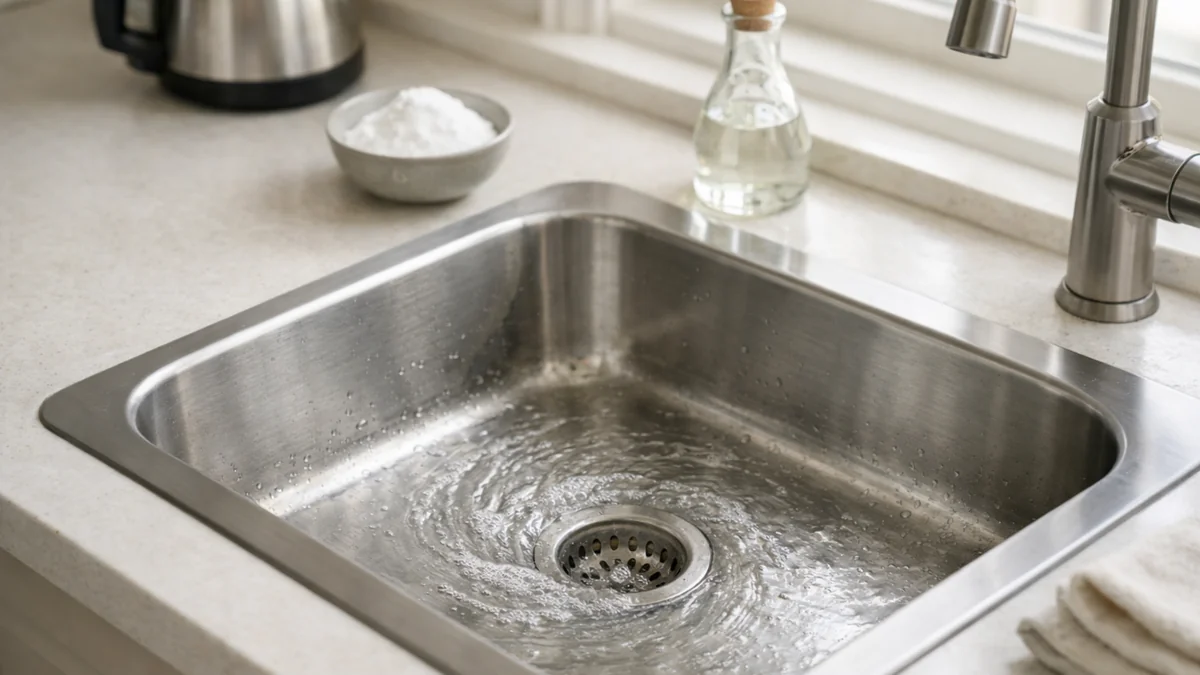
A slow or fully clogged sink can throw off your whole routine. Standing water, bad smells, and slow draining often show up at the worst time. Understanding how to unclog a sink without chemicals helps you fix the problem safely without harsh fumes or damage.
Many people reach for strong chemical drain cleaners right away. Those products can damage pipes, irritate skin and lungs, and still fail to remove the real blockage. And if the kitchen still smells off, it’s not always the sink – a quick fridge odor cleanup can help you track down the source.
There are safer, expert-approved methods that work just as well. Gentle tools, warm water, and simple household items can clear most clogs when used the right way.
Once you understand what causes sink clogs and how to handle them step by step, you can keep drains flowing without risking your home or health.
Table of Contents
What Causes Sink Clogs?
Sink clogs rarely happen all at once. They usually develop from small habits that add up over time.
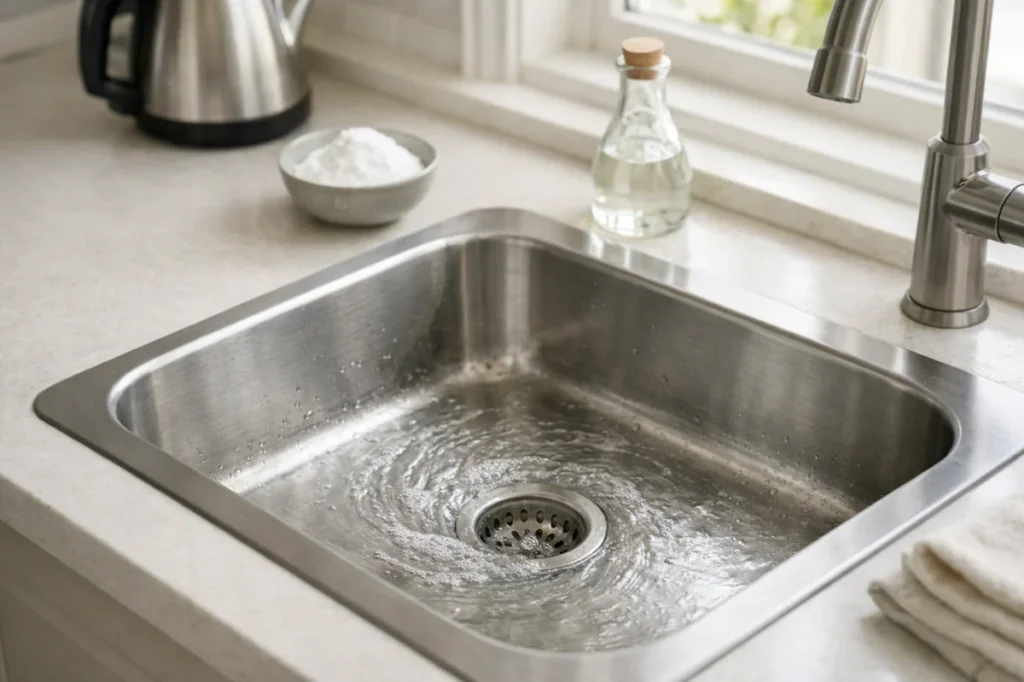
In kitchen sinks, grease and oil coat the inside of pipes. Food particles stick to that layer and slowly reduce water flow.
In bathroom sinks, hair, soap residue, toothpaste, and skin oils create sticky buildup. Even small amounts can trap debris and form a blockage.
Common causes include:
- Grease and oil poured down the drain
- Food scraps and coffee grounds
- Hair and soap scum
- Mineral buildup from hard water
- Rinsing thick products without enough water
The U.S. Geological Survey (USGS) explains that hard water minerals can build up inside household plumbing and reduce water flow over time.
Clogs are not just a sink problem. If your dishwasher is not cleaning well, clean the spray arms to improve water flow.
How to Unclog a Sink Without Chemicals (Safe, Chemical-Free Methods)
These methods show how to unclog a sink without chemicals by using a gentle-to-strong approach with simple tools like heat, pressure, and common household items. Start with the easiest option and move down only if needed.
1. Boiling Water Flush (Simple Heat Power)
Hot water helps soften grease and loosen soap residue so it can move through the pipe.
How to use it:
- Boil a full kettle or large pot of water.
- Slowly pour it directly into the drain in stages.
- Wait a few minutes and test the flow.
Best for:
- Grease-based clogs
- Slow drains
- Kitchen sinks
2. Dish Soap and Hot Water (Grease Breaker)
Dish soap cuts through oils and helps slippery buildup slide away.
How to use it:
- Squirt 1–2 tablespoons of dish soap into the drain.
- Follow with very hot water.
- Let it work for 5 minutes, then rinse again.
Best for:
- Greasy kitchen sinks
- Light to medium buildup
- Routine maintenance
Grease does not stay in the sink area. If your cabinets feel tacky, this cabinet grease cleanup is an easy next step.
3. Baking Soda and Vinegar (Natural Bubbling Action)
This reaction helps loosen organic material without damaging pipes.
How to use it:
- Pour 1/2 cup baking soda into the drain.
- Add 1 cup white vinegar.
- Cover the drain and wait 15 minutes.
- Flush with hot water.
Best for:
- Mild clogs
- Odor-causing buildup
- Bathroom sinks
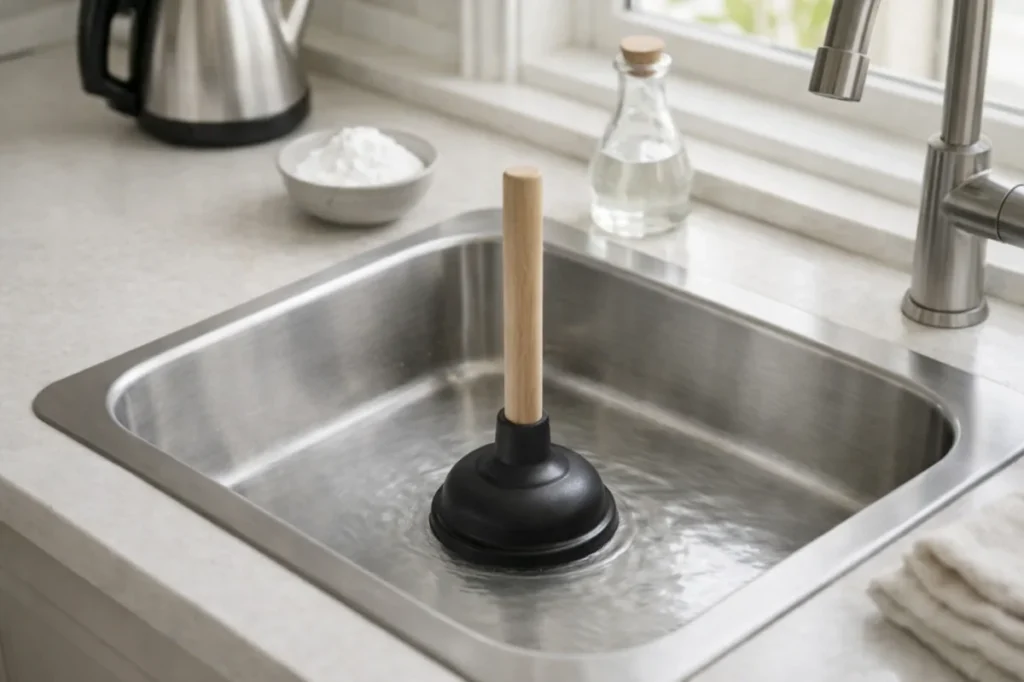
4. Plunger Method (Mechanical Pressure)
A plunger creates pressure that can dislodge stubborn blockages.
How to use it:
- Fill the sink with enough water to cover the plunger cup.
- Seal the overflow hole if present.
- Plunge firmly for 20–30 seconds.
- Test the drain.
Best for:
- Sudden clogs
- Food or hair blockages
- Bathroom and kitchen sinks
5. Drain Snake or Zip Tool (Targeted Removal)
These tools physically remove hair and debris stuck near the surface.
How to use it:
- Insert the tool slowly into the drain.
- Twist and pull upward.
- Dispose of debris and flush with hot water.
Best for:
- Hair clogs
- Bathroom sinks
- Recurring slow drains
6. Trap Cleaning (Deep but Safe Fix)
The sink trap often holds the heaviest buildup.
How to use it:
- Place a bucket under the trap.
- Unscrew carefully by hand.
- Remove debris and rinse the trap.
- Reinstall and test.
Best for:
- Severe clogs
- Sinks that won’t drain at all
- Long-term fixes
What NOT to Do (When You Want Non-Toxic Results)
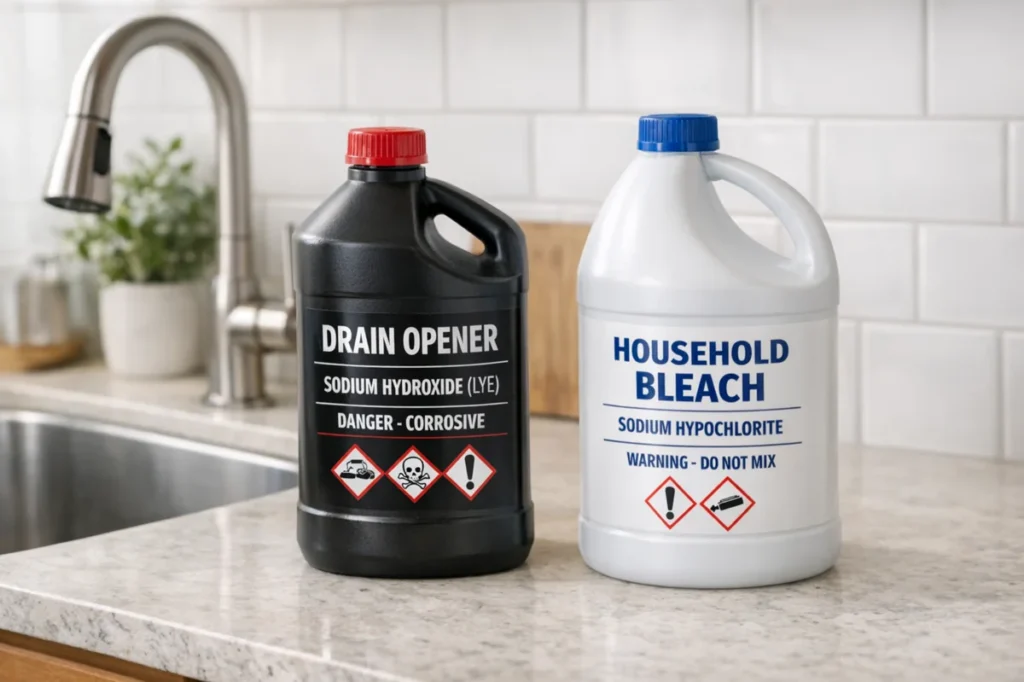
Avoiding these mistakes protects your pipes and your health.
- Do not mix vinegar with bleach. This creates dangerous fumes that can harm lungs and eyes.
- Do not rely on chemical drain cleaners. They can corrode pipes and still leave debris behind.
- Do not use boiling water on PVC pipes repeatedly. Excess heat can weaken them over time.
- Do not force tools deep into the drain. This can push clogs further down.
- Do not ignore repeated clogs. They often signal a deeper issue.
Advanced Tips to Make Cleaning Easier
- Start with the gentlest method first. Escalate only if needed.
- Use a timer when waiting for baking soda and vinegar to work.
- Keep a drain tool under the sink for quick fixes.
- Flush drains weekly with hot water to prevent buildup.
- Work slowly when removing traps to avoid spills and leaks.
If the bathroom still smells off after the drain is clear, a quick urine odor cleanup may fix it.
How to Prevent Sink Clogs From Coming Back
Small habits make a big difference over time.
- Wipe grease from pans before washing.
- Use drain strainers in kitchen and bathroom sinks.
- Run hot water for 30 seconds after each use.
- Avoid rinsing coffee grounds or fibrous foods.
- Clean sink traps every few months.
- Do a baking soda and hot water flush monthly.
Hard water can leave buildup in drains and on surfaces. If your shower glass is cloudy, this hard water stain fix can help.
Frequently Asked Questions (FAQ)
Is it safe to unclog a sink without chemicals?
Yes. These methods are safer for pipes, skin, and indoor air when done correctly.
How often should I clean my sink drain?
Light maintenance once a month helps prevent heavy buildup.
Can these methods work on severe clogs?
Most clogs respond well, but deep blockages may need trap cleaning.
Are these methods safe for old plumbing?
Yes, especially compared to harsh chemical cleaners.
Can I repeat the baking soda method?
Yes. You can repeat it once or twice if needed.
When should I call a plumber?
If multiple sinks clog or water backs up, professional help is best.
Does unclogging a sink without chemicals work for most homes?
Yes. In most households, how to unclog a sink without chemicals works well for common clogs caused by grease, soap residue, and hair.
Final Tips
Understanding what causes clogs helps you choose the right fix. Start with warm water and gentle methods before moving to tools.
For most households, how to unclog a sink without chemicals becomes a reliable routine once these safe methods are used consistently.
Avoid harsh chemicals that damage pipes and indoor air quality. A calm, step-by-step approach works better and keeps your plumbing healthy.
Regular maintenance saves time, money, and stress.
Conclusion
Learning how to unclog a sink without chemicals gives you control over common plumbing problems without risking damage or exposure. Safe, non-toxic methods work when applied patiently and correctly. With simple habits and the right tools, most sink clogs are easy to handle at home.