
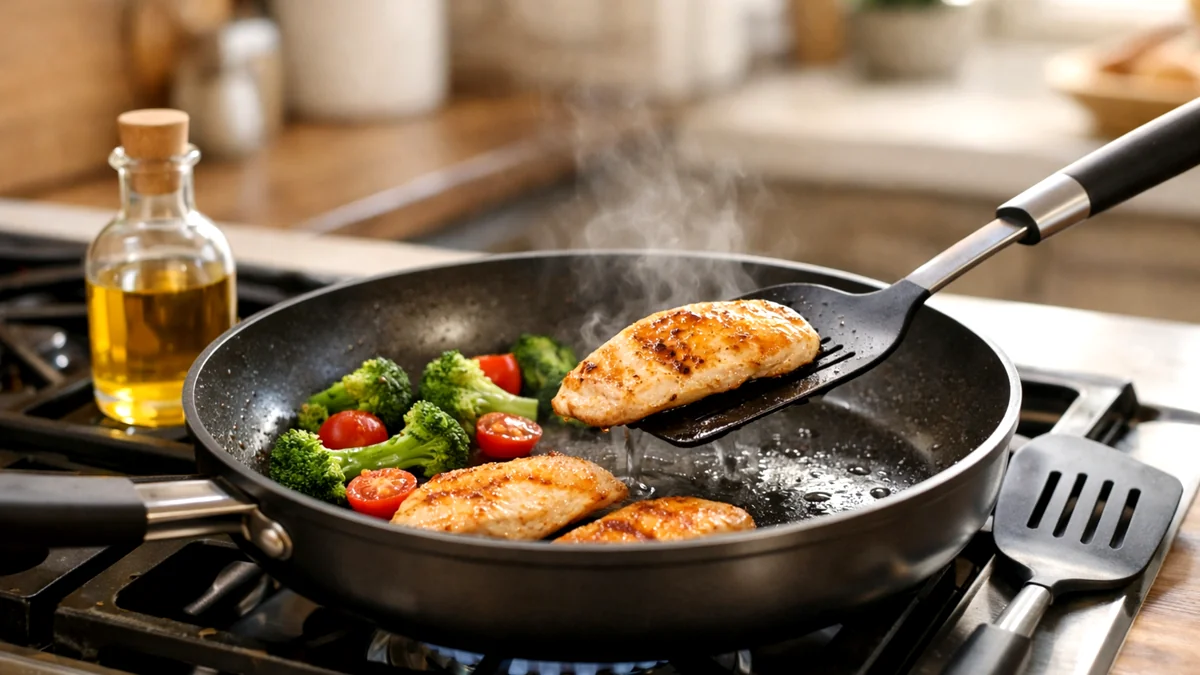
Food sticking to the pan can turn a quick meal into a messy one fast. If you want to know how to stop food from sticking to pans, the biggest fixes usually come down to heat, timing, and a few prep habits.
This problem often starts before cooking really begins. A cool pan, damp food, or early flipping can all make food grab the surface.
You can stop food from sticking to pans without changing everything. Small changes usually work better than force.
Table of Contents
Why Food Sticks to Pans
Food sticking is usually a surface and timing issue, not just a bad pan. The pan may be too cool, too dry, too crowded, or not right for what you are cooking.
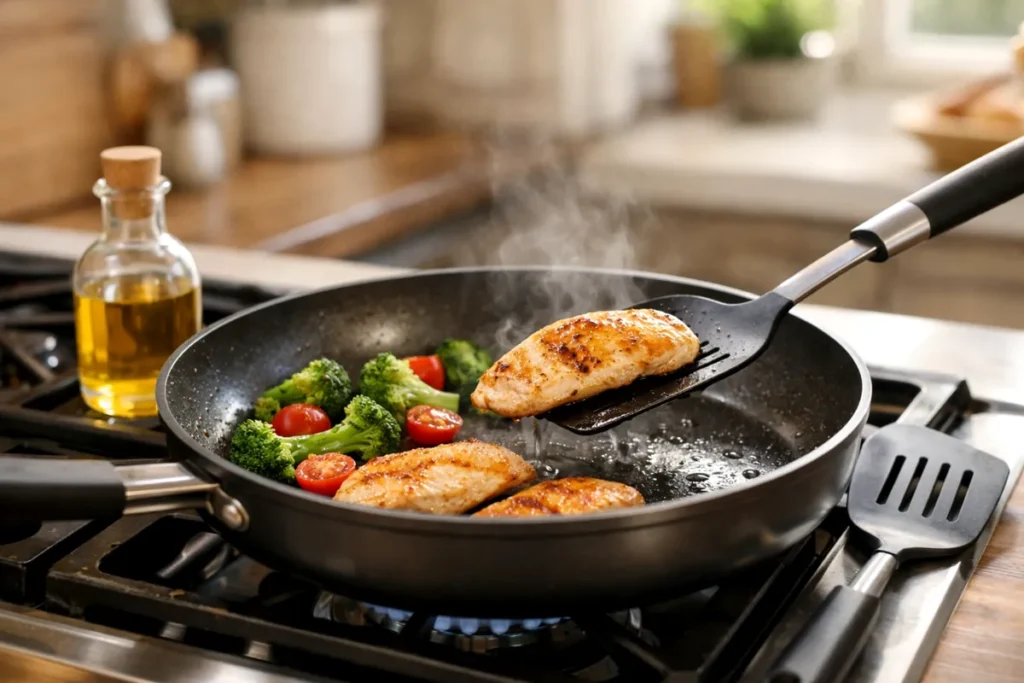
Most attempts to stop food from sticking to pans fail when you rush the start. Another common problem is moving food too soon.
Common reasons this keeps happening:
- adding food before the pan is warm
- cooking wet ingredients that create steam
- using too little oil or spreading it poorly
- crowding the pan
- using a worn or dirty pan surface
According to the USDA, food is more likely to release cleanly once the surface has had enough time to cook and brown properly, which is why flipping too early often makes sticking worse.
Best Ways to Stop Food From Sticking to Pans (Less Grab, Better Browning)
These methods work best when used together. Most people can stop food from sticking to pans with a few repeatable habits.
1. Preheat the Pan Gently (Better Start)
A gently heated pan gives food a better start. That helps it cook instead of sticking right away.
How to use it:
- warm the empty pan over medium or medium-low heat
- wait 1 to 2 minutes before adding oil
- add food only after the oil spreads easily
Best for:
- eggs
- pancakes
- chicken cutlets
2. Dry the Food First (Less Steam)
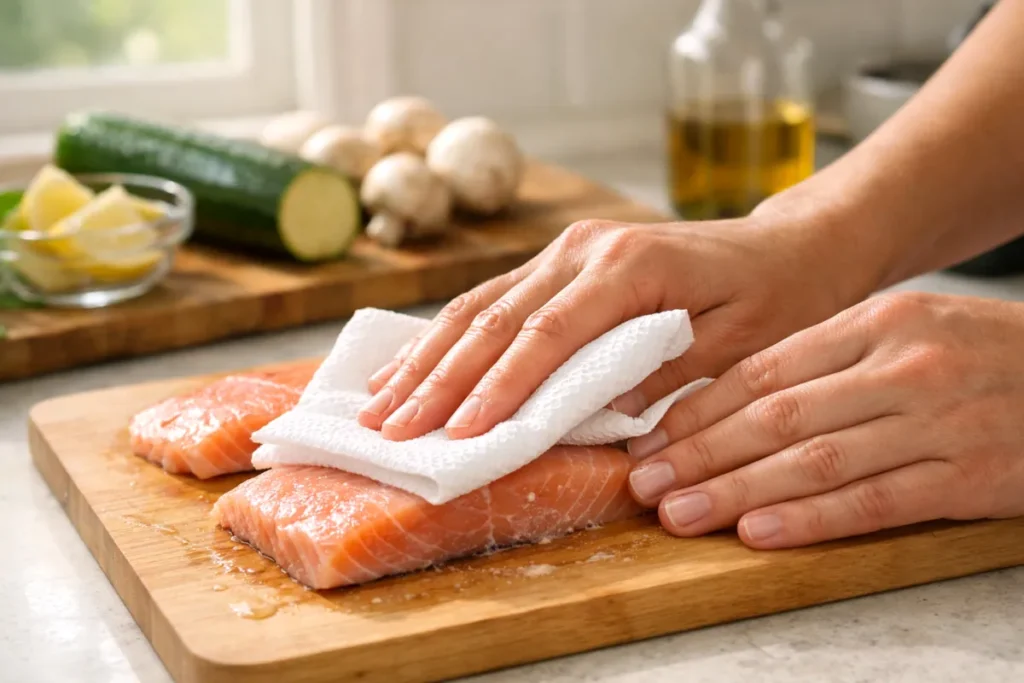
Moisture is a major cause of sticking. A drier surface browns faster and releases more cleanly.
How to use it:
- blot meat, fish, tofu, or vegetables with paper towels
- remove extra marinade before cooking
- season after drying if needed
Best for:
- fish fillets
- mushrooms
- zucchini and tofu
Fresher produce usually brings less extra moisture into the pan, so keeping vegetables fresh can help here too.
3. Use a Thin, Even Layer of Oil (Smoother Contact)
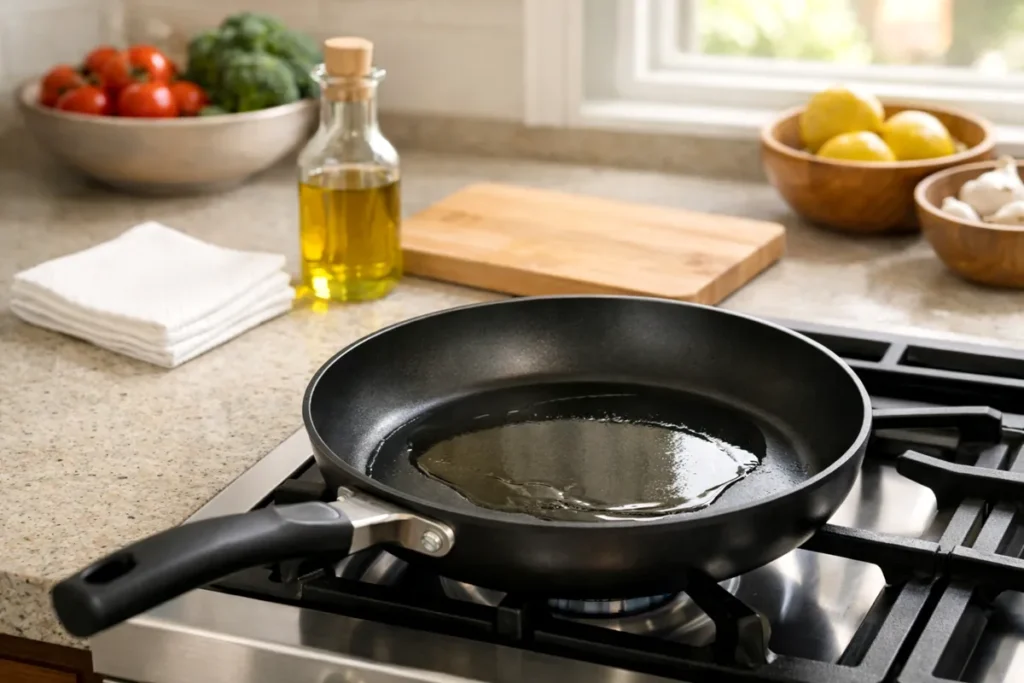
Too little oil leaves dry spots, while too much can make the pan greasy without helping much. A light coat works better.
How to use it:
- add a small amount of oil after preheating
- tilt the pan so the surface is covered
- add a touch more only if dry patches remain
Best for:
- potatoes
- sautéed vegetables
- grilled sandwiches
4. Leave the Food Alone Longer (Better Release)
A lot of sticking comes from checking too often. Once the bottom has set and browned a little, food usually lifts more easily.
How to use it:
- place the food down and do not move it right away
- test one edge gently with a thin spatula
- flip only when it loosens with light pressure
Best for:
- burgers
- salmon
- browned tofu
5. Match the Pan to the Food (Less Friction)
Sometimes the easiest way to stop food from sticking to pans is to use a pan that fits the job. Delicate foods usually need a smoother surface.
How to use it:
- use nonstick for eggs, pancakes, and delicate fish
- use stainless steel or cast iron for stronger searing
- replace pans with peeling coating or rough buildup
Best for:
- omelets
- crepes
- thin fish
That same gentle approach matters when cleaning an air fryer basket, especially if you want the surface to stay in better shape over time.
What Not to Do (Shortcuts That Create More Mess)
A few common shortcuts make sticking worse fast. They also create more scraping and more cleanup later.
- Do not add food to a pan that still feels barely warm. The surface is more likely to grab.
- Do not cook wet food straight from rinsing or heavy marinade. Steam works against browning.
- Do not crowd the pan. Packed food drops the temperature and sticks more easily.
- Do not scrape hard with the spatula right away. That can tear food and damage the surface.
- Do not keep turning the heat up to fix sticking. More heat often burns before it releases.
If food has already left a stubborn layer behind, an easy burnt pot cleanup can help before the residue gets harder to remove.
Advanced Tips to Make This Easier
A few simple routines can make this feel more automatic. The goal is less guesswork on busy nights.
- Dry ingredients while the pan preheats.
- Let very cold meat sit out briefly before cooking.
- Clean pans soon after they cool so residue does not build up.
- Place a towel or liner between stacked pans to reduce scratches.
A few time-saving cooking hacks can also make pan prep and cleanup feel easier on busy nights.
How to Prevent Food From Sticking Again
Small habits matter more than one perfect dinner. To stop food from sticking to pans more often, it helps to build a few low-effort routines into your cooking prep.
- Keep one pan for delicate foods – a smoother surface helps eggs, pancakes, and fish release more easily.
- Clean pans gently after each use – old residue and rough spots make sticking more likely next time.
- Replace worn pans when needed – damaged surfaces are harder to cook with no matter what method you use.
- Prep wet ingredients before cooking – drying them first helps reduce steam and sticking.
Frequently Asked Questions (FAQ)
Why does food stick even when I use oil?
Oil helps, but it cannot fix a cold pan, wet food, or early flipping. Sticking usually comes from a few small issues working together.
Is nonstick always the best option?
Not always. It is best for delicate foods, while stainless steel and cast iron can work well with the right heat and timing.
Why do eggs stick so easily?
Eggs set quickly and can grab the surface fast. They usually do best with gentle heat and a smooth pan.
What should I do on busy nights?
Keep it simple. Warm the pan, dry the food, add a little oil, and wait longer before flipping.
Can a damaged pan cause more sticking?
Yes. A rough surface or worn coating can make sticking harder to control even when your method is good.
What if the first fix does not work?
Change one thing at a time. That makes it easier to see whether the real issue is heat, moisture, oil, or the pan itself.
Final Tips
Start with the smallest changes first. Preheating, drying ingredients, and waiting longer before flipping fix a lot without adding much work.
It gets easier to stop food from sticking to pans when your prep stays consistent. Try the same setup a few times before changing it again.
Staying on top of backsplash cleanup can also make the whole cooking area feel easier to reset after meals.
Conclusion
Most sticking problems come from a few repeat issues, not one big mistake. When you learn how to stop food from sticking to pans with better heat, timing, and prep, cooking usually feels calmer and cleanup gets much easier.