
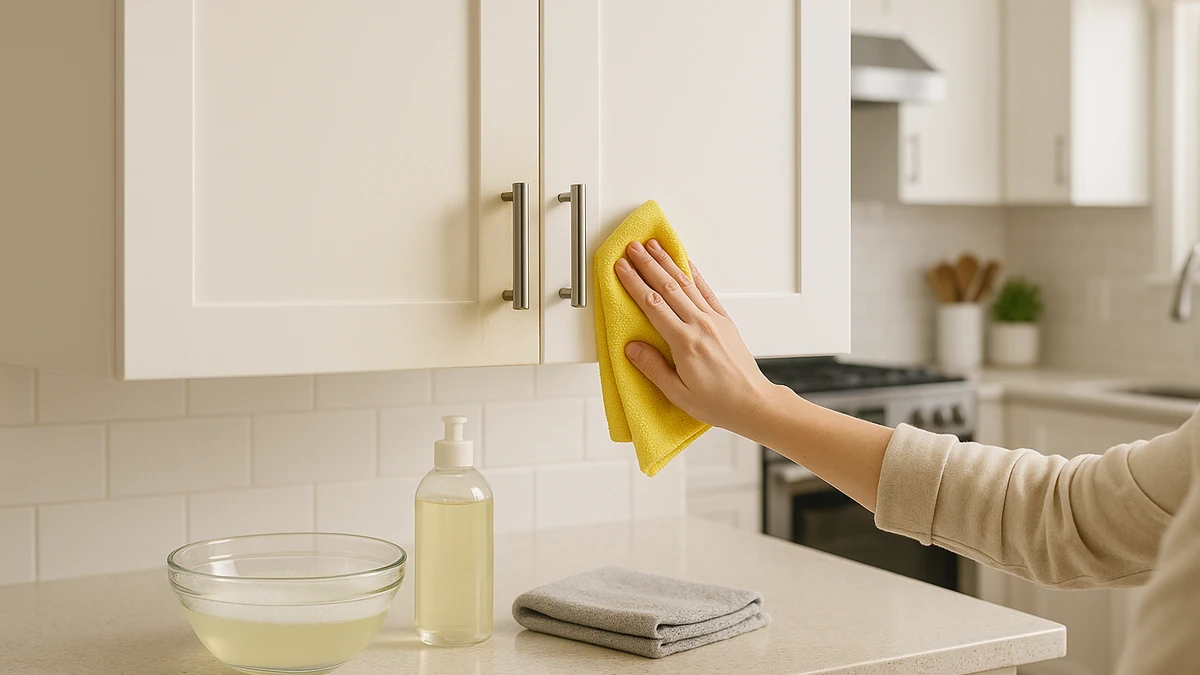
Greasy, sticky cabinets can make your whole kitchen feel dirty, even if you clean regularly. Knowing how to remove grease from kitchen cabinets helps you get back that fresh, bright look without damaging the finish.
Cooking oils, steam, and tiny food particles float through the air every time you cook. Over time, they land on cabinet doors, handles, and trim, creating a yellowish, tacky film that grabs dust and dirt.
Table of Contents
What Causes Grease Buildup on Kitchen Cabinets?
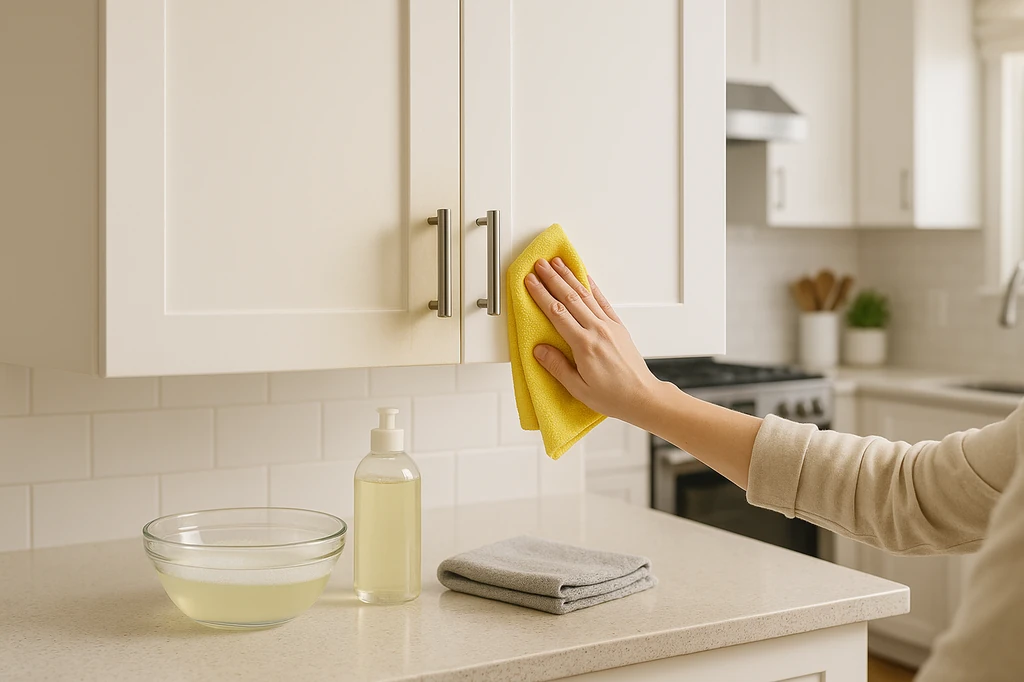
Understanding how to remove grease from kitchen cabinets helps you choose the right method for both light and heavy buildup.
Common reasons for cabinet grease buildup:
- Cooking often with oil or butter
- Frying foods without using a lid or splatter guard
- Weak or unused range hood or exhaust fan
- Cabinets installed close to the stove top
- Skipping regular wipe downs after cooking
The U.S. Environmental Protection Agency (EPA) notes that cooking is a major source of indoor particles and gases from grease and smoke. Those particles can settle on surfaces all around the kitchen, including cabinets, even if you do not see visible splatter right away.
If you’re dealing with other stubborn household buildup, you may also find our guide on how to remove mold from clothes naturally helpful.
How to Remove Grease From Kitchen Cabinets (Top Effective Methods)
Below are the most effective methods to cut through greasy buildup and restore your cabinet finish. Choose the gentlest option that works for your situation, and always test in a small, hidden area first.
Several home methods show how to remove grease from kitchen cabinets without damaging the paint, laminate, or wood surface.
1. Dish Soap and Warm Water (Gentle Everyday Method)
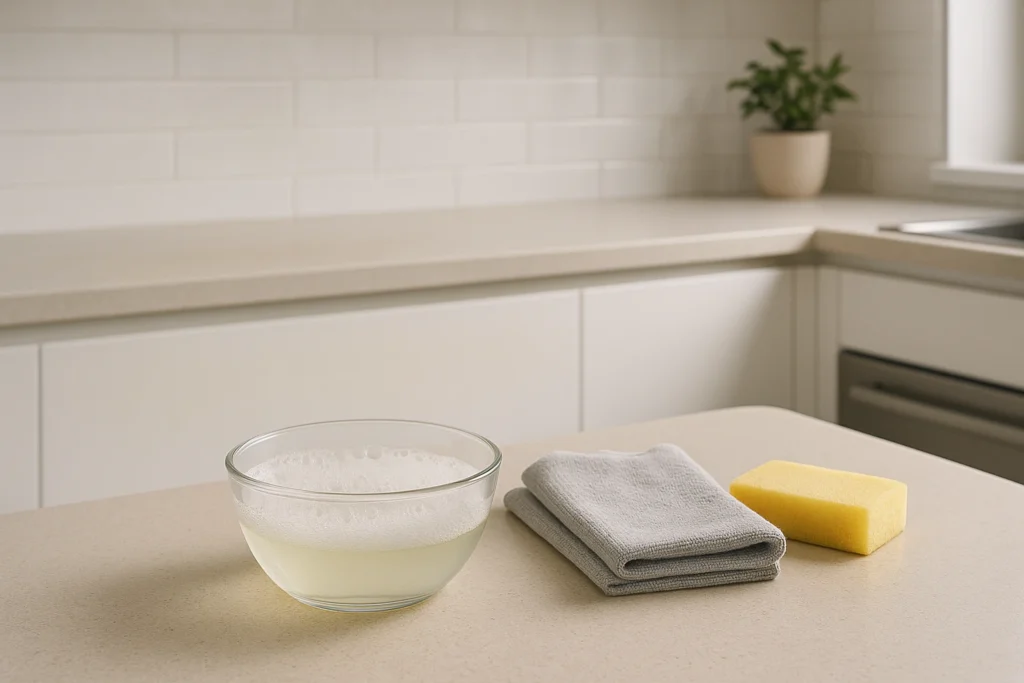
Good quality dish soap is designed to break down oils and grease on dishes, so it also works very well on light cabinet grease. Warm water helps loosen the film so you can wipe it away without scrubbing too hard.
How to use it:
- Fill a bowl or bucket with warm water and add a few drops of degreasing dish soap
- Dip a soft microfiber cloth or sponge into the solution and wring it out well
- Wipe cabinets in small sections, working from the top down
- Dry the surface with a soft towel to protect the finish
Best for:
- Light to moderate grease buildup
- Painted, laminate, or sealed wood cabinets
2. White Vinegar Solution (Natural Degreasing Power)
White vinegar cuts through grease because it is slightly acidic. It helps break the bond between the oily film and the cabinet surface, making it much easier to wipe away.
How to use it:
- Mix equal parts white vinegar and warm water in a spray bottle or bowl
- Lightly spray the solution onto a cloth or dip the cloth, then wring it out
- Wipe the greasy areas, letting the solution sit for 1–2 minutes on stubborn spots
Best for:
- Homeowners who prefer natural cleaning methods
- Painted, laminate, or sealed wood (avoid on raw wood or delicate finishes without testing)
3. Baking Soda Paste (For Stubborn, Sticky Grease)
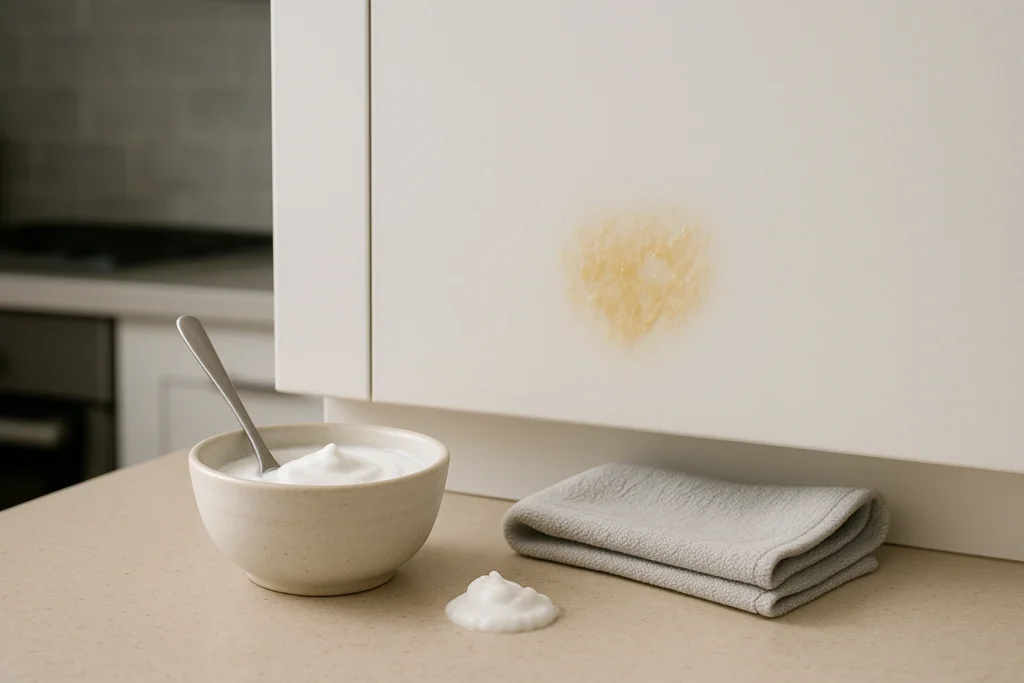
Baking soda reacts with grease and oils to help loosen them. This method is especially useful for handles, corners, and areas right above the stove where grease is thick.
It is one of the most helpful tricks for how to remove grease from kitchen cabinets that have years of hardened residue.
How to use it:
- In a small bowl, mix baking soda with a little warm water to form a thick paste
- Dip a soft cloth or sponge into the paste
- Gently rub the paste onto greasy spots in circular motions
- Let it sit for 2–3 minutes on very stubborn areas
- Wipe away the paste with a damp cloth
Best for:
- Heavy, old, or yellowed grease buildup
- Tough spots around handles, knobs, and lower edges
- Most painted or laminate cabinets (test first on glossy or delicate finishes)
4. Lemon and Vinegar Spray (Deodorizing Shine Booster)
Lemon juice combined with vinegar and a bit of water, creates a natural degreasing spray that leaves cabinets smelling clean and looking brighter.
How to use it:
- Mix 1 cup white vinegar, 1 cup warm water, and 2–3 tablespoons of lemon juice in a spray bottle
- Shake gently to combine
- Lightly spray the solution onto a microfiber cloth (not directly on the cabinet)
- Wipe the cabinet surfaces, focusing on greasy areas
Best for:
- Everyday maintenance after the main deep clean
- Neutralizing cooking odors on cabinet surfaces
5. Microfiber Cloth and Hot Water (Quick No-Product Fix)
Sometimes heat alone can soften light grease so it wipes away easily. A microfiber cloth holds more water than a paper towel and has tiny fibers that grab onto dirt and oil.
How to use it:
- Run hot tap water and soak a microfiber cloth
- Wring it out so it is damp, not dripping
- Hold the warm cloth against sticky spots for a few seconds to soften the grease
- Wipe the area, using gentle pressure
Best for:
- Fresh grease splatters
- Daily or every few days quick cleaning
6. Mild Commercial Degreaser (When Buildup Is Extreme)
If natural and gentle methods do not fully remove very thick, long-term buildup, a mild commercial kitchen degreaser can help.
However, they can be stronger than home methods, so they must be used carefully to avoid damaging paint or wood finishes.
How to use it:
- Choose a degreaser labeled safe for cabinets or painted surfaces
- Read the label and test in a hidden area first
- Apply as directed, usually spraying onto a cloth rather than directly onto the cabinet
- Wipe greasy areas, working in small sections
Best for:
- Very heavy, long-ignored grease layers
- Homeowners who have already tried gentler methods without full success
What NOT to Do (Very Important)
Using the wrong tools or products can damage your cabinets more than the grease itself. Avoid these common mistakes to keep your kitchen safe and your cabinets looking new:
- Do not use steel wool or very rough scrub pads. These can scratch paint, remove stain, or leave permanent marks.
- Do not soak cabinets with water or cleaner. Excess moisture can cause warping, swelling, or peeling, especially on wood or MDF.
- Do not mix bleach and vinegar or other cleaners. This can create dangerous fumes. Stick to one cleaner at a time.
- Do not use strong oven cleaner or heavy-duty stove degreasers on cabinets. Many are too harsh for painted or wooden surfaces.
- Do not ignore the hinges and hardware. Letting cleaner drip into hinges can cause rust or sticky movement. Apply cleaners to a cloth, not directly onto the hardware.
- Do not rush scrubbing. Pressing too hard on one spot can wear through paint or finish. Let the cleaner sit for a minute instead of scrubbing aggressively.
Advanced Tips to Make Cleaning Easier
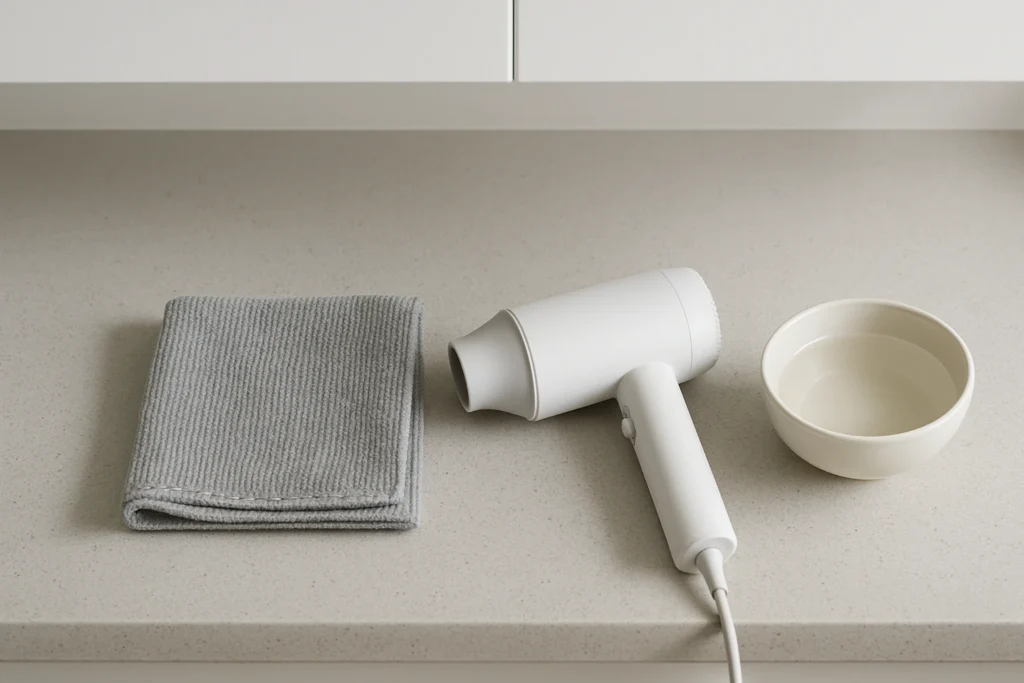
A few smart tricks can turn how to remove grease from kitchen cabinets from a big weekend project into a simple routine.
- Warm the grease first. Use a hair dryer on low heat held a safe distance away to gently warm thick grease for 20–30 seconds. This softens it so cleaners work faster.
- Let cleaners sit before wiping. Whether you use dish soap, vinegar, or baking soda, give the solution a couple of minutes to break down the grease before you start wiping.
- Work from top to bottom. Start with upper cabinet tops and doors, then move down. That way, any drips fall onto areas you have not cleaned yet.
How to Prevent Grease From Coming Back
Once you understand how to remove grease from kitchen cabinets, keeping them clean becomes much easier. Use this simple prevention checklist:
- Turn on the range hood every time you cook. Run it on low to pull steam and grease away from cabinets.
- Use lids and splatter screens. Cover pans when frying or cooking with high heat to limit grease in the air.
- Wipe nearby cabinets weekly. Do a quick wipe with warm soapy water on doors near the stove, even if they do not look dirty yet.
- Deep clean once every 1–3 months. Do a more thorough clean of all cabinet fronts, sides, and trim on a regular schedule.
- Keep the kitchen well ventilated. Open a window or use a fan to keep air moving when cooking for long periods.
For more helpful kitchen care tips, take a look at our guide on how to clean burnt pots easily.
Frequently Asked Questions (FAQ)
1. How often should I clean grease from my kitchen cabinets?
Do a deeper clean every 1-3 months.
2. Is white vinegar safe for all cabinet finishes?
White vinegar is safe for many painted and laminate cabinets when diluted with water. Always test a small hidden area first, and avoid using vinegar on raw wood or specialty finishes without checking manufacturer advice.
3. Can baking soda scratch my cabinets?
Baking soda is mildly abrasive, so avoid using it on glossy or delicate finishes.
4. How do I clean real wood cabinets without damaging them?
Use a gentle dish soap and warm water solution on a soft cloth, and avoid soaking the wood. Wipe in the direction of the grain, dry immediately, and finish with a wood-safe polish if needed.
Final Tips
These steps for how to remove grease from kitchen cabinets can restore shine and prevent new buildup when used regularly.
Combine gentle cleaners like dish soap, white vinegar, and baking soda with soft cloths and light pressure.
If you cook often, set a recurring reminder to wipe cabinets each week. With this simple routine, keeping your kitchen cabinets grease-free becomes a quick habit instead of a frustrating project.
Conclusion
Grease on kitchen cabinets is a normal part of everyday cooking, but it does not have to be permanent. With gentle products, simple tools, and smart habits, you can safely tackle even stubborn buildup and protect your cabinet finish.
By using these methods for how to remove grease from kitchen cabinets and adding a few easy prevention steps, your kitchen will stay brighter, cleaner, and more inviting.