
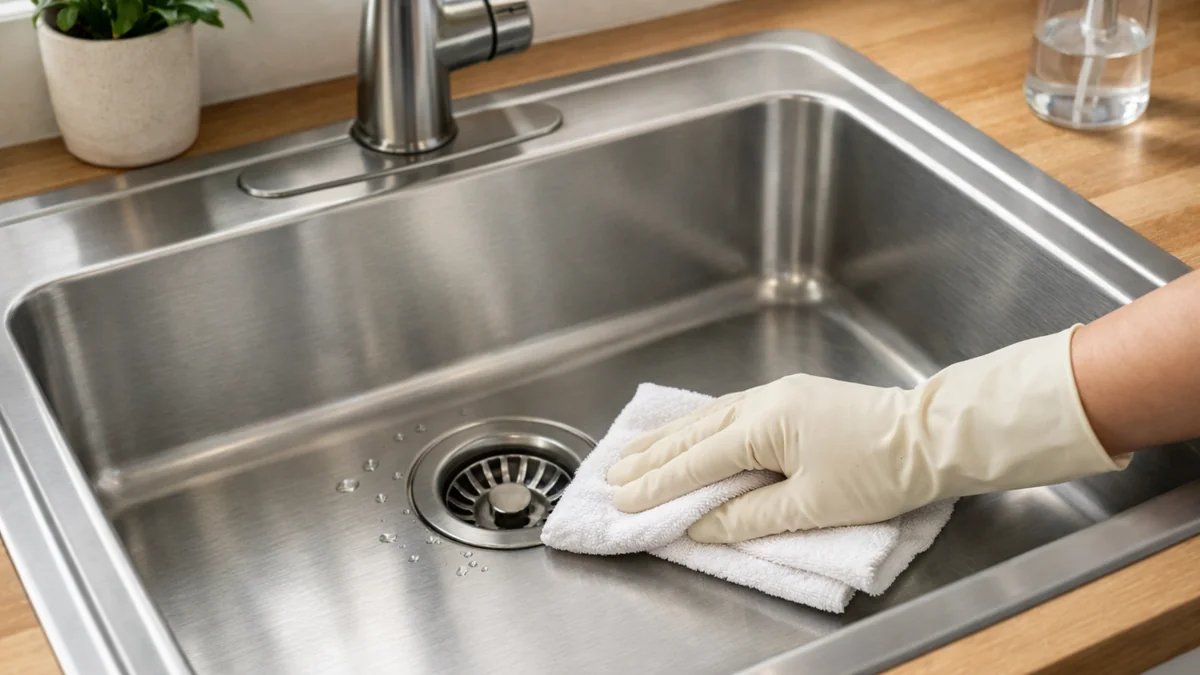
If your sink looks dull right after you wipe it, learning how to clean a stainless steel sink naturally feels worth it. It makes the whole kitchen look cleaner.
Streaks usually come from soap film, skin oils, and hard water minerals. A good rinse and a dry towel help you keep the finish even and streak-free.
You do not need harsh sprays or heavy scrubbing. Gentle basics plus a consistent finish step are what stop spots and streaks.
Most days, this takes about 5 minutes. For deeper buildup, use dwell time while you do something else.
Table of Contents
What Causes Water Spots and Streaks in a Stainless Steel Sink?
Stainless steel shows whatever is left behind. When water dries on the surface, minerals can stick, and a fast wipe can smear residue into streaks.
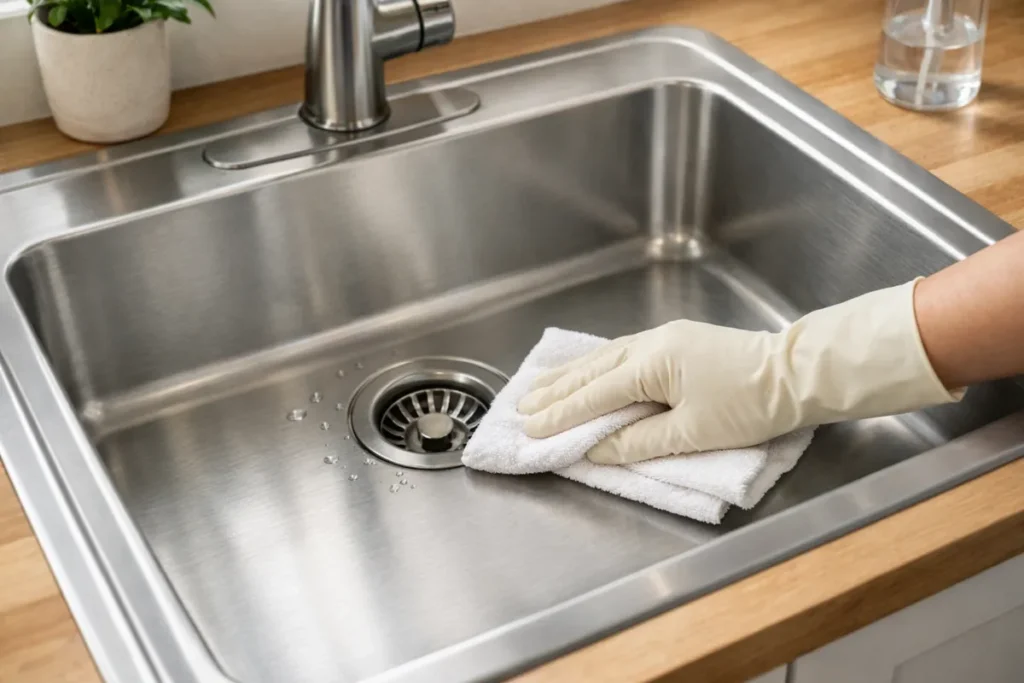
Common causes include:
- Hard water drying on the steel
- Soap film that was not rinsed fully
- Grease from hands and dishes
- Wiping against the grain
- Letting the sink air-dry
CDC says that in most situations, cleaning with soap and water can remove most germs on surfaces, which is why a simple soap wash is a solid first step.
Methods to Clean a Stainless Steel Sink Naturally (Gentle, No-Stress Methods)
Start mild, then step up only if the sink still looks cloudy.
1. Dish Soap + Warm Water (Fast reset)
This is the fastest way to reset a stainless steel sink. It lifts oils so your rinse can carry them away.
How to use it:
- Rinse out crumbs and grit.
- Add a few drops of dish soap to a damp microfiber cloth.
- Wipe with the grain, rinse well, then dry with a towel.
Best for:
- Daily cleanup
- Light grease and fingerprints
If the sink still smells off after a basic reset, it is worth checking the garbage disposal too.
2. Baking Soda Sprinkle (Gentle scrub)
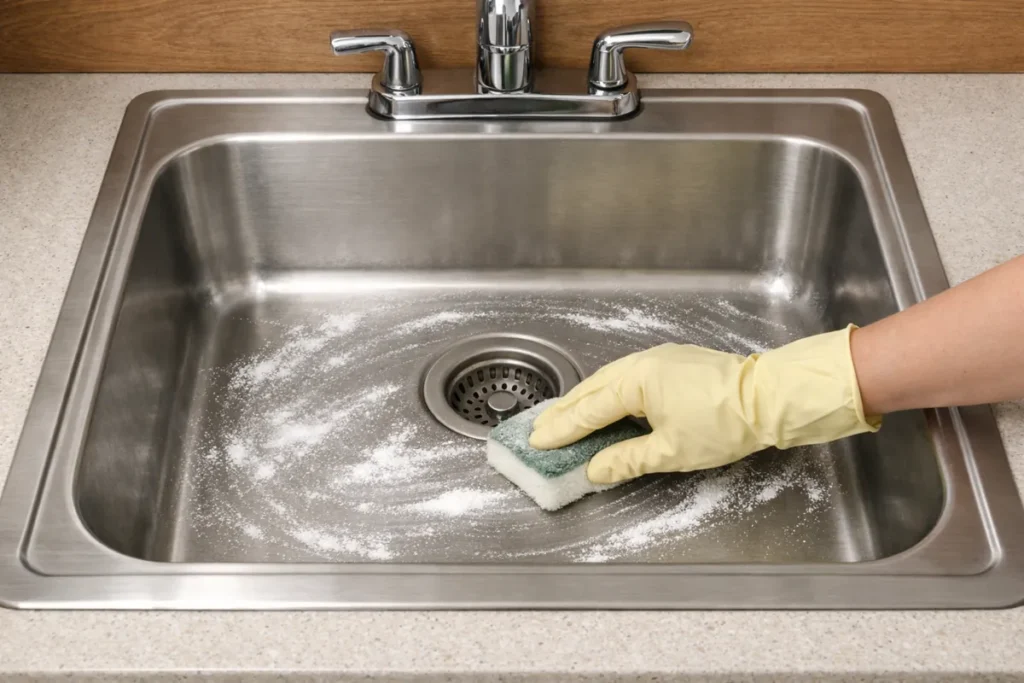
Baking soda adds mild scrubbing power and helps remove cloudy film. It is a simple way to clean a stainless steel sink naturally without scratching.
How to use it:
- Wet the sink, then sprinkle a light layer of baking soda.
- Scrub gently with a soft sponge, following the grain.
- Rinse until clear, then dry right away.
Best for:
- Dull film
- Light staining near the rim
3. White Vinegar Mist (Water spots)
Vinegar helps dissolve mineral spots fast. If you are unsure about a special coating or nearby finishes, test in a small hidden area first.
How to use it:
- Rinse the sink so vinegar is not hitting leftover soap.
- Mist vinegar on the spots and wait 1-2 minutes.
- Wipe with the grain, rinse until the water runs clear, and dry.
Best for:
- Water spots
- Faucet splash marks
Splash marks do not always stop at the sink, so the backsplash may need a quick wipe too.
4. Baking Soda Paste (Heavier residue)
For rings and stuck-on buildup, a paste adds contact time without hard scrubbing. This method can clean a stainless steel sink naturally when quick wipes stop working.
How to use it:
- Mix baking soda with a little water to make a thick paste.
- Spread it on problem areas and wait 5-10 minutes.
- Wipe it off, rinse, then dry right away.
Best for:
- Drain rings
- Gray, cloudy patches
When water is slow to clear, deal with the slow drain before more residue builds up.
5. Hot Towel Dwell (Low-effort loosening)
Heat softens grease and loosens grime, so wiping is easier. It is great when you want to clean a stainless steel sink naturally without extra elbow grease.
How to use it:
- Wet a towel with hot water and wring it damp.
- Lay it in the sink for 5 minutes.
- Wipe with a little dish soap, rinse, and dry.
Best for:
- Greasy smears
- Grime around the faucet base
If nearby surfaces still feel sticky, the kitchen cabinets may need a quick wipe too.
6. Tiny Drop of Oil (Streak-free finish)
A tiny amount of oil can even out the look of brushed steel after cleaning. Test in a small hidden area first, and keep oil away from areas where food sits.
How to use it:
- Clean and dry the sink first.
- Put one drop of mineral oil or olive oil on a soft cloth.
- Buff with the grain, then wipe once more with a clean cloth.
Best for:
- A streak-free look
- Sinks that show fingerprints
What NOT to Do (To Keep It Low-Stress)
These common shortcuts scratch steel or leave a dull film behind.
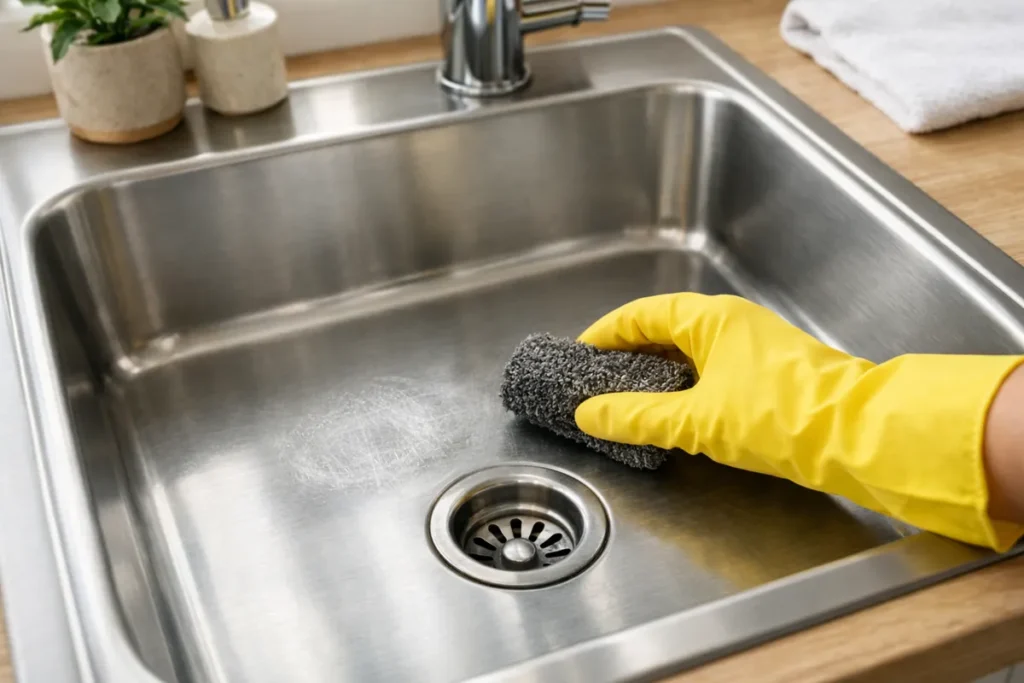
- Do not use steel wool or rough scrub pads. They can scratch the finish and make streaks look worse.
- Do not use gritty powders or harsh scouring pastes. Even some “natural” scrubs can be too abrasive.
- Do not wipe in circles or against the grain. It can leave lines that are hard to buff out.
- Do not skip the final rinse and dry. Air-drying is the fastest way to get spots back.
For more cleaning help, this guide covers simple ways to handle everyday messes around the house.
Advanced Tips to Make Cleaning Easier
A few small habits keep the sink looking better all week. Keep your tools handy so a 2-minute reset feels easy.
- Keep a microfiber cloth under the sink for fast wipes.
- Rinse the sink right after dishes so residue does not dry on.
- Dry once a day, even if you do nothing else.
- Use a soft toothbrush for the drain rim and faucet base.
If grease settles back onto surfaces fast, cleaning range hood filters can help cut down on that film.
How to Prevent Water Spots and Streaks in a Stainless Steel Sink From Building Up Again
Keep water from drying on the steel, and streaks stay away.
- Rinse away soap after each use, especially near the drain.
- Dry with a towel or microfiber cloth instead of air-drying.
- Wipe with the grain for a smoother, more even finish.
- Do a 60-second baking soda scrub weekly to stop film early.
- If you have hard water, wipe splash zones around the faucet daily.
When dishes keep leaving cloudy residue behind, check the dishwasher spray arms too.
Frequently Asked Questions (FAQ)
Can I use vinegar on a stainless steel sink?
Yes, for short contact time. Mist it on spots, wait a minute or two, then rinse and dry.
Why does my sink look streaky right after cleaning?
Usually it is soap film or minerals left behind. Rinse longer, then dry with a clean towel.
Is baking soda safe for stainless steel?
In general, yes, when you use it gently with water. Always rinse well so no powder is left behind.
What is the fastest way to clean a stainless steel sink naturally?
Dish soap, warm water, a good rinse, and a dry towel. That routine usually takes about 5 minutes.
Will lemon damage stainless steel?
A quick wipe is usually fine, but do not let juice sit. Rinse and dry right away.
Should I oil a stainless steel sink?
You can for shine, but use a tiny amount and buff well. Too much oil can feel slick and attract dust.
What about small rust spots?
They are often iron particles sitting on the surface. Try a gentle baking soda paste, then rinse and dry.
Final Tips
Once you know how to clean a stainless steel sink naturally, the secret is the finish step. Rinse well, dry right away, and wipe with the grain.
Use dwell time when you need it. A hot towel or a baking soda paste can loosen grime while you handle something else.
A consistent 2-minute reset beats an occasional long scrub. Small habits keep the sink looking bright.
For more simple reset ideas around the same space, browse these kitchen cleaning ideas when you want the whole room to feel easier to manage.
Conclusion
A stainless steel sink can look great without harsh products, even on busy days. With a gentle clean, a thorough rinse, and a quick dry, you can clean a stainless steel sink naturally and keep streaks from taking over.