
A bathroom can look clean and still smell damp. If you are trying to learn how to get rid of mold smell in the bathroom, the real fix is removing hidden moisture and the grime that holds odor.
That musty smell often comes from drains, grout lines, and soft items that stay wet. Steam plus low airflow keeps those spots damp.
Many sprays only cover the smell. A surface-safe routine works better and helps protect grout, caulk, and finishes.
Once you find the source and dry the room, keeping the space fresh becomes much easier.
Table of Contents
What Causes Musty Mold Smell in the Bathroom?
Mold smell builds when water lingers where air cannot reach. Soap scum also creates a film that traps odor in corners, seams, and drains.
Hidden moisture can keep feeding the smell even when surfaces look clean. Drains hold biofilm, and failing caulk can stay damp underneath.
Common causes include:
- Fan not running long enough after showers
- Wet towels or mats drying slowly
- Biofilm buildup in sink or tub drains
- Damaged grout or caulk that stays damp
In many homes, how to get rid of mold smell in the bathroom starts by finding where moisture is lingering.
When the smell seems to shift from spot to spot, finding the odor source can help you narrow it down faster.
Even small, daily dampness can keep odors going. The EPA notes that mold needs moisture to grow, so drying surfaces and fixing leaks helps prevent repeat musty smells.
How to Get Rid of Mold Smell in the Bathroom (Safe, Chemical-Free Methods)
Ventilate while you clean, and wear gloves if your skin is sensitive. Never mix cleaners, especially bleach with vinegar or ammonia.
1. Dry the room and “sniff-map” the source (Find it fast)
Dry air helps you pinpoint the source so you can clean the right spot first.
How to use it:
- Run the fan and crack the door for 20 minutes.
- Wipe wet ledges and the tub rim with a microfiber cloth.
- Smell near drains, under the vanity, behind the toilet, and shower corners.
Best for:
- Any bathroom that smells worse after a shower
- Finding a damp mat or leak
A strong smell around the toilet base or floor usually points to a spot that needs bathroom floor odor cleanup next.
2. Scrub the drain and overflow to remove biofilm (Hidden odor source)
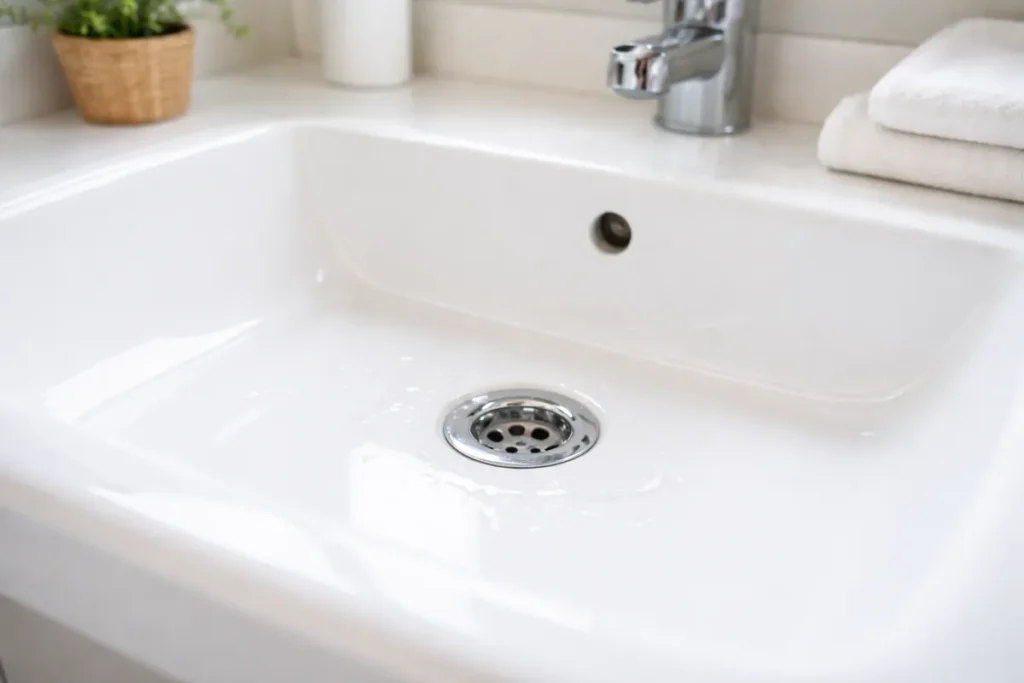
Biofilm inside drains traps grime and bacteria, which can smell musty.
How to use it:
- Pull out hair and debris, then flush with very hot tap water.
- Scrub the drain edge and stopper with dish soap and a toothbrush.
- Use an enzyme drain gel if needed, then rinse well as directed.
Best for:
- Odor that gets stronger when you run water
- Slow drains or hair buildup
A drain-like odor is often easier to rule out once you check for bathroom sewer smell next.
3. Degrease shower surfaces and rinse clean (Removes odor-holding film)
Soap scum holds odor on doors and tile, even when it looks “fine.”
How to use it:
- Mix warm water with a few drops of dish soap.
- Wipe tile, fiberglass, and doors with a soft sponge.
- Rinse well, then towel-dry.
Best for:
- Light to medium odor with visible dull film
- Fiberglass tubs and glazed tile
When the smell sticks to shower film, this guide on soap scum removal can help you clean the surface more thoroughly.
4. Spot-clean grout and caulk with 3% peroxide (Targets seams)
Grout and caulk edges stay damp the longest. Peroxide helps break down organic grime with less harsh smell.
How to use it:
- Test a hidden spot first, especially on colored grout or caulk.
- Spray 3% peroxide, wait 5-10 minutes, then scrub gently.
- Rinse thoroughly and dry the area.
Best for:
- Musty odor in shower corners and along caulk
- Grout that looks slightly dark
If grout lines or corners still smell off after spot-cleaning, a deeper tile and grout clean can help reset the area.
5. Wash towels and mats and replace anything that stays damp (Stops re-smelling)
Towels, bath mats, and liners can keep releasing odor, so how to get rid of mold smell in the bathroom will not last unless they dry fast and come out truly clean.
How to use it:
- Wash towels and mats on the warmest safe setting, then dry fully.
- Clean or wash the shower liner based on its care label.
- Replace items that still smell musty right after washing.
Best for:
- Wet-towel smell and damp-mat odor
- Bathrooms with frequent showers
What NOT to Do (To Keep It Chemical-Light)
Avoid shortcuts that trap moisture, leave residue, or risk unsafe fumes.
- Do not cover the smell with heavy fragrance sprays.
It hides the source and feels stuffy. - Do not mix cleaners, especially bleach with vinegar or ammonia.
Mixing can release dangerous gases and it will not fix moisture. - Do not scrub fiberglass, acrylic, or coated tile with rough pads.
Scratches hold grime and help odors return. - Do not soak wood, MDF, or drywall trying to “wash out” odor.
Extra water feeds mold and can cause damage. - Do not ignore damp fabrics.
A musty mat or towel can bring the smell back fast.
Advanced Tips to Make Cleaning Easier
Small habits make cleaning easier and help the bathroom dry out between showers.
- Do the drain first, then the shower, then fabrics for a fast reset.
- Use a timer for dwell time so gentle cleaners can work.
- Always rinse, then dry so residue and moisture do not linger.
- If air still feels stale, use an odor absorber overnight after the room is dry.
For glass areas, a streak-free shower door routine also helps slow buildup.
How to Prevent Musty Mold Smell in the Bathroom From Reappearing
A few quick drying habits keep humidity down, so the musty smell does not build up again.
- Run the fan for 20-30 minutes after showers to lower humidity.
- Towel-dry the shower ledge and corners so water cannot sit.
- Hang towels spread out so they dry fast.
- Wash bath mats weekly and dry them fully.
- Check caulk and grout every few months and fix small gaps early.
For more upkeep ideas like this, the bathroom cleaning guide pulls together other bathroom cleaning fixes in one place.
Frequently Asked Questions (FAQ)
What if my bathroom smells musty but I do not see any mold?
Start with drains, damp fabrics, and the toilet area, because those are common hidden sources. Then check under the sink and around the shower for slow leaks.
How often should I deep clean to prevent the smell?
A quick weekly wash plus drying habits is usually enough. Do a deeper grout and drain clean every 4-6 weeks if your bathroom stays steamy.
Is vinegar safe for bathroom odor cleanup?
Vinegar can help on some hard surfaces, but it is not safe for natural stone. If you use it, rinse well and never mix it with other cleaners.
Can hydrogen peroxide damage grout or caulk?
It can lighten some colored materials, so test first. Keep dwell time short, then rinse and dry.
What if how to get rid of mold smell in the bathroom helps at first, but the smell keeps returning?
That usually means moisture is still present, like failing caulk, a wet mat that never dries, or a small leak. Fix the water source and improve airflow, then repeat the targeted clean.
When should I call a professional?
Call for help if you see widespread mold, soft drywall, warped trim, or a strong smell that does not improve after a full clean and dry-out. A licensed mold professional can check behind walls and under flooring safely.
Final Tips
Treat musty odor like a moisture signal, not a perfume problem. Start with airflow and drying, then clean drains, seams, and fabrics in that order.
Stay gentle on finishes and use stronger options only where they make sense. With small habits, the musty smell is much easier to keep under control.
Conclusion
A fresh bathroom is mostly about dryness and routine, not harsh chemicals. Use these steps for how to get rid of mold smell in the bathroom and protect your surfaces at the same time.