
A weird odor can make a clean house feel dirty fast. A simple checklist is the fastest way to figure out how to find the source of a bad smell in your home.
Bad smells can seem to move because airflow and fabrics carry them around. The real source is usually small: a drain issue, old food, damp fabric, or a hidden pet spot.
Sprays can cover clues and add heavy fragrance. Isolate the source first, then fix it with safe, surface-friendly steps.
If the odor smells like gas, smoke, or something burning, or it makes you dizzy, stop and treat it as urgent.
Table of Contents
What Causes A Mysterious Bad Smell in Your Home?
Most mystery odors come from moisture, leftover residue that feeds bacteria, or something trapped that cannot dry. Then the smell spreads through vents, doorways, and soft materials.
Common causes include:
- Drains and plumbing biofilm, or a dry P-trap that lets sewer gas in
- Trash, recycling, fridge drips, or forgotten food
- Damp fabrics (towels, laundry piles, bath mats, pet beds)
- Hidden pet accidents on carpet edges or under furniture
- Moisture problems (leaks, condensation, musty closets, dirty HVAC filters)
The EPA notes that moisture control is key to preventing mold and moldy odors at home.
Stored fabrics can hold odor for days, so check musty closet smell if the scent is strongest near clothes or tight storage areas.
How to Find the Source of a Bad Smell in Your Home (Checklist Steps)
To learn how to find the source of a bad smell in your home, go from “where is it strongest?” to “what item is causing it?” Use these five steps in order.
1. Safety First: Rule Out Urgent Smells (Stop if it seems dangerous)
Some odors are safety issues, not cleaning problems.
Quick check:
- If you smell gas or something burning, leave the area and contact your gas utility or a qualified professional right away.
- Get fresh air if it is safe, and do not lean in to smell fumes.
- Do not keep troubleshooting if anyone feels dizzy or sick.
Best for:
- Gas-like, smoky, burning, or sharp chemical odors
- Sudden, intense smells
2. Make a Smell Map (Pick the strongest room)
This keeps you from chasing the odor around the house. Note if it is stronger near the floor, inside a cabinet, or near a vent.
Quick check:
- Pause at each doorway and note where it is strongest.
- Write down when it happens (after cooking, showers, laundry, or HVAC).
- Close doors for 10 minutes, then re-check the top two rooms.
Best for:
- Smells that seem to move
- Finding your starting room
If the smell is strongest in a lower-level room, compare your clues with musty basement smell before cleaning random surfaces.

3. Clear the Easy Food Sources (Trash, fridge, and sink area)
These sources are common and quick to fix.
Quick check:
- Empty trash and recycling, then wash the can with warm water and dish soap.
- Check the fridge for old leftovers and drips, especially drawers.
- Look under the sink for leaks, wet sponges, or sticky cabinet residue.
- Check the dishwasher filter and the garbage disposal area if the smell is near the kitchen sink.
Best for:
- Sour or rotten smells
- Odors strongest in kitchens
When the smell is strongest near old food or drawers, handle fridge odor before cleaning the whole kitchen.
4. Fix Drain Smells at the Source (Biofilm and dry traps)
Drains can smell even when they look clean. A sewer-like smell that keeps coming back usually points to a dry trap or a plumbing issue that needs a plumber.
Quick check:
- Run water 20-30 seconds in rarely used sinks, showers, and floor drains.
- Scrub the drain opening and overflow with dish soap, then rinse well.
- Flush with hot (not boiling) water, and do not mix cleaners.
Best for:
- Sewer-like or stale bathroom smells
- Odors near sinks, tubs, or laundry areas
For a drain smell that keeps coming back in the bathroom, use these bathroom sewer smell steps before trying stronger products.
5. Test Fabrics, Pet Spots, and Airflow (Common odor carriers)
Soft items hold odors, pets leave hidden spots, and HVAC can move smells room to room.
Quick check:
- Smell-test towels, mats, cushions, rugs, and pet beds up close (use a zip bag test for small items).
- Use a flashlight along baseboards and rug edges, then blot and smell a damp paper towel.
- If you use an enzyme cleaner, test a hidden spot first, and let the area dry fully with airflow.
- When the odor is strongest while the HVAC is running, check the filter and sniff near a vent.
Best for:
- Musty towel, “dirty laundry,” litter box, or “wet dog” odors
- Smells that show up in more than one room
If cushions or fabric furniture hold the smell, handle upholstery odor before you clean the whole room again.
After these steps, you should have a clear suspect. That is the goal of how to find the source of a bad smell in your home.
What NOT to Do (To Keep Kids and Pets Safe)
Skip quick cover-ups and harsh chemicals so you can find the source safely.
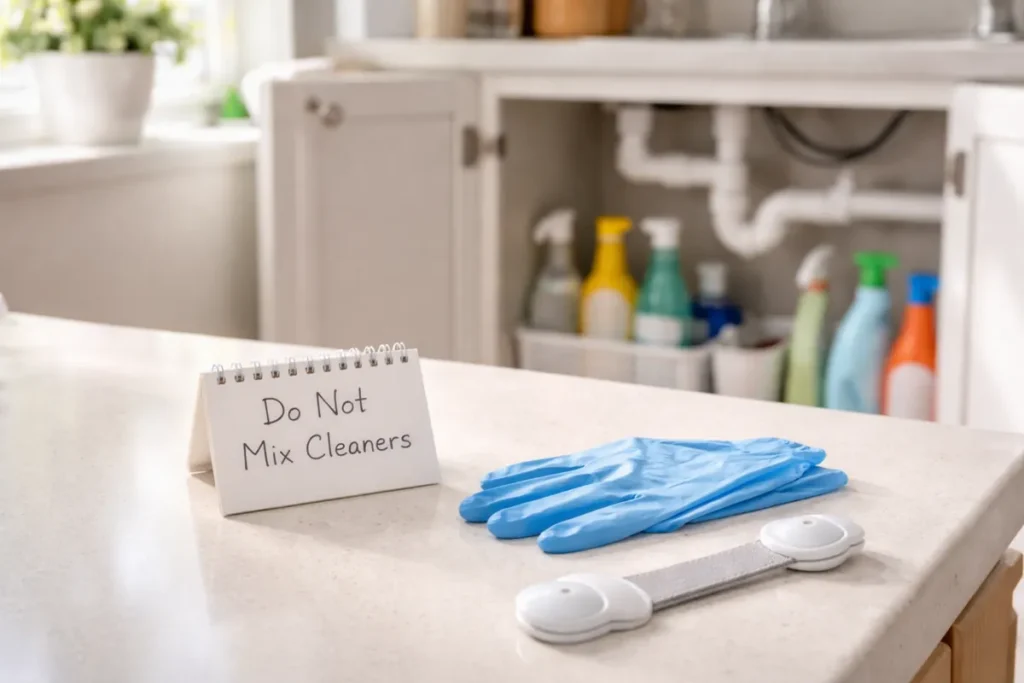
- Do not mask the smell with strong fragrance before you isolate the source.
- Do not ignore gas-like, smoky, or burning plastic or electrical smells.
- Do not pour harsh chemicals into drains “just to try something.”
- Do not mix cleaners, especially bleach with vinegar or ammonia.
- Do not soak wood, MDF, or upholstery trying to wash out odor.
Smoke needs source-focused cleanup, so use a smoke smell plan instead of covering it with heavy fragrance.
Advanced Tips to Make Cleaning Easier
These quick habits help you narrow it down faster with less guessing.
- Work one zone at a time – one room, one closet, one bin.
- Check at the same time daily so you notice patterns.
- Start low. Floor drains, trash cans, damp rugs, and pet areas are common culprits.
- Keep a small odor kit: flashlight, dish soap, baking soda, paper towels, microfiber cloth, and an enzyme cleaner.
Once you know the odor type, the odor removal guide can help you choose a more specific fix.
How to Prevent Bad Smells From Returning
Once the source is gone, small routines keep it from building up again.
- Run water weekly in rarely used drains so traps do not dry out.
- Dry towels and mats fully, and wash them on a schedule.
- Empty trash and recycling often, and rinse sticky containers.
- Wipe fridge drips and toss leftovers before they turn.
- Ventilate humid rooms and change HVAC filters on time.
- Clean pet accidents fast, and wash pet bedding regularly.
For bigger home cleaning routines beyond odor problems, the main cleaning guide keeps related tasks in one place.
Frequently Asked Questions (FAQ)
How do I tell sewer gas from musty odor?
Sewer gas is often a sharp “drain” smell and may improve after you run water. Musty odor is more like damp fabric and often links to humidity.
Why does the smell move to different rooms?
Airflow carries it through vents and open doors. Fabrics can absorb it and release it later.
Are vinegar or baking soda safe for drains?
They can help with light freshening, but they do not remove heavy drain buildup by themselves. Never mix them with bleach or other cleaners.
What if the smell comes back after I cleaned?
Go back to the steps on how to find the source of a bad smell in your home and re-check drains, fabrics, and moisture. A hidden wet spot can keep feeding odor.
Is this safe around kids and pets?
Yes, if you keep it gentle and ventilate. Store products out of reach and avoid harsh fumes.
When should I call a pro?
Call a plumber for repeated sewer smells, slow drains, or leaks. Call HVAC help if odor appears only when the system runs.
Final Tips
Start with safety, then isolate the strongest room and check trash, drains, fabrics, pet spots, and airflow clues.
When you follow the steps for how to find the source of a bad smell in your home, you stop wasting time on random fixes. Focus on the strongest room first, then rule out the easiest sources.
Once you find it, use light cleaning and good drying so it does not return.
Conclusion
When you need to know how to find the source of a bad smell in your home, the fastest path is the same every time: isolate, confirm, fix, and prevent.