
Cat urine on clothes is one of those smells that feels impossible to wash out. If you are searching for how to remove cat urine smell from clothes, you are probably dealing with an odor that comes back the moment the fabric dries.
This happens because urine sinks deep into fibers and leaves residue behind. Regular detergent may clean the surface, but it does not always remove what is trapped in the weave.
A lot of people accidentally lock the smell in by using hot water too soon or tossing the item in the dryer. Heat can make the odor harder to remove.
The fix is not harsh chemicals. It is the right order: rinse, treat, wash, and only then dry.
Once the smell is gone, these fresh laundry habits help keep clothes smelling clean.
Table of Contents
What Causes Cat Urine Smell in Clothes?
Cat urine smell clings to fabric because it dries in place and leaves behind residue that holds odor. When the fabric warms up or gets damp again, that residue can “reactivate,” so the smell comes back even after a normal wash.
Common causes include:
- Waiting too long to rinse
- Using hot water first (it can set odor)
- Using too much detergent (it can trap residue)
- Heat-drying before the smell is truly gone
When you are trying to figure out how to remove cat urine smell from clothes for good, think “flush and break down,” not “spray and cover.”
Accidents can hit carpet too, so follow these cat pee on carpet steps before the odor spreads.
How To Remove Cat Urine Smell From Clothes (Kid- and Pet-Safe Methods)
Use these methods in order. Start gentle, then step up only if needed. Always check the care label, and test any treatment on an inside seam for delicate or dyed fabrics.
1. Cold Water Rinse First (Fast Flush)
This works because removing urine up front makes every later step more effective.
How to use it:
- Rinse from the back of the stain with cold running water for 30 to 60 seconds.
- Blot with a towel (do not rub).
- Repeat once if the area is large or still smells sharp.
Best for:
- Fresh accidents
- Cotton shirts, towels, sheets
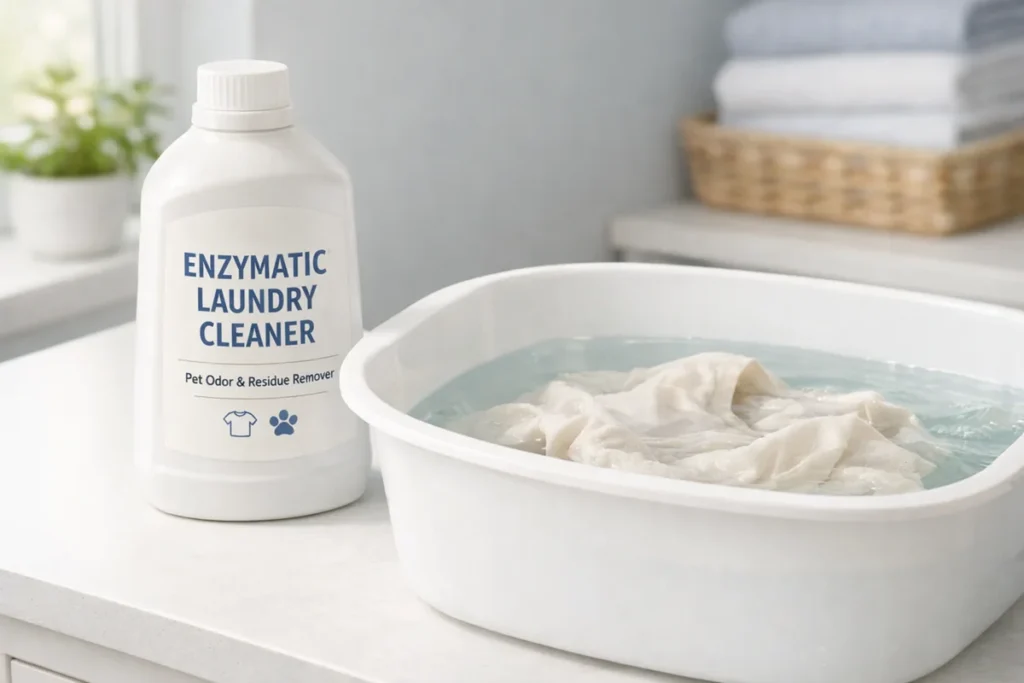
2. Enzyme Soak (Best for Deep Odor)
Enzyme cleaners break down residue that detergent often leaves behind. This is usually the most reliable fix for stubborn odor.
Humane World for Animals notes that if the odor is still there after washing, rewashing with an enzymatic cleaner can help break down pet waste odors.
How to use it:
- Soak the item in cool water with an enzyme product labeled for pet urine (follow the label time).
- Gently swish the fabric so the solution reaches deep into the fibers.
- Wash normally after soaking.
Best for:
- Strong odor that comes back after washing
- Thicker fabrics like hoodies and towels
If this keeps happening, using the right enzyme cleaner options saves time and extra washes.
3. White Vinegar Pre-Soak (Simple Odor Reset)
Vinegar can loosen residue and reduce sharp odor so the wash can finish the job.
How to use it:
- Mix 1 cup white vinegar with 1 gallon of cool water.
- Soak 20 to 30 minutes.
- Squeeze out the excess liquid, then wash with a normal amount of detergent.
Best for:
- Light to medium odor
- Everyday cotton and blends
4. Baking Soda Wash Boost (Deodorize Without Perfume)
Baking soda helps absorb odor and supports a cleaner rinse, without coating fabric in fragrance.
How to use it:
- Add 1/2 cup baking soda to the wash drum.
- Wash in cool or warm water (skip hot).
- Run an extra rinse if the fabric still feels slick or smells “off.”
Best for:
- Lingering smell after the first wash
- Gym clothes and everyday loads
5. Oxygen Bleach Soak (Deep Clean for Sturdy Loads)
Oxygen bleach (often “color-safe bleach”) can help with old odor and light stains. It is not the same as chlorine bleach.
How to use it:
- Check the care label (avoid silk, wool, leather, dry clean only).
- Dissolve and soak as directed, then wash and rinse well.
- Do not machine-dry until the item smells clean after washing.
Best for:
- White towels, sheets, sturdy cotton
- Older spots with faint staining
6. Wash, Sniff Test, Then Air-Dry (No Heat Yet)
This works because dryer heat can lock in whatever residue is left. You want proof it is gone first.
How to use it:
- Smell the fabric while it is still damp after washing.
- Air-dry, then smell again before using the dryer.
- If you notice any urine odor, repeat the enzyme soak before heat-drying.
Best for:
- Anything you normally machine-dry
- Preventing “set-in” odor
This final check is a key step in how to remove cat urine smell from clothes without heat-setting the odor.
A stale, damp smell usually means you need a different approach. This musty towel smell routine can help.
What NOT to Do (To Keep Kids and Pets Safe)
These mistakes are why the smell keeps coming back.
- Do not start with hot water. Heat can set odor into fibers.
- Do not use chlorine bleach on urine stains. It can damage fabric and create irritating fumes.
- Do not overuse detergent. Too much can trap residue and leave fabric feeling coated.
- Do not use the dryer until the odor is gone. Dryer heat can make the smell “stick.”
Advanced Tips to Make Cleaning Easier
A few simple setup moves can make the treatment work better and cut down on repeat washes.
- Treat it as two steps: flush first, then break down. A quick rinse makes soaks work better.
- Wash the item alone the first time so odor does not spread to other laundry.
- For thick items, add a second rinse to help flush out residue.
- Keep a simple “pet mess kit” near the washer: gloves, a bucket, enzyme cleaner, baking soda.
A musty washer can re-transfer odor, so it helps to clean a smelly washer occasionally.
How to Prevent Cat Urine Smell From Coming Back

Once you know how to remove cat urine smell from clothes, prevention is mostly about speed and good laundry habits.
If accidents keep happening, schedule a vet check first, because medical issues and stress can both lead to litter box accidents.
- Rinse with cold water right away, even if you cannot wash yet.
- Keep an enzyme cleaner or enzyme laundry additive on hand.
- Do not store accident laundry in a closed hamper. Airflow helps.
- Use the right amount of detergent, not extra. Cleaner rinsing means fresher fabric.
- Do a quick sniff check after washing before you dry.
A few small routines make a big difference across the house. These easy pet odor habits help.
Frequently Asked Questions (FAQ)
Can I use vinegar on all fabrics?
Vinegar is usually fine for washable cotton and many blends, but always check the care label. Test on an inside seam for delicate or dyed items.
What if I already washed it once and it still smells?
That is common with cat urine. Use an enzyme soak, then rewash, and do not heat-dry until it smells clean.
Will baking soda remove the smell by itself?
It helps, but it is often not enough alone for true cat urine odor. Use it as a booster after rinsing or alongside a good wash routine.
Are these methods safe if I have kids and pets?
Yes, when used as directed and rinsed well. The biggest risk is mixing harsh chemicals or using chlorine bleach.
How do I know the odor is really gone?
Smell the fabric damp, then again after air-drying. If it passes both checks, the dryer is safe.
How many times should I repeat the process?
Most items clear in one to two rounds when enzymes are used and heat is avoided. If it still smells after two tries, the urine may be deep in thick fabric.
Final Tips
Act fast and start with a cold rinse. Then use the gentlest method that works, and step up to enzymes if the smell is stubborn.
Avoid heat until you are sure the odor is gone. If you follow the right order for how to remove cat urine smell from clothes, you can save most items without harsh chemicals or heavy perfumes.
Conclusion
You can fix this without extreme products, but timing and order matter. Rinse first, break down residue with enzymes or safe soaks, and avoid heat until the fabric passes the sniff test. That is the clean, safe way to handle how to remove cat urine smell from clothes and keep it from coming back.