
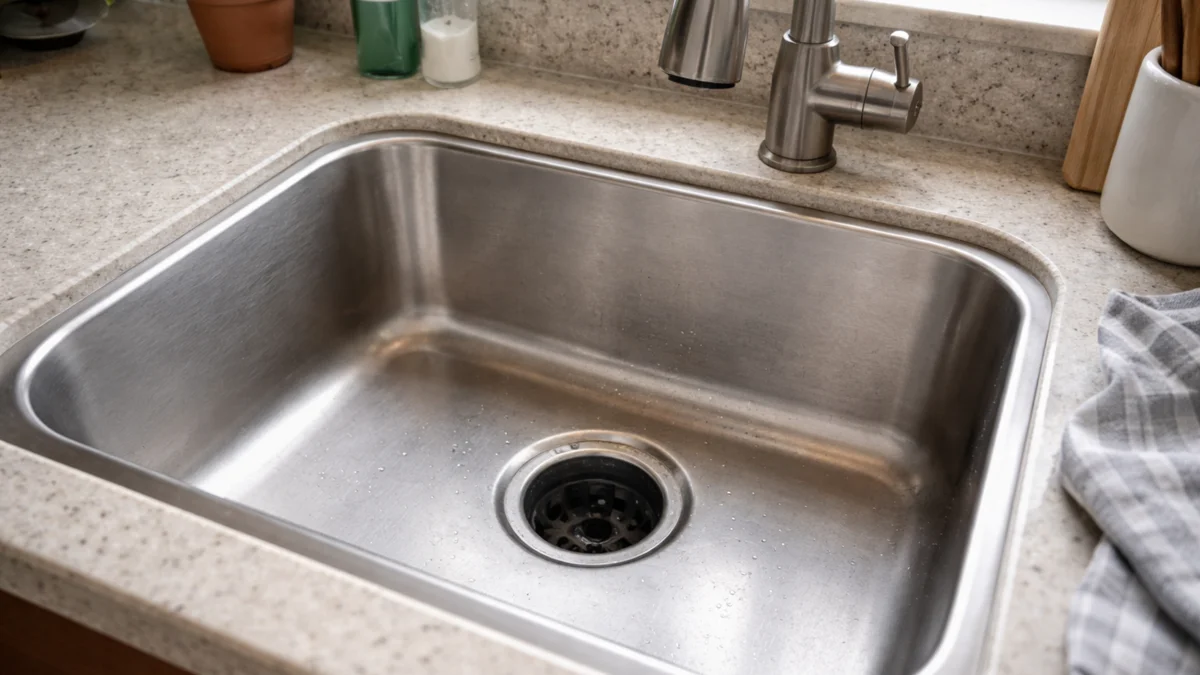
Garbage disposal odor shows up when the sink looks clean. Knowing how to clean a smelly garbage disposal helps you remove hidden grime instead of masking it.
Many people try to clean a smelly garbage disposal with random sprays or too much cleaner. That often misses the trouble spots, especially the rubber splash guard and damp film inside the chamber.
A better approach is to clean a smelly garbage disposal by loosening grease, flushing trapped food, and freshening the parts that stay wet. You do not need a harsh routine to get good results.
Once you know why the smell builds up, it becomes easier to clean a smelly garbage disposal safely. The steps below cover the cause, the best methods, what to avoid, and how to keep odor from building up again.
Table of Contents
What Causes Garbage Disposal Smell?
Most people need to clean a smelly garbage disposal because food bits stick to the inside walls and under the splash guard. Add grease, warmth, and moisture, and that film starts to smell sour or rotten.
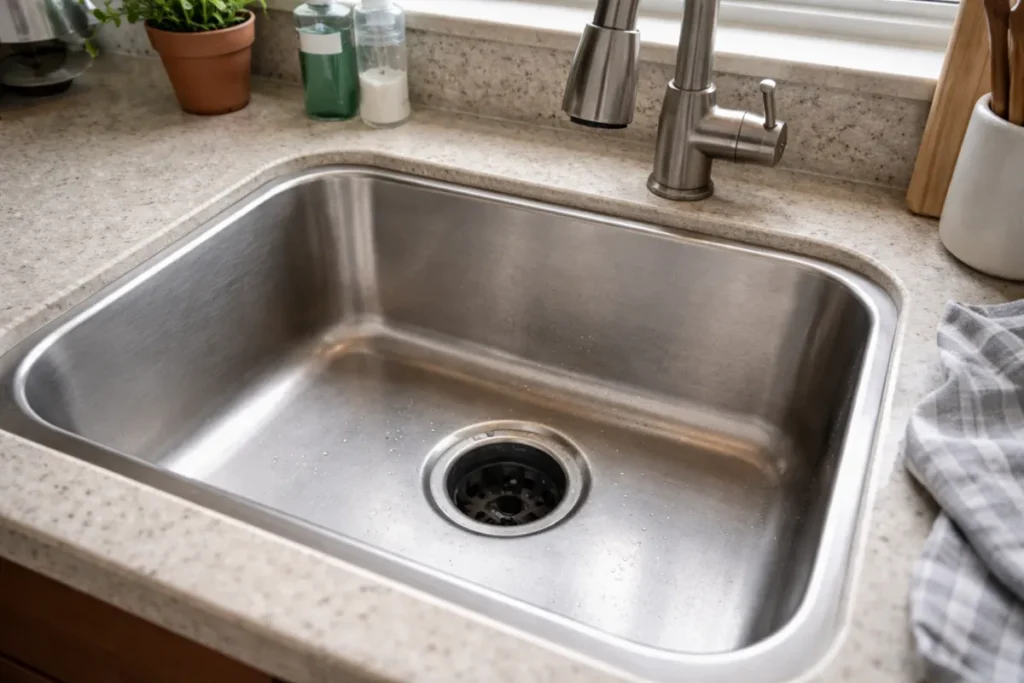
Common causes include:
- greasy residue coating the chamber
- soft scraps trapped under the rubber guard
- not enough water during or after grinding
- long gaps between cleanings
EPA explains that fats, oils, and grease can create blockages in sewer systems, which is one more reason to keep large scraps and oily residue out of the disposal.
You may also need to clean a smelly garbage disposal more often if you grind sticky foods or rinse with only a weak stream of water. The smell is often strongest near the rubber baffle because that is where residue hides.
If food scraps sit nearby, lingering trash can smell can mix with sink odor and make the whole area smell worse.
Methods to Clean a Smelly Garbage Disposal (Deeper Freshness, Low Fumes)
1. Hot Water and Dish Soap (Cuts Grease Film)
This is the best first step when you want to clean a smelly garbage disposal without jumping to stronger products. Soap loosens oily residue, and strong water flow helps carry it through.
How to use it:
- run hot water for 20 seconds
- add a small squeeze of dish soap
- turn on the disposal briefly, then keep flushing
Best for:
- light everyday odor
- recent greasy meals
2. Baking Soda and Vinegar (Foams Into Hidden Spots)
This method helps lift light grime and freshen the chamber. It is a gentle way to clean a smelly garbage disposal when the odor is noticeable but not extreme.
How to use it:
- pour in 1/2 cup of baking soda
- add 1 cup of white vinegar slowly
- let it fizz for 5 minutes, then flush with hot water
Best for:
- stale sour smell
- weekly refreshes
Vinegar also works well for cleaning a coffee maker, which is another spot where stale buildup can hang on.
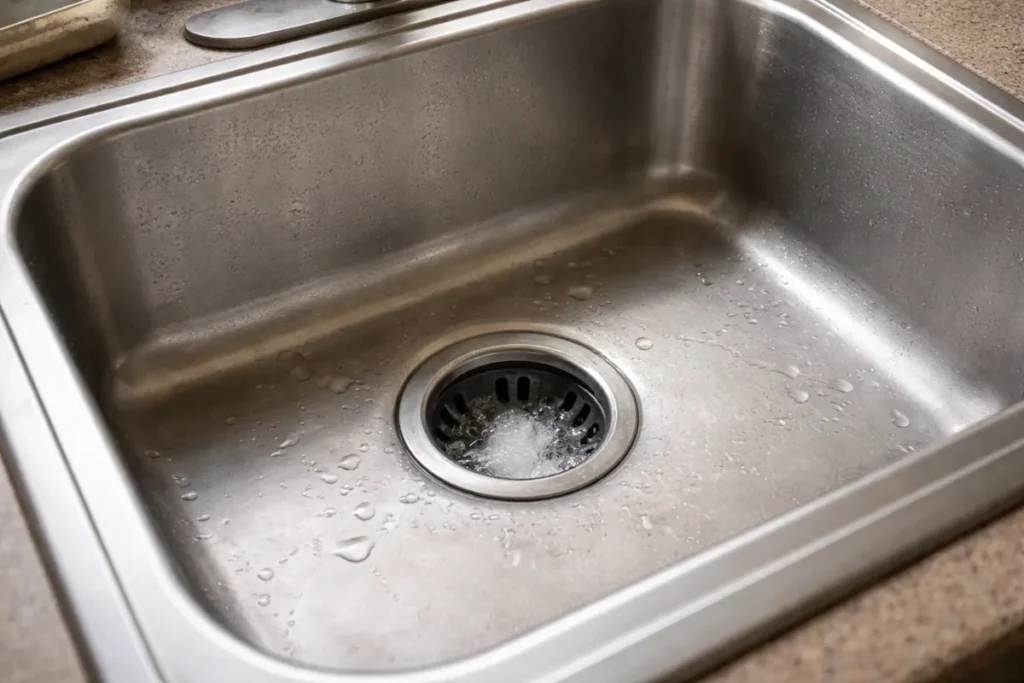
3. Ice and Coarse Salt (Scrubs While It Grinds)
Ice helps knock residue loose from the inner walls, while coarse salt adds mild scrubbing power. It gives you a deeper reset without a harsh cleaner.
How to use it:
- add a handful of ice cubes
- pour in 1 tablespoon of coarse salt
- run cold water and grind until the noise settles
Best for:
- film on the chamber
- stuck bits after heavy use
4. Splash Guard Scrub (Targets the Hidden Ring)
A lot of bad odor sits under the rubber splash guard where brushes rarely reach. Cleaning that ring often makes the biggest difference.
How to use it:
- turn off the wall switch first
- lift the rubber flaps and scrub underneath with a soapy brush
- wipe, rinse, and flush with warm water
Best for:
- strong smell near the sink opening
- visible grime under the flaps
The area around the opening often needs attention too, and a quick stainless steel sink cleanup can make the whole sink look cleaner.
5. Enzyme-Based Disposal Cleaner (Longer-Lasting Freshness)
If you need to clean a smelly garbage disposal after the gentle methods above, an enzyme cleaner is a smart next step. It breaks down organic residue with less harsh odor than many chemical options.
How to use it:
- read the label and use only the amount directed
- let it sit for the recommended time
- flush well and do not mix it with other cleaners
Best for:
- recurring odor
- deeper organic buildup
Recurring odor can point to another smell source nearby, not just the disposal itself.
Test any product on a hidden area if it may touch nearby surfaces, wear gloves if your skin is sensitive, and never combine cleaners in the disposal. CDC warns that mixing household bleach or other disinfectants with other cleaners can release vapors that may be dangerous to breathe in.
What NOT to Do (Protect Parts, Avoid Fumes)
A few common shortcuts can make the odor worse.
- Do not pour random cleaners together. Even if each one seems mild alone, mixing formulas raises the risk of fumes and surface damage.
- Do not use too much citrus peel. A small amount can freshen the smell, but too much leaves material behind.
- Do not scrub with metal tools. They can nick nearby finishes and make the area harder to clean safely.
- Do not rely on fragrance alone. A strong scent may hide the odor while grime keeps building underneath.
You can also browse more cleaning guides for simple routines that remove grime instead of hiding smells.
Advanced Tips to Make Cleaning Easier
Small tweaks can make each cleanup work much better. They also help you avoid extra odor between deep cleans.
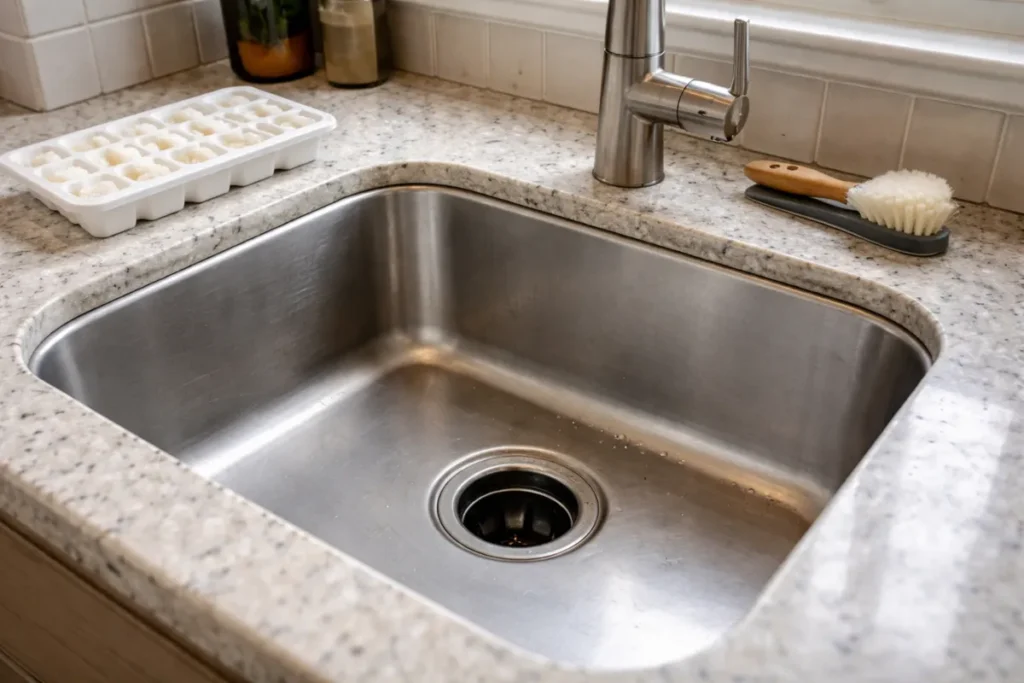
- Freeze vinegar in ice trays for a two-step refresh.
- Use a narrow brush just for the splash guard area.
- Run plenty of water before and after grinding food.
- Clean the drain stopper and sink rim too.
Hidden buildup in dishwasher spray arms can also add to stale kitchen odor over time, so it helps to clean those regularly too.
How to Prevent Garbage Disposal Smell From Building Up Again
Steady habits help stop that sour sink smell from building up again.
- scrape large scraps into the trash or compost first
- avoid sending heavy grease down the disposal
- run cold water during grinding
- flush for a few extra seconds after use
- scrub under the splash guard every week or two
If the kitchen still smells off after the disposal is clean, leftover fridge odor may be part of the problem too.
Frequently Asked Questions (FAQ)
How often should I clean my garbage disposal?
A light refresh once a week works for most kitchens. Heavy use may call for deeper cleaning.
Is baking soda and vinegar enough on its own?
It often works for mild odor and light residue. If the smell keeps showing up, clean the splash guard and use a deeper method next.
Are enzyme cleaners better than stronger chemical cleaners?
For routine odor, they are usually a smarter choice. They target organic residue with less harsh smell.
Is it safe around kids and pets?
Gentle methods are easier to manage at home. Store cleaners safely, rinse well, and never let anyone reach into the disposal.
What if the smell is still there after cleaning?
Clean the rubber guard again and check the sink rim and nearby drain opening. If the unit also drains slowly, hums, or leaks, the issue may be bigger than odor alone.
Can I use boiling water?
A steady hot tap flush is usually enough for cleaning. Cold water is still better while the disposal is actively grinding food.
Final Tips
To clean a smelly garbage disposal well, focus on grime first and scent second. Once buildup is gone, the fresh smell is easier to keep.
Start with the gentlest method, then step up only if needed. Clean the splash guard regularly, flush with enough water, and avoid random cleaner combinations.
The kitchen cleaning guide also covers other kitchen trouble spots that can hold onto odor.
Conclusion
You can clean a smelly garbage disposal like a pro without harsh fumes or rough methods. A smart routine removes hidden residue, protects nearby parts, and keeps your sink smelling cleaner for longer.