
Cooking often feels slow not because of the stove, but because of everything around it. People who want to save time while cooking lose minutes to chopping, dish buildup, and too many decisions.
Some popular shortcuts sound helpful, but do not actually make dinner easier. Some create more cleanup than they save, while others take too much prep to be worth it.
The best ideas depend on your routine. A busy parent needs different shortcuts than someone who only cooks once or twice a week.
What matters most is whether you can realistically keep using the hack. The right hacks should feel easy enough to use on a tired day.
Table of Contents
What Makes a Good Time-Saving Kitchen Hack?
A useful hack should make dinner smoother without adding hidden work.
- It saves time during prep, cooking, or cleanup.
- It should be simple enough to repeat without much effort.
- It should not leave you with extra tools, bowls, or containers to wash.
- It should make dinner easier to manage, not just faster to do.
The USDA‘s safe food handling basics are a good reminder that faster cooking still needs prep habits.
What to Look for First (Fast Wins by Routine)
Start by spotting where dinner slows down most in your kitchen. The best shortcut is usually the one that fixes the problem you run into again and again.
- Prep vs. cleanup: If chopping drags, use prep shortcuts. If dishes are the real problem, focus on one-pan meals and quick cleanup while you cook.
- How often you cook: People who cook often benefit from simple repeatable systems. Occasional cooks usually do better with low-maintenance habits.
- Rush level: If evenings feel hectic, choose hacks that reduce decisions before cooking starts.
- Meal style: If your family rotates the same meals each week, batching can help. If meals vary a lot, flexible shortcuts usually work better.
Best Hacks to Save Time While Cooking (Less Rush, Fewer Dishes)
1. Prep One Base Ingredient (Faster Starts)
This is one of the easiest ways to save time while cooking without committing to full meal prep.
Best for:
- Busy weeknights
- Frequent cooks
- Families with repeat meals
Why it saves time:
- Cuts down on repeated chopping
- Helps dinner come together faster
- Makes simple meals easier to throw together
Watch out for:
- Prepping more than you will use
- Choosing the wrong ingredients for your week
How to use it well:
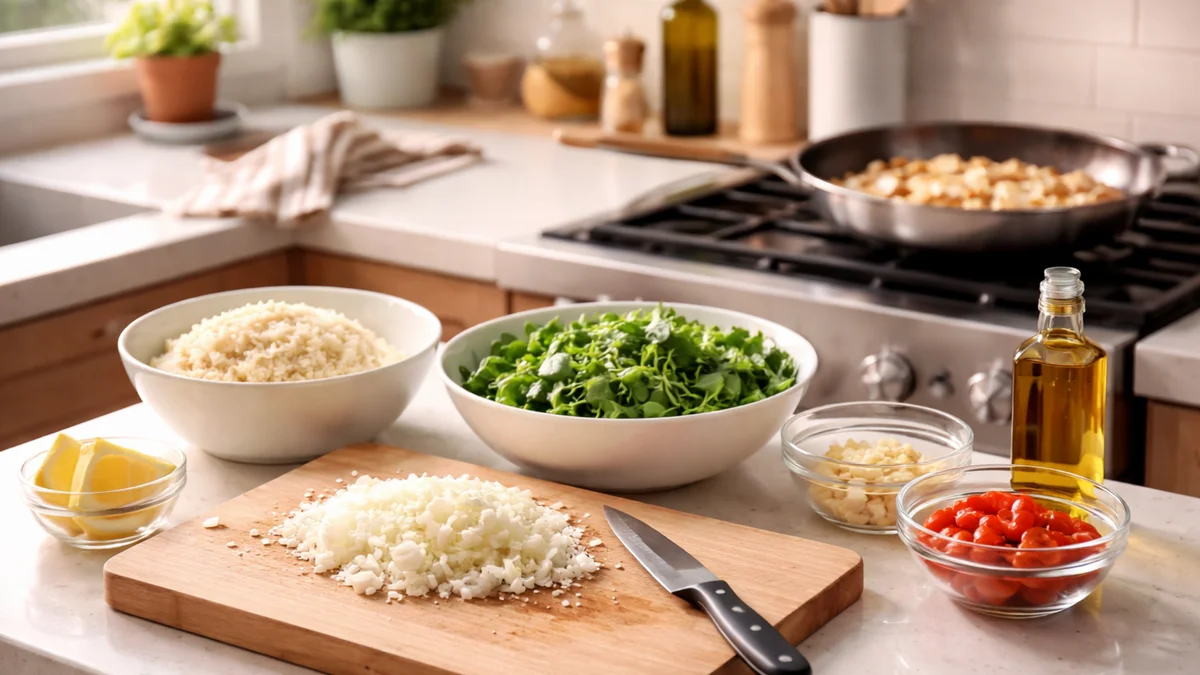
Pick one or two ingredients you use often, such as chopped onions, cooked rice, or washed greens.
If onion prep is part of your routine, knowing a quick fix for lingering onion smell makes cleanup easier to keep up with.
2. Clean in Short Bursts (Less Sink Stress)
Cleaning as you go helps most when it stays light. The goal is to stop mess from turning into a second job.
Best for:
- Small kitchens
- People who hate late cleanup
- Meals with waiting times
Why it saves time:
- Keeps counters usable
- Prevents a big sink pile
- Lowers end-of-meal stress
Watch out for:
- Over-cleaning while food needs attention
- Losing your place in the meal
How to use it well:
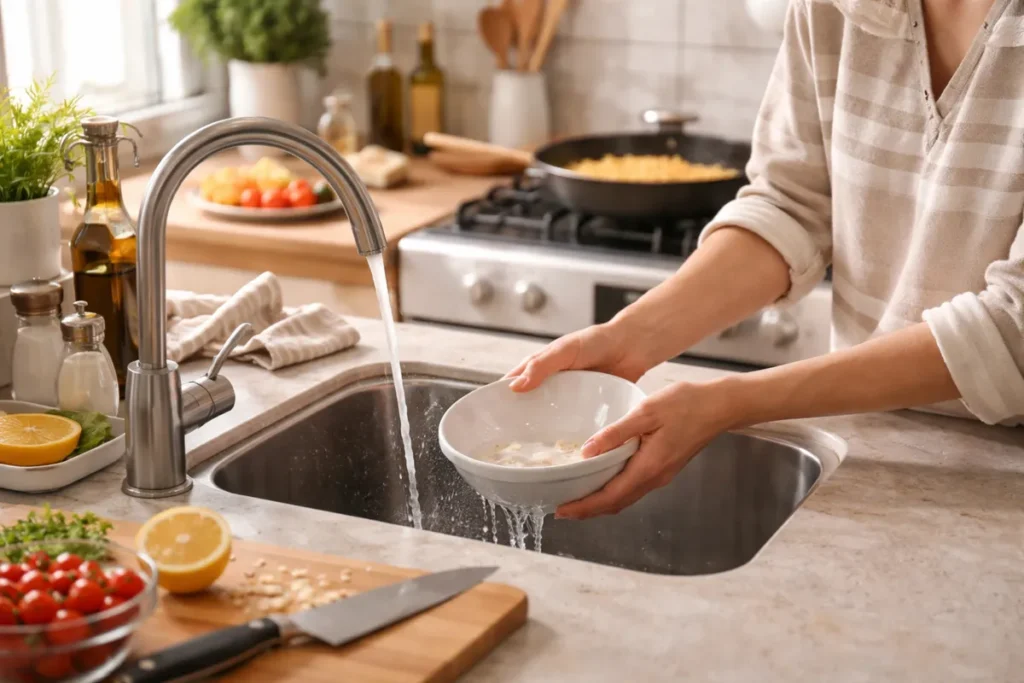
Use natural pauses to rinse one tool, load one bowl, or wipe one spot, then move on.
Cleanup feels easier at the end of the night when trash can odor is not adding one more kitchen problem.
3. Choose One-Pan or One-Pot Meals (Fewer Moving Parts)
Simple meal structure often saves more time than a clever trick. It also makes it easier to save time while cooking because there is less to manage.
Best for:
- Low-energy nights
- Beginner cooks
- Anyone wanting fewer dishes
Why it saves time:
- Reduces tool switching
- Simplifies timing
- Cuts cleanup later
Watch out for:
- Overcrowding the pan
- Forcing every meal into this format
How to use it well:
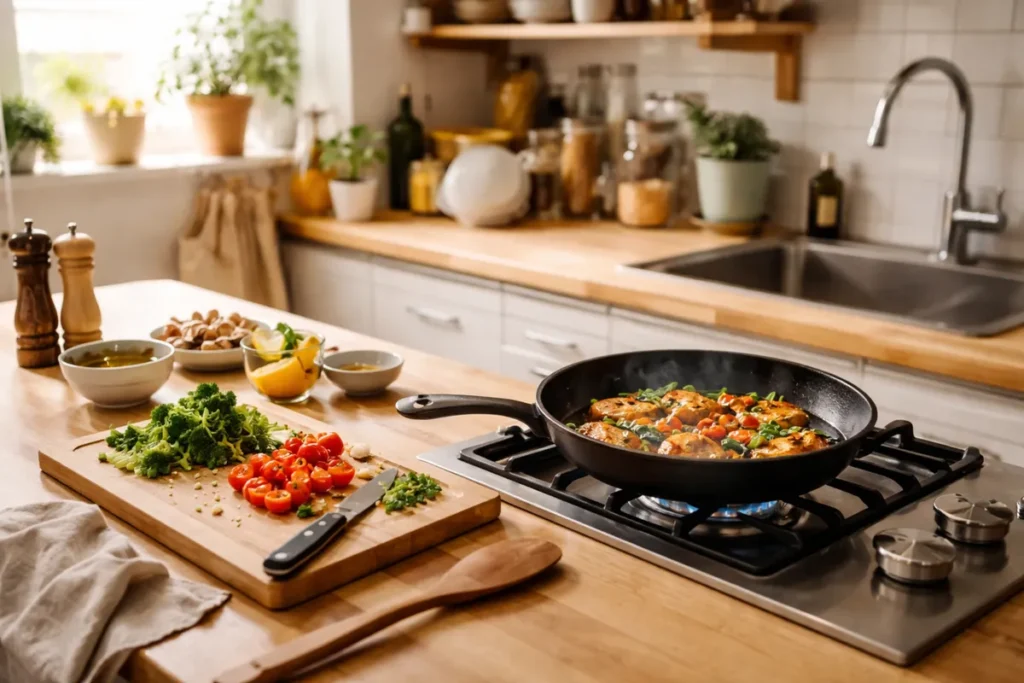
Use it for meals that naturally fit, like soups, sheet-pan dinners, pasta, or stir-fries.
One-pan meals save even more time when sink cleanup stays simple too.
4. Group Similar Steps Together (Better Flow)
Task switching quietly slows people down. Keeping similar steps together makes cooking feel calmer.
Best for:
- Multi-step meals
- Distracted cooks
- People who lose track easily
Why it saves time:
- Reduces back-and-forth between tasks
- Helps you spot missing ingredients sooner
- Keeps the process more organized
Watch out for:
- Doing too much upfront
- Grouping steps that should stay fresh
How to use it well:
Do quick prep first, then stove work, then finishing steps so you are not bouncing back and forth.
5. Use a Simple Weekly Meal Pattern (Less Daily Guesswork)
A simple weekly pattern can save time before cooking even begins. It helps save time while cooking because you spend less time deciding what to make.
Best for:
- Families
- Tired weeknight cooks
- People who struggle to choose dinner
Why it saves time:
- Speeds up planning
- Makes shopping easier
- Makes leftovers easier to use later in the week.
Watch out for:
- Making it too strict
- Choosing themes no one likes
How to use it well:
Think in broad categories like soup night, taco night, or leftovers night instead of exact recipes.
A simple meal rhythm also works better when fridge odors do not make leftovers harder to use later in the week.
What NOT to Do (Shortcuts That Backfire)
Some shortcuts look efficient but create more work than they remove.
- Do not prep a full week of food if you rarely follow a fixed plan – prep one or two ingredients you use all the time instead.
- Do not buy a complex gadget system before fixing your routine – habits usually help more.
- Do not start too many parts of dinner at once – break dinner into stages so timing stays manageable.
- Do not choose hacks that use lots of extra containers – fewer dishes usually means faster nights.
How to Make These Hacks Work in Your Kitchen
Match one good shortcut to one problem before adding anything else.
- Small kitchen: Use one-pan meals and quick cleanup during cooking to keep counters clear.
- Busy weeknights: Prep one ingredient you use often and follow a simple dinner routine to make decisions easier.
- Cooking for kids: Repeat a few flexible meal formats and keep simple staples ready.
- Low energy after work: Use grouped tasks and fewer tools so dinner feels easier to manage.
Even simple routines work better when a clogged sink is not slowing cleanup down.
Frequently Asked Questions (FAQ)
What matters most in a time-saving kitchen hack?
It should solve a problem you run into again and again. If it saves minutes but adds stress or cleanup, it is the wrong fit.
Do these hacks work for beginners?
Yes. One-pan meals, grouped prep, and cleaning as you go are easy starting points.
How many hacks should I start with?
Start with one or two. That is usually enough to save time while cooking without making dinner feel over-organized.
Does meal prep always save time?
No. It helps most when you prep foods you already use often, not when you create a system you will not maintain.
Can simple hacks beat expensive tools?
Very often. Better flow, fewer dishes, and repeatable habits usually help more than another gadget.
How do I test a new routine without wasting effort?
Try it for three or four dinners. Keep what made dinner easier and drop the rest.
Final Tips
The best shortcuts are usually the simplest ones. They fit your real meals, your energy level, and the cleanup you can handle.
Focus on what makes dinner easier instead of chasing a perfect system. A few repeatable habits help more than a big kitchen reset.
Conclusion
The smartest way to save time while cooking is to choose a few methods that match your routine. When a hack makes dinner easier, cleaner, and simpler to think through, you are more likely to keep using it.