

Smoke can make one room feel stale fast. The quickest way to remove smoke smell from a room is to clear the air and clean the surfaces holding the odor.
A smoky room may seem better after you open a window, then smell bad later. The odor is not only in the air – it also sticks to fabric, dust, and surfaces.
Smoke odor settles in layers. Airing out helps first, but the smell often hangs on in soft items and dusty spots.
To remove smoke smell from a room fast, use a short air-out first, then clean the places that hold the smell. That works better than spraying fragrance and hoping it fades.
Table of Contents
What Causes Smoke Smell in a Room?
Smoke odor lingers because tiny particles and oily residue settle on surfaces. You need to clean both the air and the residue left behind to remove smoke smell from a room.

Typical causes include:
- indoor smoking or vaping
- burnt food or overheated oil
- candles, incense, or fireplaces
- smoke pulled in from another room
- dirty vents or filters holding odor
The EPA notes that ventilation and air cleaning can reduce smoke exposure indoors, but they will not eliminate it, and smoke-related chemicals can also remain on hard and soft surfaces.
When the smoky smell keeps returning from one spot, a quick odor source check can help you find what is still holding it.
Methods to Remove Smoke Smell From a Room Fast (Clear Odor, Low Stress)
To remove smoke smell from a room fast, start with the air, then clean the surfaces and materials that trap it. This order gives a quick lift without wasting effort.
1. Open Windows and Vent the Room (Quick Fresh-Air Start)
Fresh air gives the room an immediate first improvement. A fan helps move smoky air out instead of just stirring it around.
What to do:
- open windows on opposite sides if possible
- open the door to create airflow
- place a fan facing outward in one window
Best for:
- fresh smoke odor
- small rooms
2. Remove Ash, Dust, and Loose Debris (Keep Residue From Spreading)
Smoke smell clings to fine particles, so dusty surfaces can keep feeding the odor back into the room. A light cleanup first makes later steps work better.
What to do:
- empty ashtrays or smoky trash right away
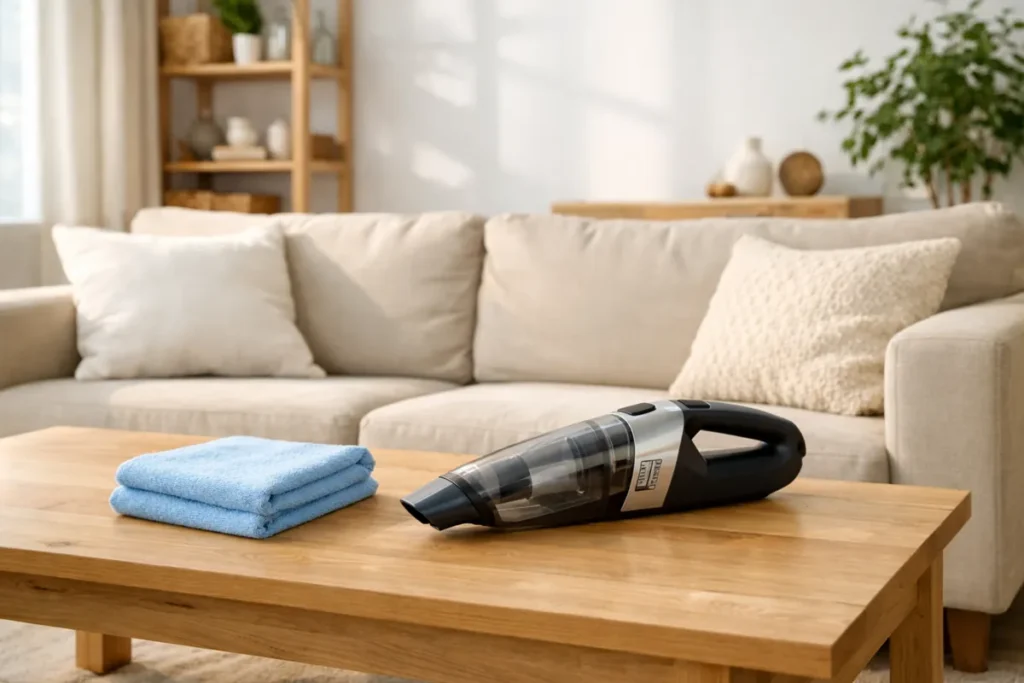
- vacuum floors, rugs, and upholstery
- dust shelves, trim, and sills with microfiber
Best for:
- visible dust or ash
- odor that lingers after basic cleanup
A burnt-food smell can also spread into the kitchen, so check for fridge odor if the room still smells stale.
3. Wash or Air Out Soft Items (Clear Odor From Fabrics)
Curtains, cushion covers, and throw blankets can hold onto smoke fast. Cleaning or airing them often makes a big difference.
What to do:
- wash removable fabric items if care labels allow
- dry them fully before putting them back
- air non-washable items near an open window or outdoors in dry weather
Best for:
- fabric-heavy rooms
- one-time smoke odor
Sofas and chairs can hold smoke longer than hard surfaces, so upholstery odor may need its own cleanup step.
4. Wipe Hard Surfaces With Mild Soap and Water (Remove Smoke Film)
A light film can stay on furniture, trim, doors, and walls after smoke exposure. Lifting that film helps remove smoke smell from a room without using harsh products.
What to do:
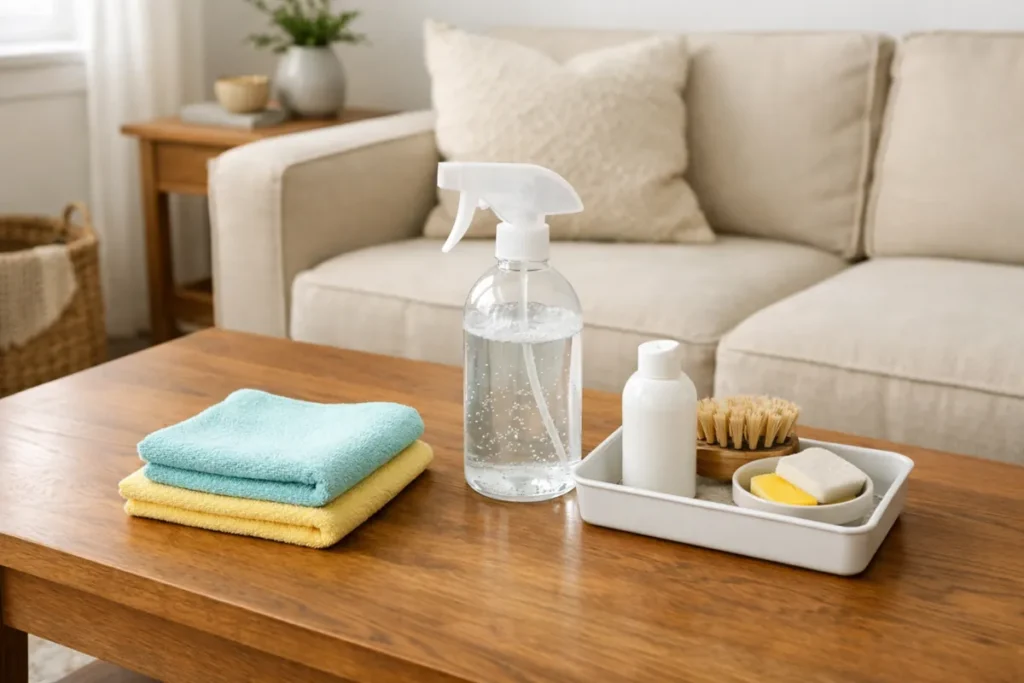
- mix a few drops of dish soap into warm water
- wipe hard surfaces with a damp cloth
- dry with a second clean cloth
Best for:
- light residue
- sealed or painted surfaces
5. Check Filters and Air Flow (Clear Leftover Odor)
A smoky smell later on usually means the filter or nearby surfaces are still holding part of the odor. This step helps finish the job after cleaning.
What to do:
- replace any filter that smells smoky
- run an air purifier with carbon if you have one
- place baking soda or activated charcoal nearby for follow-up odor control
Best for:
- repeated smoke exposure
- central-air rooms
What NOT to Do (Avoid Damage, Skip Cover-Ups)
A few wrong moves can lock the odor in longer.
- Do not only spray fragrance into the room. It may cover the smell briefly, but it does not remove the residue.
- Do not soak walls, upholstery, or wood finishes. Too much moisture can leave marks or slow drying.
- Do not skip vacuuming or dusting first. Wiping over loose residue can smear it around.
- Do not close the room right after cleaning. Give the air time to fully move out.
- Do not mix cleaners together. Use one method at a time and test delicate finishes first.
If the odor is sharp or drain-like instead of smoky, check for a possible bathroom sewer smell before repeating the same cleaning steps.
Advanced Tips to Make Cleaning Easier
Small setup changes can cut cleanup time right away. They also help each deodorizing step work more evenly.
- Start high and work down so dust and residue do not land on cleaned spots.
- Use two cloths when wiping surfaces. One loosens the film, and the second lifts it away.
- Pull soft items slightly away from walls while airing out. Air reaches trapped odor better.
- Vacuum slowly instead of making fast passes. Slower passes pull out more debris.
A smoky lower-level room may also need the same moisture control used for basement musty smell problems.
How to Keep Smoke Smell From Lingering Indoors
A few small habits can keep smoke odor from building up again.
- Keep smoking, candles, and incense out of the room – source control matters most.
- Open a window or run ventilation during smoky cooking – move odor out early.
- Vacuum fabrics and floors weekly – less dust means fewer odor-holding particles.
- Replace HVAC and purifier filters on schedule – dirty filters can recirculate smell.
- Wipe nearby hard surfaces after smoky events – quick cleanup stops buildup.
If smoke reached stored clothes or linens, the same airflow habits used for a musty closet smell can help closed spaces freshen up.
Frequently Asked Questions (FAQ)
Will opening windows alone fix the smell?
It can help with fresh smoke, but it often is not enough. Odor settles on surfaces, so the room may smell bad again once the windows close.
What absorbs smoke smell fastest?
Activated charcoal and baking soda can help with leftover odor. They work best after you clean the room, not instead of cleaning it.
Can I use vinegar?
You can use diluted vinegar on some hard surfaces if the finish allows it. Test first, since mild soap and water is a safer starting point.
Why does the smell come back the next day?
That means some residue is still sitting on fabrics, dust, or vents. To remove smoke smell from a room, you may need one more round of cleaning and filter care.
Do carpets and couches hold smoke odor longer?
Yes, soft surfaces often trap odor longer than sealed hard surfaces. That is why vacuuming and fabric care matter.
Is an air purifier enough by itself?
It can help, especially one with carbon, but it works best with ventilation and cleaning. If the residue stays on surfaces, the smell can keep coming back.
Final Tips
Start with airflow, then remove dust, then clean odor-holding surfaces. That order usually gives the fastest result with the least effort.
If the smell is strong, do two shorter cleaning rounds instead of one rushed session. When you remove smoke smell from a room, the goal is to clear away what the smoke left behind, not cover it up.
For other stubborn smells around the house, the odor removal guide can help you choose the right cleanup path.
Conclusion
A smoky room can be fixed with a few steps. When you remove smoke smell from a room by combining ventilation, surface cleaning, fabric care, and filter checks, the room feels fresher and stays that way longer.