
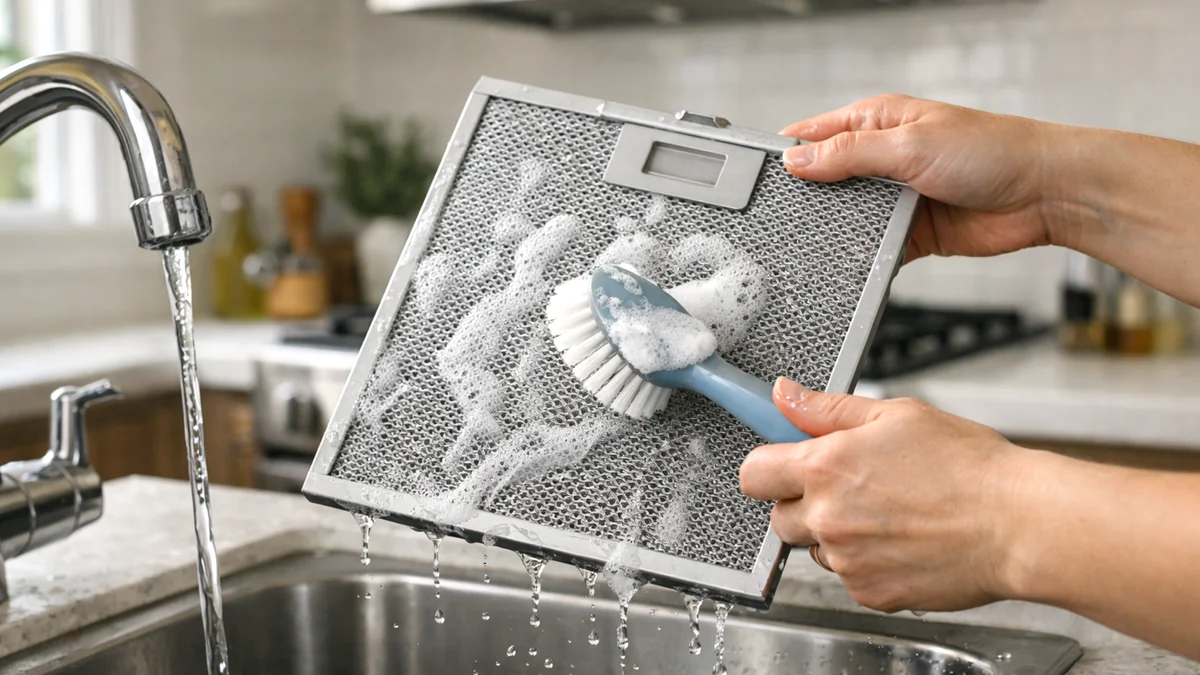
You start cooking and the hood fan sounds busy, but the air still feels heavy. Learning how to clean range hood filters before grease turns sticky makes a big difference.
Grease rises as mist, then lands on the filter like a glaze. It cools into a tacky film that grabs dust.
Most filters can be cleaned with hot water, dish soap, and a soft brush. The goal is to loosen the grease first so it rinses away instead of spreading.
If you clean range hood filters on a regular schedule, the job stays small. It helps the fan move air the way it should.
Table of Contents
What Causes Grease Buildup on Range Hood Filters?
Range hood filters are meant to catch airborne cooking oils. When you sauté, fry, or sear, tiny droplets rise with warm steam and cling to the metal.
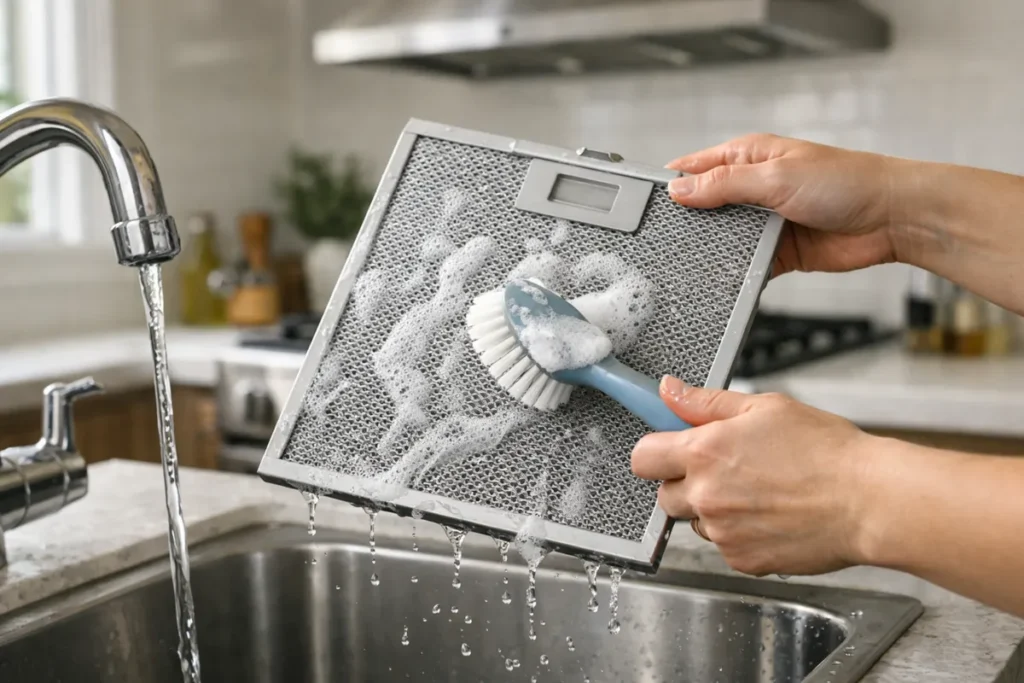
The longer the oil sits, the more it hardens into a sticky layer. When you delay, it takes longer to clean range hood filters.
Common causes include:
- Frequent high-heat cooking, especially frying
- Not running the fan long enough after cooking
- Waiting months between cleanings
- Skipping quick wipe-downs around the hood
EPA recommends using a range hood that vents outdoors to help move smoke, steam, and airborne grease out of the kitchen.
If that oily film has started spreading beyond the hood, this guide on greasy kitchen cabinets can help you clean the nearby buildup too.
Methods to Clean Range Hood Filters (Less Scrub, More Lift)
Most filters are aluminum mesh or stainless steel baffle filters. To clean range hood filters well, use hot water, a grease-cutting cleaner, and a little time to let it sit.
1. Hot Water and Dish Soap Soak (Best for Regular Cleaning)
Dish soap breaks down oils, and hot water loosens grease in the mesh. It’s a reliable way to clean range hood filters after cooking.
How to use it:
- Remove the filter and shake off dust.
- Fill a sink or tub with hot water.
- Add dish soap and mix.
- Soak 15-30 minutes.
- Scrub gently with a soft brush.
- Rinse with hot water and air-dry fully.
Best for:
- Light to medium grease
- Monthly maintenance
2. Baking Soda and Dish Soap Paste (Lifts Tacky Corners)
Baking soda adds mild grit that helps lift sticky patches.
How to use it:
- After a soapy soak, keep the filter wet.
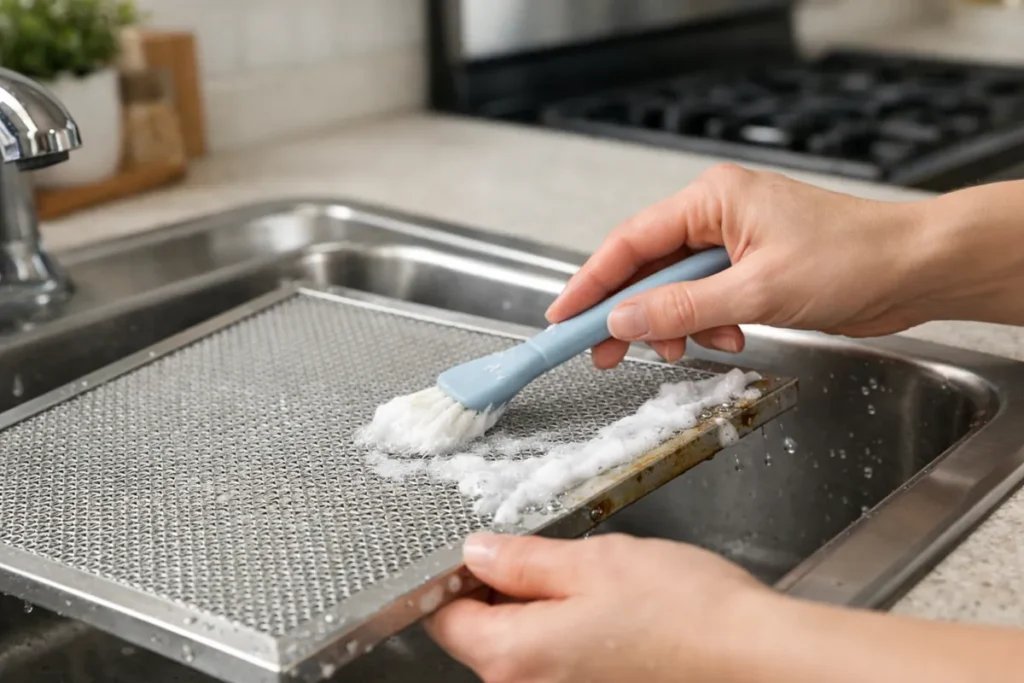
- Mix baking soda with a little dish soap to form a paste.
- Dab it onto edges and thick spots, then wait 10 minutes.
- Scrub lightly, then rinse well.
- Repeat only where it still feels tacky.
Best for:
- Sticky edges and corners
- Filters that feel slick after rinsing
3. Vinegar Rinse After Soaking (Cuts Leftover Film)
Vinegar can help cut leftover film after the grease is loosened.
How to use it:
- Soak and scrub first using Method 1.
- Swish the filter in warm water with a splash of vinegar.
- Rinse again with warm water.
- Dry completely before reinstalling.
Best for:
- A lingering slick feel
- Homes with hard water
4. Dishwasher Cycle (Hands-Off, Label-Approved Wash)
Some filters are dishwasher-safe, but heat and strong cycles can discolor aluminum. Check the manual or filter label first.
How to use it:
- Place the filter on the lower rack, angled to drain.
- Run a normal cycle.
- Skip heated dry if you are unsure about the finish.
- Rinse any residue and air-dry.
Best for:
- Dishwasher-safe baffle filters
- Regular upkeep
5. Trash-Bag Soak Method (Deep Soak, No Tub)
A sealed bag keeps the cleaner in contact with the grease.
How to use it:
- Put the filter in a thick trash bag inside a pan.
- Add hot water, dish soap, and 2 tablespoons baking soda.
- Tie the bag and gently slosh to coat the filter.
- Let it sit 20-30 minutes.
- Open carefully, scrub lightly, rinse, and dry.
Best for:
- Small kitchens and apartments
- Filters that need a deeper soak
6. Citrus Degreaser Spot Treatment (Targets Thick Grease Spots)
A citrus degreaser can cut heavy buildup when soap alone struggles. Use it only on the worst areas and test it on a small corner first.
How to use it:
- Pre-soak 10-15 minutes in hot soapy water.
- Spray degreaser on thick patches only.
- Wait a few minutes, then scrub gently.
- Rinse with hot water for a full minute.
- Wash once more with dish soap, then dry.
Best for:
- Filters neglected for months
- Thick grease near the fan intake
Grease cleanup usually does not stop at the hood, and oven racks are often the next thing to tackle.
What NOT to Do (Avoid Warping and Rust)
A few shortcuts can bend the metal and make grease harder to rinse out.
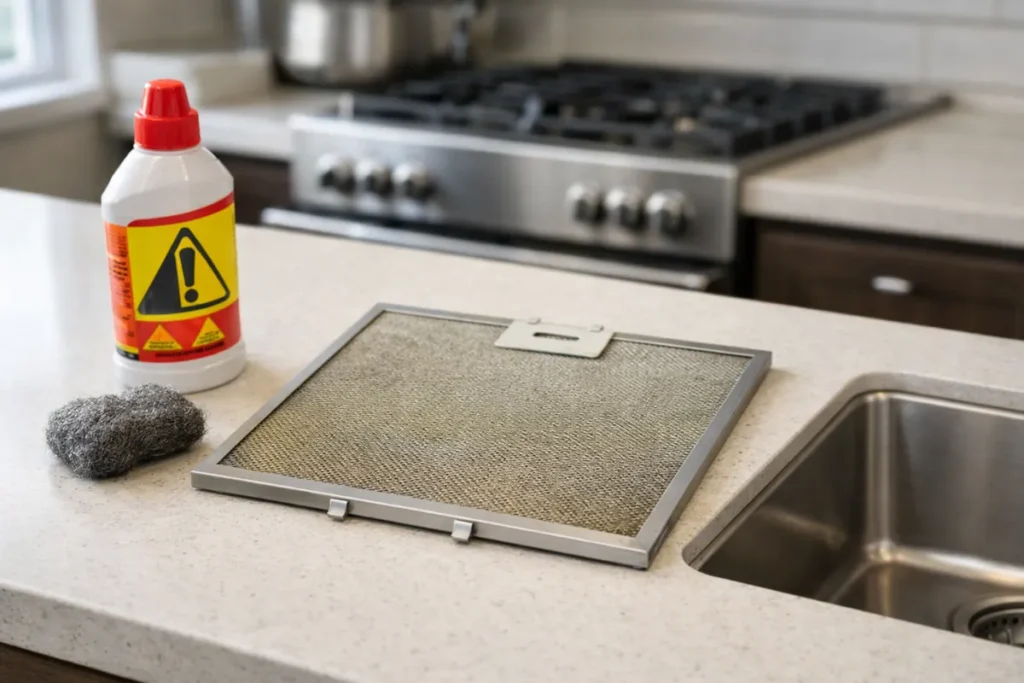
- Do not use abrasive pads or steel wool. Scratches make grease stick faster next time.
- Do not soak for hours in harsh cleaners. Long soaks can discolor metal and weaken seams.
- Do not bend the filter to “open” the mesh. It may stop fitting and can rattle in the hood.
- Do not reinstall it damp. Trapped moisture can cause rust on some frames.
For other gentle cleanup ideas around the kitchen, the kitchen cleaning guide is a useful next stop.
Advanced Tips to Make Cleaning Easier
Small setup tweaks make the mess easier to control. These tricks help you clean less often and rinse faster.
- Wipe the filter track and the underside of the hood while the filter is out. Fresh grease drips down onto clean filters.
- Rinse from the cleaner side toward the greasier side. It pushes grease out instead of deeper in.
- Use a long-handled soft brush. It reaches the center without pressing hard.
- Set a drying spot with airflow. A dish rack near a fan helps it dry evenly.
If the soak leaves residue in the basin, this natural method for a stainless steel sink helps clean it up without much extra work.
How to Prevent Grease Buildup on Range Hood Filters From Coming Back
A light routine keeps the fan strong and the filter clean.
- Run the fan 5 minutes before cooking. Early airflow catches grease sooner.
- Keep the fan on 10 minutes after cooking. It clears lingering mist and steam.
- Wipe the underside weekly. Less grease above means less grease in the filter.
- Rinse the filter with hot water every 2 weeks. It slows buildup before it turns sticky.
- Deep-clean monthly if you fry or sear often. High heat creates a thicker layer.
Grease often spreads to the wall near the stove, so a greasy backsplash may need attention too.
Frequently Asked Questions (FAQ)
How often should I clean my range hood filter?
In a typical kitchen, clean range hood filters about once a month. If you fry often or cook on high heat daily, aim for every 2-3 weeks.
Can I use vinegar alone?
Vinegar helps with leftover film, but it is not great at breaking grease by itself. Use it after a soapy soak.
Is it okay to put an aluminum mesh filter in the dishwasher?
Sometimes, but it depends on the filter. Aluminum can discolor, so check the label or manual before you try it.
What if the filter still feels sticky after cleaning?
Repeat the hot soapy soak, then use a baking soda paste on the tackiest spots. For very old buildup, a targeted degreaser step may help.
Do I need to clean inside the hood too?
A quick wipe inside helps the filter stay cleaner longer. Turn off the hood first and only wipe what you can reach safely.
How do I know when it is time to replace the filter?
Replace it if the mesh is torn, the frame is bent, or it won’t sit flat and seal properly. If it will not sit flat, replace it.
Final Tips
Start with hot water and dish soap, then add baking soda only where you need it. If the metal still feels slick, rinse again with hot water.
Set a phone reminder to clean range hood filters before they look dirty. If you fall behind, start with the hot soapy soak, then treat any sticky spots and rinse well.
The same gentle routine also works well when you need to clean the microwave after splatters and grease build up.
Conclusion
Clean filters help your hood do its job and keep grease from spreading around the kitchen. Build a simple routine, treat thick spots gently, and rinse well. The next time you clean range hood filters, it will feel far less messy.