

A weak shower can start with white deposits blocking the spray holes. A soak and gentle scrub can remove calcium buildup on showerheads faster than hard scrubbing.
That chalky crust forms as hard water dries on the showerhead. Over time, the spray turns uneven, pressure drops, and the head can look dull.
Many people grab rough tools first, but that can scratch the finish without clearing the clog inside. To remove calcium buildup on showerheads, soften the deposits first and then clean the small parts carefully.
The best method depends on how thick the scale is and whether it is only on the surface or also inside the showerhead. Match the method to the buildup, and water flow should improve quickly.
Table of Contents
What Causes Calcium Buildup on Showerheads?
Calcium buildup forms when mineral-rich water dries on the showerhead over time. The longer it sits, the harder it is to remove calcium buildup on showerheads without soaking first.
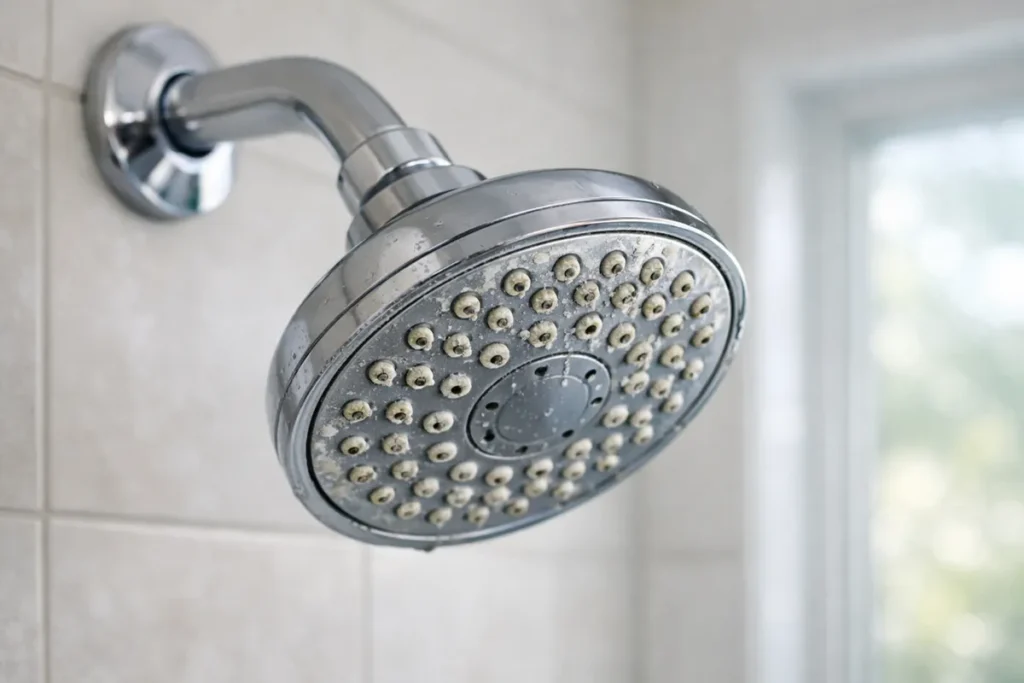
Typical causes include:
- hard water with high mineral content
- water left to dry on the spray face
- missed cleanings that let new scale stack on old residue
- clogged nozzles that trap more deposits
The USGS notes that hard water leaves mineral deposits on fixtures, which is why white scale keeps showing up in bathrooms.
Those same minerals often leave limescale on faucets too.
Methods to Remove Calcium Buildup on Showerheads (Better Flow, Less Effort)
To remove calcium buildup on showerheads, start with the gentlest method that matches what you see. Move up only if the nozzles still look blocked or the spray stays weak.
1. Vinegar Bag Soak (Best First Step)
For light to medium scale, vinegar is often enough to remove calcium buildup on showerheads on many standard finishes.
How to use it:
- fill a small bag with enough white vinegar to cover the spray face
- secure it around the showerhead with a rubber band
- soak for 30 to 60 minutes, then scrub lightly and run hot water
Best for:
- light white crust
- chrome and standard metal finishes
The same mineral problem often shows up as hard water stains on nearby shower glass too.
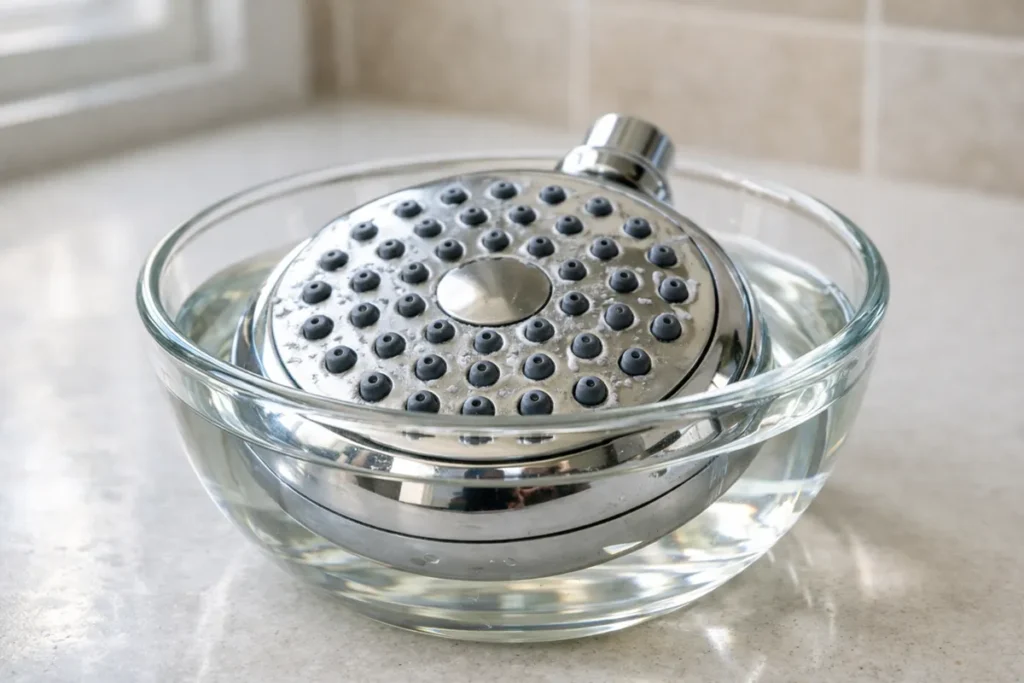
2. Remove and Bowl-Soak (For Heavier Scale)
A full soak reaches deposits inside the head.
How to use it:
- unscrew the showerhead if the design allows it
- place it in a bowl of white vinegar for 1 to 2 hours
- scrub with a soft toothbrush, rinse well, and reattach
Best for:
- medium to heavy buildup
- heads with visible internal residue
A soak-first approach can also help loosen soap scum on shower walls.
3. Toothbrush and Toothpick Detail Clean (For Clogged Nozzles)
This works best after soaking, when the deposits have softened.
How to use it:
- scrub the face in small circles with a soft toothbrush
- use a wooden toothpick gently at blocked nozzles
- run water for a minute to flush loosened debris
Best for:
- patchy spray patterns
- rubber nozzles with blocked openings
4. Screen Filter Rinse (For Weak Pressure)
Sometimes you need to remove calcium buildup on showerheads from the inside, not just the spray face. Many models have a small screen filter near the pipe connection that collects scale.
How to use it:
- unscrew the showerhead and look for the small mesh screen
- lift it out carefully and rinse it under water
- brush off residue, reinstall it, and test the flow
Best for:
- weak pressure across the whole spray
- homes with sediment as well as scale
5. Commercial Descaler (When Vinegar Is Not Enough)
A bathroom descaler can help with stubborn buildup, but follow the label and never mix cleaners.
How to use it:
- choose a product made for mineral scale and your showerhead finish
- apply or soak only as directed, testing a hidden spot first if needed
- rinse thoroughly and run water long enough to clear residue
Best for:
- heavy hardened buildup
- cases where vinegar was not enough
What NOT to Do (No Scratches, No Setbacks)
A few shortcuts can leave the spray worse than before.
- Do not use steel wool or harsh scouring pads. They can scratch chrome and damage coatings.
- Do not poke deep with metal pins. That can damage rubber nozzles and leave the spray uneven.
- Do not mix vinegar, acid products, or other cleaners together. Mixing does not clear scale faster.
- Do not leave strong descalers on too long. Extra soak time can dull the finish.
- Do not skip the final rinse. Cleaner residue and loosened grit can still block flow.
Advanced Tips to Make Cleaning Easier
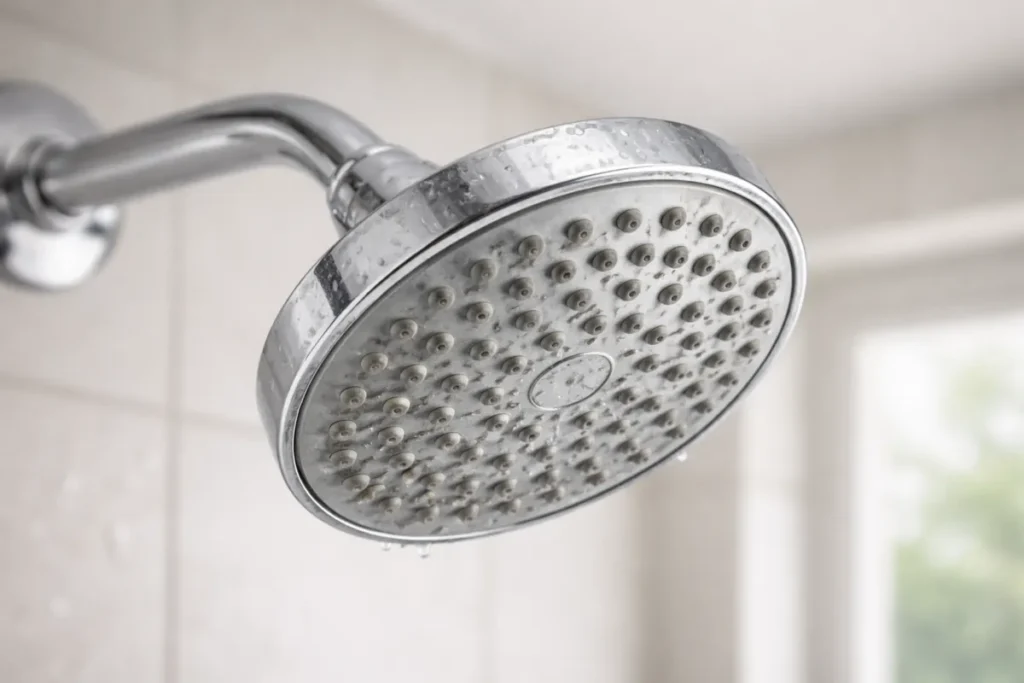
Small setup changes can cut scrubbing time. They also help water move through each nozzle again.
- Run hot water for a minute before soaking. Warm residue often softens faster.
- Wrap a cloth around the soak bag if it slips. This keeps the spray face covered.
- Take a photo before removing parts. It helps if a washer or screen comes loose.
- Clean the nozzles right after soaking. Mineral residue hardens again as it dries.
Once the spray pattern is back, cleaning the glass shower door helps the whole shower look finished.
How to Keep Calcium Buildup From Forming Again on Showerheads
Simple habits can help reduce how often you need to remove calcium buildup on showerheads.
- wipe the spray face after showers – fewer drying droplets means less fresh scale
- rub rubber nozzles with your fingers weekly – light deposits break loose before they harden
- do a short vinegar soak every few weeks – routine care is easier than a full reset
- check the spray pattern early – small clogs are easier to clear than thick deposits
- consider water treatment for very hard water – severe buildup forms again faster.
Keeping the shower area drier can also help prevent musty smells in the bathroom.
Frequently Asked Questions (FAQ)
Can vinegar damage a showerhead?
Usually not on many standard finishes if you use it briefly and rinse well. Check manufacturer guidance for specialty finishes.
How long should I soak a showerhead?
Light scale may loosen in 30 minutes. Heavier buildup often needs 1 to 2 hours once the head is removed.
Do I need to remove the showerhead first?
Not always. A bag soak works for lighter scale, but removing the head helps when buildup is inside too.
What if the spray is still weak after cleaning?
Check the screen filter and pipe connection for trapped sediment. If flow stays poor, the problem may be deeper in the plumbing.
How often should I clean it?
Once a month works for many homes. If you need to remove calcium buildup on showerheads often, your water is likely very hard and needs more frequent upkeep.
Can I use baking soda by itself?
It can help with light film, but it does not dissolve hard mineral scale as well as vinegar or a descaler.
Final Tips
Start with the gentlest method that fits the scale you see. Soaking first usually does more than scrubbing harder.
Rinse well, check the inside filter if pressure stays low, and keep up with light maintenance.
Conclusion
A clogged spray pattern usually looks worse than it is. Once you remove calcium buildup on showerheads with the right soak, light scrubbing, and a full rinse, better water flow comes back quickly.