

Kitchen odors can be frustrating, especially when they keep coming back no matter how often you clean. If you have tried airing out the room or using air fresheners without success, learning kitchen hacks to remove stubborn odors can help you fix the problem at the source.
These smells often hide where you do not immediately look. Grease, moisture, food residue, and bacteria slowly build up inside cabinets, drains, appliances, and trash areas.
You do not need harsh chemicals or professional services to deal with them. Safe, at-home deep-clean methods can break down odor-causing buildup and restore freshness by targeting odors at the source instead of masking them.
Once you understand what causes these smells and how to remove them properly, keeping your kitchen smelling fresh becomes much easier and less stressful.
Table of Contents
What Causes Stubborn Kitchen Odors?
Stubborn kitchen odors usually come from hidden buildup rather than surface messes. Cooking releases grease particles and moisture that settle into cabinets, walls, appliances, and drains.

Over time, food residue mixes with heat and humidity. This creates a perfect environment for bacteria that produce lingering smells.
Using proven kitchen hacks to remove stubborn odors helps break down hidden buildup instead of simply masking smells.
Common causes include:
- Grease buildup inside cabinets and on hardware
- Food residue trapped in drains and garbage disposals
- Moisture and residue inside dishwashers
- Spills and spoiled food inside the refrigerator
- Trash bins holding food waste too long
The National Institute of Environmental Health Sciences explains that moisture and organic residue from everyday indoor activities can support the growth of biological contaminants on surfaces, which often contributes to lingering indoor odors over time.
If several rooms smell off, start with these whole-home odor fixes.
Kitchen Hacks to Remove Stubborn Odors (For Tough, Built-Up Smells)
These kitchen hacks to remove stubborn odors focus on breaking down buildup instead of masking smells. Start with gentler methods and move to deeper cleaning where odors persist.
Not every odor needs the same approach, which is why identifying the most likely source matters.
1. Deep Degrease Cabinet Interiors (Targets Hidden Grease Film)
Grease inside cabinets often holds onto food odors long after surfaces look clean. Deep degreasing removes the sticky layer that traps smells.
How to use it:
- Mix warm water with dish soap
- Wipe cabinet interiors with a microfiber cloth
- Rinse with a damp cloth and dry fully
Best for:
- Cabinet boxes and shelves
- Areas near the stove
- Long-term cooking odors
If the grease feels sticky or keeps coming back, follow these steps to remove grease from kitchen cabinets.
2. Clean Cabinet Handles and Hinges (Releases Trapped Odors)
Hardware collects grease from hands and cooking vapors. Odors cling to these small surfaces more than expected.
How to use it:
- Remove hardware if possible
- Soak in warm soapy water
- Scrub gently and dry completely
Best for:
- Metal handles and knobs
- Sticky or dull hardware
- Odors near prep areas
3. Flush Kitchen Sink Drains Deeply (Removes Organic Buildup)
Kitchen drains trap food particles that rot over time. A deeper clean reaches past the visible opening.
How to use it:
- Pour baking soda down the drain
- Add white vinegar and let foam settle
- Rinse with hot water after 10 minutes
Best for:
- Slow-draining sinks
- Sulfur or musty smells
- Daily-use kitchen sinks
4. Reset Dishwasher Odors (Cleans Filters and Seals)
Dishwashers can smell even when dishes look clean. Filters and rubber seals often hide food residue.
How to use it:
- Remove and rinse the filter
- Wipe seals with vinegar solution
- Run an empty hot cycle
Best for:
- Persistent dishwasher smells
- Cloudy glassware
- Machines used daily
5. Deodorize Refrigerator Seals and Trays (Stops Odors From Returning)
Refrigerator seals and drip trays hold spills that are easy to miss. These areas release odors every time the door opens.
How to use it:
- Wipe seals with warm soapy water
- Clean removable trays
- Dry thoroughly before replacing
Best for:
- Sour or spoiled food smells
- Older refrigerators
- Odors that return quickly
When the fridge smells come back fast, use a deep fridge odor cleanup next.
6. Deep Clean Trash Cans (Neutralizes Embedded Smells)
Trash bins absorb odors into plastic over time. Simple rinsing is not enough for stubborn smells.
How to use it:
- Wash with hot water and dish soap
- Rinse with vinegar
- Let air dry completely outdoors
Best for:
- Kitchen trash cans
- Recycling bins
- Warm or humid climates
For stubborn bin odors, use a trash can odor cleanup.
What NOT to Do (With Stubborn Buildup)
When dealing with stubborn kitchen odors, avoiding common mistakes is just as important as using the right cleaning methods.
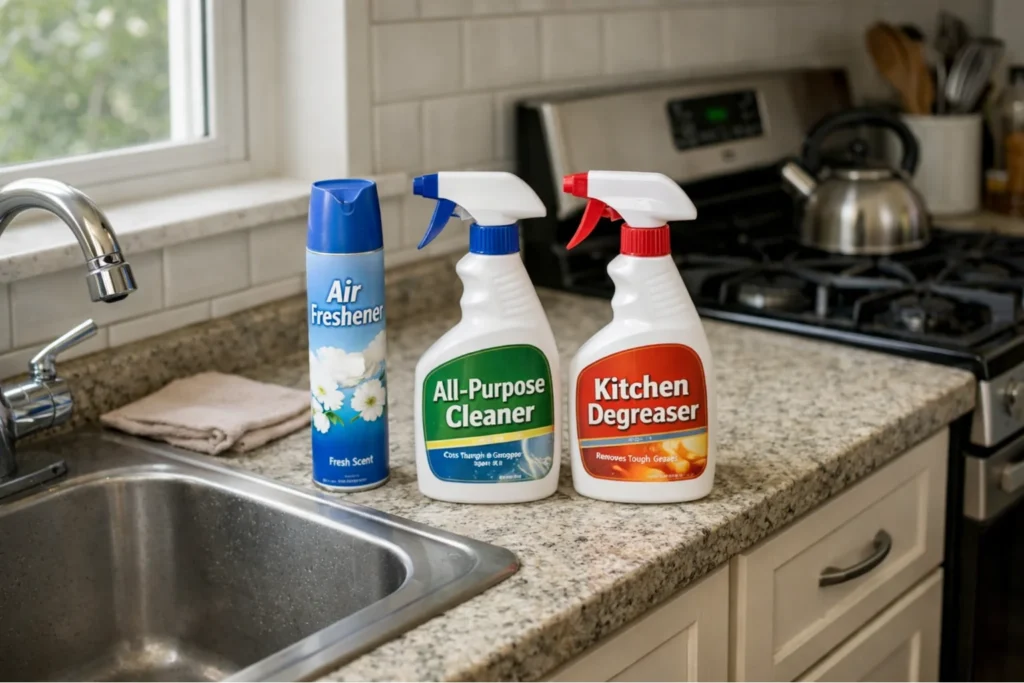
Some methods make stubborn kitchen odors worse instead of better.
- Do not rely on air fresheners. They mask smells without removing buildup.
- Do not mix vinegar with bleach or ammonia. This creates toxic fumes.
- Do not soak wood cabinets with water. Moisture can warp surfaces.
- Do not ignore appliance filters and seals. Odors hide there first.
Once the source is gone, use spray-free freshening to keep the air clean.
Advanced Tips to Make Cleaning Easier
Stronger odors usually point to buildup inside drains, appliances, or trash areas rather than surface smells alone.
- Pre-treat the smelliest areas and let cleaners sit before scrubbing.
- Use small brushes to reach seams and corners.
- Clean from top to bottom to prevent recontamination.
- Keep separate cloths for cleaning and drying.
- Let surfaces dry fully to prevent moisture odors.
Small adjustments make deep cleaning faster and more effective.
How to Prevent Stubborn Kitchen Odors From Coming Back
Prevention saves time and reduces deep-clean frequency.
- Wipe cabinets weekly to prevent grease layers
- Empty trash daily or every other day
- Clean dishwasher filters monthly
- Check fridge seals during regular cleanings
- Use ventilation while cooking
After deep cleaning, a simple natural air freshener can keep things fresh without covering odors.
Frequently Asked Questions (FAQ)
How often should you deep-clean to remove stubborn kitchen odors?
Every 1–3 months, depending on cooking habits.
Is vinegar safe for kitchen surfaces?
Yes, when diluted and used on non-porous materials.
Can baking soda scratch surfaces?
It can scratch delicate finishes if scrubbed too hard.
What if odors come back quickly?
Check hidden areas like drains, seals, and filters.
Are commercial cleaners necessary?
Most odors respond well to home methods first.
Is this safe with kids and pets around?
Yes, when using proper ventilation and storage.
Final Tips
When stubborn smells keep returning, relying on consistent kitchen hacks to remove stubborn odors makes long-term kitchen freshness much easier to maintain.
Stubborn kitchen odors usually mean something is being missed, not that your kitchen is dirty. Focus on hidden buildup rather than surface shine.
Gentle but thorough cleaning works best when paired with patience. Avoid rushing or overusing harsh products.
Consistent maintenance keeps deep-clean sessions shorter and easier over time.
Conclusion
Even persistent smells can be handled with the right approach and a little extra attention. Using these kitchen hacks to remove stubborn odors helps break down odor sources instead of covering them up. When used consistently, even simple kitchen odor removal hacks can eliminate stubborn smells caused by long-term buildup. With deep cleaning now and simple habits later, your kitchen can stay fresh, clean, and comfortable long term.