
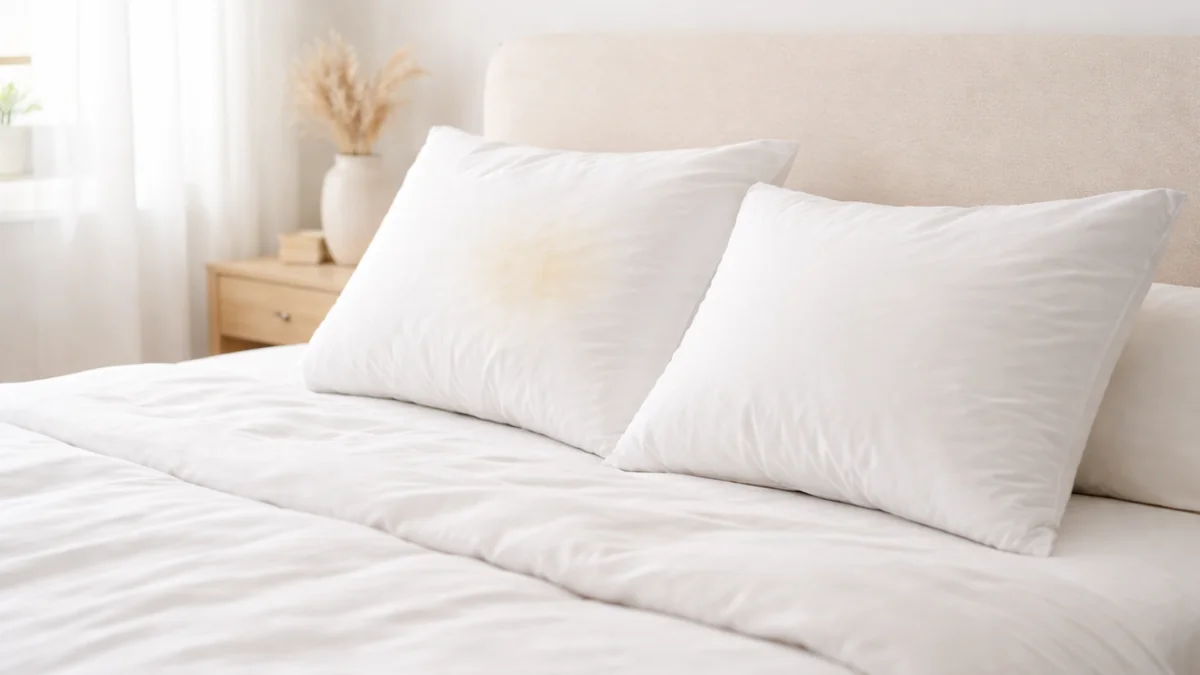
If you are trying to figure out how to remove yellow stains from pillows, you are not alone. Most pillows yellow slowly from sweat, body oils, and moisture that soak through the case over time.
The stains can look worse on white bedding, even when the room is clean. They can also make your bedding look worn out faster.
You do not need harsh chlorine bleach to fix this. A gentle deep-clean that removes oils and rinses well can noticeably lighten the fabric, especially on newer stains.
Once the stains fade, a few simple habits help keep them from building up again.
Table of Contents
What Causes Yellow Stains on Pillows?
Yellowing is usually a mix of skin oils, sweat, and moisture that cling to the fabric. High humidity and incomplete drying can make yellowing harder to remove.
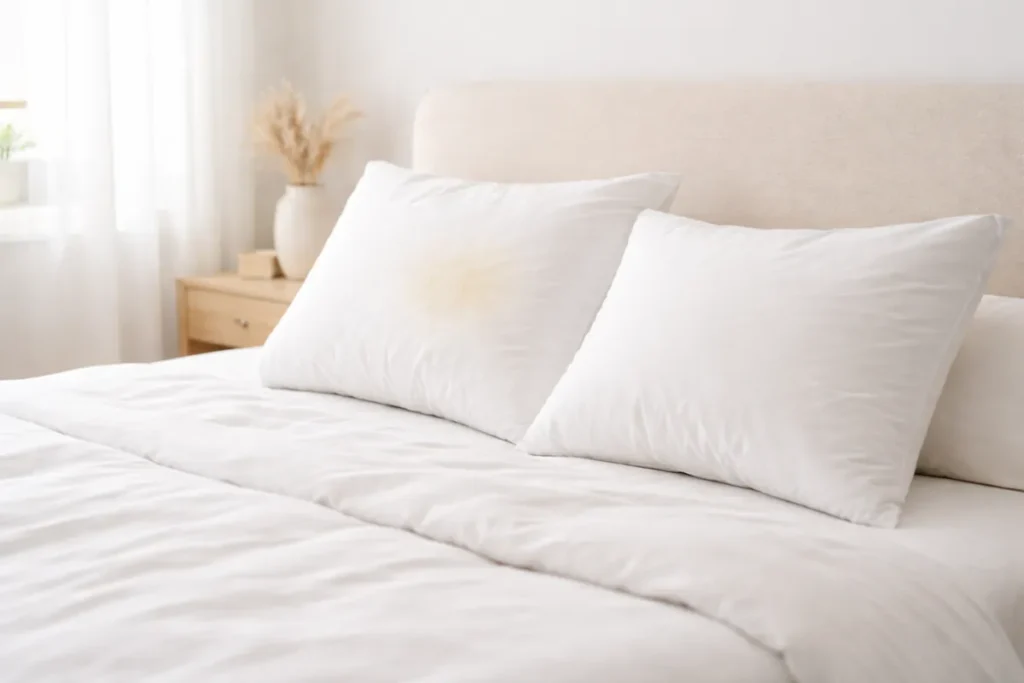
Common causes include:
- Night sweat and body oils soaking through the pillowcase
- Drool or damp hair leaving moisture behind
- Skincare, hair products, and sunscreen residue
- Washing pillows too rarely or skipping an extra rinse
Sweat and body oils can yellow pillows and leave sweat stains on white shirts, so early pre-treating pays off.
How to Remove Yellow Stains From Pillows (Safe Deep-Clean Methods)
Check the care label first. Care labels use standard symbols, and the American Cleaning Institute has a simple chart to help you read them for safer wash and dry settings. Most polyester and many down-alternative pillows are washable, while memory foam and latex usually need spot cleaning only.
A simple rule for how to remove yellow stains from pillows without damage is to start mild and step up only if the stain stays.
1. Dish Soap Pre-Treat (Cuts Body Oils)
Dish soap breaks up oily film so the stain can lift instead of spreading.
How to use it:
- Mix 1 teaspoon clear dish soap with 1 cup warm water.
- Dab onto the yellow area and blot gently with a clean cloth.
- Wipe with plain water, then press dry with a towel.
Best for:
- Light yellowing from oils
- A first step before soaking or washing
2. Oxygen Bleach Soak (Deep Clean Without Chlorine)
Oxygen bleach releases oxygen in water to lift stains and dingy buildup.
How to use it:
- Dissolve oxygen bleach in warm water using the label amount.
- Soak washable pillows 2 to 4 hours, pressing them so water moves through the inside.
- Rinse until water runs clear.
Best for:
- Medium to heavy yellowing on washable pillows
- Older stains that need soaking time
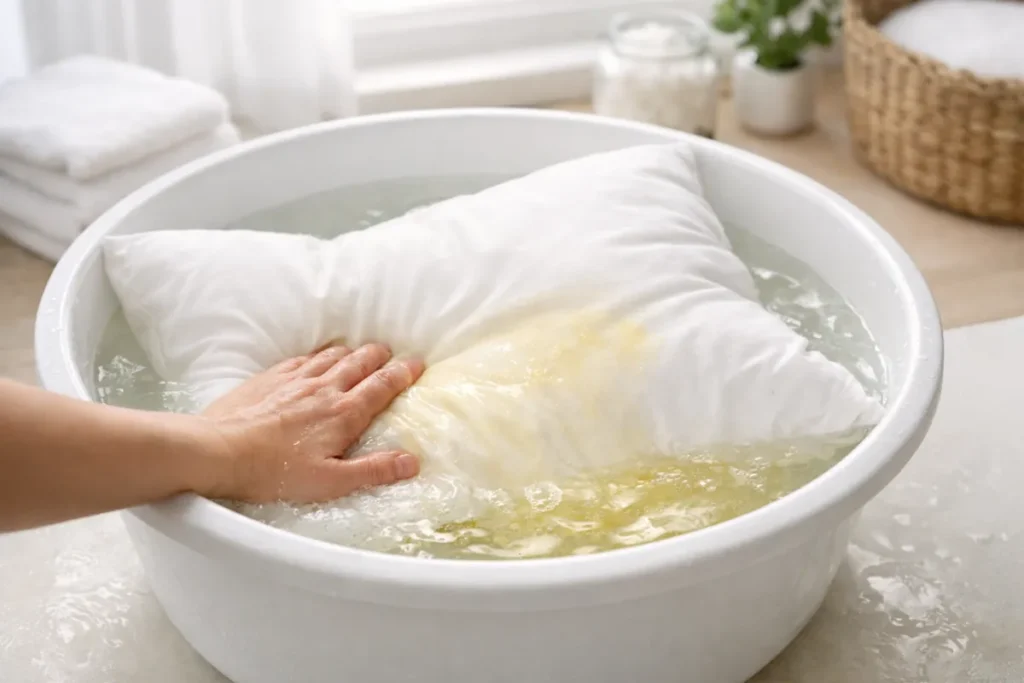
3. Enzyme Pre-Soak (Targets Sweat and Drool)
Enzymes help break down proteins and oils that basic detergent may miss.
How to use it:
- Mix enzyme detergent or booster in warm water per label directions.
- Soak 30 to 60 minutes, then rinse well.
- Wash normally, or follow with an oxygen soak if stains remain.
Best for:
- Sweat and drool stains
- Pillows that still look dull after a normal wash
4. Hydrogen Peroxide Spot Treatment (White Fabric, Test First)
Hydrogen peroxide can lighten yellow spots on white fabric, but it can also lighten the fabric itself, so test first. Never mix it with bleach.
How to use it:
- Apply a small amount of 3% hydrogen peroxide with a cloth (test a hidden spot first).
- Let it sit 10 minutes, then blot with plain water to rinse.
- Press dry with a towel, then air dry fully.
Best for:
- Stubborn spots on white pillows
- Occasional touch-ups, not frequent whitening
5. Full Wash and Dry Reset (Washable Pillows)
A full wash evens out the color after pre-treating or soaking.
How to use it:
- Wash two pillows together on a gentle cycle with warm water and regular detergent.
- Add oxygen bleach if the label allows, then run an extra rinse.
- Dry on low heat until fully dry inside, fluffing once halfway through.
Best for:
- Overall yellowing across the whole pillow
- A full reset when you want how to remove yellow stains from pillows results to last longer
Drying fully matters most for keeping yellowing from building up again. The same habits that prevent musty smell from towels can help pillows dry all the way through.
What NOT to Do (To Keep It Safe)
These mistakes can damage the pillow or make stains harder to remove.
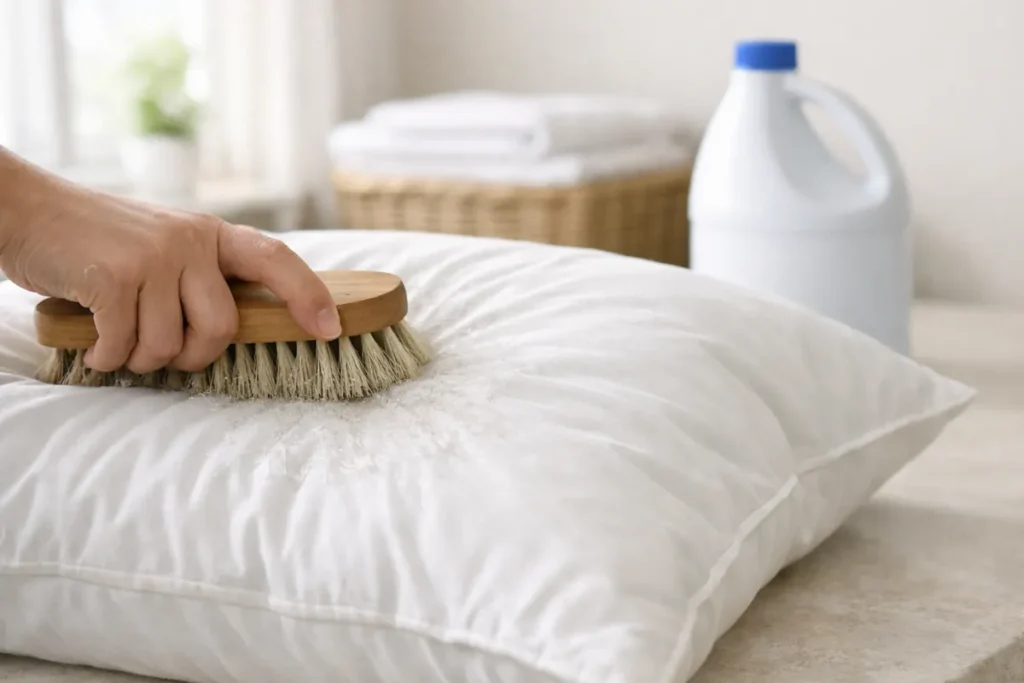
- Do not use chlorine bleach on pillows unless the care label clearly allows it – it can weaken fibers and create uneven spots.
- Do not mix bleach with vinegar or ammonia – dangerous fumes can form.
- Do not soak memory foam or latex – trapped water can lead to mildew and breakdown.
- Do not scrub hard with rough brushes – it frays fabric and makes stains show more.
- Do not stop drying early – damp fill can sour and yellow again.
Trapped moisture can lead to mildew over time. On washable items, removing mold from clothes walks you through safe cleanup steps.
Advanced Tips to Make Cleaning Easier
These tweaks make the same methods work better. They also help pillows dry faster inside.
- Pre-treat the whole stain “halo,” not just the darkest center, so the color blends evenly.
- Let cleaners dwell – 10 to 30 minutes often works better than scrubbing.
- Press out moisture before drying by rolling the pillow in a towel and pressing firmly.
- Add dryer balls or clean tennis balls (in socks) to reduce clumping and help pillows dry evenly.
Sometimes pillows still look dull because the washer is not rinsing well, and a smelly washing machine cleanup can help.
How to Prevent Yellow Stains on Pillows From Building Up Again
Block oils and moisture early, then rinse and dry the pillow fully every time.
- Use a zippered pillow protector so oils and sweat do not reach the pillow.
- Wash pillowcases weekly, especially in warm weather or after heavy skincare.
- Wash washable pillows every 3 to 6 months and add an extra rinse to remove detergent film.
- Dry pillows completely, and fluff them mid-dry so moisture does not stay trapped inside.
- Keep the bedroom moderately dry, since humidity makes dampness linger and stains set faster.
Small weekly habits from laundry freshness hacks can also help pillowcases stay cleaner between deep washes.
Frequently Asked Questions (FAQ)
Why do pillows turn yellow?
Most yellowing comes from sweat, body oils, drool, and product residue that slowly bonds to fabric. Moisture that does not dry fully makes it build faster.
Can I use bleach to whiten pillows?
Chlorine bleach is harsh and can damage pillow fabric or make stains patchy. When you want how to remove yellow stains from pillows with less damage risk, oxygen bleach is usually the safer choice.
Is hydrogen peroxide safe on pillows?
It can be safe on white fabric in small amounts, but test first and rinse well. Avoid it on colored covers or delicate materials.
How often should I wash pillows?
Many washable pillows do well every 3 to 6 months. If you sweat a lot, you may need to wash them more often.
What if my pillow is memory foam?
Do not soak it or machine wash it unless the label says you can. Spot clean lightly, then let it air dry completely.
What if the stains do not come out the first time?
Older stains may need a second round. Repeat the oxygen or enzyme soak before you reach for harsher products.
Final Tips
Start by cutting oils, then lift the stain, then rinse and dry fully. That order is the core of how to remove yellow stains from pillows without damage.
Once pillows look brighter, protect them with a washable barrier and a steady wash routine. Small habits keep your bedding looking fresh longer.
Conclusion
A clean pillow does not have to be a brand-new pillow. When you know how to remove yellow stains from pillows with gentle methods, you can brighten fabric safely and make future washes easier. Keep up with protectors, regular washing, and full drying, and the yellowing stays under control.