
Sweat stains can make a clean white shirt look dull fast. If you are searching for how to remove sweat stains from white shirts, you can usually fix it with simple, fabric-safe steps.
Most yellow underarm marks build up over time. Sweat mixes with deodorant, body oils, and heat, then it clings to the fibers.
The fastest wins come from treating stains before heat gets involved. A short pre-treat and the right wash settings do more than scrubbing harder.
You also want to avoid a few common mistakes that lock stains in or weaken fabric. Once the shirt is clean, a small routine keeps new stains from forming.
When clean shirts still smell off after washing, the washer is often the source. Clean a smelly washing machine so odor does not keep transferring back to your laundry.
Table of Contents
What Causes Sweat Stains on White Shirts?
Sweat is not just water. It carries salts and oils that can grab onto fabric, especially in the underarm area.
To understand how to remove sweat stains from white shirts, it helps to know what is feeding the yellowing. The biggest trigger is deodorant residue that builds up with each wear and wash cycle.
Common causes include:
- Heavy deodorant layers that leave waxy buildup
- Waiting a day or two to wash after wearing
- Using high heat drying before the stain is gone
- Not rinsing out sweat after workouts
- Detergent overload that traps residue in the fibers
Moisture makes stains and residue harder to lift. If whites keep smelling damp after washing, remove mold from clothes first so you are not fighting two problems at once.
MedlinePlus notes that sweat is naturally salty, which can leave residue behind on fabric over time.
How to Remove Sweat Stains From White Shirts (Simple Home Methods)
Start with the gentlest option when you are figuring out how to remove sweat stains from white shirts, and move up only if needed. Always check the care label, and test any new product on a hidden seam first.
1. Cold Rinse and Detergent Pre-Treat (Fast Start)
Cold water helps prevent set-in staining, and detergent lifts oils. This is the best first step for fresh marks.
How to use it:
- Rinse the underarm area from the inside with cold water.
- Rub a few drops of liquid detergent into the stain.
- Wait 10 minutes, then wash.
Best for:
- Fresh sweat marks
- Cotton tees and cotton blends
2. Baking Soda Paste (Gentle Lift)
Baking soda helps loosen residue and lightly buffs the stain without rough scrubbing. It is a good option for everyday shirts.
How to use it:
- Mix 3 tablespoons baking soda with 1 tablespoon water.
- Spread on the stain and press it in.
- Let it sit 30 minutes, rinse, then wash.
Best for:
- Light yellowing
- Most sturdy white fabrics
3. White Vinegar Soak (Deodorant Buildup Fix)
Vinegar helps break up deodorant residue so it can wash out. It is mild, but do a quick spot test on delicate fabrics.
How to use it:
- Mix 1 cup white vinegar with 2 cups cool water.
- Soak the stained area for 30-60 minutes.
- Rinse well and wash.
Best for:
- Stains that feel stiff or waxy
- Underarms with heavy deodorant use
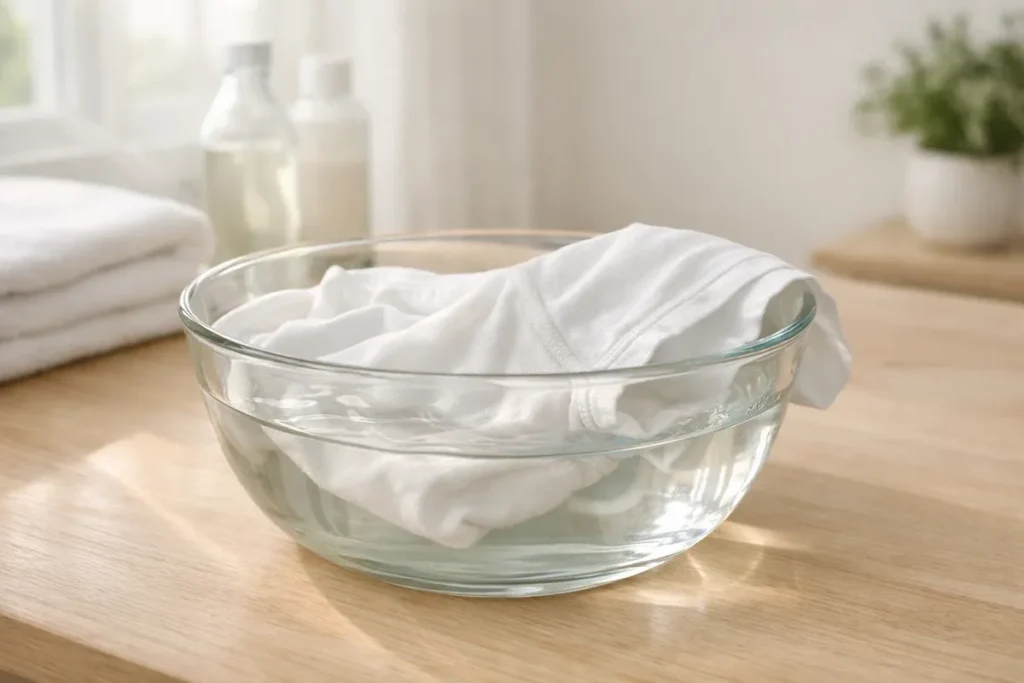
4. Hydrogen Peroxide and Dish Soap (Stronger Spot Treatment)
Hydrogen peroxide can lift yellowing on true whites, and dish soap cuts oily buildup. Keep it short, and test first.
How to use it:
- Mix 2 tablespoons 3% hydrogen peroxide with 1 tablespoon dish soap.
- Apply, gently work it in, and wait 15-20 minutes.
- Rinse, then wash.
Best for:
- Older yellow stains
- White cotton and sturdy blends
5. Oxygen Cleaner Soak (Deep Reset)
An oxygen cleaner (often called oxygen bleach) lifts set-in stains with a longer soak. It is usually gentler on fabric than chlorine bleach.
How to use it:
- Add the product to warm water as the label directs.
- Soak 1-4 hours, then rinse.
- Wash and air-dry until you confirm the stain is gone.
Best for:
- Stains that survived several washes
- Larger sweat areas, not just small spots
If you are refreshing other white items too, you can clean white sneakers without harsh scrubbing using the same gentle approach.
What NOT to Do (Before You Start)
Small mistakes can set sweat stains or weaken the fabric, so avoid the ones below.
- Do not dry the shirt until the stain is fully gone. If you are working on how to remove sweat stains from white shirts, the dryer can lock the yellowing in.
- Do not iron the underarm area when a stain is present. Heat can leave a permanent shadow.
- Do not scrub hard with a stiff brush. It can fuzz the fabric and weaken seams.
- Do not pour straight chlorine bleach on underarms. It can weaken fibers and sometimes makes yellowing look worse when sweat residue is involved.
- Do not mix cleaners in the same soak. Mixing products like bleach and vinegar can create dangerous fumes.
Advanced Tips to Make Cleaning Easier
These quick tips make stain removal faster and more consistent.
- Pre-treat before the shirt goes in the hamper. Even a quick rinse slows staining.
- Turn the shirt inside out for treatment. You are closer to the residue that sits deep in the fibers.
- Air-dry after stain treatment. If any yellow remains, you can treat again without locking it in.
- Use a soft toothbrush for paste methods. It adds control without shredding fabric.
- If you are unsure about a fabric setting, check the care label for the safest wash and dry options.
If laundry still smells damp after washing, this musty smell in towels guide is a helpful next step.
How to Prevent Sweat Stains on White Shirts From Forming Again
A few simple habits can stop yellow underarm marks from forming again.
- Let deodorant dry before dressing. Wet product transfers into fabric and builds residue faster.
- Use less deodorant and apply it evenly. Thick layers create waxy buildup that holds sweat and oils.
- Wash white shirts soon after wearing. Quick washing stops stains from bonding to fibers.
- Skip high heat when possible. Lower heat reduces the chance of setting leftover residue.
- Do a quick weekly underarm pre-treat. That way, how to remove sweat stains from white shirts is not something you have to do often.
For a simple routine that keeps laundry smelling clean between washes, try these laundry hacks for fresh clothes.
Frequently Asked Questions (FAQ)
Why do sweat stains turn yellow on white shirts?
Yellowing often comes from sweat mixing with deodorant and body oils. Over time, that residue clings to the underarm fibers and darkens.
Can I use hot water right away?
Start with a cold rinse or pre-treat first. Then wash on the warmest setting your care label allows.
Will hydrogen peroxide damage fabric?
On many true white cotton shirts, 3% hydrogen peroxide is usually safe for short treatments. Test in a hidden spot first, especially on blends and stretchy fabrics.
What if the stain is still there after washing?
Do not dry it. Repeat a method like an oxygen soak, then wash again.
How often should I treat underarms on white shirts?
If you sweat a lot or use strong antiperspirant, a quick weekly pre-treat helps. For occasional wear, treat only when you notice buildup.
What is the fastest option if I need the shirt today?
Rinse with cold water, pre-treat with detergent, and wash right away. If any yellow remains, air-dry and spot-treat again instead of rushing it into the dryer.
Final Tips
Start gentle and move up only if needed. Most shirts respond best when you treat the underarms before heat hits them.
Always check the care label and test new products in a hidden spot. If stains keep returning, add a weekly underarm routine so you are not starting from zero each time.
Conclusion
White shirts stay brighter when you treat underarm residue early and avoid high heat too soon. With a few repeatable steps, it is easier to learn how to remove sweat stains from white shirts without damaging the fabric.