
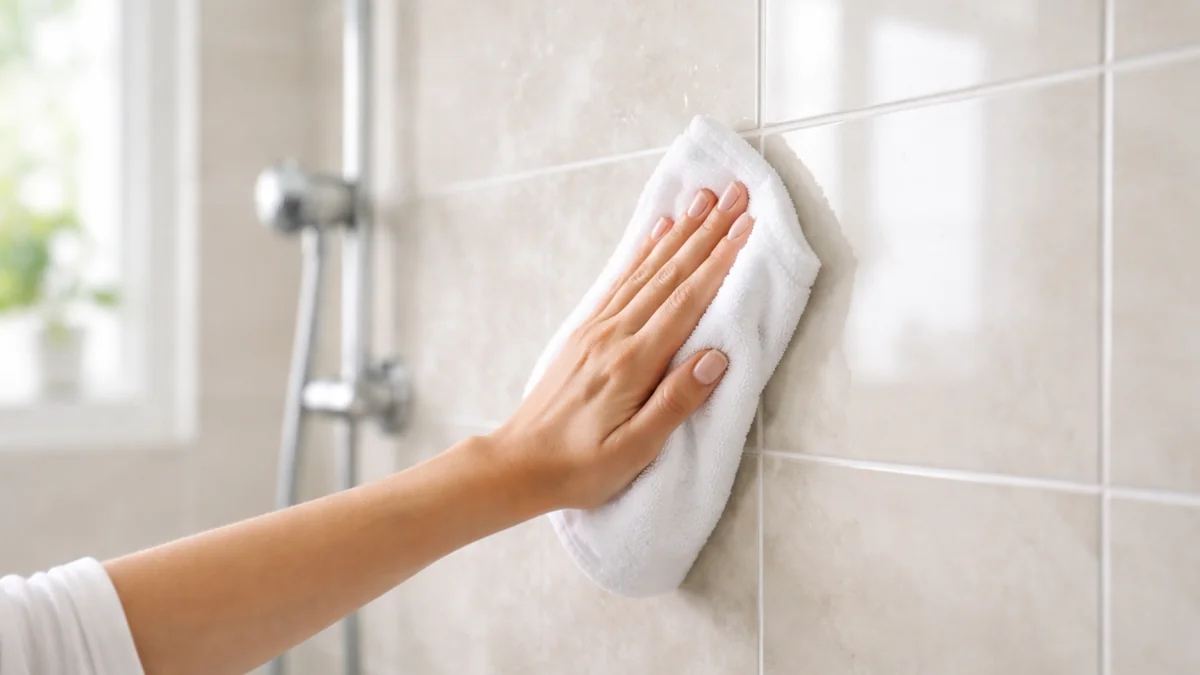
Soap scum can make shower walls look dull and feel tacky, even right after you rinse. You can learn how to remove soap scum from shower walls using safe tools and no-scratch steps that will not damage the finish.
It builds in thin layers, so quick wipes start to feel useless. The key is to soften the film, wipe it off gently, then rinse well so it does not smear back on.
If your shower door looks hazy too, clean hard water stains on shower glass while you are here.
After the first deep clean, upkeep is simple.
Table of Contents
What Causes Soap Scum on Shower Walls?
Soap scum is a mix of soap, body oils, and minerals from water that dries onto the surface. Warm steam keeps walls damp longer, so new residue bonds to old layers.
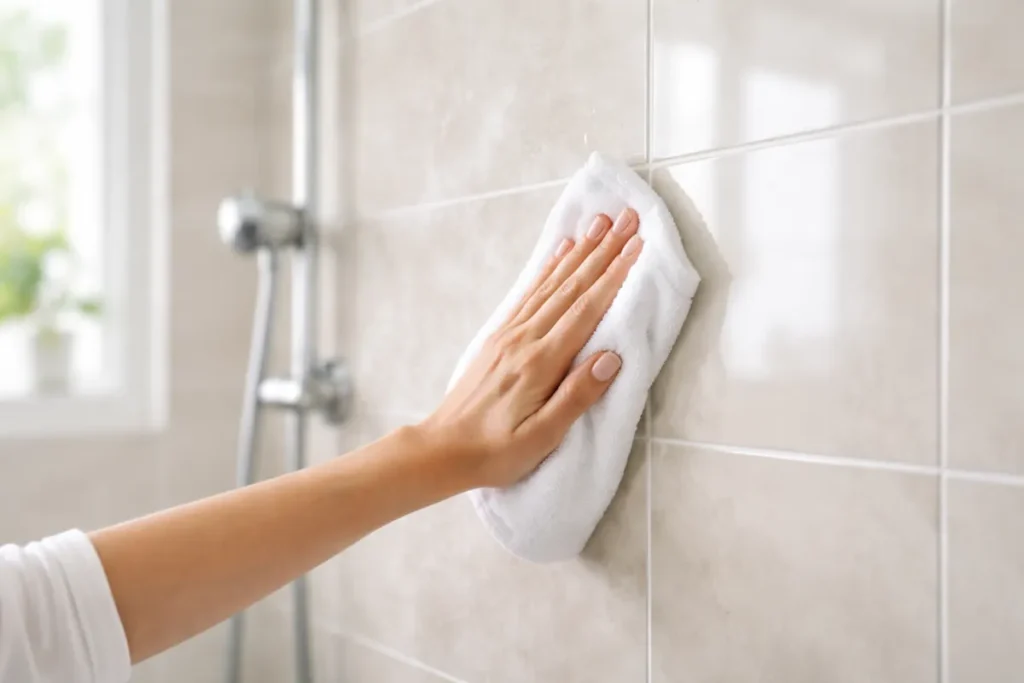
Typical causes include:
- Hard water minerals reacting with soap
- Product residue from shampoo and body wash
- Not drying walls after showers
- Low airflow that keeps moisture trapped
USGS notes that hard water is high in calcium and magnesium, which is why buildup can be worse in some homes.
The same minerals can coat fixtures, so remove limescale from faucets to keep the whole shower area looking clean.
After the first deep clean, how to remove soap scum from shower walls is mostly simple upkeep.
How to Remove Soap Scum From Shower Walls (No-Scratch, Streak-Free Methods)
If you want to know how to remove soap scum from shower walls without scratching, start by letting your cleaner sit for a few minutes. Dwell time does most of the work.
Grab microfiber cloths, a non-scratch sponge, a spray bottle, and a small soft brush for corners.
1. Warm Water and Dish Soap Spray (Easy First Pass)
Dish soap breaks down body oils, which helps the mineral film release.
How to use it:
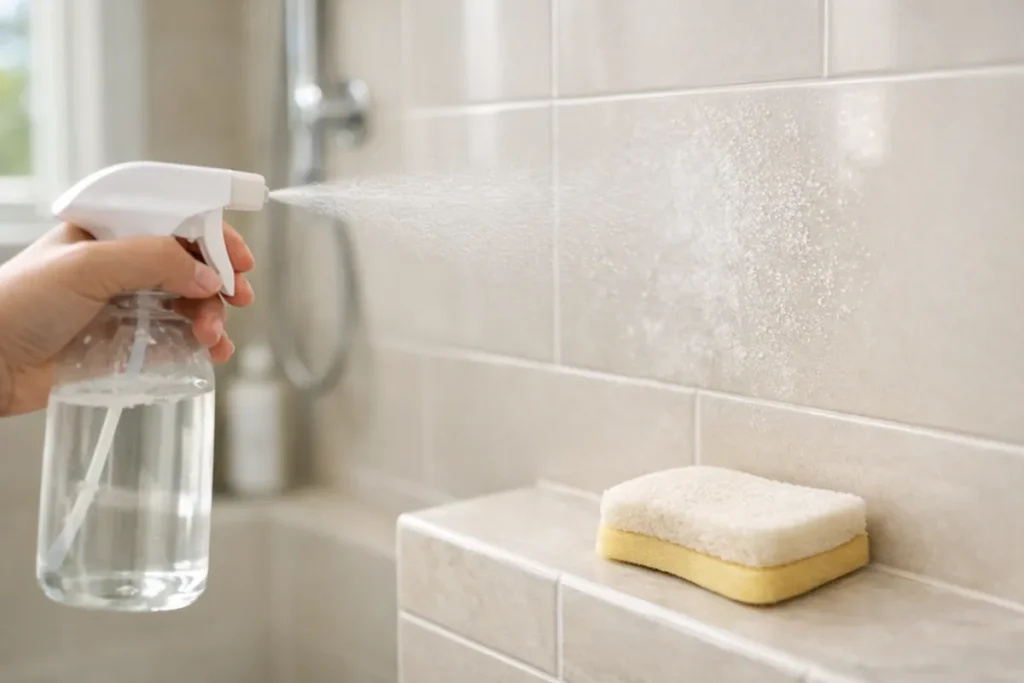
- Mix warm water with a few drops of dish soap in a spray bottle.
- Spray the walls and wait 5-10 minutes.
- Wipe with a damp microfiber cloth, then rinse.
Best for:
- Light to medium buildup on fiberglass, acrylic, and glazed tile
- Weekly deep-clean resets
2. White Vinegar Spray (Mineral Softener)
Vinegar helps loosen mineral residue that makes soap scum feel stuck.
How to use it:
- Spray white vinegar on the wall and wait 10 minutes.
- Wipe gently with a non-scratch sponge.
- Rinse well, then dry with a microfiber towel.
Best for:
- Cloudy film on glass and glazed tile
- Hard-water residue
Safety note: Avoid vinegar on natural stone like marble or travertine. Test a small hidden spot first.
3. Baking Soda Paste (Targeted Lift)
A light paste can lift softened scum on textured spots without harsh scrubbing.
How to use it:
- Mix baking soda with a little water to make a thick paste.
- Spread a thin layer on problem areas and wait 5 minutes.
- Wipe with a damp cloth and rinse.
Best for:
- Textured tile and grout edges
- Small stubborn patches
4. Hot Towel Compress (Softens Thick Layers)
Heat and moisture help break the bond between layers, so wiping is easier.
How to use it:
- Soak a towel in very warm water and wring it out.
- Press it on the wall for 3-5 minutes.
- Remove and wipe the softened film, then rinse.
Best for:
- Heavy buildup that needs extra softening
- Bottom sections where runoff collects
5. Two-Cloth Rinse and Dry (No-Streak Finish)
Soap scum can look “still there” because a thin residue dries back onto the surface.
How to use it:
- Wipe the wall with your cleaner using one damp cloth.
- Rinse with clean warm water and wipe again.
- Dry right away with a fresh microfiber towel.
Best for:
- Glass doors that look hazy after cleaning
- Finishing after any method
6. Non-Abrasive Soap Scum Remover (Stronger Option)
If home methods fail after two passes, a non-abrasive commercial remover can cut through heavy film.
How to use it:
- Ventilate the bathroom and follow the label directions.
- Let it sit for the recommended time.
- Wipe with a non-scratch sponge, then rinse thoroughly.
Best for:
- Thick buildup that has been ignored for months
- Hard-water homes where film returns fast
What NOT to Do (If You Want Safe Cleaning)
Avoid harsh scrubbing and risky mixes that can damage your shower.
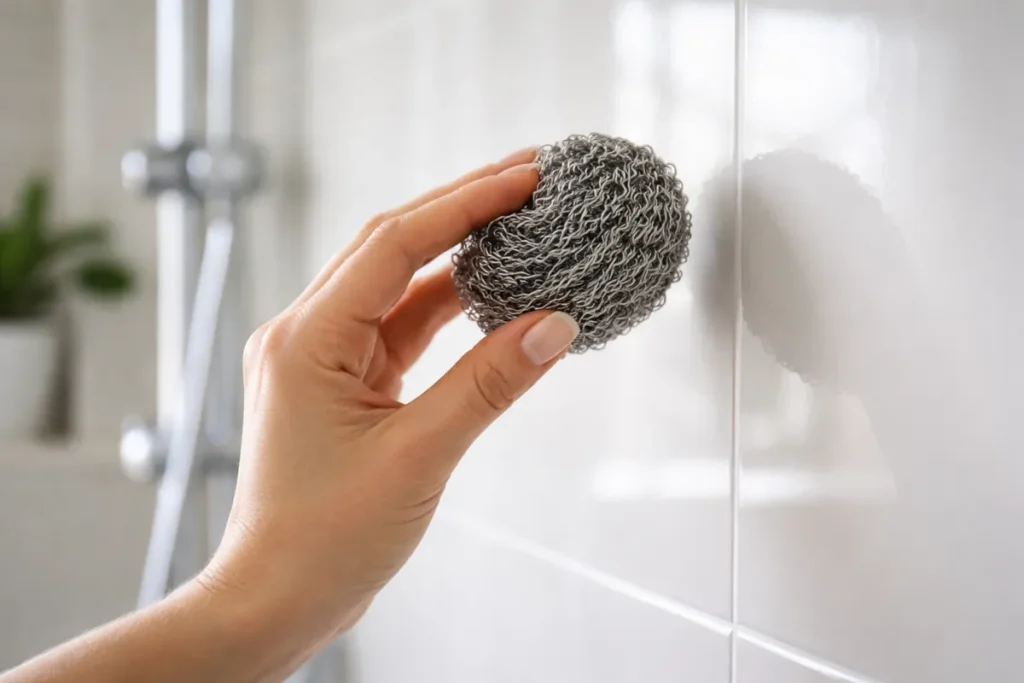
- Do not use steel wool or rough scrub pads – they can scratch glass and acrylic.
- Do not scrape with a metal blade – one slip can gouge the surface or catch on grout.
- Do not mix cleaning chemicals – mixing bleach with vinegar or ammonia can create dangerous fumes.
- Do not use acids on natural stone – it can etch and dull the finish.
- Do not skip rinsing – leftover cleaner and residue can dry into new haze.
Advanced Tips to Make Cleaning Easier
A few small tweaks make the same products work better. They also cut down your wipe time.
- Pre-treat the worst areas first, like corners and the bottom third of the wall.
- Clean top to bottom so dirty runoff does not streak over clean sections.
- Keep one cloth for wiping and one cloth for drying to prevent water spots.
- Do two shorter passes instead of one aggressive scrub if the film is thick.
Bathroom fabrics can stay damp for hours, so deal with any mold on fabric early before it spreads.
How to Prevent Soap Scum on Shower Walls From Building Up Again
Quick dry-offs and weekly wipe-downs stop film before it sticks.
- Squeegee or wipe walls after showers – less water means fewer minerals left behind.
- Rinse products off fully – leftover body wash turns into film as it dries.
- Run the fan or crack a window for 20 minutes – faster drying slows buildup.
- Do a weekly spray-and-wipe – thin layers never get a chance to harden.
- Fix drips and leaks – constant wet spots make residue stick.
A lingering bathroom smell usually has a source, so find the source of a bad smell before you try a stronger product.
With these habits, how to remove soap scum from shower walls becomes routine upkeep, not a big project.
Frequently Asked Questions (FAQ)
How often should I clean shower walls?
Wipe or squeegee after showers if you can, and deep clean every 1-2 weeks. In hard-water homes, weekly works best.
Is vinegar safe for all showers?
It is usually safe for glass and glazed tile, but not for natural stone. If you are unsure, start with dish soap and warm water.
Will baking soda scratch?
It can scratch delicate finishes if you press hard. Use a soft cloth, light pressure, and rinse well.
What if the haze is still there after cleaning?
You may be seeing leftover residue. Rinse again with warm water and dry with a clean microfiber towel.
When should I use a commercial cleaner?
Use it when gentle methods do not work after two rounds. Choose a non-abrasive bathroom product and ventilate well.
Is it safe to clean with kids and pets nearby?
Dish soap and warm water are the safest option. For stronger products, keep the bathroom closed off until everything is rinsed and dry.
Final Tips
Start gentle and let your cleaner sit before you wipe. Soft tools, light pressure, and a solid rinse keep surfaces clear without damage.
Drying matters as much as cleaning. When walls dry faster, less residue has a chance to stick.
Fresh towels make the bathroom feel cleaner, so get rid of musty towel smell before it spreads.
Conclusion
You do not need harsh scrubbing to get a clear shower again. A soak, a gentle wipe, and a quick dry habit show you how to remove soap scum from shower walls with less effort each week.