
A microwave can look fine and still feel sticky or smell stale inside. The best way to clean microwave without chemicals is to use steam to loosen grime, then wipe it away with mild supplies.
Grease mist and tiny splatters bake onto the walls and ceiling, leaving a film that can smell “old” when it heats.
If you want a clean that does not leave a harsh smell behind, focus on lifting residue instead of covering it. A little dwell time does more than scrubbing harder.
Once it is clean, a few quick habits keep new residue from building up again.
Table of Contents
What Causes Grease and Food Residue in a Microwave?
Microwave residue is usually oil, moisture, and food particles. Heat turns splatter into a thin film, and new drips stick to that film and harden.
Moisture condenses on the interior and keeps grime tacky around the door edges if you do not wipe it dry.
Typical causes include:
- Heating food uncovered (soups, sauces, oatmeal, popcorn)
- Letting boil-overs dry before wiping
- Greasy foods that mist the ceiling
- Forgetting the turntable and roller ring
- Keeping the door closed after steaming foods
The EPA notes that increasing ventilation during and after cleaning can reduce your exposure to airborne residues and particles, so crack a window or run the kitchen fan while you clean your microwave.
If splatter keeps spreading past the microwave, it can also leave a greasy backsplash that needs the same kind of gentle cleanup.
Best Way to Clean Microwave Without Chemicals (Gentle Methods)
Start with steam, then do a quick rinse-wipe. That is the best way to clean microwave without chemicals when you want a truly clean finish.
1. Lemon steam bowl (Easy weekly reset)
Steam softens dried splatter so it wipes off, and lemon keeps the scent light.
How to use it:
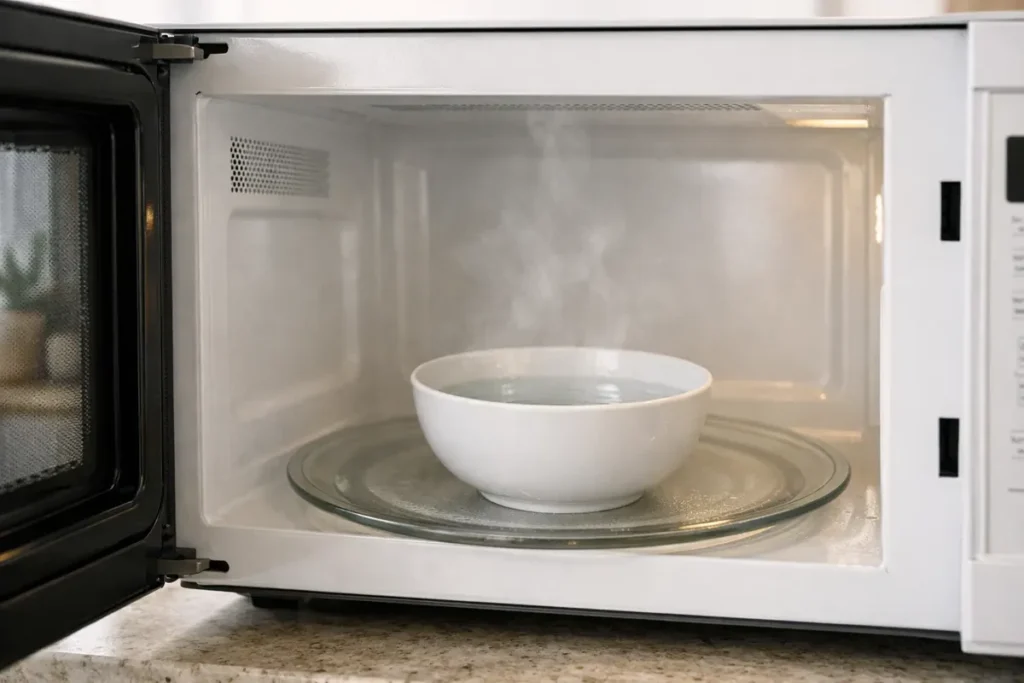
- Add 1 cup water and 2-3 lemon slices to a microwave-safe bowl.
- Heat 3-5 minutes, then keep the door closed for 5 minutes.
- Remove the bowl carefully and wipe the interior with a damp microfiber cloth.
Best for:
- Light to medium film
- Everyday odors from reheated meals
The FDA warns that water heated by itself in a microwave can sometimes become superheated and erupt when disturbed, so avoid overheating, let the bowl sit for 30-60 seconds, and use oven mitts when removing it.
2. Vinegar steam bowl (Cuts grease and neutralizes odors)
Warm vinegar vapor helps loosen greasy film and tackle strong food smells, without perfumed sprays.
How to use it:
- Mix 1 cup water with 1-2 tablespoons distilled white vinegar in a bowl.
- Heat 4-6 minutes, then leave the door shut for 5 minutes.
- Wipe top to bottom, then do one quick plain-water wipe.
Best for:
- Medium grease film
- Fish, curry, and onion odors
3. Baking soda paste (For stuck-on splatters)
Baking soda lifts baked-on spots with gentle scrubbing, and it does not leave a sharp smell behind.
How to use it:
- Mix 2 tablespoons baking soda with a little water to form a thick paste.
- Dab onto stuck spots and let it sit 5-10 minutes.
- Wipe clean with a damp cloth and rinse-wipe once more.
Best for:
- Dried sauce dots on walls or ceiling
- Stubborn spots near the back panel
This soften-first approach also works well on burnt pots, where dwell time matters more than hard scrubbing.
4. Hot soapy wipe-down (Removes the greasy layer)
Dish soap breaks up oil so the film comes off instead of spreading around.
How to use it:
- Add a few drops of dish soap to hot water and dampen a cloth.
- Wipe in sections, flipping the cloth often.
- Rinse-wipe with plain water and dry with a towel.
Best for:
- A greasy door and bottom surface
- A deep-clean after steaming
If you are doing a full kitchen reset, it is also a smart time to freshen the stainless steel sink after handling greasy dishes and cloths.
5. Turntable and roller ring soak (Hidden grime remover)
These parts catch drips and crumbs that can cause smells to return.
How to use it:
- Remove the glass plate and roller ring and soak in warm, soapy water for 5-10 minutes.
- Wash with a soft sponge, including grooves, then rinse well.
- Dry fully, wipe the microwave floor, and reinstall.
Best for:
- Sticky drips under the plate
- “Clean but still smells” microwaves
6. Baking soda odor reset (No-harsh-smell finish)
If the microwave warms up and smells stale, this step helps absorb leftover odor.
How to use it:
- Place an open bowl with 2-3 tablespoons baking soda inside.
- Close the door for 2-3 hours (or overnight).
- Remove the bowl, wipe once with a damp cloth, and air it out for a few minutes.
Best for:
- Lingering smells after strong foods
- Freshness between deep cleans
What NOT to Do (If You Want Safe Cleaning)
Here are the most common mistakes that backfire in a microwave.
- Do not use abrasive pads or rough scrubbers. Scratches hold onto grime and make future cleaning harder.
- Do not scrape with hard tools. You can damage coatings and the door seal area.
- Do not soak the control panel or vents. Water can seep into seams and cause issues.
- Do not overheat bowls until they boil dry. It can crack dishes and overheat the microwave.
The same gentle-cleaning rule applies to an air fryer basket, since rough pads can wear down the surface faster than you think.
Advanced Tips to Make Cleaning Easier
A few pro tricks can make the next clean feel effortless.
- Clean when it is slightly warm. Residue releases faster than when it is cold.
- Start with the ceiling. Loosened grime will not drip onto clean areas.
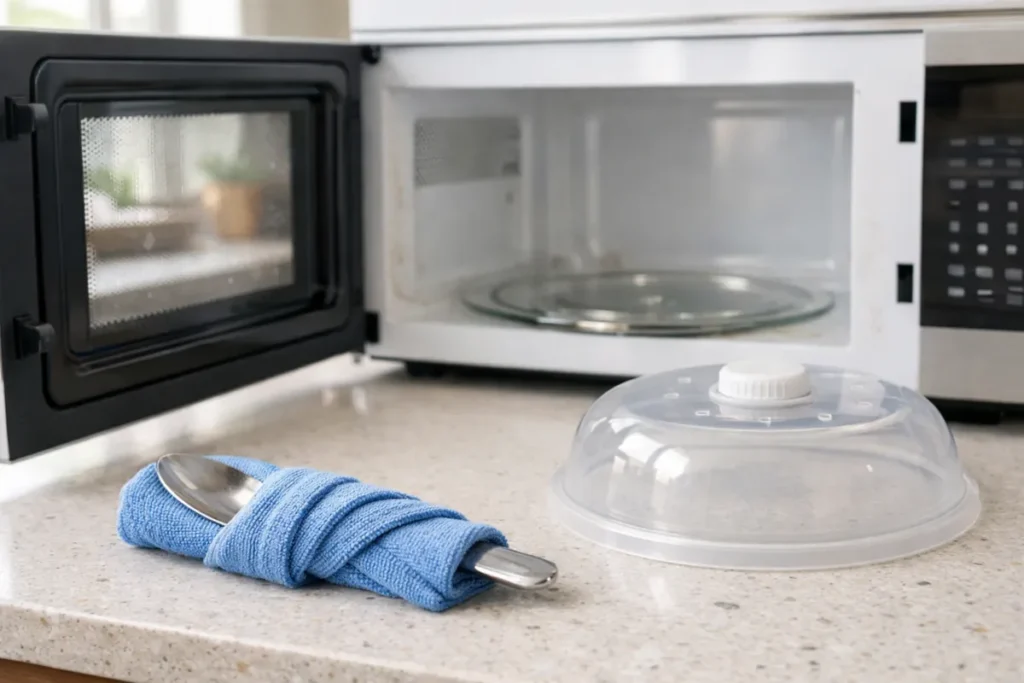
- Use a wrapped spoon for edges. Wrap a damp cloth around a spoon handle to reach seams and corners.
- Keep a microwave cover nearby. Less splatter means less cleaning later.
When cleanup feels easy, the best way to clean microwave without chemicals becomes a quick habit, not a big chore.
For a bigger no-harsh-smell cleanup day, the same approach also works well on oven racks.
How to Prevent Grease and Food Residue in a Microwave From Building Up Again
Little habits matter most here. Do these and you will wipe less later.
- Cover food every time. It blocks splatter before it hits the ceiling.
- Wipe fresh spills right away. Warm residue comes off fast.
- Do a weekly steam bowl. It keeps the film from turning into buildup.
- Wash the turntable often. It removes drips that can cause odors later.
- Air-dry after steaming foods. Leave the door open for a minute so moisture escapes.
For more simple low-odor routines like this, browse our kitchen cleaning guide.
Frequently Asked Questions (FAQ)
How often should I deep-clean my microwave?
For daily use, aim for every 1-2 weeks. If you wipe spills right away, the deep clean is fast.
Is vinegar safe to heat in a microwave?
Yes, when diluted with water in a microwave-safe bowl. Wipe with plain water after so no smell lingers.
Can I use baking soda on the microwave ceiling?
Yes, as a paste on a cloth with light pressure. Rinse-wipe well so residue does not fall later.
What if stains are still stuck after steaming?
Repeat the steam step, then use baking soda paste on the remaining spots. Most tough messes need more dwell time, not more force.
Is the best way to clean microwave without chemicals safe around kids and pets?
It is usually lower-odor than strong sprays, but hot bowls can burn. Keep kids and pets away until everything cools.
When should I use a commercial cleaner?
When heavy grease will not budge after steam and soap, use a low-odor cleaner labeled for kitchen appliances and follow the label.
Final Tips
A simple rule is that the best way to clean microwave without chemicals is to soften messes first, then lift them off. Let steam do the loosening, then remove the greasy layer with a mild wipe and a quick rinse-wipe.
Protect surfaces by skipping rough scrubbers and keeping water away from vents and buttons. With small habits, the next deep clean takes minutes.
Conclusion
A fresh microwave comes from removing residue before it hardens and traps odor. Use the best way to clean microwave without chemicals and you will cut food odors now and make upkeep easier later.