

Dog smell can settle into a couch even when the room looks tidy. How to get dog smell out of couch usually takes a true deep clean, not a quick spray.
Upholstery holds onto hair, dander, skin oils, and moisture. That mix sinks into seams and cushions, then gets stronger over time.
The odor is often worst where your dog naps, rubs, or jumps up after a walk. Humidity and slow drying can make the smell linger longer than you expect.
Rainy walks can make the whole room smell like wet dog, so wet dog smell help can tide you over while the couch dries.
You can remove it with safe steps that pull odor out of fibers and cushion foam. The key is to clean in layers and finish with full drying.
Table of Contents
What Causes Dog Smell in Your Couch?
Dog odor is usually a buildup problem. Oils and dander stick to fabric, hair traps it, and moisture keeps it active inside the cushion.

Common causes:
- Body oils and dander on the fabric
- Wet fur, drool, and muddy paws
- Trapped hair in seams and under cushions
- Old spots that soaked into foam
- Humid air and poor ventilation
If the odor feels baked in, you will get the best results when you remove hair and oily residue before you try to freshen anything. That simple order is what makes how to get dog smell out of couch actually last.
The U.S. Environmental Protection Agency (EPA) notes that pets are a source of animal dander, and that keeping indoor humidity under control can help reduce moisture-related biological contaminants over time.
Room odors often stick around, and whole-home deodorizing steps help you clear the air too.
How to Get Dog Smell Out of Couch (Deep-Clean Methods That Last)
The steps below show how to get dog smell out of couch with simple tools, safe products, and the right order. Start gentle and only go stronger if you need to.
Check the care tag first. “W” is water-based, “S” is solvent-only, and “WS” allows either. When in doubt, start dry and test any liquid in a hidden spot.
1. Vacuum and Lift Pet Hair (Sets Up Every Other Step)
Removing hair first stops you from rubbing odor deeper. It also helps powders and sprays reach the fabric instead of sitting on fur.
How to use it:
- Pull off cushions and pillows.
- Lift hair with a rubber pet-hair tool or lint brush.
- Vacuum seams, creases, and under cushions with a crevice tool.
Best for:
- Any couch, any odor level
- Heavy shedding and “musty-dog” smell
Leftover hair keeps odor trapped, so get pet hair out before you deodorize the fabric.
2. Baking Soda Settle Time (Simple Odor Absorber)
Baking soda helps absorb odor while staying gentle on most fabrics. It works best when you let it sit long enough.
How to use it:
- Sprinkle a light layer over cushions and arms.
- Let it sit 6–12 hours.
- Vacuum slowly until the powder is gone.
Best for:
- Light to medium odor
- Routine monthly refresh
3. Dish Soap Blot Clean (Removes Oily Film)
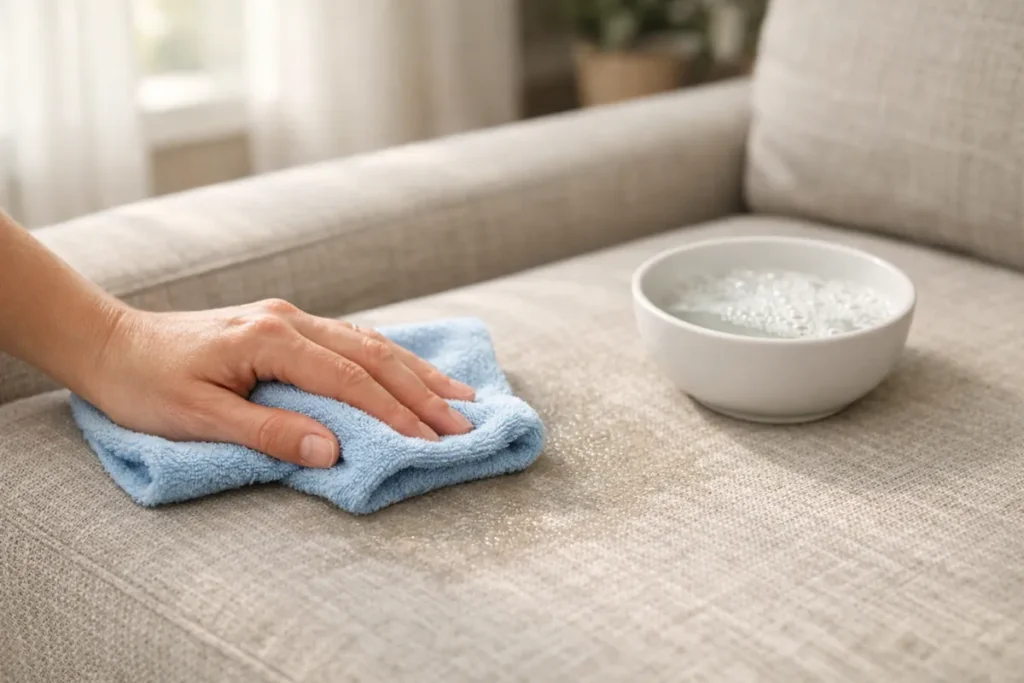
Dog odor often clings to skin oils on the surface. A tiny amount of dish soap helps break that film, then you rinse it away.
How to use it:
- Mix 1 teaspoon dish soap with 2 cups warm water.
- Wring a cloth very well and blot, do not scrub.
- Wipe once more with a clean cloth dampened with plain water.
- Blot dry with a towel.
Best for:
- Armrests, headrests, favorite nap spots
- W or WS fabrics
4. Vinegar Water Mist (Neutralizes Lingering Smell)
Diluted vinegar can help neutralize odor compounds as the fabric dries. Use a light mist and good airflow so you do not over-wet the cushion.
How to use it:
- Mix equal parts white vinegar and water.
- Lightly mist and blot right away.
- Dry with fans and open windows.
Best for:
- Wet-dog smell that hangs around
- Light to medium odor after cleaning
5. Enzyme Cleaner for “One Bad Cushion” (Targets Organic Residue)
If one area smells stronger, there may be old drool or an accident inside. Enzyme cleaners break down the residue that keeps odor coming back.
How to use it:
- Choose an upholstery-safe pet enzyme cleaner.
- Test first, then apply as directed and blot.
- Give it the full contact time on the label.
- Dry completely before using the couch again.
Best for:
- Strong odor in one spot
- Odor that returns after baking soda
6. Upholstery Extraction (Deep Reset for Heavy Odor)
A fabric-safe extractor can pull odor from deeper layers, but only if you control moisture. Fast drying is what prevents a new musty smell.
How to use it:
- Confirm the couch is safe for water-based cleaning.
- Do one gentle wet pass, then two dry passes.
- Separate cushions and run fans until fully dry.
Best for:
- Whole-couch odor and buildup
- Multi-pet homes
Once the couch is completely dry, a natural air freshener can add a light, safe scent.
What NOT to Do (If You Want Lasting Results)
A few common mistakes can lock the smell in or create a new musty odor, even after a good clean.
- Do not soak cushions or foam. Trapped moisture can create a new sour smell.
- Do not scrub hard with rough pads. It can damage fabric and push grime deeper.
- Do not use too much soap. Leftover detergent attracts dirt and holds odor.
- Do not mix cleaners, especially bleach with vinegar or ammonia.
- Do not sit on the couch while it is damp. Compression slows drying inside the cushion.
Advanced Tips to Make Cleaning Easier
These small pro-style habits make the deep clean faster and help you avoid over-wetting the couch.
- Treat the worst spot first and let it sit while you do the rest.
- Set a timer for dwell time instead of scrubbing harder.
- Clean in small zones so you never over-wet one area.
- Use one cloth for cleaning solution and one for rinsing and drying.
- Flip and rotate cushions so every side dries evenly.
How to Prevent Dog Smell in Your Couch From Returning
Once the couch smells fresh again, these small habits help keep odor from rebuilding. They also make how to get dog smell out of couch faster the next time you need it.
- Brush your dog often to reduce oils and shedding.
- Wash your dog’s bedding regularly so odors do not transfer back onto the couch.
- Vacuum seams and under cushions weekly.
- Wipe paws and dry wet fur before couch time.
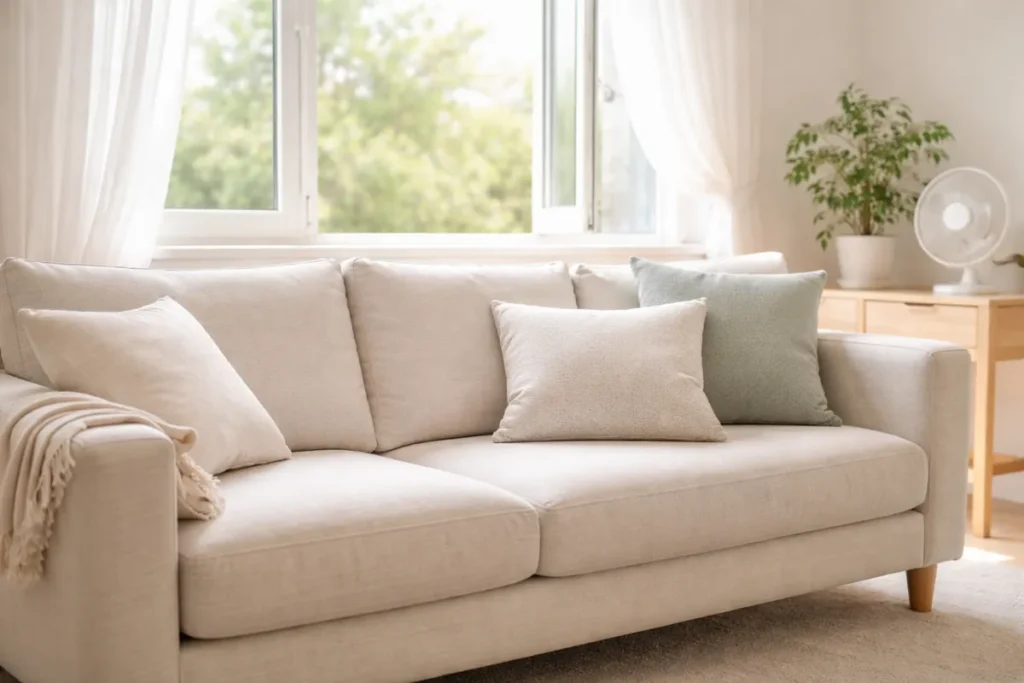
- Air out the room with a fan or open window, especially after rain.
- Do a baking soda sit-and-vacuum monthly.
Make this easier long-term with a simple pet odor prevention plan for your whole home.
Frequently Asked Questions (FAQ)
How often should I deep clean a couch with a dog?
Vacuum weekly and do a deeper clean every 1–3 months, depending on shedding and odor.
Can I get dog smell out of a couch without removing or washing the covers?
How to get dog smell out of couch when you cannot remove the covers starts with vacuuming, baking soda, and careful spot cleaning. Dry the couch fully before you try anything stronger.
Will vinegar ruin upholstery?
It can affect some dyes. Always test first and mist lightly instead of soaking.
Why does the smell come back after a day?
Residue or moisture is still inside the cushion. Use an enzyme cleaner on the worst area and focus on full drying.
When should I switch to a commercial upholstery cleaner?
Use one for heavy buildup or when home methods are not enough. Rinse lightly so detergent does not stay behind.
Is it safe to clean with kids and pets at home?
Use gentle products, ventilate the room, and keep pets off the damp couch until it is fully dry.
Final Tips
For lasting results, remove hair first, then treat oils, then neutralize odor, then dry fully. Skipping the drying step is the fastest way for the smell to return.
If you follow this order, how to get dog smell out of couch becomes much easier the next time the odor starts creeping back.
For a quick win before company comes over, use same-day freshness tips for the whole room.
When one cushion is the main source, treat it like a separate project and give it extra dwell time. Repeat gentle steps instead of soaking the couch.
Conclusion
You do not need a new couch to get a fresher-smelling living room. With patient, layered cleaning and thorough drying, even stubborn dog odor is manageable. If you stick to these steps, how to get dog smell out of couch becomes a quick routine and the results last longer.