
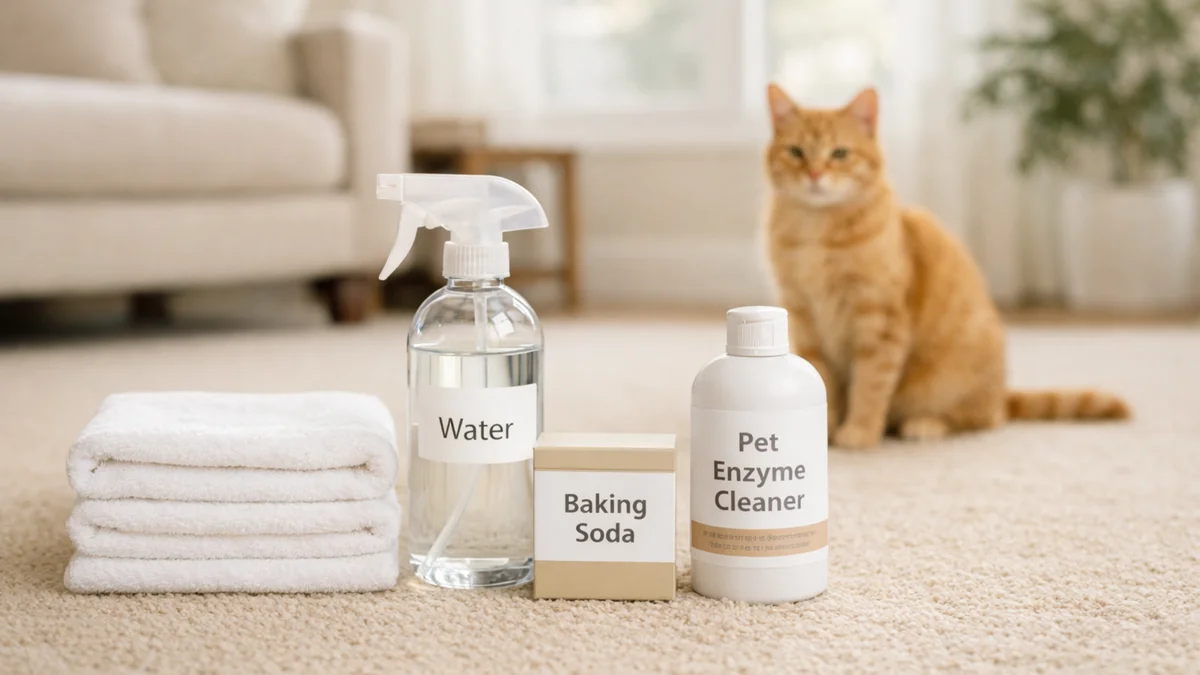
Cat accidents happen fast, and the smell can linger even after you clean the spot. Knowing how to clean cat pee from carpet the right way helps you remove both the stain and the smell that can draw your cat back.
Cat urine soaks into carpet fibers and can reach the pad underneath. If you only wipe the surface, the smell can return later.
You do not need harsh chemicals for this. A few simple methods work for fresh messes, and an enzyme cleaner can handle tougher spots.
Do the steps in order, then dry the area well so nothing stays trapped.
Table of Contents
What Causes Cat Pee on Carpet?
Sometimes it is a one-time accident. Other times, it repeats because even a small leftover smell tells your cat this is the same “bathroom spot.”
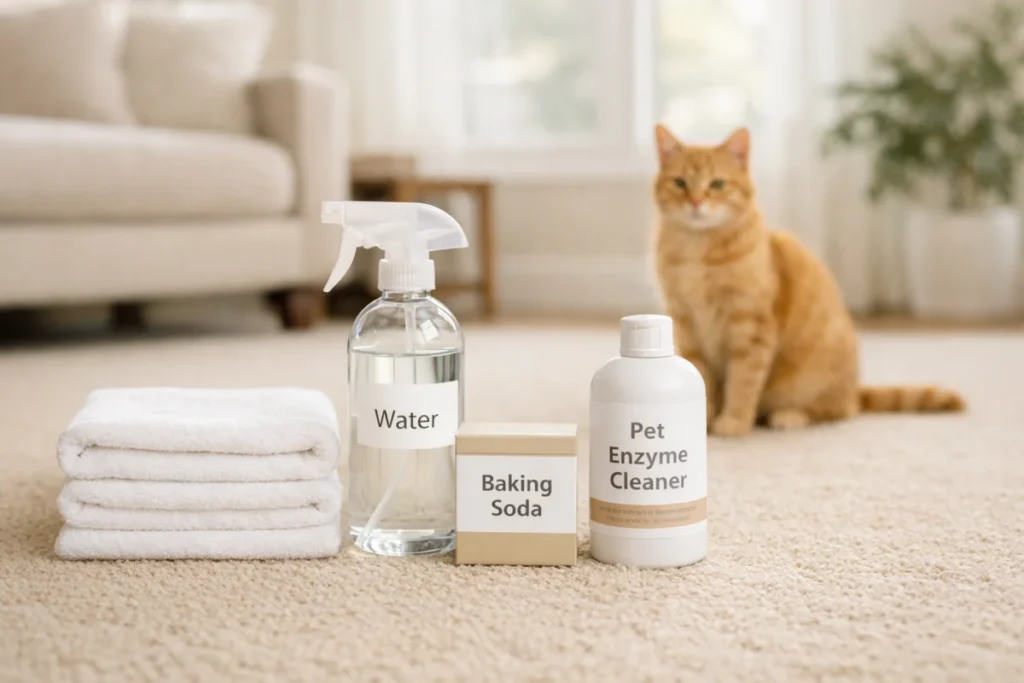
Carpet absorbs urine fast and spreads it outward and downward. The liquid can sink into the padding, where odor can linger even when the surface looks clean.
Routine and health can also play a role. Stress, a dirty litter box, or a medical issue may lead to peeing outside the box.
Common causes include:
- A litter box that is not cleaned often enough
- Stress from changes (new pet, moving, loud guests)
- Marking behavior in multi-cat homes
- A medical problem (UTI, bladder irritation, kidney issues)
- Old odor left behind from a prior accident
In small apartments, cutting down litter box smells can reduce stress and make accidents less likely.
Safety note: The CDC warns to never mix bleach with ammonia or any other cleaner. As urine breaks down, it can release ammonia, so avoid bleach for pet messes and stick to safer cleaners.
How to Clean Cat Pee From Carpet (Most Effective Methods)
Before you start, blot as much as possible. The more liquid you remove first, the easier how to clean cat pee from carpet becomes. Test any cleaner on a hidden spot first, especially on wool rugs or dyed carpet.
1. Blot and Rinse With Cold Water (Fast First Response)
This works best when the spot is fresh. Blotting removes liquid before it sinks deeper.
How to use it:
- Blot firmly (do not rub) with towels until they come up mostly dry.
- Add a small splash of cold water.
- Blot again to lift what is left.
- Repeat 1-2 more rounds.
Best for:
- Fresh accidents you catch right away
- Small spots near the surface
Wash used towels the same day so the smell does not spread. If odors linger, try these steps for cat urine smells in laundry.
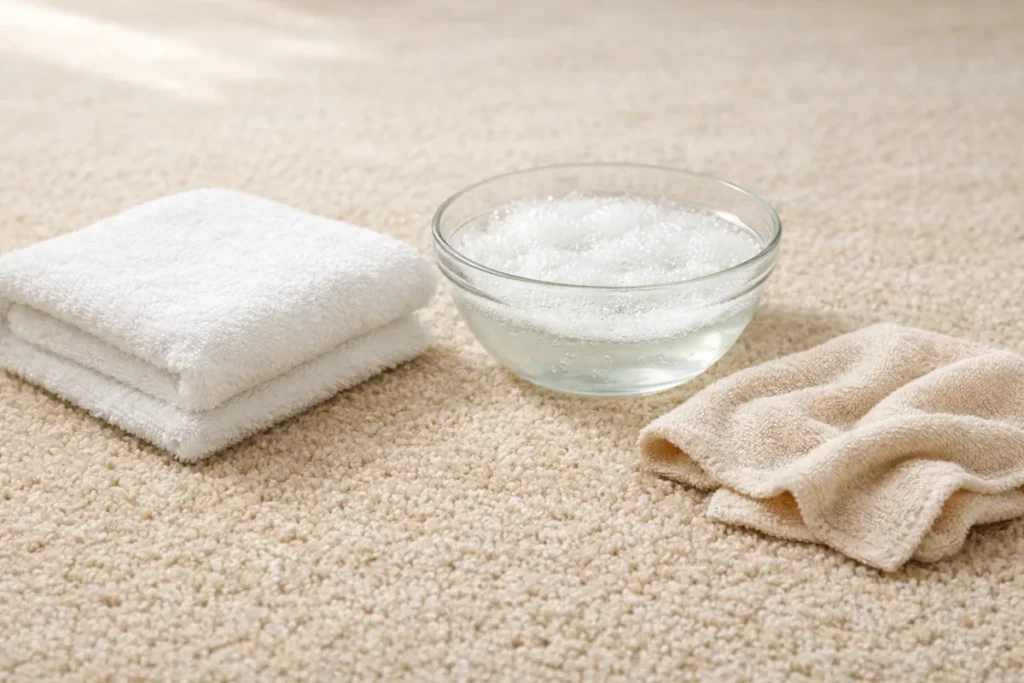
2. Dish Soap and Warm Water (Gentle Cleaning Method)
Dish soap helps lift the sticky residue that holds odor. It is mild and low-risk on most carpets when used lightly.
How to use it:
- Mix 1 teaspoon dish soap with 2 cups warm water.
- Blot the stain with a cloth dipped in the mix.
- Rinse with a clean damp cloth.
- Press dry towels on top to pull out moisture.
Best for:
- Light staining after initial blotting
- Homes that want a gentle first cleaner
3. White Vinegar and Water Rinse (Odor-Reducing Rinse)
Vinegar can help break down odor and leftover residue. The vinegar smell fades as it dries.
How to use it:
- Mix equal parts white vinegar and cool water.
- Lightly spray the area (do not soak).
- Wait 5-10 minutes.
- Blot well, then blot once more with plain water.
Best for:
- Mild to moderate odor after cleaning
- Older spots that still smell “sharp”
4. Baking Soda Overnight (Deep Odor Absorber)
Baking soda helps absorb odor during drying. It works best after you have cleaned and blotted the area.
How to use it:
- Make sure the spot is only slightly damp, not wet.
- Cover the area with baking soda.
- Let it sit 8 hours or overnight.
- Vacuum slowly and thoroughly.
Best for:
- Lingering smell when the stain looks gone
- Busy rooms where odor spreads faster
5. Enzyme Cleaner (Best Option for True Removal)
Enzyme cleaners are made for pet urine. They break down the source so the smell does not come back later.
How to use it:
- Pick an enzyme cleaner labeled for cat urine and test a hidden spot first.
- Apply enough product to reach as deep as the urine went.
- Let it sit for the full label time, then leave it to air dry.
- If you have a wet/dry vacuum, extract moisture after the dwell time to help the pad dry faster.
Best for:
- Strong odor that keeps returning
- Repeat accidents in the same area
For repeat accidents, compare enzyme cleaner options before you buy.
What NOT to Do (Before You Start)
These mistakes can set the stain or lock in smell. Avoid them if you want how to clean cat pee from carpet to actually work.
- Do not rub the stain. Rubbing pushes urine deeper and frays fibers.
- Do not use bleach. It can discolor carpet and can be unsafe around urine.
- Do not flood the area with water. Over-wetting can trap odor in the pad.
- Do not steam clean right away. Heat can set stains and odors.
- Do not cover it with fragrance sprays. The odor source is still there.
Advanced Tips to Make Cleaning Easier
A few small upgrades can make the cleanup faster and help the carpet dry fully.
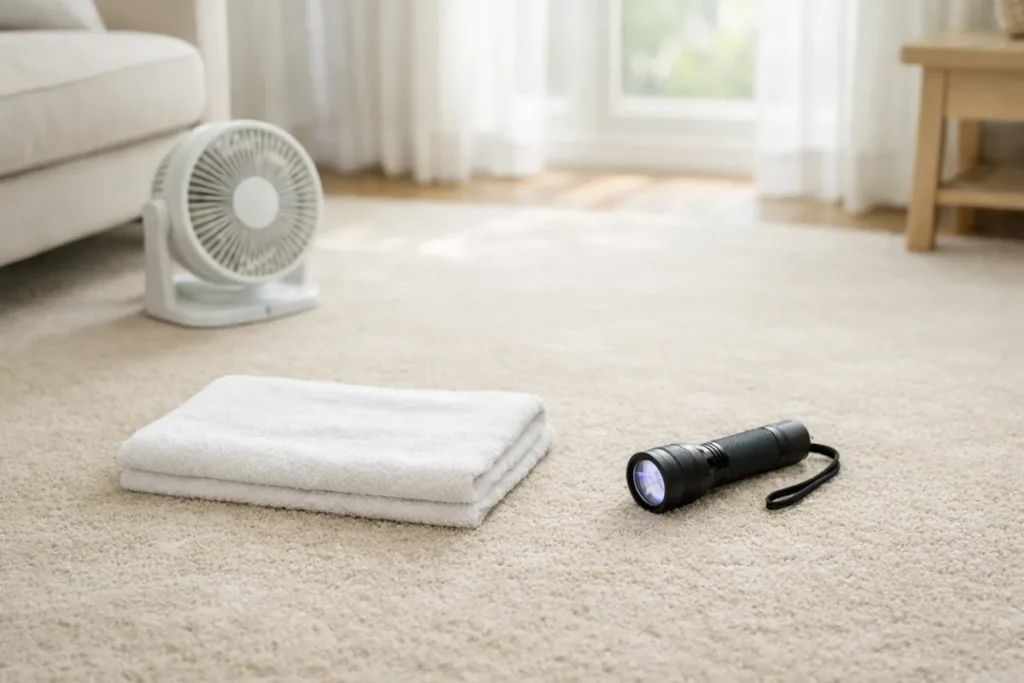
- Use a blacklight to find old spots you missed, especially near walls.
- Press, do not wipe. Fold a towel and stand on it to pull moisture up.
- Treat the edges too. Urine often spreads beyond the visible stain.
- Speed drying with a fan and airflow. Damp carpet can still smell to pets.
If urine reached wood, use a safer method that protects the finish – this guide on hardwood urine cleanup helps.
How to Prevent Your Cat From Peeing on the Carpet Again
Once you know how to clean cat pee from carpet, prevention is about making the litter box easier than the carpet.
- Scoop litter boxes daily so they stay inviting.
- Wash litter boxes weekly with mild soap, then dry fully.
- Add more boxes in multi-cat homes (one per cat, plus one extra is a common goal).
- Keep routines steady and give your cat a quiet space during busy weeks.
- Clean repeat spots with an enzyme cleaner, even if they look fine.
- Call a vet if accidents are new, frequent, or paired with straining or crying.
A simple weekly routine can also help you prevent pet odors at home between deep cleans.
Frequently Asked Questions (FAQ)
How long should I let an enzyme cleaner sit?
Follow the label, then allow full air drying. Enzymes keep working as the area dries, so do not rush it.
Can I use vinegar on any carpet?
Usually yes when diluted, but always test first. Some wool rugs and special dyes can react.
Will baking soda remove the smell completely?
It helps a lot, but it is not always enough alone. It works best after you clean and blot out moisture.
What if the smell comes back after it dries?
That often means urine reached the pad. Repeat enzyme treatment and focus on drying and extraction.
Can I use a carpet cleaning machine right away?
Avoid heat early. Clean and treat first, then do a full machine pass later if needed.
When should I call a professional?
If odor stays after multiple enzyme treatments, the pad may need replacement. A pro can treat large areas without over-wetting.
Final Tips
Act fast, blot deeply, and dry the area well. Start gentle, then move to enzymes if odor lingers.
Always test products in a hidden spot. Keep pets off the area until it is fully dry.
Not all urine messes are on carpet. For hard floors, this guide to urine smells on bathroom floors is a better fit.
Conclusion
With the right order of steps, you can remove both stain and smell without harsh chemicals. If you follow this guide on how to clean cat pee from carpet and focus on drying, your home can feel fresh again and your cat is less likely to return to the same spot.