
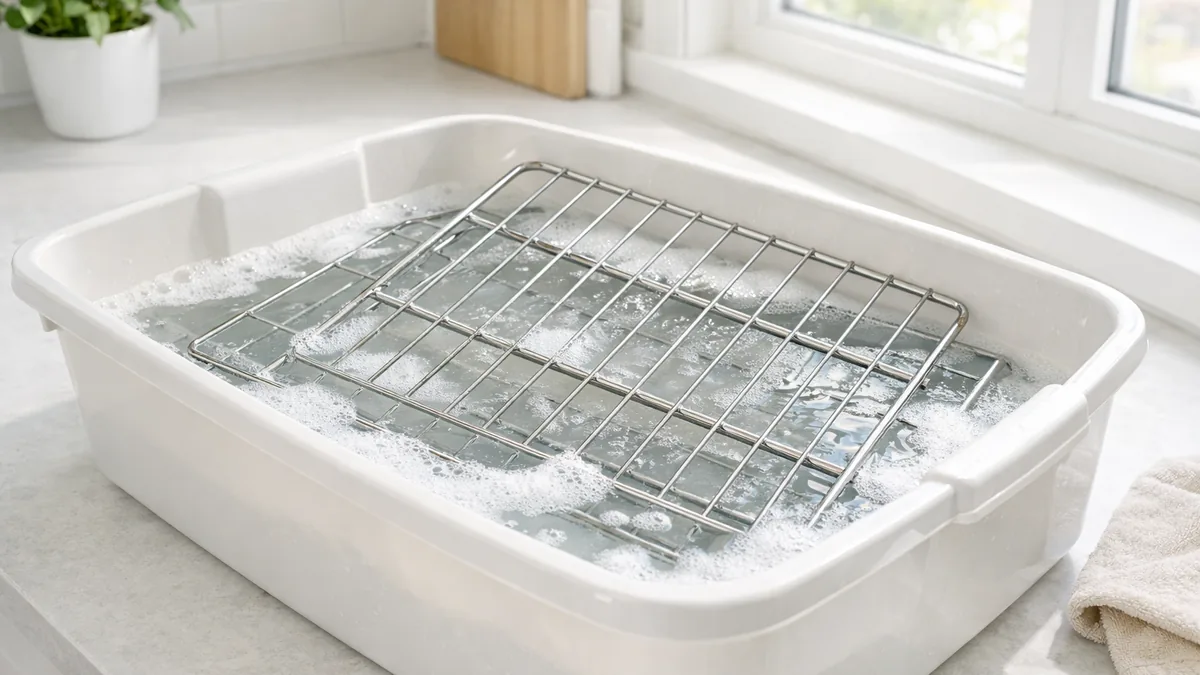
Oven racks are one of those things that slowly get worse without you noticing. Drips from casseroles, baked-on grease, and food splatters turn shiny racks into dark, sticky messes. Knowing how to clean oven racks without chemicals makes it easier to handle that buildup safely at home.
This problem usually does not happen after one use. Each cooking session adds a thin layer of grease that hardens with heat. Over time, the racks feel rough, look dull, and can even smoke when the oven heats up.
Many store-bought cleaners promise fast results, but they often come with harsh fumes. For homes with kids, pets, or sensitive airways, those chemicals are not always a good option.
Oven racks respond very well to simple, natural deep-clean methods. Once you understand what causes the mess and how to break it down safely, this becomes a manageable task that also makes future cleaning much easier.
Table of Contents
What Causes Dirty Oven Racks?
Oven racks collect grime because they sit right where heat, grease, and spills meet. Every time food bubbles over or splatters, residue lands on the metal and bakes on.
Heat plays a big role. High oven temperatures harden grease, turning soft residue into stubborn buildup. Steam from cooking also helps grease spread and stick.
Lack of regular cleaning makes things worse. Light residue is easy to remove, but once it bakes on repeatedly, it becomes much harder to break down.
Common causes include:
- Grease and oil splatters during roasting or baking
- Sugary spills that caramelize and harden
- High heat that bakes residue onto metal
- Skipping routine wipe-downs
The U.S. Environmental Protection Agency (EPA) notes that everyday cooking activities can release tiny particles into the air that settle on indoor surfaces over time, especially in enclosed areas like ovens.
Those same airborne grease particles also cling to range hood filters above the stove.
How to Clean Oven Racks Without Chemicals (Safe Deep-Clean Methods)
Understanding how to clean oven racks without chemicals makes these methods safer to use regularly, even for heavy, baked-on buildup.
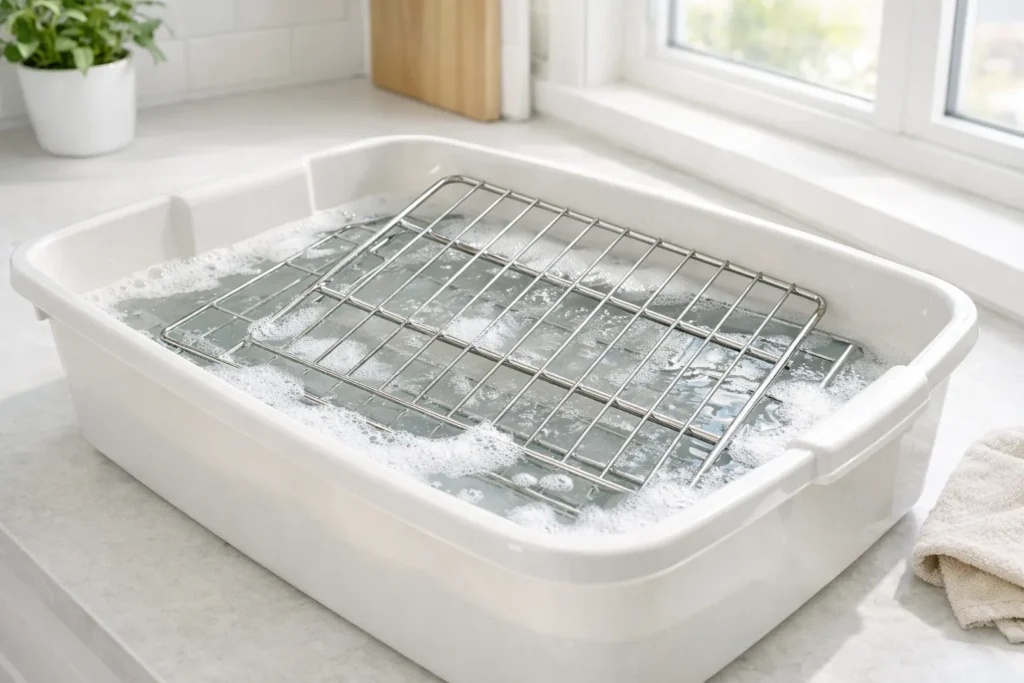
1. Hot Water and Dish Soap Soak (Gentle Grease Lifter)
This method loosens grease by softening it first. It works well because heat and soap break down oils without harsh fumes.
How to use it:
- Remove oven racks and place them in a bathtub or large sink.
- Fill with very hot water and add a generous amount of dish soap.
- Let soak for 2 to 4 hours.
- Scrub gently with a non-scratch sponge and rinse well.
Best for:
- Light to medium grease
- Regular maintenance cleaning
- Homes sensitive to strong smells
A similar low-fume routine can also help with microwave cleaning using everyday basics.
2. Baking Soda Paste (Breaks Down Baked-On Grime)
Baking soda is mildly abrasive and helps lift stuck-on residue. It works slowly but deeply.
How to use it:
- Mix baking soda with water to form a thick paste.
- Spread the paste over the racks, focusing on dirty areas.
- Let sit overnight or at least 6 hours.
- Scrub with a soft brush, then rinse and dry.
Best for:
- Medium to heavy buildup
- Older grease layers
- Deep weekend cleaning
3. Vinegar Spray After Baking Soda (Foaming Lift)
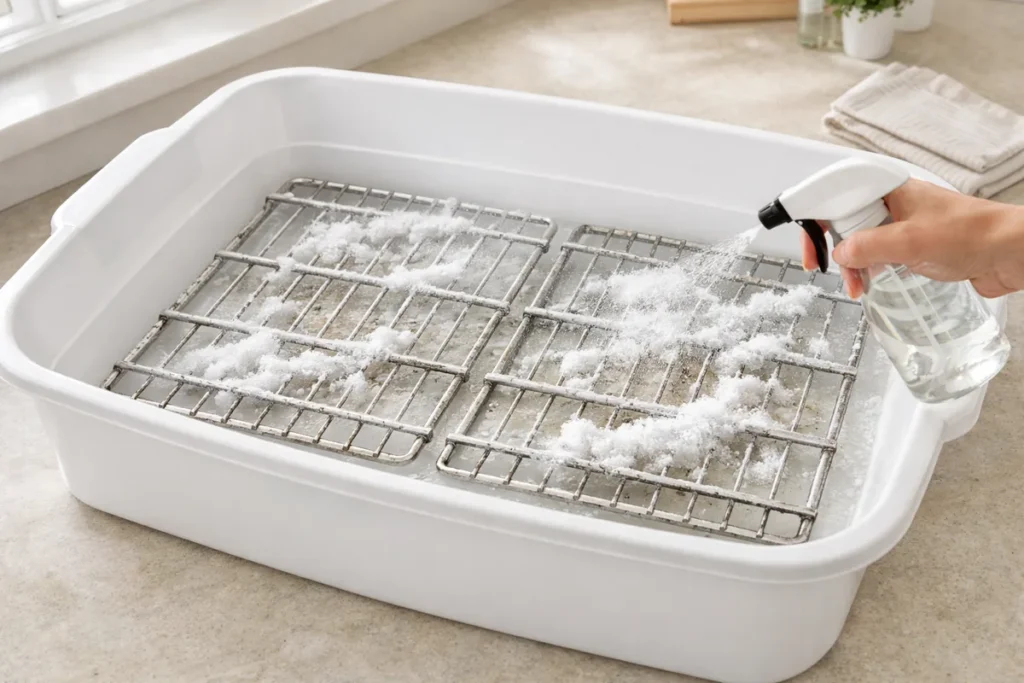
Vinegar reacts with baking soda to loosen grime. This combo helps release stubborn spots without scrubbing hard.
How to use it:
- Apply baking soda paste first and let it sit for several hours.
- Spray white vinegar over the paste.
- Let the foam work for 10 to 15 minutes.
- Scrub gently, rinse, and dry.
Best for:
- Stubborn grease patches
- Racks that feel sticky or rough
- Extra lifting without harsh tools
4. Lemon and Hot Water Soak (Cuts Grease Naturally)
Lemon contains natural acids that cut grease while leaving a fresh smell. It is gentle but effective.
How to use it:
- Fill a tub with hot water.
- Add sliced lemons or lemon juice.
- Soak racks for 2 to 3 hours.
- Scrub lightly and rinse.
Best for:
- Light grease
- Freshening dull racks
- Homes that prefer mild scents
5. Salt and Baking Soda Scrub (Extra Grip for Tough Spots)
Salt adds texture that helps lift grime without scratching when used carefully.
How to use it:
- Sprinkle baking soda over the rack.
- Add a small amount of salt.
- Dampen with water to create a scrub.
- Scrub gently, then rinse well.
Best for:
- Small stubborn spots
- Baked-on drips
- Targeted cleaning
6. Long Soak With Repeated Scrub (For Heavy Buildup)
Some racks need patience more than force. Long soaking softens layers that built up over years.
How to use it:
- Soak racks overnight in hot soapy water or baking soda solution.
- Scrub lightly in the morning.
- Repeat soaking if needed instead of scrubbing harder.
Best for:
- Very heavy buildup
- Older ovens
- Avoiding damage from harsh scrubbing
This soak-first approach also helps loosen baked-on messes in burnt pots without jumping straight to heavy scrubbing.
What NOT to Do (To Keep It Safe)
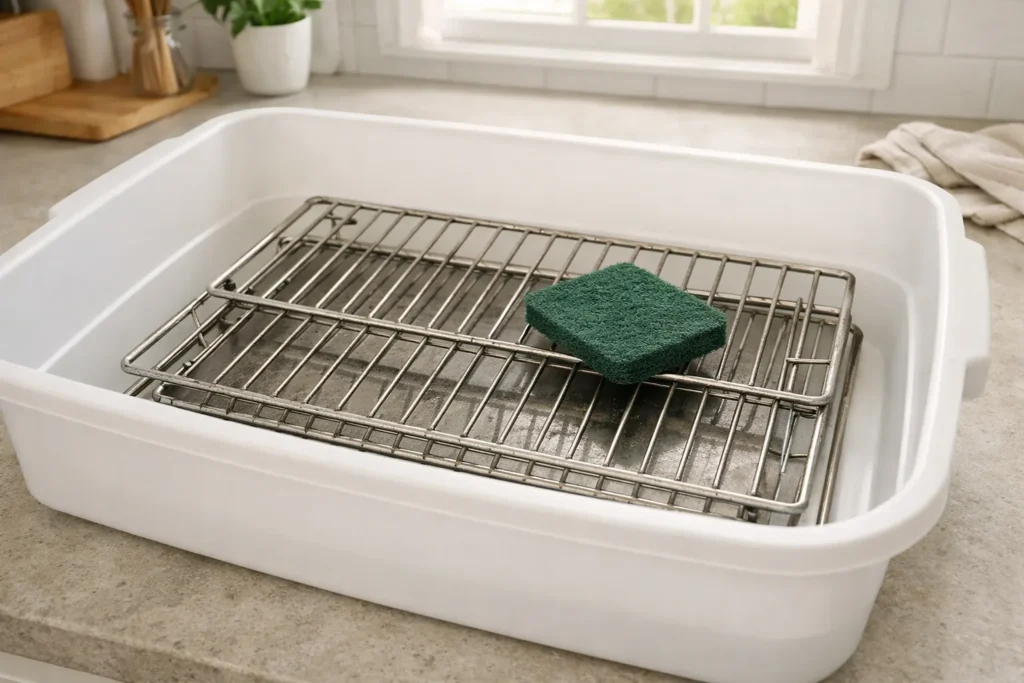
Some cleaning habits can damage oven racks or create safety risks.
- Do not use metal scouring pads. They scratch the coating and make future buildup worse.
- Do not mix vinegar with bleach or ammonia. This creates dangerous fumes.
- Do not scrub aggressively while dry. Dry scrubbing scratches metal.
- Do not put racks in the dishwasher. The heat and detergent can damage the finish.
- Do not rush heavy buildup. Force usually causes damage, not faster results.
Most of these mistakes happen when people rush the process instead of following safe, proven steps for how to clean oven racks without chemicals.
Advanced Tips to Make Cleaning Easier
- Line the tub with an old towel before soaking to prevent scratches.
- Let cleaners sit longer instead of scrubbing harder. Time does the work.
- Use an old toothbrush to reach corners and rails.
- Rinse thoroughly to avoid residue that can smoke later.
- Dry racks fully before placing them back in the oven.
Regular wipe-downs on a greasy backsplash can also help reduce the oily film that builds up around the oven.
How to Keep Oven Racks Clean Longer
Staying consistent with these habits makes it much easier to maintain results after learning how to clean oven racks without chemicals.
- Wipe racks lightly once a month when the oven is cool.
- Use baking sheets or foil under messy dishes to catch drips.
- Clean spills soon after they cool instead of waiting weeks.
- Avoid placing food directly on racks without protection.
- Do a gentle soak before buildup becomes dark and sticky.
- Keep the oven interior clean so residue does not spread.
The same habit of quick wipe-downs can keep an air fryer basket from collecting sticky buildup too.
Frequently Asked Questions (FAQ)
How often should I clean oven racks?
Light cleaning every 1 to 2 months works well. Deep cleaning is usually needed 2 to 4 times a year.
Is baking soda safe for oven racks?
Yes, baking soda is safe and non-toxic. It is gentle when used with water and soft brushes.
Can vinegar damage oven racks?
Vinegar is safe when used occasionally and rinsed well. Do not leave it on for days.
What if grease does not come off the first time?
Repeat soaking instead of scrubbing harder. Heavy buildup often needs two rounds.
Will clean racks stop smoking smells?
Yes, removing baked-on grease reduces smoke and burnt odors during cooking.
Is it really effective to clean oven racks without chemicals?
Yes. When done correctly, how to clean oven racks without chemicals can be just as effective at removing heavy grease and buildup as harsh cleaners, without the fumes or surface damage.
Final Tips
Oven racks respond best to patience and gentle methods. Heat and grease cause the mess, so moisture and time are the solution.
Start with soaking before scrubbing. Let natural cleaners do the work instead of forcing results.
Avoid shortcuts that damage the surface. A smooth rack stays cleaner longer.
Small habits make a big difference. Light maintenance prevents heavy buildup.
For more simple routines like this, the kitchen cleaning guide brings together other easy fixes for greasy cooking areas.
Conclusion
Oven racks do not need harsh products to look and work better again. With simple household items and the right steps, even tough grime can be removed safely. Knowing how to clean oven racks without chemicals protects your air, your oven, and your time while making future cleaning easier.