
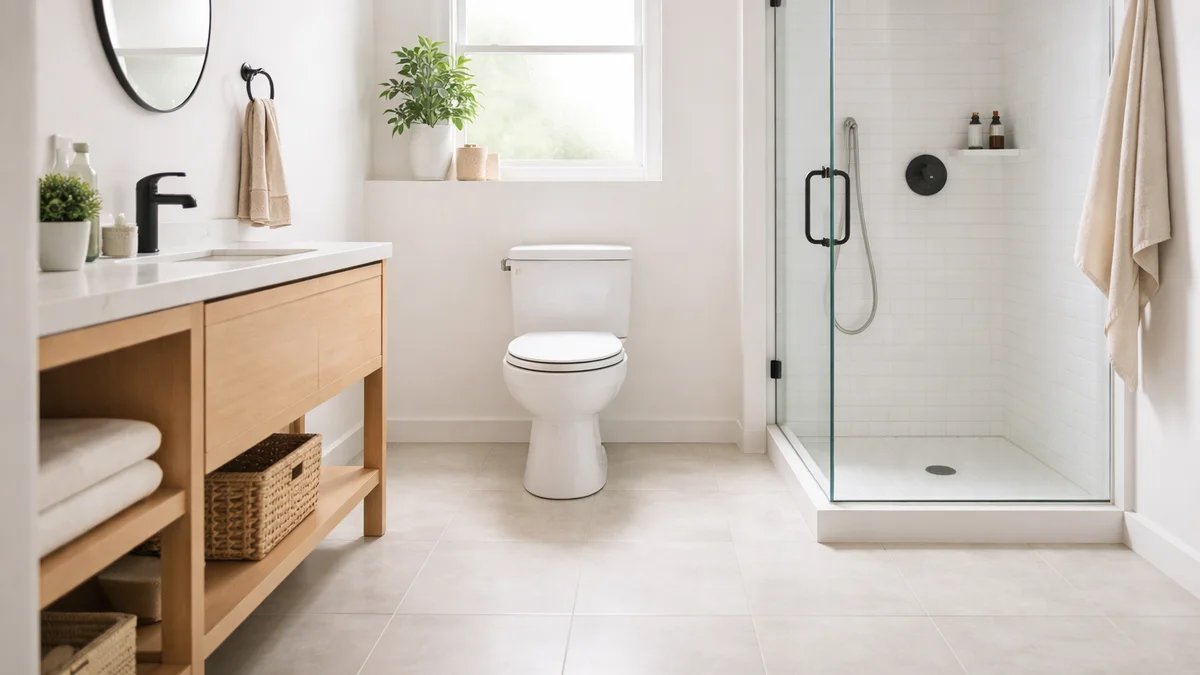
Urine odors on a bathroom floor are more common than most people admit. Small splashes around the toilet, missed cleanups, and moisture trapped in grout can create a strong smell that lingers.
Knowing how to remove urine smell from bathroom floor areas is important not just for comfort, but for hygiene. When urine residue stays trapped, bacteria continue releasing odor, especially in warm, humid bathrooms.
Many people instinctively scrub harder or reach for stronger products, but that often fails to fix the smell and can damage bathroom floors. Safe, family-friendly methods work better when they remove odor at the source and prevent it from coming back.
Table of Contents
What Causes Urine Smell on Bathroom Floors?
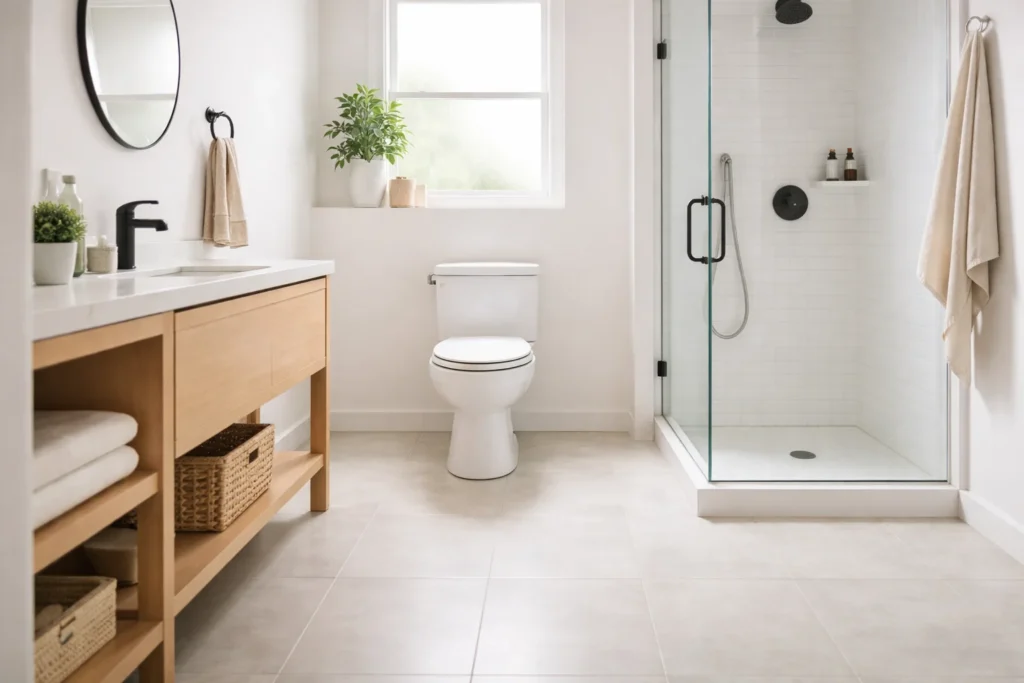
Understanding how to remove urine smell from bathroom floor surfaces starts with knowing where the odor actually comes from.
Urine smell on bathroom floors builds up slowly. Small splashes, drips, or accidents seep into grout lines, seams, and textured flooring.
Moisture makes the problem worse. When urine residue stays damp, bacteria feed on it and release ammonia-like odors.
Common causes include:
- Missed splashes around the toilet base
- Urine soaking into grout or floor seams
- Infrequent deep cleaning near the toilet
- Poor bathroom ventilation
- Using cleaners that mask smell instead of removing it
Health organizations like the Centers for Disease Control and Prevention (CDC) explain that bacteria break down organic waste and release odor-causing gases when surfaces are not cleaned thoroughly.
When the odor seems to spread beyond the floor itself, the source of a bad smell may be somewhere else in the bathroom or nearby.
How to Remove Urine Smell From Bathroom Floor (Family-Safe Cleaning Methods)
The key to learning how to remove urine smell from bathroom floor surfaces is breaking down odor-causing residue safely. Start gentle and move up only if needed.
1. Warm Water and Dish Soap (Safe First Step)
This works because dish soap lifts organic residue without damaging finishes.
How to use it:
- Mix warm water with a few drops of dish soap
- Mop or scrub the affected area with a soft brush
- Rinse with clean water and dry fully
Best for:
- Fresh urine smells
- Tile, vinyl, and sealed floors
- Regular maintenance cleaning
2. White Vinegar Solution (Odor Neutralizer)
Vinegar helps neutralize alkaline urine odors and breaks down residue.
How to use it:
- Mix equal parts white vinegar and water
- Spray or mop the area lightly
- Let sit for 5 minutes, then rinse and dry
Best for:
- Dried urine smells
- Grout and tile floors
- Light to moderate odor buildup
Always test in a hidden spot first.
3. Baking Soda Paste (Gentle Deodorizing Scrub)
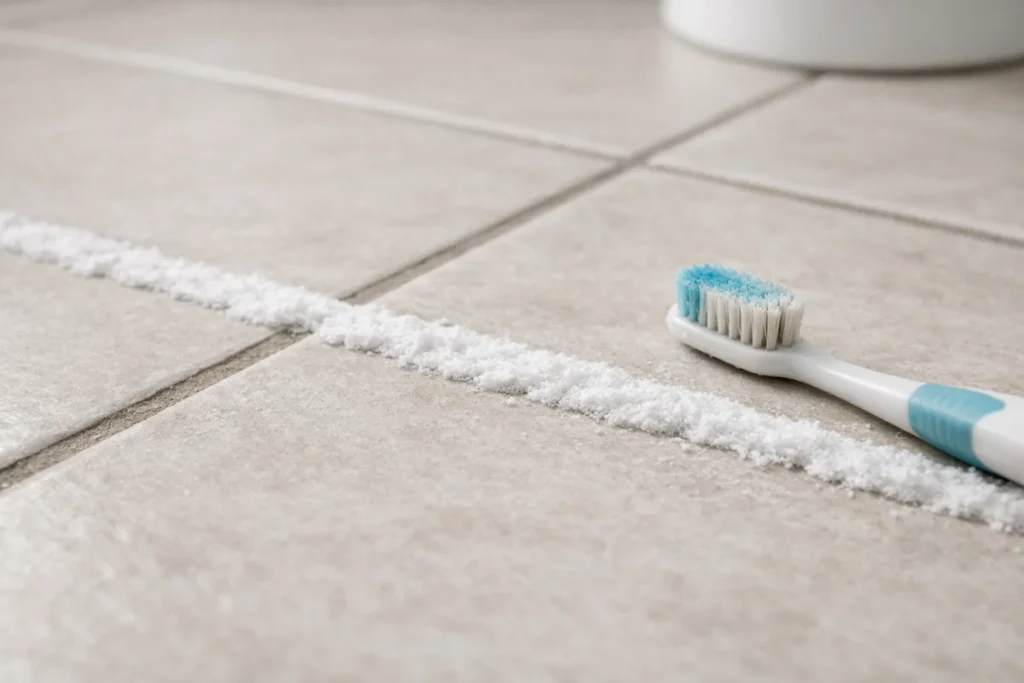
Baking soda absorbs odors and adds gentle scrubbing power.
How to use it:
- Mix baking soda with a little water to form a paste
- Apply to grout lines or smelly spots
- Scrub gently, rinse, and dry
Best for:
- Grout lines
- Textured tile
- Localized odor spots
4. Hydrogen Peroxide (Deep Odor Breakdown)
Hydrogen peroxide breaks down odor-causing bacteria safely when used correctly.
How to use it:
- Pour 3% hydrogen peroxide directly on grout
- Let it bubble for 5–10 minutes
- Scrub lightly, rinse, and dry
Best for:
- Deep-set urine smells
- White or light-colored grout
- Occasional deep cleaning
Avoid using on dark grout without testing.
5. Enzyme Cleaner (Pet- and Kid-Safe Option)
Enzyme cleaners digest urine residue instead of masking it.
How to use it:
- Apply according to label instructions
- Let it sit for the recommended time
- Do not rinse unless directed
Best for:
- Strong or old urine odors
- Bathrooms used by kids or pets
- Floors where smell keeps returning
6. Toilet Base and Edge Cleaning (Often Missed)
Odors often hide under the toilet rim and base.
How to use it:
- Spray cleaner around the toilet base
- Use an old toothbrush to scrub edges
- Wipe dry thoroughly
Best for:
- Persistent smells near the toilet
- Regular deep cleaning routines
A full odor reset also gets easier when you include cleaning the toilet tank in your bathroom routine.
What NOT to Do (To Keep Kids and Pets Safe)
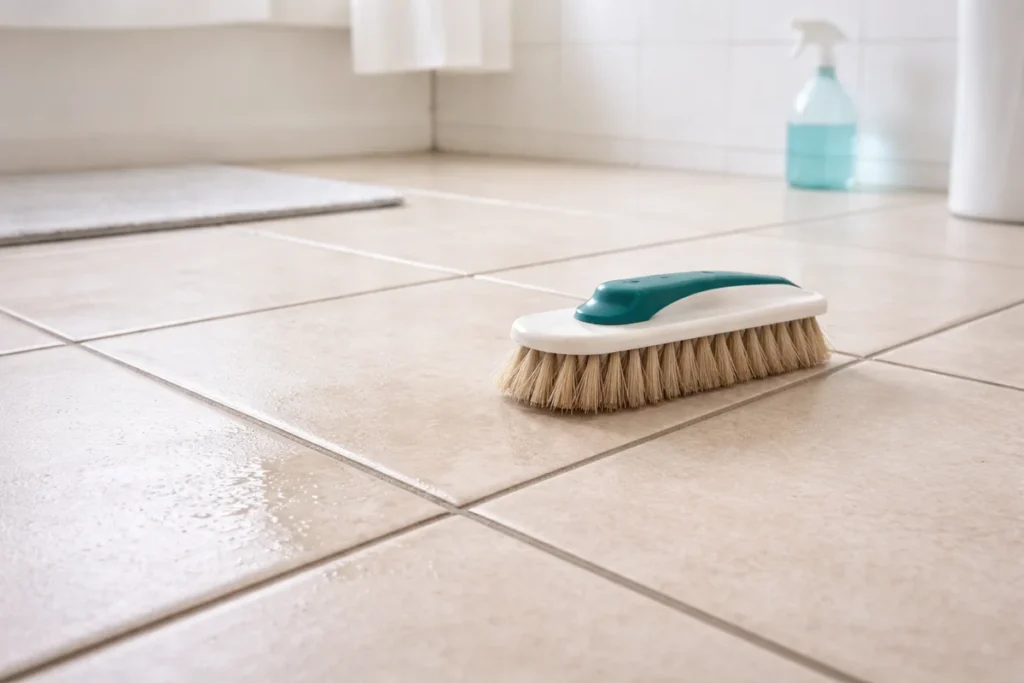
Some cleaning mistakes make odors worse or create safety risks.
- Do not mix vinegar with bleach or ammonia. This creates dangerous fumes.
- Do not soak wood or laminate floors. Excess water causes swelling and damage.
- Do not rely on air fresheners alone. They mask odor without removing it.
- Do not scrub aggressively with metal brushes. This damages grout and seals.
- Do not skip drying. Moisture feeds odor-causing bacteria.
If the smell is stuck in grout lines, gentler tile and grout cleaning works better than harsh scrubbing.
Advanced Tips to Make Cleaning Easier
Use these small tweaks to make cleaning easier and more effective. They help odors fade faster and stay gone.
- Clean the area at night so it can dry fully overnight.
- Use a soft grout brush to reach deep seams without damage.
- Keep a dedicated toilet-area cleaning cloth separate from others.
- Turn on the bathroom fan during and after cleaning.
- Set a 10-minute timer for cleaners to work properly.
When the smell feels more like drain gas than surface residue, bathroom sewer smell issues may be the real cause.
How to Prevent Urine Smell on Bathroom Floors From Coming Back
These small habits help maintain results after learning how to remove urine smell from bathroom floor areas effectively.
- Wipe the floor around the toilet weekly
- Deep clean grout once a month
- Dry floors after mopping or splashes
- Improve ventilation with a fan or open window
- Use enzyme cleaner for routine odor control
- Check toilet base seals regularly
Keeping the room dry also helps prevent musty odors, so it is worth watching for mold smell in the bathroom when ventilation is poor.
Frequently Asked Questions (FAQ)
Is it safe to use vinegar on bathroom floors?
Yes, vinegar is safe on tile and sealed floors when diluted. Always test first.
How often should I deep clean urine odors?
Once a month is enough for most homes. Spot clean as needed.
Can I use baking soda and vinegar together?
Use them separately. Mixing reduces their effectiveness.
Are enzyme cleaners safe for kids and pets?
Most enzyme cleaners are designed to be family-safe when used as directed.
What if the smell keeps coming back?
Check grout, toilet base seals, and ventilation. The odor source may be hidden.
Will hydrogen peroxide damage my floor?
It is safe on most tile and grout but should be tested first.
Should I use bleach for urine smell?
Bleach disinfects but does not remove odor residue effectively.
Final Tips
Urine odors come from residue, not just surface dirt. Removing the source is more important than strong smells or heavy scrubbing.
Start with gentle, family-safe methods and only move to stronger options when needed. Always dry the floor completely after cleaning.
Consistent maintenance keeps bathroom floors fresh and prevents deep odor buildup.
For more simple routines that help keep the whole space fresh, see this bathroom cleaning guide.
Conclusion
Once you understand what causes the smell, how to remove urine smell from bathroom floor surfaces becomes simple and manageable. Safe, family-friendly methods work better than harsh chemicals when used correctly. With regular care and smart habits, your bathroom can stay clean, fresh, and odor-free without stress.