
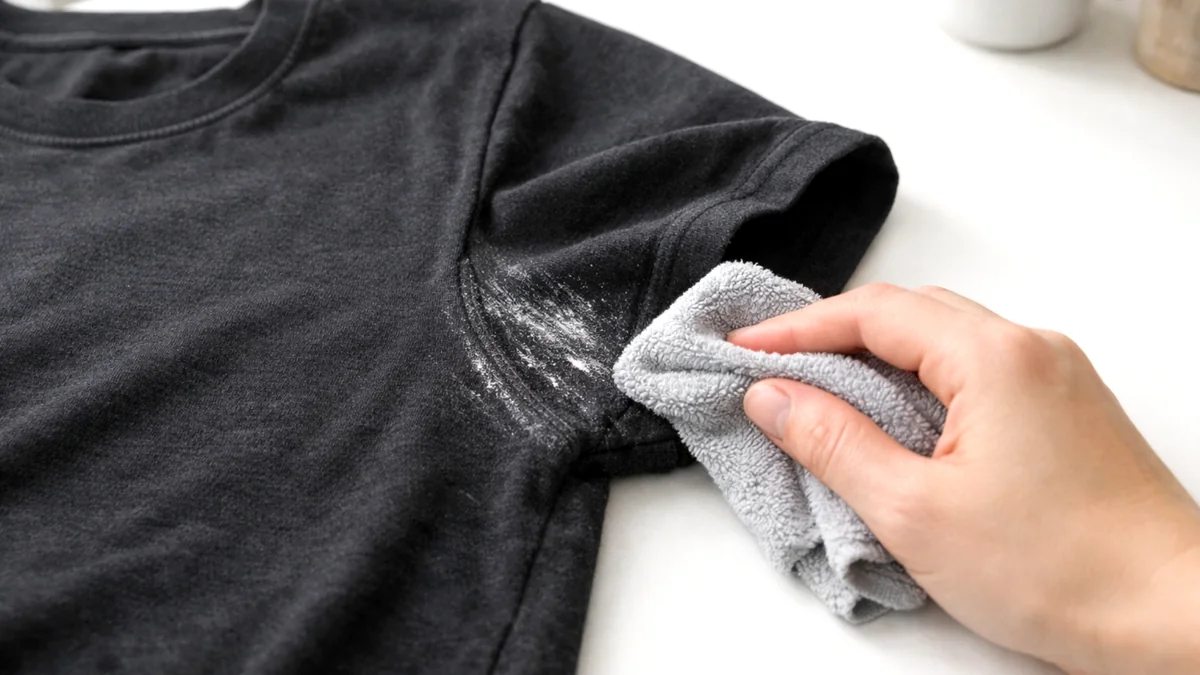
White streaks show up right before you need to leave. If you need to know how to remove deodorant stains from shirts, the best move is to lift the residue before heat and rubbing push it deeper into the fabric.
These marks often start as a light chalky patch. Later, they can look dull or turn yellow in the underarm area.
The stain is usually caused by buildup, not by one single wear. Too much product, not enough drying time, and tight sleeves can all leave residue behind.
Most shirts respond well to simple, fabric-safe cleaning. Once you know the cause, the right method, and what to avoid, it gets easier to remove deodorant stains from shirts.
Table of Contents
What Causes Deodorant Stains on Shirts?
Deodorant stains usually come from product that stays on the fabric instead of washing out cleanly. That residue can mix with sweat and body oils, which is why some white marks later turn yellow.
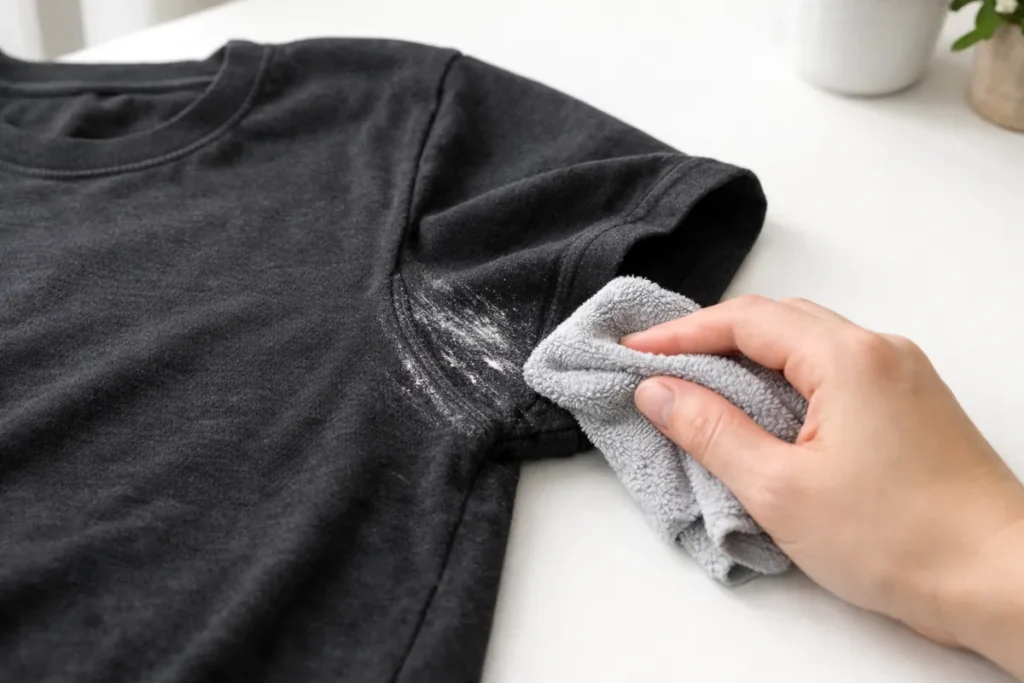
The underarm area also gets friction. Pulling a shirt on and off can push more product into the fibers.
Common causes include:
- Applying too much deodorant
- Getting dressed before it dries
- Wearing tight sleeves that rub the fabric
- Letting sweat and product build up
- Drying the shirt before the stain is gone
The FDA explains that antiperspirants use active ingredients to reduce sweat, which helps explain why residue can collect in underarm fabric over time.
Even older marks can improve with gentle treatment. You can still remove deodorant stains from shirts without harsh scrubbing.
When underarm residue has already mixed with sweat, sweat stains may need a slightly deeper pre-wash treatment.
Methods to Remove Deodorant Stains From Shirts (Without Fabric Damage)
1. Dry cloth lift (For fresh white marks)
Fresh white streaks often sit on the surface. A soft dry cloth can lift them before they settle in.
How to use it:
- Lay the shirt flat
- Rub gently with a dry microfiber cloth
- Turn the cloth to a clean area as residue lifts
Best for:
- Fresh white marks
- Dark shirts
- Quick touch-ups
2. Damp cloth wipe (For light residue)
A slightly damp cloth can loosen chalky buildup without soaking the shirt. This is a good next step after using a dry cloth.
How to use it:
- Wet a soft cloth with cool water and wring it out
- Blot and wipe the mark gently
- Let the area air-dry
- Repeat once if needed
Best for:
- Thin cotton shirts
- Small patches
- Fast cleanup before washing
The same act-fast rule helps with coffee stains before they dry into the fabric.
3. White vinegar soak (For mild buildup)
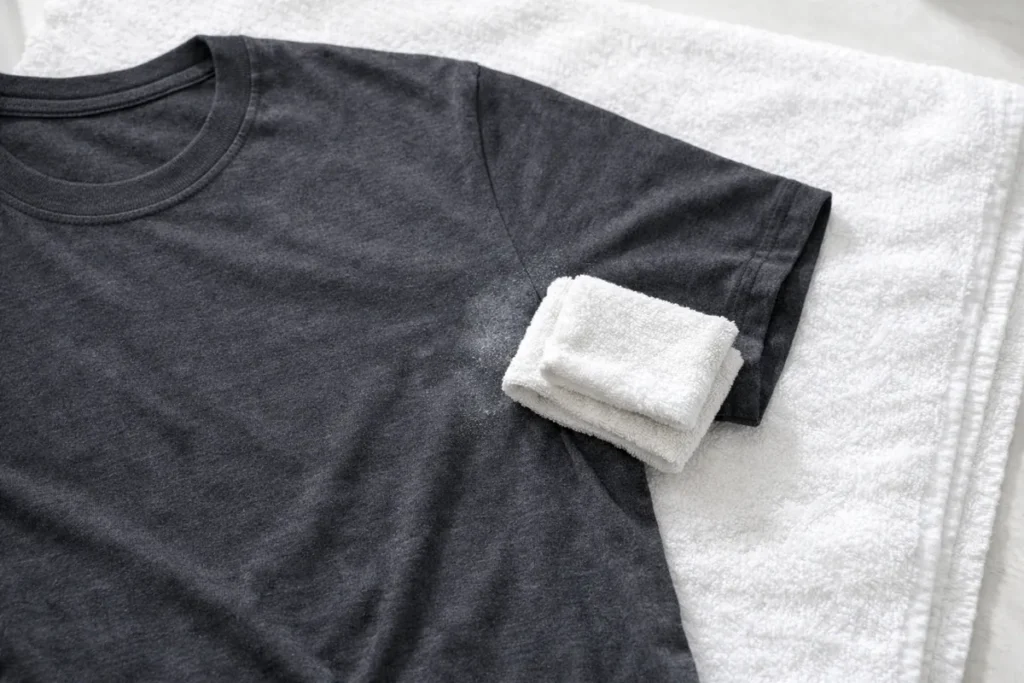
Vinegar can loosen the film left in the underarm area. It is a simple way to remove deodorant stains from shirts when the stain is not deeply set.
How to use it:
- Mix equal parts white vinegar and cool water
- Soak the stained area for 20 to 30 minutes
- Rub the fabric lightly against itself
- Rinse well before washing
Best for:
- Cotton shirts
- Everyday tees
- Mild white or yellow marks
4. Dish soap treatment (For oily residue)
Some stains are partly oily because product mixes with sweat and skin oils. Dish soap can help break that layer down before washing.
How to use it:
- Apply a small drop of dish soap to the damp stain
- Work it in gently with your fingers
- Let it sit for 10 minutes
- Rinse well and wash
Best for:
- Waxy buildup
- Yellowing
- Hot-weather shirts
The same gentle soap-first approach can also help with grease stains before they go through the dryer.
5. Baking soda or stain remover (For stubborn spots)
For older residue, you may need more cleaning power. Test in a hidden spot first, especially on delicate or dark fabrics.
How to use it:
- Make a soft baking soda paste with water, or use a fabric-safe stain remover
- Apply to the stained area
- Let it sit for 10 to 15 minutes
- Rinse and wash according to the care label
- Air-dry first if any shadow remains
Best for:
- Older stains
- White shirts
- Set-in buildup
What NOT to Do (Avoid Set-In Marks)
A few shortcuts can make the stain stick harder.
- Do not start with hot water. Heat can make the residue cling more tightly.
- Do not machine-dry the shirt before checking the area. Dryer heat can set both white marks and yellow shadows.
- Do not scrub hard with a stiff brush. Rough friction can damage fibers.
- Do not layer several random cleaners at once. Extra residue can make rinsing harder.
- Do not treat delicate tops like heavy cotton shirts. Lighter fabrics need a gentler approach.
The same gentle handling matters for ink stains, where rubbing can spread the mark instead of lifting it.
Advanced Tips to Make Cleaning Easier
Small changes can save time on wash day. They also help shirts stay cleaner with less effort.
- Let deodorant dry before getting dressed. That reduces transfer.
- Turn shirts inside out before washing. Detergent can reach the underarm area better.
- Pre-treat early when you spot buildup. It is easier to remove deodorant stains from shirts before the residue has time to build up over several wears.
- Keep a microfiber cloth nearby. A quick dry wipe can clear a fresh streak fast..
- Check the shirt before dryer heat. If any mark remains, treat it again first.
How to Prevent Deodorant Stains From Building Up Again
Daily habits keep fresh marks from turning stubborn.
- Use a lighter layer of deodorant. More product often means more residue.
- Wait a minute before putting on your shirt. Dry product transfers less.
- Wash sweaty shirts sooner. This stops oils and product from settling together.
- Rotate shirts when you can. Repeated friction in the same area can make buildup worse.
- Look at the underarms before drying. That quick check helps you remove deodorant stains from shirts before heat sets the mark.
If deodorant marks keep coming back after washing, compare stain removers for clothes before moving to a stronger treatment.
Frequently Asked Questions (FAQ)
How often should I treat deodorant stains on shirts?
Treat them as soon as you notice them. Fresh marks usually come out faster.
Is vinegar safe for every shirt?
Not always. Test in a hidden spot first and follow the care label.
What should I use on black shirts?
Start with the gentlest option. A dry cloth, damp cloth, or mild soap treatment is usually safest.
When should I use a stronger stain remover?
Use one when basic methods fail or when the shirt has already been washed and dried with the stain still there.
What if the first method does not work?
Move to the next method instead of scrubbing harder. Some stains need loosening, rinsing, and a proper wash.
Can these stains turn yellow over time?
Yes. Residue can mix with sweat and body oils.
Final Tips
Start with the gentlest method and move up only if needed. That gives you a better chance of clearing the mark without wearing out the fabric.
Timing and prevention habits make it easier to remove deodorant stains from shirts and keep white marks from showing up again.
If you want more fabric-safe stain help, the laundry cleaning guides cover other common clothing cleaning problems too.
Conclusion
Most of these stains come out with steps, not harsh treatment. Catch the mark early, and it gets easier to remove deodorant stains from shirts.