
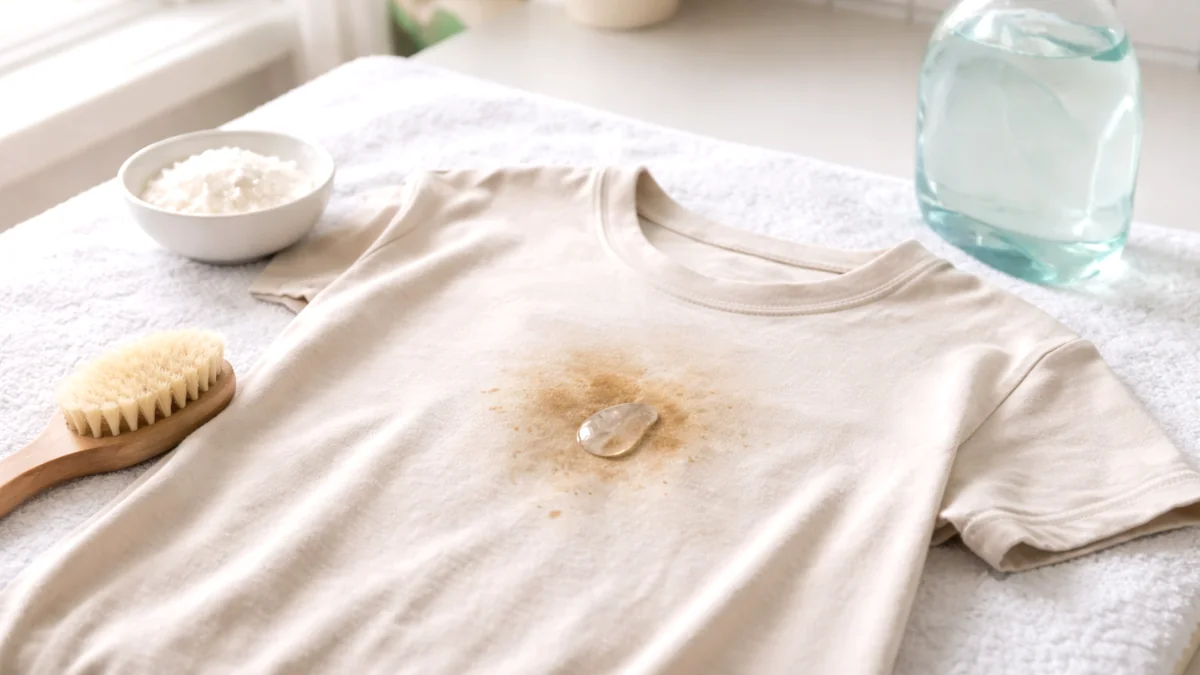
Grease spots tend to land on your best shirt at the worst moment. If you need to know how to remove grease stains from clothes without making things worse, start by treating the oil before you wash. Heat and time are what turn a small spot into a stubborn stain.
Grease spreads into fibers and grabs onto lint, so it can look darker after a normal cycle. A quick pre-treat is usually the difference between a clean finish and a lingering shadow.
You do not need fancy products to remove grease stains from clothes. Dish soap, laundry detergent, and a little patience handle most stains. The main rule is simple: do not dry it until you are sure the mark is gone.
If the care label says dry-clean only, skip soaking and heavy scrubbing. You can still absorb fresh oil, then let a cleaner finish the job.
Table of Contents
What Causes Grease Stains on Clothes?
Grease stains on clothes come from cooking oils, butter, salad dressing, lotions, and oily takeout bags. Oil does not evaporate, so it keeps spreading until something absorbs it or soap breaks it up.
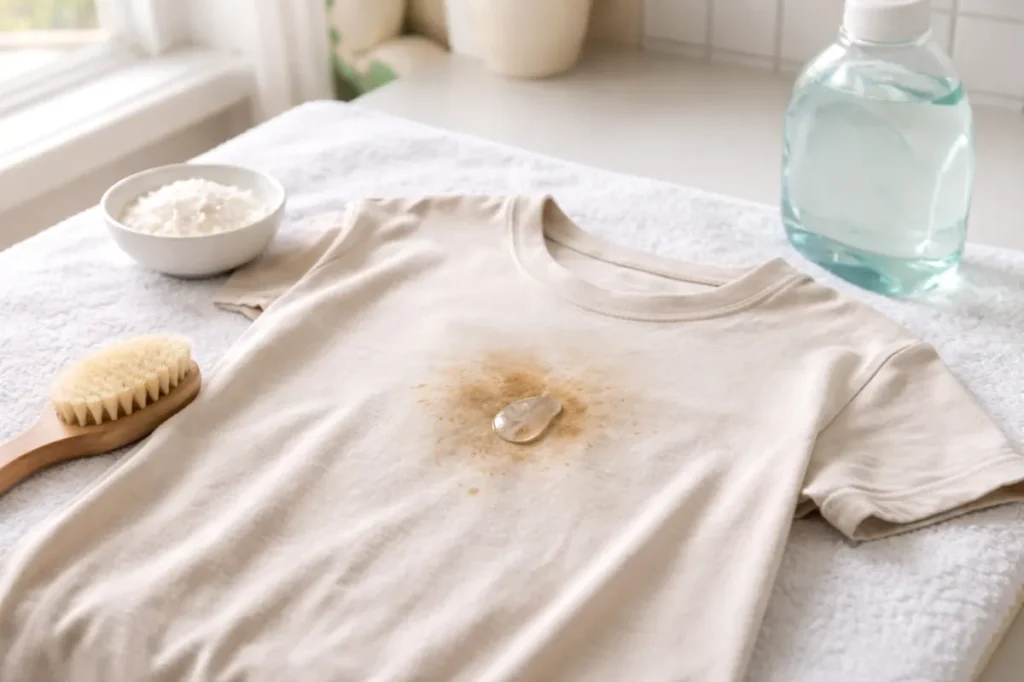
Common causes include:
- Frying splatter and drips that hit sleeves and front panels
- Body oils that build up on collars and straps
- Washing without pre-treating, then drying before checking
- Using too much softener, which can trap oily soil
New Mexico State University Extension notes that heat can set stains, so always check the spot before you use the dryer.
For dark drink spills, use this coffee stain guide before the mark dries.
Methods to Remove Grease Stains From Clothes (Lift Oil Without Fading)
Choose the method based on the fabric and how old the stain is. Always check the care label first, and skip the dryer until you confirm you can remove grease stains from clothes completely.
1. Blot and Absorb With Powder (Pull Oil Up First)
Absorbent powders pull loose oil out before water spreads it around.
How to use it:
- Blot with a paper towel, do not rub.
- Cover with cornstarch or baking soda.
- Wait 20-60 minutes, then brush off.
- Wash, then air dry to check.
Best for:
- Fresh cooking grease
- Light to medium fabrics
- First step before soap
2. Dish Soap Pre-Treat (Cut Through Food Oils)
Dish soap is designed to break up oil, so it works well on fresh stains.
How to use it:
- Apply 1-2 drops of grease-cutting dish soap.
- Gently work it in with your fingers.
- Wait 10-15 minutes.
- Rinse from the back with warm water, then wash.
Best for:
- Cotton tees, hoodies, and jeans
- Butter, pizza, and dressing spots
- Stains caught the same day
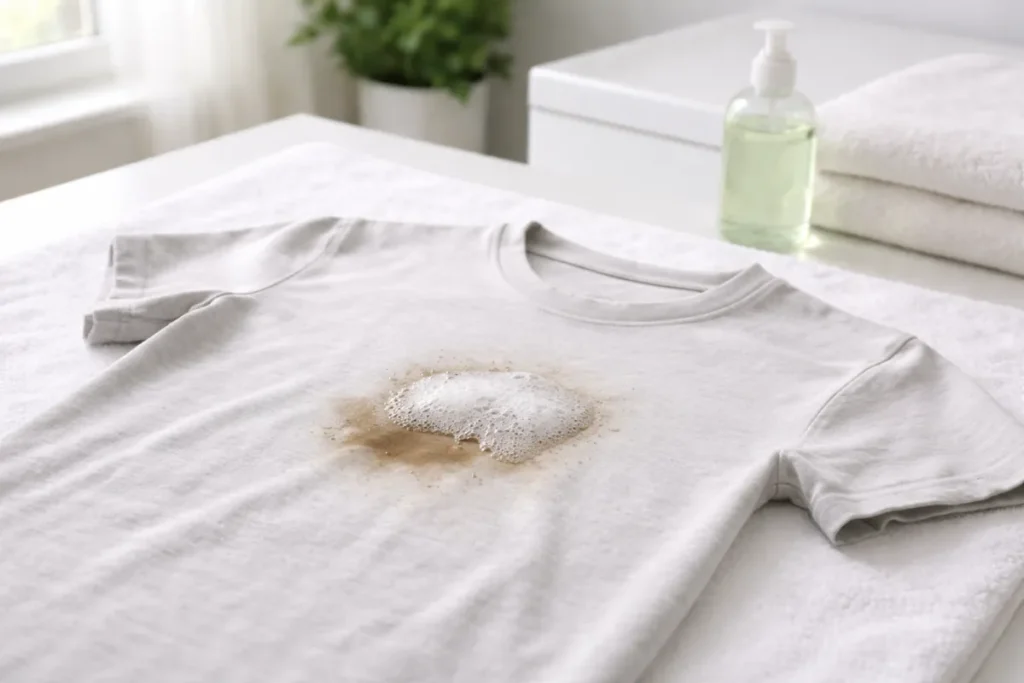
3. Enzyme Stain Remover (Handle Set-In Grease)
Enzyme or stain-remover sprays can help break down oil and food residue over time.
How to use it:
- Test in a hidden spot first on dark colors.
- Saturate the stain and wait as the label directs.
- Wash with detergent on the warmest safe setting.
- Repeat once if you still see a ring.
Best for:
- Older stains and mixed food stains
- Athletic wear with body oils
- Clothes you need to save
4. Oxygen Booster Soak (Lift Leftover Grease)
An oxygen-based laundry booster can lift stubborn residue with a longer soak.
How to use it:
- Dissolve the booster in warm water (follow the label).
- Soak 1-4 hours, then rinse.
- Wash with detergent and air dry to check.
Best for:
- Towels, sheets, and sturdy cotton
- Light colors and whites
- Faint grease halos
5. Delicate Spot Clean (Protect Sensitive Fabrics)
Delicates can stretch or fade, so keep the treatment gentle.
How to use it:
- Dust the spot with cornstarch and wait 30 minutes.
- Brush off, then dab with cool water and mild soap.
- Blot dry and lay flat to air dry.
- If it is dry-clean only, take it in.
Best for:
- Silk, wool, rayon, and blends
- Small spots where rubbing would damage fibers
- Reducing oil before professional cleaning
If the mark still shows after one wash, a stronger laundry stain remover may work better than repeating the same step.
What NOT to Do (Prevent Heat-Set Damage)
A few common moves can set grease deeper and ruin the fabric.
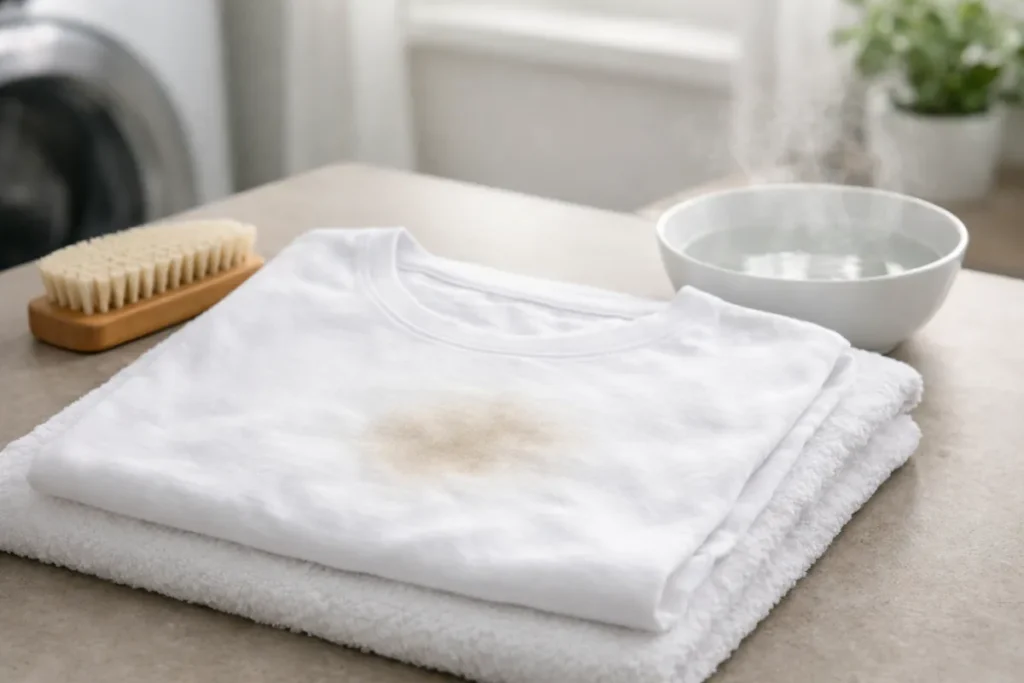
- Do not put it in the dryer until the stain is fully gone, because heat can lock oil in.
- Do not scrub hard with a stiff brush, since it can fuzz fabric and leave a pale patch.
- Do not start with very hot water, because it can spread grease before soap breaks it up.
- Do not mix several cleaners at once, since buildup can trap future grime.
Ink can spread fast, so removing ink stains takes a different approach than grease.
Advanced Tips to Make Cleaning Easier
Treat the spot early, even if you cannot wash right away. Air dry first so faint rings do not surprise you later.
- Pre-treat, then let the item sit until wash day. A treated spot can wait a few hours.
- Rinse from the back of the fabric to push oil out, not deeper in.
- Check the stain in sunlight or near a window before you dry it.
- Repeat one method before you switch products. Consistency often wins with grease.
For yellowing around collars and underarms, this sweat stain method is a better fit than grease treatment.
How to Prevent New Grease Stains on Clothes
Small habits keep oil from turning into repeat laundry problems.
- Wear an apron while cooking. It blocks splatter from landing on your outfit.
- Keep dish soap near the sink. A quick dab helps stop spreading.
- Let lotion and sunscreen dry first. Oily transfer shows up on straps and collars.
- Wipe hands before touching clothes. Finger oil transfers fast to cuffs and hems.
- Carry a stain wipe or pen. Early treatment helps remove grease stains from clothes later.
Underarm buildup often needs a separate step, especially when you are dealing with deodorant stains.
Frequently Asked Questions (FAQ)
Can I fix a grease stain after it has been washed and dried?
If you need to remove grease stains from clothes after they went through the dryer, start with dish soap and wash again. Air dry to check each time.
What water temperature works best?
Use the warmest setting that is safe for the fabric. Warm water helps detergents work, but pre-treat first so oil does not spread.
Is dish soap safe on dark clothes?
Usually, yes, but test in a hidden spot if the dye is fragile. Work gently to avoid a lighter rubbed area.
When should I use a stronger stain remover?
Use one if the stain is old, large, or you already washed it once. Follow the label and do not dry until the mark is gone.
What if the first method fails?
Repeat it once, then move up one level, like from dish soap to an enzyme remover. Many stains lift on the second try.
Do I need dry cleaning for grease stains?
Only if the label says dry-clean only or the fabric is very delicate. You can still absorb fresh oil first, then let a cleaner finish it.
Final Tips
Blot first, use soap second, and save heat for last. If you are trying to remove grease stains from clothes, air dry after washing so you can check the spot in good light.
If the stain survives one wash, repeat a targeted method and skip the dryer again. A small stain kit and a few prevention habits will save fabric, time, and frustration.
For more fabric fixes, keep the laundry cleaning guide handy when stains need a different approach.
Conclusion
Grease stains cling to fibers, but most are fixable with the right order. Treat first, wash on the warmest safe setting, and check before drying. With a little patience, you can remove grease stains from clothes and keep your favorites in rotation.