
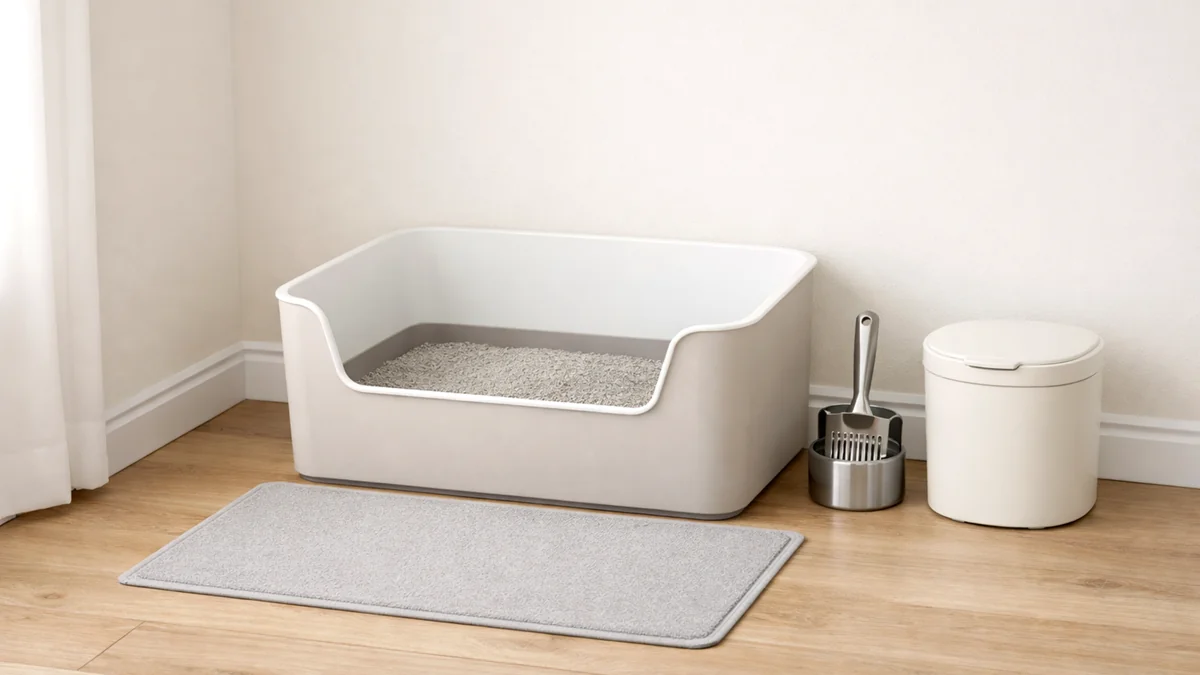
A litter box can make a small apartment feel “off” fast, even when everything looks clean. The key to how to stop litter box smells in small apartments is a few smart setup changes and a simple routine, not stronger sprays.
Smell builds when waste sits, litter gets damp, and fine dust sticks to the box and the floor around it. In a small space, you notice it sooner.
Many people try scented litter or air fresheners. Those can cover odor for a short time, but they can also bother cats and still leave the source behind.
The pro approach is simple: remove waste quickly, keep litter dry and deep enough to clump, wash the box on a schedule, and keep the surrounding area truly clean. This routine shows you how to stop litter box smells in small apartments without harsh chemicals.
For whole-room freshness in a small space, natural ways to deodorize your home can help you keep odor under control between cleanings.
Table of Contents
What Causes Litter Box Smells in Small Apartments?
Litter box odor is mostly a timing and airflow issue. Waste starts smelling quickly, and in a small apartment it spreads through shared air fast. The smell also hides in seams, on the scoop, under the mat, and along the floor edge behind the box.
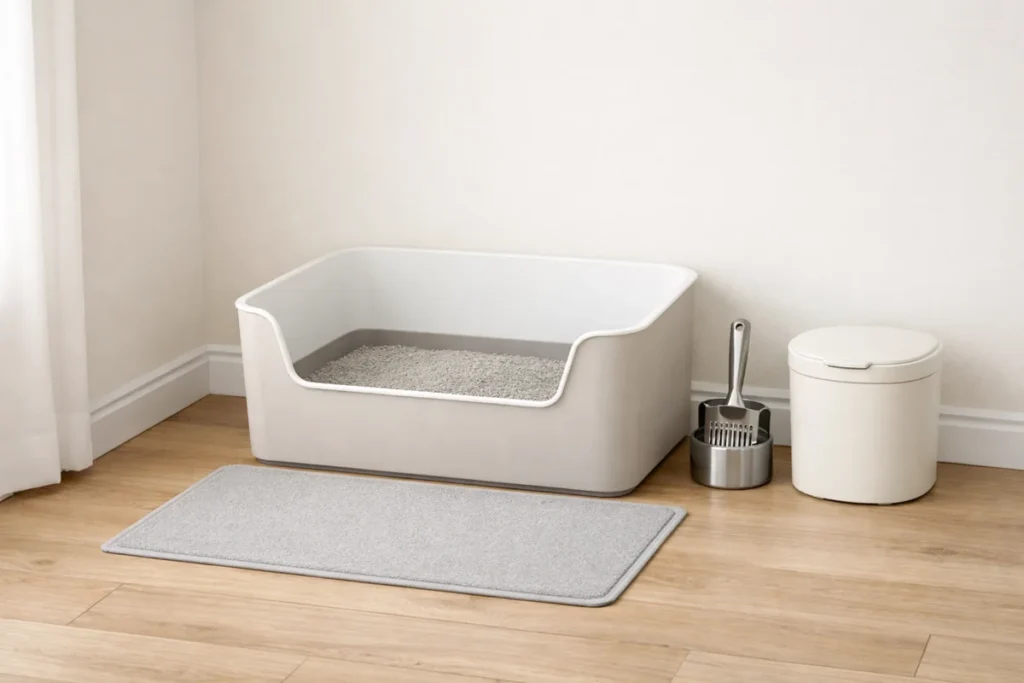
Common causes include:
- Not scooping often enough (even one missed day matters)
- Litter that is too old, too shallow, or not clumping well
- A box that is too small, which traps moisture and waste
- A covered box that holds odor inside, then releases it when opened
- Poor ventilation or high humidity that makes odor linger
Odor can also cling to sealed floors near the box, so dried urine on hardwood is a good next step if mopping is not enough.
For practical litter box care basics, the Cornell Feline Health Center recommends removing feces and clumps daily, then scrubbing the box with a gentle detergent, drying it, and refilling with clean litter.
How to Stop Litter Box Smells in Small Apartments (Safe for Kids and Pets)
1. Scoop twice a day (Fastest odor control)
This works because the strongest smell comes from waste sitting in the box. Remove it before it has time to spread into the room.
How to use it:
- Scoop morning and night and scrape corners.
- Bag waste tightly and take it out daily.
- Wipe the scoop edges so odor does not build up.
Best for:
- Small apartments where odor spreads fast
- Anyone who wants results fast without changing litter
2. Use a larger, open box (Less trapped odor)
A bigger box gives clumps more space and helps litter stay drier.
How to use it:
- Choose a box about 1.5x your cat’s length.
- Use high sides if needed, but keep the top open.
- Leave space behind the box so you can wipe the wall and floor edge.
Best for:
- Homes where covered boxes smell worse
- Cats that kick litter or miss the edge
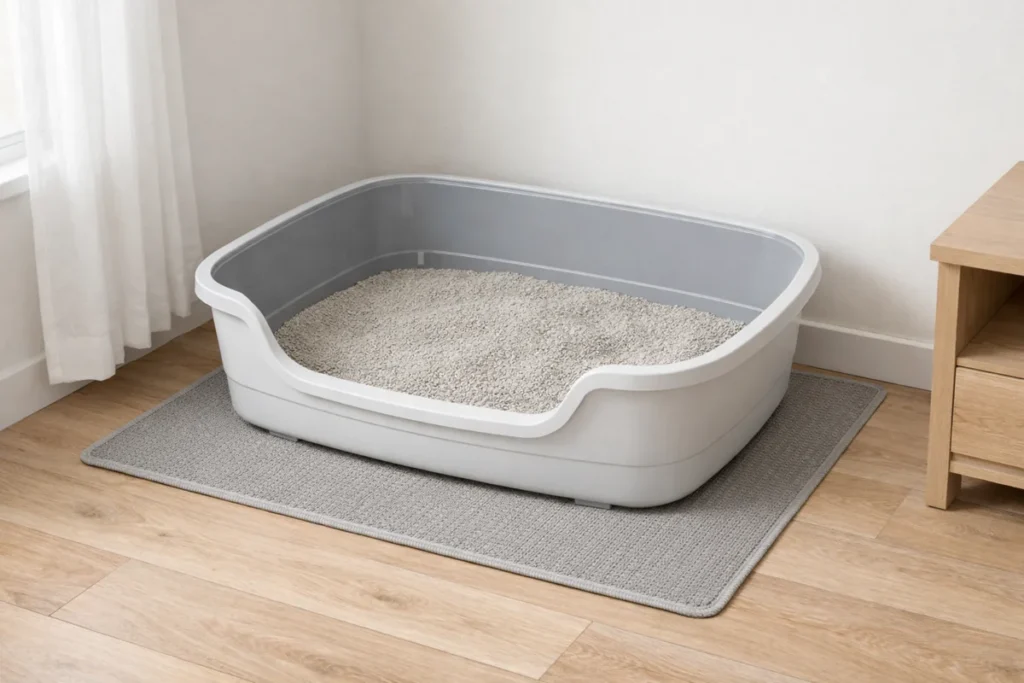
3. Pick unscented clumping litter and keep the right depth (Drier litter, less odor)
Good clumping litter locks moisture into firm clumps, so the rest stays drier. Unscented often smells more neutral and is easier on sensitive cats.
How to use it:
- Fill to 2-3 inches so clumps form well.
- Top off every few days to keep the depth steady.
- Transition slowly over 7-10 days if you switch types.
Best for:
- Cats sensitive to fragrance
- Boxes that get soggy quickly
4. Do a weekly empty, wash, and dry reset (Removes odor film)
Even with scooping, the box walls and seams collect an invisible odor film. Washing removes buildup so the box stops adding odor back into the room.
How to use it:
- Dump all litter and wash with warm water plus mild dish soap.
- Scrub seams, rinse very well, and dry fully.
- Refill with fresh litter at the right depth.
Best for:
- Boxes that still smell right after scooping
- Homes that need long-lasting odor control
5. Clean the “odor zone” around the box (Where smell hides)
In small spaces, odor often comes from tracked dust, tiny splashes, and residue on the floor. Cleaning around the box removes the source you cannot see.
How to use it:
- Vacuum or sweep every 2-3 days.
- Wipe floors and baseboards with warm water and a drop of dish soap.
- Use a pet-safe enzyme cleaner on the floor for stubborn spots.
Best for:
- Corners, closets, and bathrooms where odor lingers
- Homes where the box looks clean but the room still smells
If a nearby rug still smells, use this guide to clean cat pee from carpet.
What NOT to Do (To Keep Kids and Pets Safe)
A few popular “quick fixes” can backfire and irritate cats or people, so skip these mistakes.
- Do not use strong air fresheners near the box. They can irritate cats and only cover odor.
- Do not spray cleaners into the litter. Cats can pick up residues on paws and fur.
- Do not “power clean” the box with harsh chemicals. Plastic can hold residues that bother your cat.
- Do not mix cleaning products together. Some combinations can create dangerous fumes.
- Do not let litter get too low. Shallow litter stops clumping and creates wet patches.
Advanced Tips to Make Cleaning Easier
Once your setup is solid, a couple of small upgrades can make the whole routine easier.
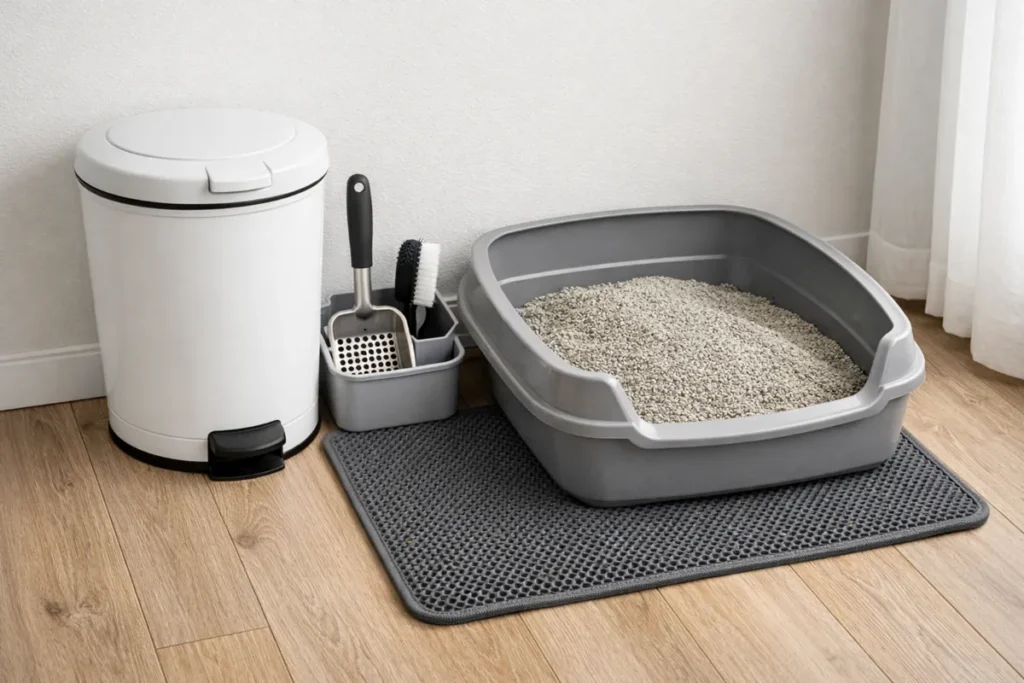
- Keep a small, lidded trash can next to the box so scooping stays fast.
- Set a repeating reminder for the weekly wash so it never slips.
- Keep a spare scoop and a small brush nearby so you can scrape stuck clumps quickly.
- Place a washable litter mat that traps dust and bits before they spread.
Once the source is gone, a natural air freshener can help the room stay fresh without strong perfumes.
How to Prevent Litter Box Smells in Small Apartments From Building Up Again
These habits keep odor from building up.
- Scoop twice a day and take waste out daily.
- Keep litter 2-3 inches deep and top off every few days.
- Empty, wash, and dry the box weekly (or every 10 days if odor stays low).
- Vacuum or sweep around the box every 2-3 days.
- Keep the box in the most ventilated spot you have.
To make these habits stick, prevent pet odors with a simple whole-home routine that takes just a few minutes a week.
Frequently Asked Questions (FAQ)
How often should I scoop in a small apartment?
Twice a day is ideal in a small space.
Will a covered litter box help with odor?
It often traps odor and can make it stronger when you open the lid.
Is scented litter a good idea?
Usually no. Many cats dislike fragrance, and “scent plus waste” can smell heavier than unscented clumping litter.
Do air purifiers help with litter box smells?
They can help, especially with an activated carbon filter. Place it a few feet away so it supports room air without blowing into the litter.
My box still smells right after I scoop. Why?
Odor is likely stuck to the plastic or the area around the box. Do a full wash-and-dry reset and wipe the floor edge behind it.
What is the simplest plan if I want results fast?
Scoop twice daily, wash the box weekly, and clean the “odor zone” around it. That routine is the backbone of how to stop litter box smells in small apartments.
Final Tips
Treat the litter box like a small daily reset, not a weekly emergency. Scooping twice a day beats any scented product. If you stick with the basics, how to stop litter box smells in small apartments becomes a quick routine, not a constant problem.
Keep litter deep enough to clump, and dry the box fully after washing. Once the basics are solid, a bigger open box and better airflow make the results last.
Conclusion
A small apartment can stay fresh with a simple routine and a few smart setup choices. When you follow how to stop litter box smells in small apartments, you remove the source and stop odor from building up in the room.