
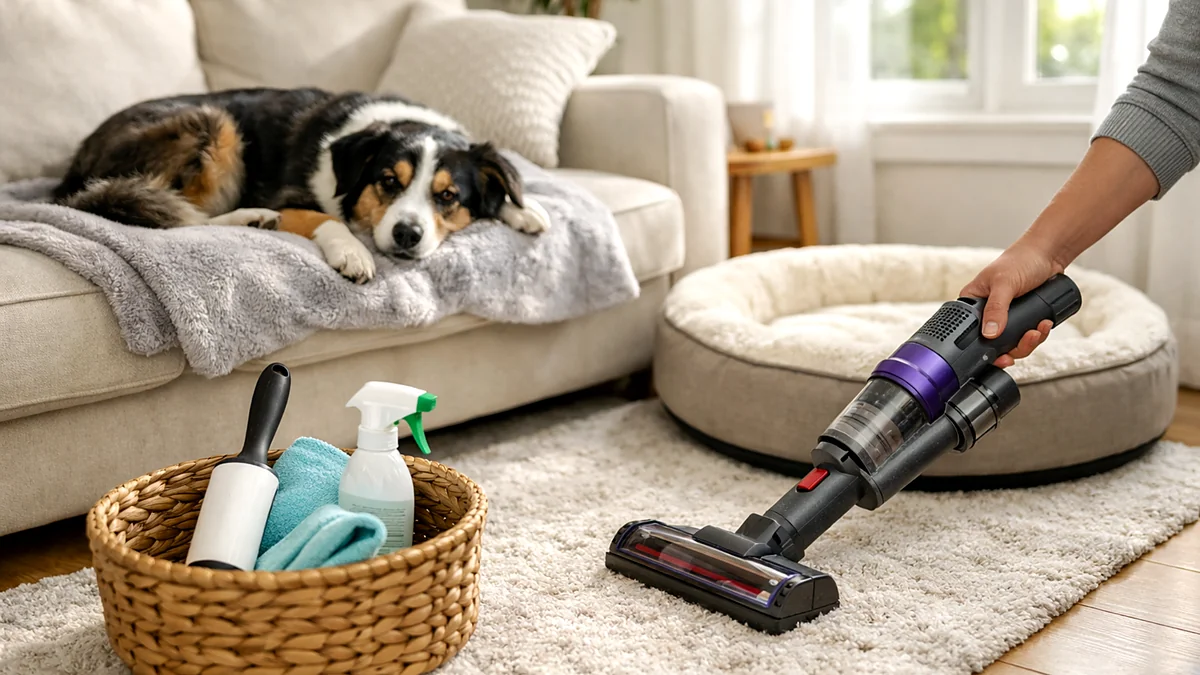
Pets are family, but smells can build up fast. When you are figuring out how to prevent pet odors in your home, the goal is not stronger sprays. It is a simple routine that removes odor sources before they soak into fabrics and linger in the air.
Most pet odors come from the same places: hair and dander on floors, body oils on soft furniture, damp fur, litter box gases, and the occasional accident. When you handle those spots on a schedule, your home stays fresh without a daily deep clean.
This plan is simple and repeatable.
Table of Contents
What Causes Pet Odors in Your Home?
Pet smells are usually a mix of fur, dander, saliva, and body oils that land on floors and fabrics. Moisture makes it worse, especially with damp fur and slow-drying blankets.
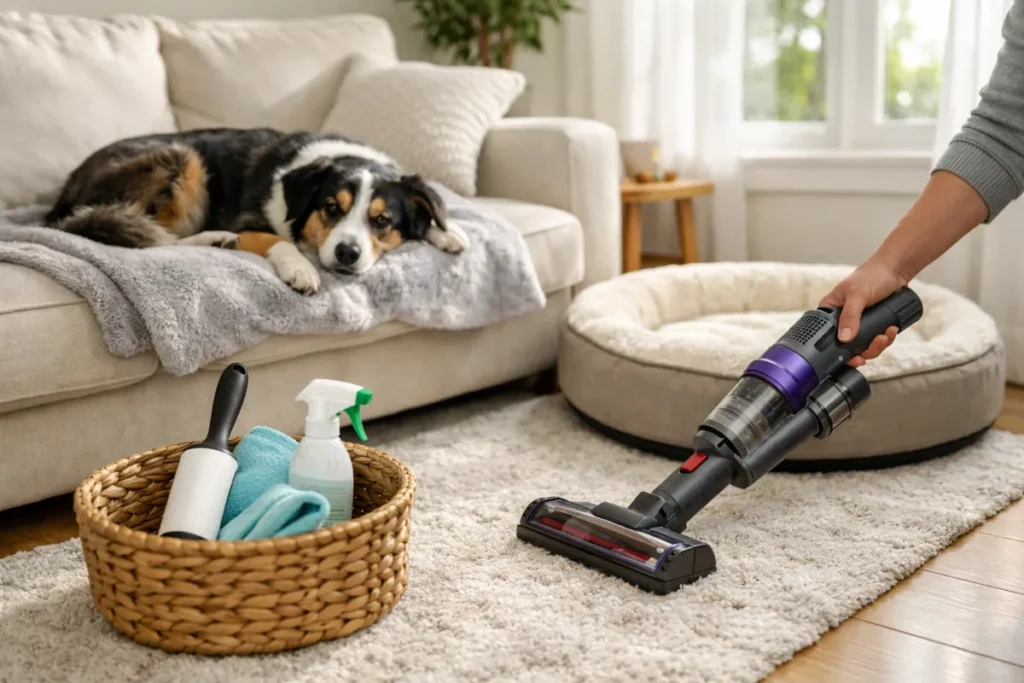
Accidents matter because residue can hide in fibers and cracks and smell again after the area dries. Once you know the sources, how to prevent pet odors in your home feels much easier.
Common reasons odors build up:
- Hair and dander collecting in corners and under furniture
- Body oils soaking into rugs, couches, and pet beds
- Damp fur after baths, rain, or snow
- Litter box gases and dusty litter tracking
- Old accidents that soaked into padding or seams
For a simple whole-home reset, try these natural ways to deodorize your home.
How to Prevent Pet Odors in Your Home (Simple Daily and Weekly Routine)
1. Daily hair pickup (5 minutes, high-traffic zones)
Hair and dander are the “slow leak” that makes rooms start to smell, especially when pet hair builds up on the couch. A quick daily pass stops buildup before it settles.
How to do it:
- Vacuum or microfiber-sweep the main paths and the pet area.
- Hit edges and corners first, then the open floor.
Best for:
- Homes with rugs or wall-to-wall carpet
- Heavy shedders and multi-pet homes
2. Weekly furniture reset (covers, cushions, and throws)
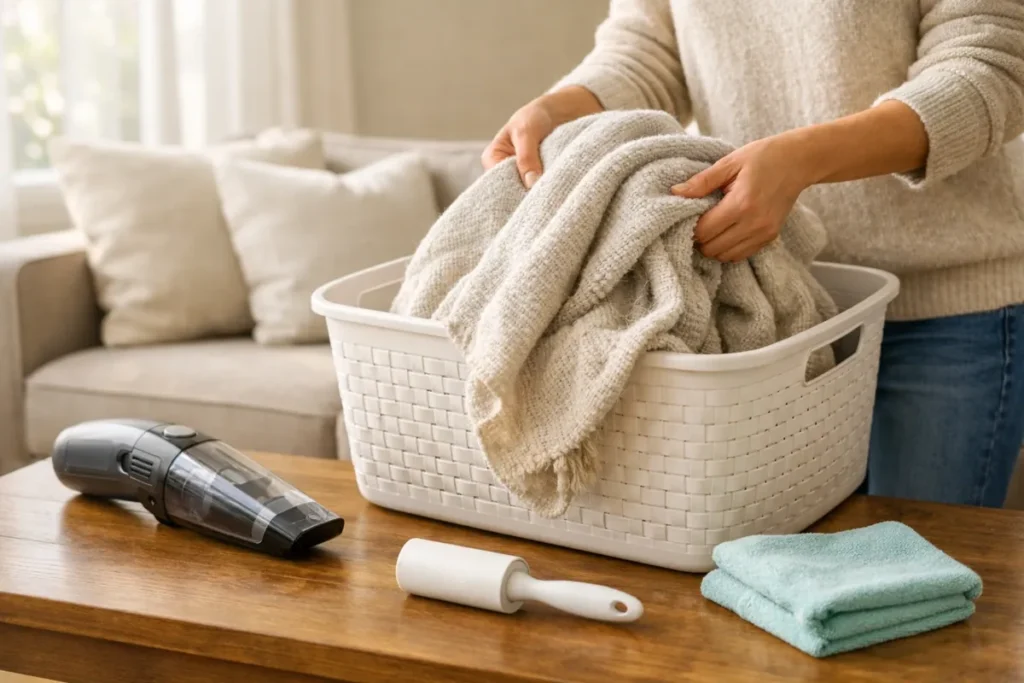
Soft fabrics hold pet oils and release odor over time. A weekly reset keeps the couch from holding onto smell.
How to do it:
- Wash throws and washable covers weekly.
- Vacuum cushions and clean underneath them.
- Spot-clean drool and paw marks (test in a hidden spot first).
Best for:
- Pets allowed on furniture
- Small homes where odors concentrate faster
When couch cushions still hold odor after cleaning, this deeper reset can help you get dog smell out of your couch.
3. Pet bedding on a schedule (before it starts to smell)
Pet beds can be the strongest odor source in the house. Regular washing keeps buildup from spreading.
How to do it:
- Wash bedding weekly, or every 2 weeks for low-odor pets.
- Dry fully until there is no dampness left.
- Vacuum the bed cover between washes.
Best for:
- Dogs that play outside often
- Pets with thicker coats that trap oils
4. Litter box or potty zone routine (small, frequent wins)
Litter box odor spreads when waste sits too long or the area gets ignored. A steady routine keeps the smell from ever getting strong.
How to do it:
- Scoop daily and wipe the rim as needed.
- Fully change litter on a schedule, not only by “topping off”.
- Wipe the floor around the box weekly.
Best for:
- Multi-cat homes
- Homes where the box is near living space
For tighter spaces, these tips to stop litter box smells in small apartments can make a big difference.
5. Fast accident protocol (clean it right the first time)
Odor lingers when residue is left behind. Speed helps, but the order matters most on carpet and upholstery.
How to do it:
- Blot fresh spots with paper towels (do not rub).
- Use an enzyme cleaner for urine and follow the label directions.
- Let it sit, then blot again and let it dry fully.
Best for:
- Puppies, senior pets, and anxious pets
- Rugs, carpet, and upholstery (test in a hidden spot first)
On carpet, a deeper cleanup helps, so use this routine to clean cat pee from carpet.
6. Keep air moving (ventilation + filters)
Even a clean home can smell “stale” if air is trapped. Fresh airflow helps odors leave instead of settling.
How to do it:
- Air out rooms for 5-10 minutes when weather allows.
- Run fans after showers, cooking, or mopping.
- Change HVAC filters on schedule, and sooner with multiple pets.
Best for:
- Homes with limited ventilation
- Humid seasons and rainy climates
The EPA lists source control, improved ventilation, and filtration/air cleaning as best practices for improving and maintaining indoor air quality, which can help a home feel fresher overall with pets.
7. Grooming that prevents “wet dog” smell (brush + dry)
Most pet odor starts on the coat. Brushing and proper drying reduce what transfers to rugs and furniture.
How to do it:
- Brush 2-4 times per week (daily for heavy shedders).
- Towel dry well after rain or baths and keep pets off fabric until dry.
- Wash collars and harnesses monthly.
Best for:
- Dogs that get wet often
- Pets with thick coats that dry slowly
What NOT to Do (For Lasting Results)
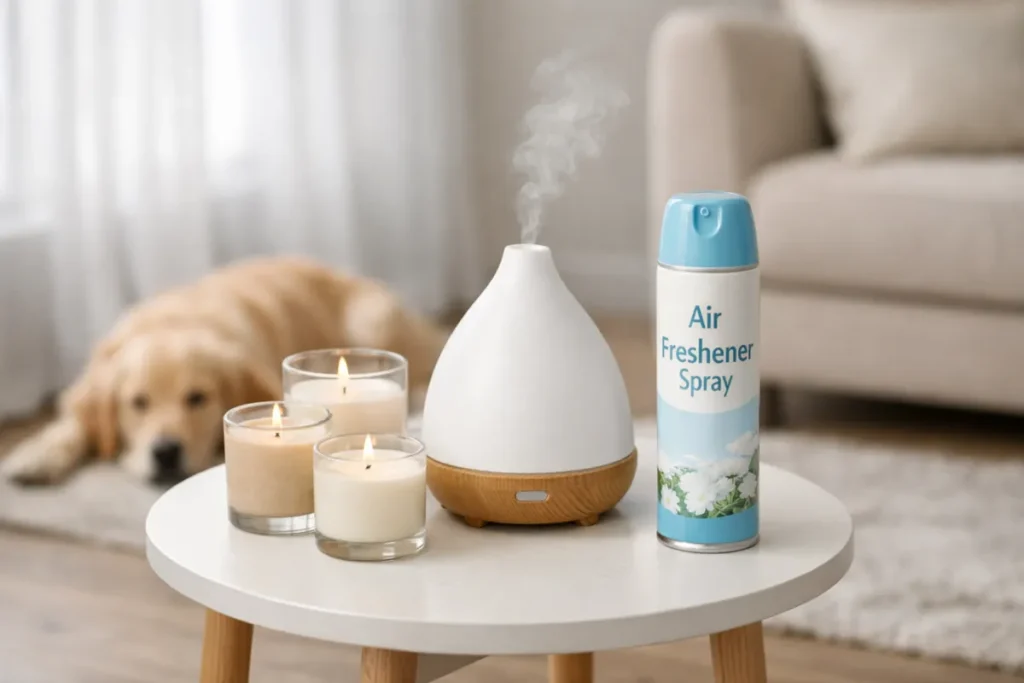
A few common mistakes can make pet odors hang around longer, even if you are cleaning regularly.
- Do not mask odors with strong sprays – fragrance can mix with pet smell and feel worse.
- Do not use essential oils around pets unless your vet says it is safe – many oils are risky, especially for cats.
- Do not soak carpets or couches – too much water pushes odor deeper and can leave a musty smell.
- Do not wait until the litter box “smells” to clean it – by then, odor has already spread.
- Do not ignore HVAC filters – dirty filters can recirculate odor.
Note on essential oils: The ASPCA Animal Poison Control Center says that in their concentrated form (100%), essential oils can be dangerous for pets.
Advanced Tips to Make Odor Prevention Easier
These small setup tweaks make your routine feel easier and help you stay consistent week after week.
- Use washable throws where pets nap most, so you can wash the “odor layer” fast.
- Keep a small accident kit ready (enzyme cleaner, paper towels, gloves).
- Put a pet towel by the door to reduce outside smells coming in.
- Use a lidded trash can for pet waste and empty it often.
- Set specific days (like Sunday bedding wash and Wednesday couch reset) so how to prevent pet odors in your home becomes automatic.
Frequently Asked Questions (FAQ)
How often should I wash pet bedding?
Weekly is ideal for most homes. For low-odor indoor pets, every 2 weeks can work.
How often should I vacuum with pets?
Do quick daily pickup in the busiest areas and a full vacuum weekly.
What helps most for “wet dog” smell?
Drying is the key. Towel dry well and keep damp pets off rugs and couches.
Are air purifiers worth it for pet odors?
They can help with dander and stale air. They work best alongside cleaning routines.
Why does the smell keep coming back?
There is usually a missed source like rug padding, a pet bed, or a couch seam. Recheck pet favorite spots first.
What is a pet-safe way to deodorize a room?
Control the source, then use neutral options like baking soda or charcoal placed safely out of reach.
Final Tips
A fresh home with pets is built on routine. Keep hair under control daily, reset fabrics weekly, and wash pet bedding on schedule.
When accidents happen, clean fast and let the area dry fully. Over time, how to prevent pet odors in your home becomes automatic.
Conclusion
You do not need a perfect house to keep it smelling clean. When you focus on the real sources and stick to small habits, how to prevent pet odors in your home becomes simple and predictable.