

Walking into a room that smells stale or heavy can ruin the whole feel of your home. Knowing how to make a room smell good without spray is especially helpful if you are sensitive to strong scents or want a safer, more natural approach.
Room odors often linger even when the space looks clean. Soft surfaces, trapped air, and small amounts of moisture slowly hold onto smells over time.
Many people try candles or air fresheners and feel frustrated when the odor comes back. Those products usually cover the smell instead of removing what causes it.
For a light scent without harsh chemicals, try a natural air freshener instead of a strong spray.
There are safer, non-toxic methods that professional cleaners rely on to deal with room odors properly. These methods focus on airflow, absorption, and gentle cleaning rather than adding fragrance.
When you understand why rooms hold odors and how to treat them the right way, keeping your space fresh becomes much easier and more consistent.
Table of Contents
What Causes Room Odors?
Room odors usually develop slowly, not all at once. They build up when air, fabrics, and surfaces hold onto smells without regular release or cleaning.

Soft materials are a major factor. Curtains, rugs, couches, bedding, and even throw pillows absorb odors from daily life.
If you have a dog, wet dog smell can sink into rugs and upholstery and linger after baths or rainy walks.
Moisture also plays a role. Even small amounts from humidity, damp laundry, or poor airflow allow odor-causing bacteria to grow.
Common causes include:
- Poor air circulation
- Fabric surfaces trapping smells
- Indoor humidity or dampness
- Everyday activities like pets, shoes, or sleeping
The U.S. Environmental Protection Agency explains that inadequate ventilation allows indoor pollutants to build up instead of being carried outside, which is why airflow plays a key role in preventing lingering room odors.
Once you understand these causes, it becomes much easier to apply methods that show how to make a room smell good without spray naturally and consistently.
How to Make a Room Smell Good Without Spray (Best Natural Cleaning Methods)
Start with airflow first, then move to absorption and fabric cleaning for best results.
1. Fresh Air Flush (Removes Trapped Odors)
This method works because fresh air replaces stale, odor-filled air instead of masking it. Professional cleaners always start with airflow.
How to use it:
- Open windows on opposite sides of the room if possible
- Let air move through for 10–30 minutes
- Use a fan to help circulate air
Best for:
- Light to medium room odors
- Bedrooms and living rooms
- Daily freshness resets
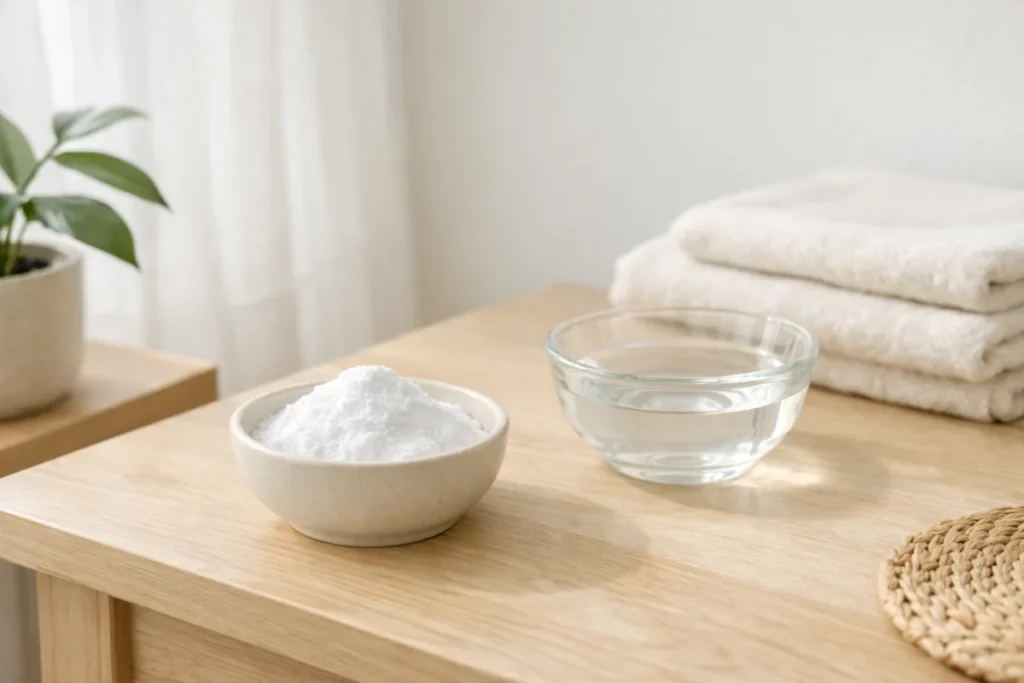
2. Baking Soda Odor Absorbers (Neutralizes Smells Naturally)
Baking soda absorbs odors at the source rather than adding scent. It works quietly over time.
How to use it:
- Place baking soda in a small open bowl
- Set it near the strongest odor area
- Replace every 2–4 weeks
Best for:
- Musty or stale rooms
- Closets and sleeping areas
- Ongoing odor control
3. Vinegar Air Neutralizer (Breaks Down Odor Molecules)
White vinegar helps neutralize stubborn smells without leaving fragrance behind. The vinegar smell fades as it dries.
How to use it:
- Fill a small bowl with white vinegar
- Place it in the room overnight
- Ventilate the room in the morning
Best for:
- Strong lingering odors
- Rooms that feel heavy or stale
- Occasional deep odor resets
4. Wash and Refresh Soft Fabrics (Removes Hidden Odors)
This works because most room odors live in fabric, not in the air. Cleaning those materials removes the real source.
How to use it:
- Wash curtains, pillow covers, and throws
- Vacuum rugs and carpets thoroughly
- Steam-clean upholstery if available
Best for:
- Bedrooms and living rooms
- Pet or body-odor smells
- Long-term odor buildup
Pets make odors stick in fabrics, so a simple pet-odor routine between deep cleans keeps rooms fresher.
5. Activated Charcoal or Natural Absorbers (Long-Term Control)
Charcoal and similar natural absorbers trap odor particles instead of releasing scent.
How to use it:
- Place charcoal bags or dry coffee grounds in containers
- Set them in corners or near fabric furniture
- Refresh or replace monthly
Best for:
- Continuous odor prevention
- Small or enclosed rooms
- Low-maintenance freshness
6. Gentle Surface Wipe-Down (Removes Residue)
Odors sometimes cling to dust and light residue on surfaces. A gentle wipe removes what holds the smell.
How to use it:
- Mix warm water with a drop of dish soap
- Wipe hard surfaces with a microfiber cloth
- Dry surfaces fully
Best for:
- Shelves, nightstands, and baseboards
- Rooms that look clean but smell off
- Light odor maintenance
Kitchen odors spread fast, so clearing trash can smell often freshens the whole room.
When used together, these methods show how to make a room smell good without spray by addressing odors at their source.
What NOT to Do (If You Want Natural Cleaning)
Natural cleaning works best when you remove odors instead of hiding them.
- Do not rely on scented sprays or plug-ins. They cover odors temporarily and can irritate sensitive noses.
- Do not mix vinegar with bleach or ammonia. This creates dangerous fumes.
- Do not soak carpets or furniture with water. Excess moisture creates more odors.
- Do not ignore fabric surfaces. Cleaning only hard surfaces rarely fixes room smells.
Advanced Tips to Make Cleaning Easier
These small habits help make odor control faster and more effective.
- Start with airflow before using any absorbers or cleaners.
- Focus on fabrics first, then hard surfaces.
- Use timers to let absorbers or vinegar sit long enough to work.
- Keep separate cloths for wiping and drying to avoid damp smells.
- Rotate natural absorbers so one is always working while another refreshes.
How to Prevent Room Odors From Coming Back
Prevention saves time and reduces the need for deep odor removal by stopping smells before they build up.
- Open windows regularly, even for a few minutes
- Wash bedding and throws weekly or biweekly
- Vacuum rugs and carpets consistently
- Keep humidity balanced with ventilation
- Handle spills and damp items right away
- Use natural absorbers year-round
- Do light refresh cleans before odors build up
These habits support long-term freshness and make it easier to follow how to make a room smell good without spray as part of a regular cleaning routine.
For a simple whole-home plan, use these natural steps to deodorize your home for longer-lasting results.
Frequently Asked Questions (FAQ)
Is it safe to use these methods on all surfaces?
Yes, when used gently and tested in a hidden area first. Avoid soaking delicate materials.
How often should I refresh a room naturally?
Light ventilation can be done daily. Deeper fabric cleaning works best every few weeks.
Can I use natural methods instead of commercial cleaners?
Yes. Most room odors respond better to absorption and airflow than to chemicals.
What if one method does not work the first time?
That usually means the odor source is still present. Focus on fabrics and moisture.
Are these methods safe if I have kids or pets?
Yes. These methods avoid harsh chemicals and strong fragrances.
Will vinegar leave a lasting smell?
No. The scent fades as it dries, leaving the room neutral.
Can I mix different home remedies together?
No. Never mix vinegar with bleach or ammonia.
Final Tips
Room odors are usually a sign of trapped smells, not poor cleaning. Removing the source works better than adding fragrance.
Start with the gentlest methods and give them time to work. Avoid rushing or overusing products.
Short on time? These quick smell tricks can give you a fast reset between deeper cleans.
Small, regular habits keep rooms fresh with much less effort over time.
Conclusion
A fresh-smelling room does not require sprays or strong scents. By focusing on airflow, absorption, and gentle cleaning, how to make a room smell good without spray becomes a simple, safe routine you can rely on. With consistent habits and natural methods, your home can stay clean, calm, and welcoming every day.