
Wet fur can make a clean home smell “off” fast. If you are trying to figure out how to get rid of wet dog smell in the house, you do not need harsh sprays. You need a simple order of steps.
That odor sticks because moisture wakes up natural skin oils and helps them spread into fabric. Rugs, throws, and dog beds can hold onto it.
The fix is simple: clean what absorbed the smell, move air through the house, and dry it fully.
Table of Contents
What Causes Wet Dog Smell in the House?
Wet dog smell is a mix of moisture, skin oils, and dirt that gets carried indoors. When fur, towels, or bedding stay damp, that mix transfers into whatever your dog touches.
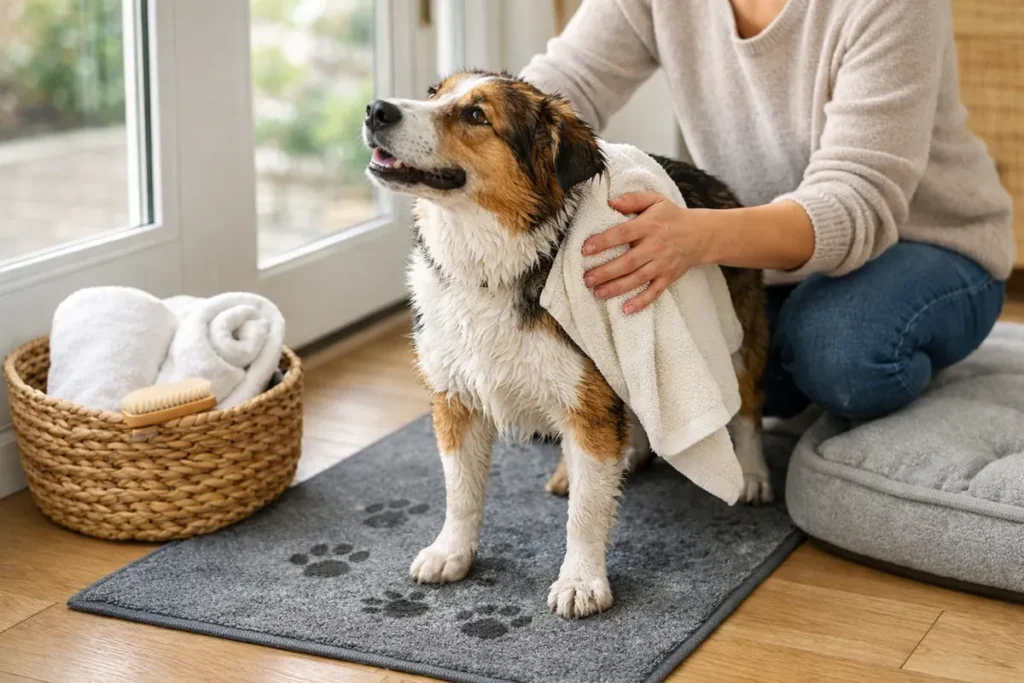
Humidity makes it worse because damp air slows drying.
Common causes include:
- A dog drying on rugs, couches, or bedding
- Towels and blankets left damp in a pile
- A dog bed insert that stays slightly wet inside
- Muddy paws spreading grime onto floors
- Low airflow in entryways, basements, and laundry rooms
When the couch holds most of the smell, start with the cushions and seams first, and a couch odor fix can help.
The EPA recommends keeping indoor humidity below 60% (ideally between 30% and 50%) to help prevent mold growth and moisture problems.
How to Get Rid of Wet Dog Smell in the House (Complete Home Methods)
This whole-home order shows how to get rid of wet dog smell in the house without missing the source.
Whole-Home Order
- Remove the source
- Wash fabrics that reintroduce odor
- Clean hard surfaces and floors
- Ventilate and move air
- Dry fully
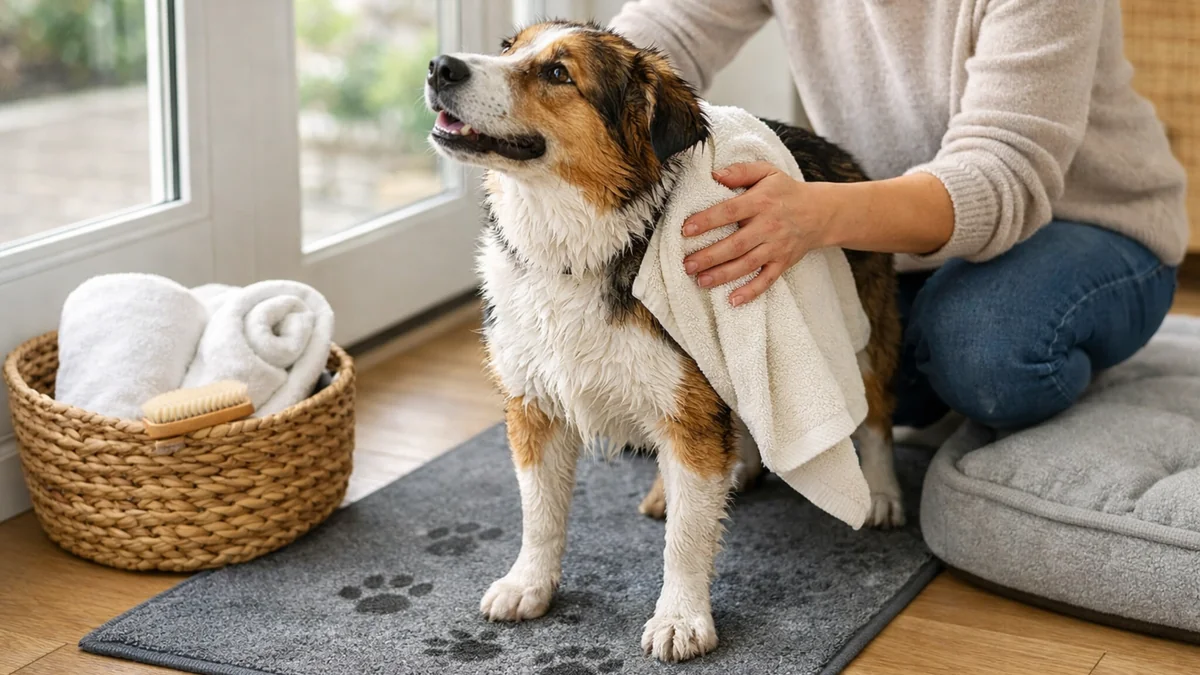
1. Dry the dog fast (Stop the source)
When the coat is still damp, the smell keeps re-entering the room. Faster drying reduces what transfers to furniture and floors.
How to use it:
- Towel-dry well, then do a second pass with a dry towel.
- Use a pet-safe dryer on low or cool, keeping it moving.
- Brush once mostly dry to lift trapped moisture.
Best for:
- Rainy walks and post-bath drying
- Thick coats that stay damp
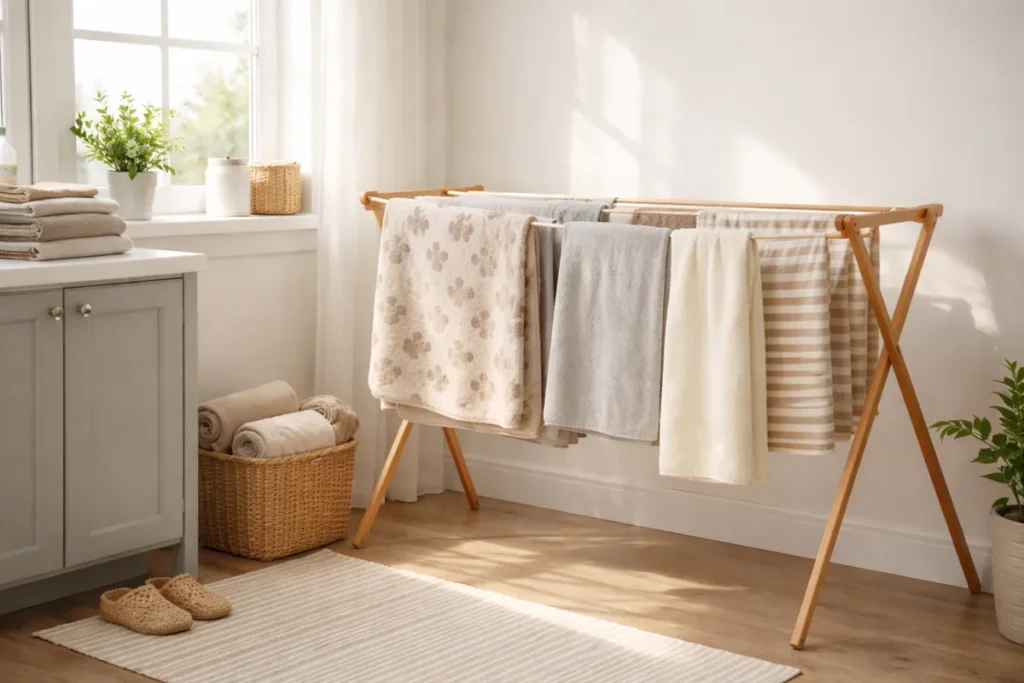
2. Wash and fully dry dog fabrics (Break the odor loop)
Bedding and throws can bring the smell right back after you clean the room. Washing removes oils, but full drying prevents that damp, sour note.
How to use it:
- Wash covers, blankets, and towels in the warmest safe water.
- Add baking soda to the wash if you want a gentle deodorizing boost.
- Dry completely.
Best for:
- Dog beds, crate pads, and couch throws
- Odor that returns the next day
3. Deodorize rugs and carpet without soaking (Lift and vacuum)
Soft flooring holds hair and oils, so it holds odor too. A dry deodorizing step is safer than soaking the carpet when you cannot dry it fast.
How to use it:
- Vacuum slowly first, especially edges and under furniture.
- Sprinkle baking soda lightly and wait 30 to 60 minutes.
- Vacuum again.
Best for:
- Area rugs and wall-to-wall carpet
- Light to moderate wet dog odor
4. Clean hard floors and baseboards (Remove the “dog path”)
Dogs can track a thin film of moisture and oils from the door to their nap spot. Wiping those surfaces removes residue that keeps odors around.
How to use it:
- Wipe baseboards and paw-level walls with warm water and mild dish soap.
- Mop hard floors with a gentle cleaner.
- Dry the floor with a towel or run a fan until it is completely dry.
Best for:
- Tile, vinyl, laminate, and sealed wood
- Smell strongest near doors and hallways
5. Refresh the air the right way (Move and filter)
Covering odor with fragrance rarely works for long. Airflow and filtration reduce the smell in the air while the house dries out.
How to use it:
- Open windows for 10 to 20 minutes to create a cross-breeze.
- Run a fan toward an open window, or run your HVAC fan setting.
- Replace your HVAC filter if it is overdue, and use an air purifier if you have one.
Best for:
- Whole-home stale odor in closed-up homes
- Homes with pets in multiple rooms
Once the air is moving, a few no-spray habits can help keep the house fresh between deeper cleans.
If one spot still smells strong, treat entry mats and the dog bed area with a pet-odor enzyme cleaner as directed.
What NOT to Do (Common Mistakes)
Avoid these mistakes so you do not trap odor in fabrics.
- Do not rely on strong room sprays. They mask odor but leave the source behind.
- Do not soak carpet or upholstery. Too much water can push odor deeper and dry slowly.
- Do not use high heat on damp fabrics. Heat can set oils and make smell harder to remove.
- Do not close up the house right after a bath. Trapped humidity keeps the odor in the air.
- Do not mix cleaning products. Rinse, then switch if you need to.
Advanced Tips to Make Cleaning Easier
A few smart tweaks can make the cleanup quicker and a lot less annoying.
- Keep a drying kit by the door: two towels, a brush, and a washable mat.
- Use washable throws where your dog naps, then wash them weekly.
- Swap dog bed covers on a schedule so you always have a clean spare.
- Vacuum pet hair often, since hair holds oils and odor.
- Run a dehumidifier for a few hours after baths if your home is humid.
If you want fewer odor flare-ups, a whole-home deodorizing routine can keep pet smells from building up over time.
How to Stop Wet Dog Smell in the House From Lingering
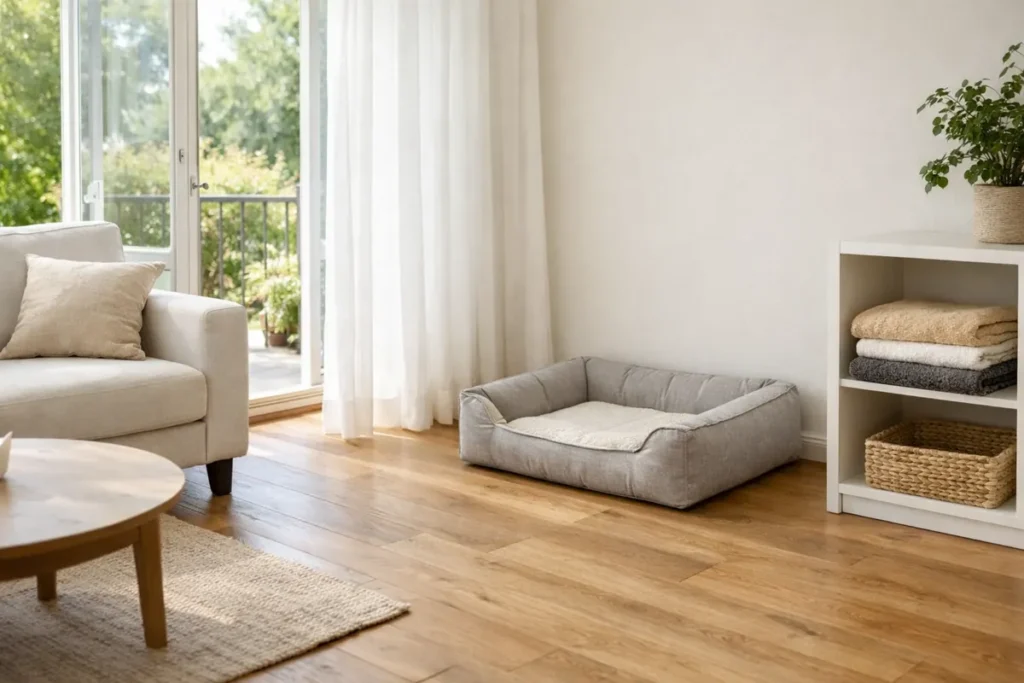
Once you know how to get rid of wet dog smell in the house, this checklist helps keep it from lingering.
- Dry your dog right away after walks, baths, or snow play.
- Wash dog towels and bedding on a routine, not only when they look dirty.
- Keep entry mats clean and dry, and rotate them during rainy weeks.
- Vacuum rugs and high-traffic paths often, even if they look fine.
- Ventilate the home briefly each day when weather allows.
- Keep indoor humidity lower in wet seasons so fabrics dry faster.
A simple weekly routine to keep pet odors down makes rainy-season smells much easier to manage.
Frequently Asked Questions (FAQ)
How long does wet dog smell last indoors?
If everything dries fast, it can fade in a few hours. Damp fabrics can hold it longer.
What is the fastest thing I can do after a rainy walk?
Dry the dog first, then handle the towel. Crack a window and run a fan.
Is baking soda safe to use around pets?
It is widely used on rugs and carpet in small amounts. Keep pets away while it sits, then vacuum well.
Do I need an air purifier for wet dog odor?
Not always, but it can help in closed-up homes after you clean and dry fabrics.
Why does the smell come back after I cleaned?
One item is usually still holding odor, like a dog bed insert or entry mat. Repeat the whole-home order and focus on what stays damp.
What if the smell is strong even when the dog is dry?
Check for damp rugs, pads, or a basement corner that is staying humid. If the odor seems to come from the dog’s skin, ask a vet about coat or skin issues.
Final Tips
Treat wet dog odor as a moisture problem first. Dry the dog, then wash and dry the fabrics the dog touches most.
Doing the steps in order is the key to how to get rid of wet dog smell in the house without stronger sprays.
Keep air moving while you clean, and do not stop until everything is fully dry. Simple habits after each wet outing prevent most of the smell.
Once the source is handled and everything is dry, a gentle natural air freshener can keep the space smelling clean without masking the problem.
Conclusion
After one good reset, you will know how to get rid of wet dog smell in the house without a big cleanup each time. Remove the source, clean what absorbed the odor, and dry the home fully so the smell does not linger.