
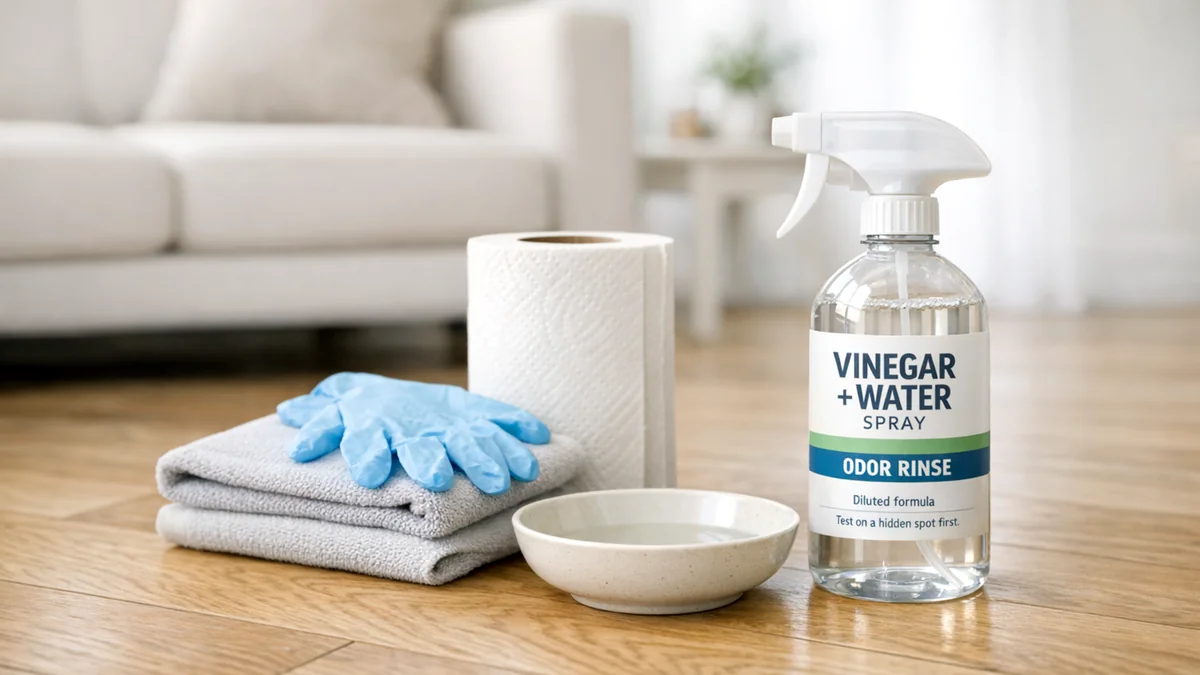
Dried cat urine on hardwood can stink even when the floor looks clean. The key to how to clean dried cat urine from hardwood floors is low moisture, the right cleaner, and fast drying so you remove odor without harming the finish.
Hardwood does not soak like carpet, but urine can wick into seams, tiny cracks, and edges. Once it dries, humidity or damp mopping can make the smell noticeable again.
Carpet holds urine deep in the fibers, so cleaning cat pee from carpet often takes a different rinse and dry routine.
You can fix most spots at home with careful, step-by-step cleaning. Start gentle, then step up only if odor remains.
Keep liquids light, never let puddles sit, and dry the area fully before you judge the results.
Table of Contents
What Causes Dried Cat Urine and Odor on Hardwood Floors?
Cat urine can dry into a thin film that holds odor, and it can creep into seams where boards meet. The smell can seem to return because dried residue can rehydrate when the air is humid or the floor is cleaned with too much water.
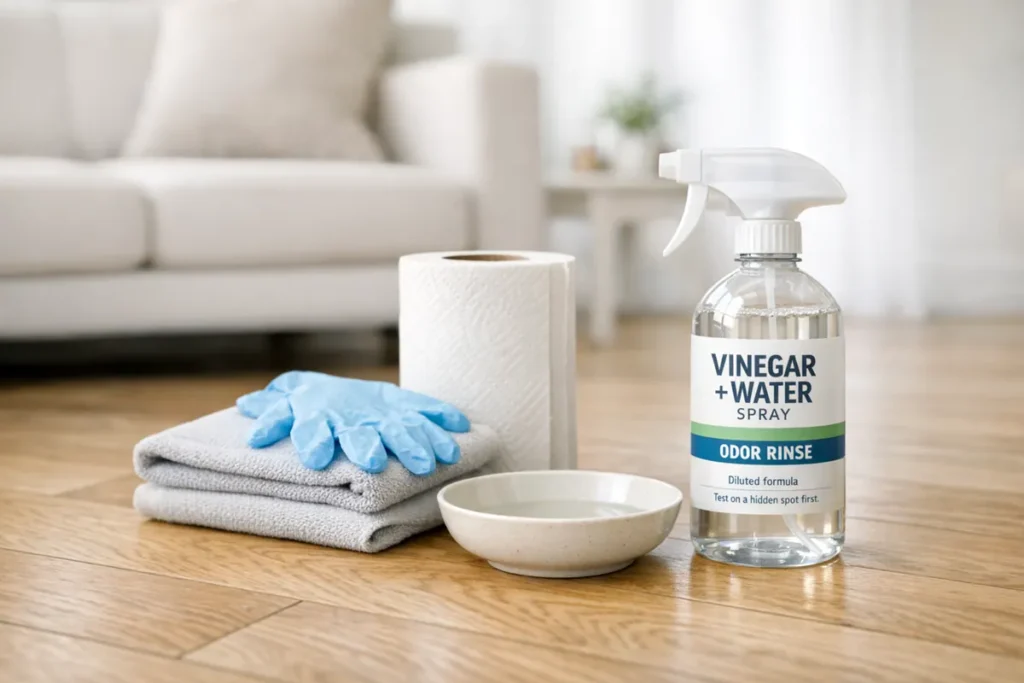
The National Wood Flooring Association (NWFA) says to clean spills immediately with a dry or slightly damp cloth, and not to use wet mops or steam mops on wood floors.
Common reasons it gets worse over time:
- The spot dried before it was fully removed
- Urine seeped into seams or scratches
- The finish is worn in a high-traffic area
- Damp mopping left extra moisture behind
This same low-moisture routine also works for urine odor on bathroom floors, especially around toilets and baseboards.
How to Clean Dried Cat Urine From Hardwood Floors (Gentle but Effective Methods)
Before you start, confirm the floor is sealed. If the finish is waxed, oiled, or very worn, keep liquids minimal and do more spot testing.
1. Dry Lift and Vacuum (Remove Dried Residue First)
Dry residue can smear when it gets wet. Lifting it first keeps the mess contained.
How to use it:
- Lift crusty bits with a plastic scraper or old card.
- Vacuum, then wipe once with a dry microfiber cloth.
Best for:
- Visible dried residue
- Quick first step before any liquid
2. Mild Dish Soap Wipe (Lift the Sticky Film)
A tiny amount of dish soap helps cut the film that traps odor on the finish.
How to use it:
- Mix 1 teaspoon dish soap with 2 cups warm water.
- Wipe with a well-wrung cloth, then wipe once with plain water.
- Buff dry immediately.
Best for:
- Light odor with no staining
- Sealed floors needing a gentle pass
3. Enzyme Cleaner Compress (Best for Set-In Odor)
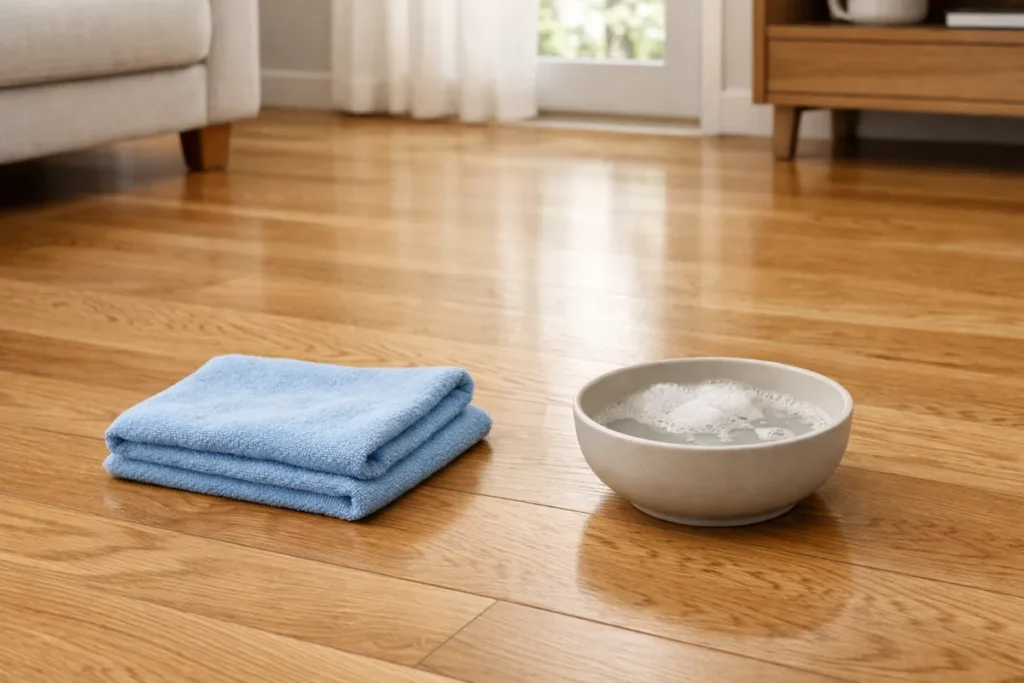
Enzymes break down the odor source, not just the surface. When the smell is still noticeable after cleaning, an enzyme compress is often the best way to handle how to clean dried cat urine from hardwood floors without soaking the boards.
How to use it:
- Spot test an enzyme cleaner labeled safe for hardwood.
- Lightly dampen a folded paper towel and place it over the spot.
- Let it sit for the label time, then remove, wipe lightly, and dry fast.
- Run a fan for 20-30 minutes.
Best for:
- Odor that lingers after basic cleaning
- Seams near baseboards or doorways
For repeat accidents, keeping a reliable option from this enzyme cleaner list makes quick spot compresses much easier.
4. Diluted Vinegar Quick Wipe (Odor-Reducing Rinse)
Vinegar can reduce odor, but it can dull some finishes if overused. Keep it diluted and fast.
How to use it:
- Mix 1 part white vinegar with 3 parts cool water.
- Wipe quickly with a well-wrung cloth.
- Wipe once with plain water, then buff dry.
Best for:
- Mild lingering odor after soap cleaning
- Small areas that pass a spot test
5. Hydrogen Peroxide Dab (Target Seams Carefully)
Hydrogen peroxide can help stubborn odor, but it may lighten wood or affect finish. Use only as a brief, targeted dab.
How to use it:
- Spot test first and let it dry.
- Dab 3% hydrogen peroxide on a cotton pad.
- Press for 1-2 minutes, then wipe and dry.
Best for:
- Tiny seam lines that still smell after enzymes
- Very small, pinpointed hotspots
What NOT to Do (To Protect Your Surfaces)
Hardwood is less forgiving than it looks, so a few common cleaning habits can turn a small spot into a bigger repair.
- Do not steam mop. Heat plus moisture can push odor into seams.
- Do not soak the area with a wet rag. Excess water can swell boards.
- Do not use abrasive pads or powders. Scratches trap residue.
- Do not leave cleaners sitting longer than directed. Some products can dull finish.
Advanced Tips to Make Cleaning Easier
These small pro moves help you work cleaner, faster, and with fewer repeat passes.
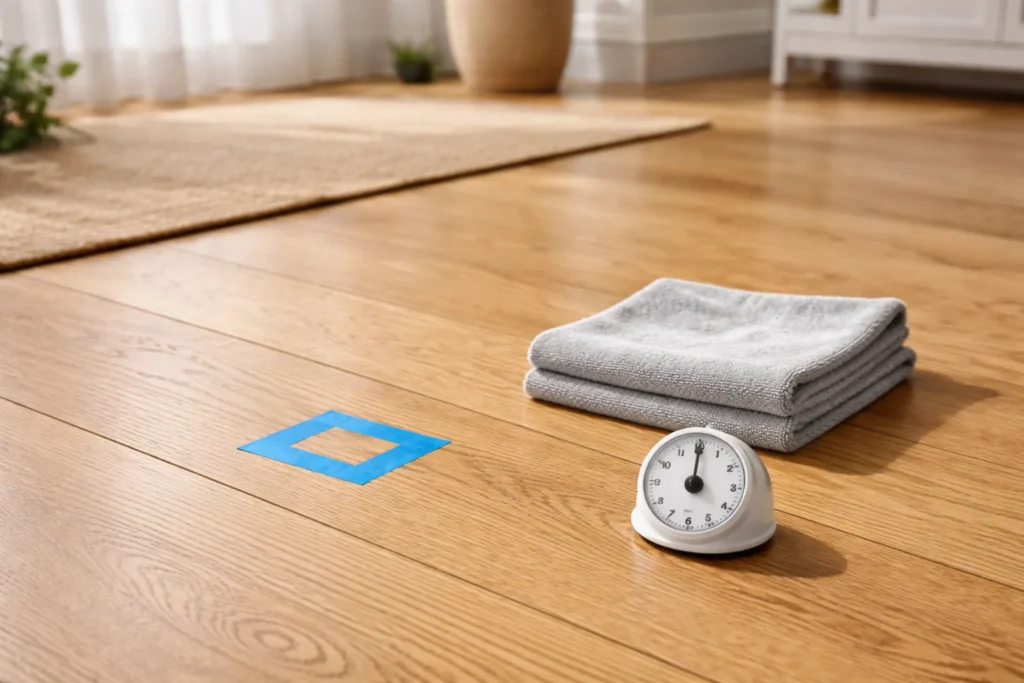
- Mark the spot with painter’s tape so you do not lose it mid-clean.
- Use a timer for dwell time, especially with enzyme compresses.
- Keep a dry towel in your hand and dry after every pass.
If you need a second round, repeat the low-moisture steps. This is safer than adding more water when you are trying to figure out how to clean dried cat urine from hardwood floors without damage.
Wash any towels or throw rugs used for cleanup right away, because cat urine smell in clothes can linger after a normal cycle.
How to Prevent Dried Cat Urine and Odor on Hardwood Floors From Returning
Prevention is mostly about making the right spot easy for your cat and keeping pet areas simple to maintain.
- Blot accidents right away, then wipe and dry.
- Keep an enzyme cleaner for quick spot compresses.
- Use a waterproof mat under litter boxes and nearby rugs.
- Mop with a barely damp pad, not a wet mop, in pet areas.
- Scoop litter daily and wash the box regularly.
A simple weekly routine can prevent pet odors at home before they spread into floors, rugs, and soft fabrics.
Frequently Asked Questions (FAQ)
Is vinegar safe on hardwood floors?
Sometimes, if the floor is sealed and you dilute it. Spot test first and keep contact time short.
Can baking soda scratch hardwood?
Yes. Avoid scrubbing hardwood with baking soda because it can dull the finish.
What if the smell comes back after it dries?
Residue may still be in a seam or scratch. Repeat the enzyme compress and focus on fast drying.
When should I call a professional?
If odor persists after multiple enzyme treatments, urine may have reached gaps or the subfloor. A pro can assess whether deeper treatment or refinishing is needed.
How long should an enzyme cleaner sit?
Follow the label. On hardwood, do not extend the time unless the directions say it is safe.
Do these steps still work in an older home when you need to know how to clean dried cat urine from hardwood floors?
Often yes, but older finishes can be thinner. Do extra spot testing and keep moisture even lighter.
Final Tips
Remove dry residue first, then clean the surface film, then use enzymes if odor remains. The win on hardwood is controlled moisture plus thorough drying.
If a spot is stubborn, do two gentle passes with full drying in between instead of one aggressive scrub. Once you know how to clean dried cat urine from hardwood floors, quick blotting and a simple spot routine will keep it from becoming a set-in problem.
Conclusion
Set-in urine odor is fixable in most homes. Use gentle cleaners, target seams with the right method, and dry the area fast so the wood stays protected. This guide on how to clean dried cat urine from hardwood floors helps you get rid of the smell now and makes future cleanup much easier.