
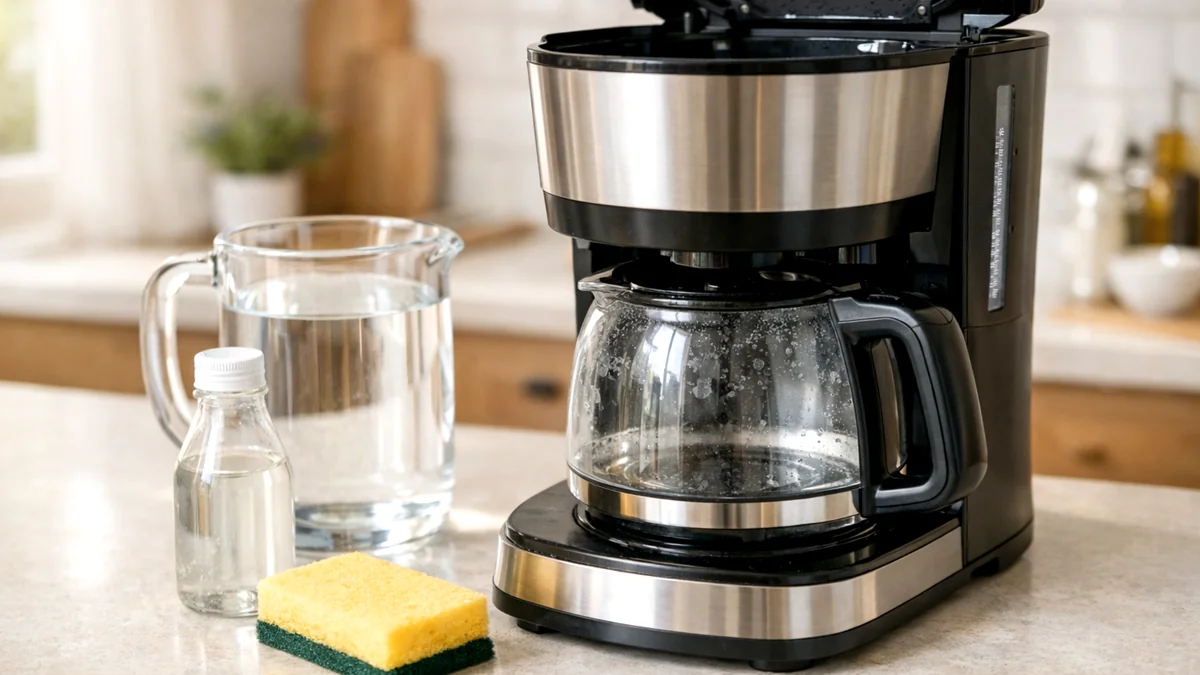
Coffee can start tasting dull long before a coffee maker looks dirty. Knowing how to clean a coffee maker with vinegar helps remove hidden scale before it changes the flavor of every cup.
Hard water leaves mineral deposits inside the reservoir and tubing, while old coffee oils cling to the basket, lid, and carafe.
Many people clean a coffee maker with vinegar only after the machine starts brewing more slowly. A steady routine works better and makes it easier to rinse away any sour smell.
You do not need anything fancy for this job. The right vinegar mix, a few rinse cycles, and better maintenance habits are usually enough.
Table of Contents
What Causes Coffee Maker Scale and Residue?
Most buildup comes from minerals in water and leftover coffee oils. You may need to clean a coffee maker with vinegar more often if you brew daily or live in an area with hard water.
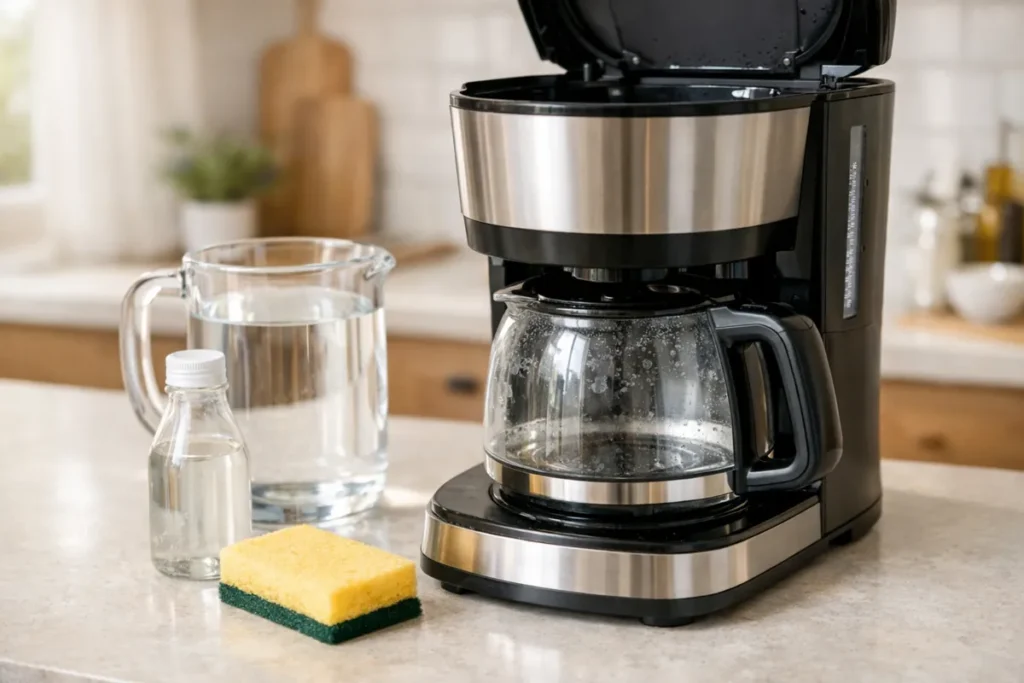
Common causes include:
- Hard water minerals collecting inside the machine
- Coffee oils sticking to the basket, lid, and carafe
- Leaving water sitting in the reservoir
- Skipping regular rinse cycles
- Waiting until flavor or brew speed changes
The USGS notes that hard water can leave mineral buildup in home coffee makers, which is one reason vinegar helps dissolve scale.
The same hard water minerals can also leave limescale on faucets around the kitchen over time.
Methods to Clean a Coffee Maker With Vinegar (Deep Clean, Less Aftertaste)
Start gentle, then move to a stronger reset only if the machine still brews slowly.
1. Standard Brew Cycle Clean (For Regular Buildup)
This is the main method for normal upkeep. It loosens scale inside the machine without adding extra work.
How to use it:
- Empty the machine and remove old grounds or filters.
- Fill the reservoir with equal parts white vinegar and water.
- Run one brew cycle and let it rest for 10 minutes.
- Run 2 full cycles of fresh water.
Best for:
- Monthly cleaning
- Mild to moderate scale
- Machines that still brew normally
2. Light Maintenance Mix (For Mild Scale)
A weaker mix is enough when the machine is not very dirty.
How to use it:
- Mix 1 part white vinegar with 2 parts water.
- Run one brew cycle.
- Follow with 2 fresh-water cycles.
- Check the carafe and lid for any leftover scent.
Best for:
- Light upkeep
- Newer machines
- Softer water areas
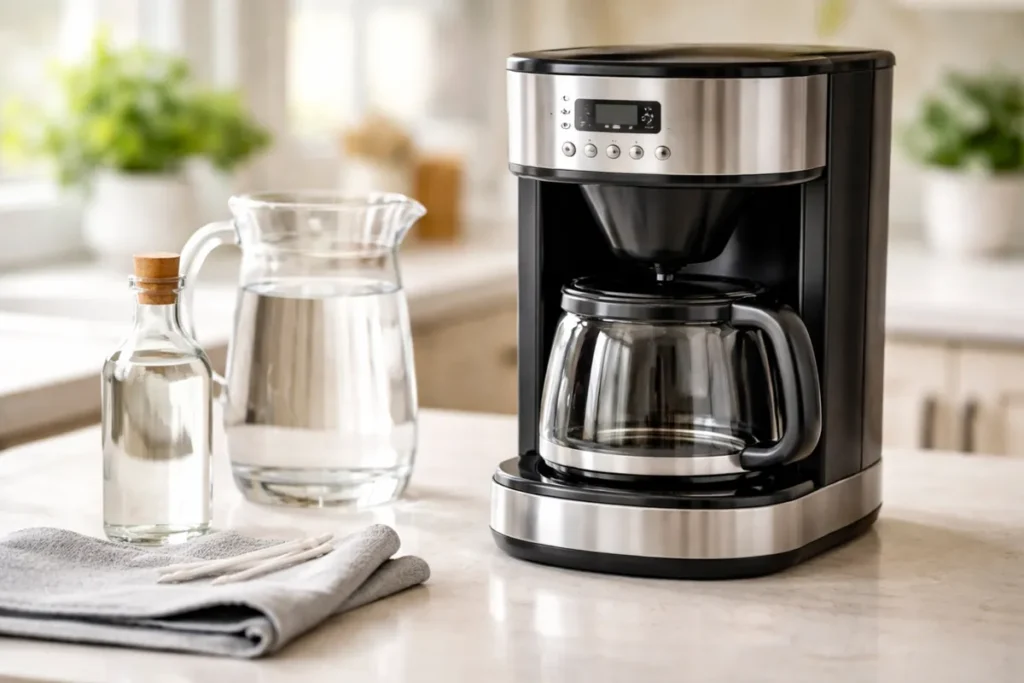
3. Removable Parts Soak (For Oily Residue)
The brew cycle will not remove every film on the basket or lid. A short soak helps clear old oils that can affect taste.
How to use it:
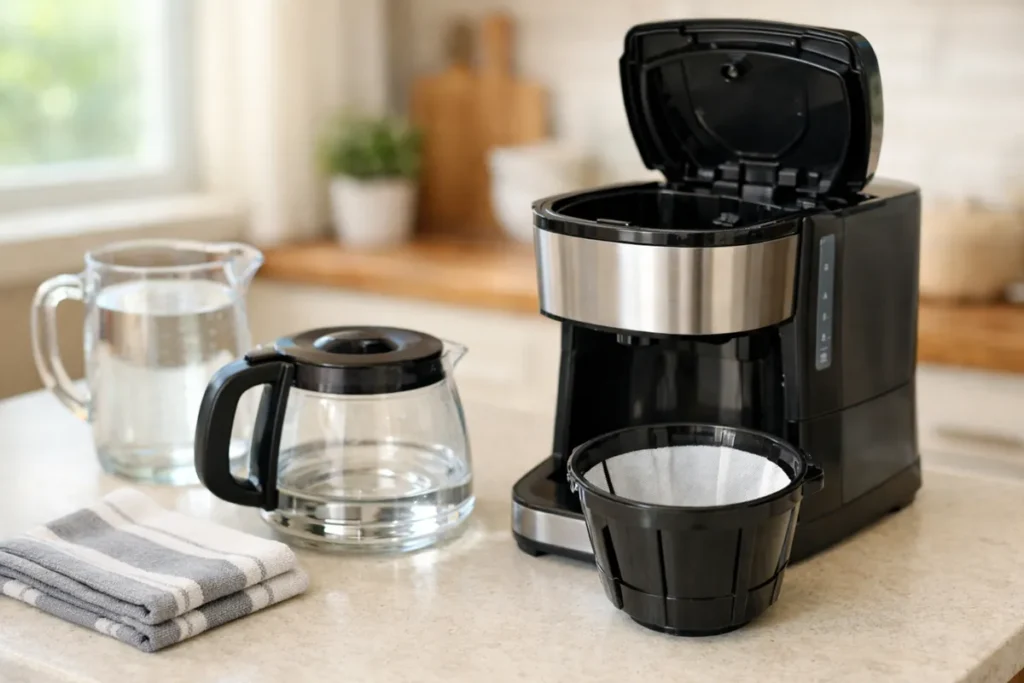
- Remove the basket, lid, and reusable filter.
- Soak them in warm water with a small splash of vinegar for 10 minutes.
- Wipe with a soft sponge.
- Rinse very well and let them dry.
Best for:
- Greasy film
- Cloudy carafes
- Reusable filters
Grease does not just cling to coffee maker parts – it can also collect in range hood filters.
4. Repeat Cycle for Heavy Scale (When Brewing Slows)
If one round does not improve flow, the machine probably needs a second pass. This is a common way to clean a coffee maker with vinegar when hard water scale has had time to build up.
How to use it:
- Run the standard 1:1 vinegar and water cycle.
- Let it rest for 10 to 15 minutes.
- Run a second full cycle with fresh solution.
- Finish with 3 full water-only cycles.
Best for:
- Slow brewing
- Older machines
- Heavy scale
5. Final Rinse for Fresh Taste (To Clear the Flavor)
This step matters just as much as the cleaning cycle. It is the main reason you can clean a coffee maker with vinegar without leaving an aftertaste.
How to use it:
- Fill the reservoir with clean water only.
- Run 2 full cycles.
- Wash the carafe and lid with dish soap and warm water.
- Run one more water cycle if any smell remains.
Best for:
- Plastic parts that hold odor
- Finishing any vinegar clean
- Anyone sensitive to taste changes
What NOT to Do (Avoid Residue and Damage)
A few habits leave more taste behind than the vinegar itself.
- Do not use straight vinegar for routine cleaning. It can leave a stronger smell and usually is not needed for normal scale.
- Do not stop after one rinse cycle. Most machines need at least 2 rounds of fresh water.
- Do not scrub clear or coated parts with rough pads. Scratches can make future residue stick faster.
- Do not leave the vinegar mix sitting for hours. A short pause helps, but too much time can make the smell harder to remove.
- Do not ignore the basket and lid. Old oils there can make a clean machine taste dirty again.
Gentle cleaning matters for other coated kitchen items too, including an air fryer basket.
Advanced Tips to Make Cleaning Easier
Small changes make the whole cleanup less annoying. They also help the next pot taste better sooner.
- Rinse the basket separately. Even when you run vinegar through the reservoir, the basket often needs its own wash.
- Smell the lid before brewing. That quick check tells you whether one more rinse is worth it.
- Clean on a schedule. It is easier to clean a coffee maker with vinegar before scale gets thick.
- Use filtered water if you can. That can slow down new mineral deposits.
- Leave the lid open after rinsing. Airflow helps leftover scent fade faster.
How to Keep Coffee Maker Scale and Residue From Building Up
A simple routine keeps scale low and coffee tasting better.
- Empty leftover water after each use. Standing water gives minerals more time to settle.
- Wash removable parts often. This removes oily film before it gets stale.
- Run a light cleaning cycle monthly. Regular descaling is easier than fixing heavy buildup.
- Wipe the lid and basket area. Small splashes can turn into sticky residue.
- Use fresh water each time to help prevent stale flavors.
The same mineral buildup can also clog dishwasher spray arms and cut cleaning performance over time.
Frequently Asked Questions (FAQ)
How often should I clean my coffee maker with vinegar?
A daily-use machine usually does well with monthly cleaning. With hard water, do it sooner.
Can vinegar damage a coffee maker?
A diluted mix is usually fine for routine descaling. Check your manual in case the brand gives different directions.
Which vinegar should I use?
Plain white vinegar is best. Dark or flavored vinegars can leave color or smell behind.
What if one cycle does not fix the problem?
Run a second cycle and add extra water-only rinses. Heavy scale often needs more than one round.
Can I clean the carafe and basket with vinegar too?
Yes, but keep the soak short and rinse very well. Dish soap and warm water also help remove leftover smell.
When should I switch to a descaler?
Use one if repeated vinegar cleaning does not improve flow or if your manual recommends a specific product.
Final Tips
Start with the mildest method. A steady routine works better than waiting for heavy buildup.
Always rinse more than once and wash the carafe, lid, and basket separately. That is what helps remove the sharp smell people worry about most.
You can clean a coffee maker with vinegar without affecting the next brew if you stay patient with the rinse step.
If the kitchen still feels stale after you clean the machine, lingering fridge odor may be part of it.
Conclusion
A better cup often comes down to simple upkeep. When you clean a coffee maker with vinegar the right way, you remove scale, cut stale residue, and keep the machine ready for the next pot.